

♥ Wishlist
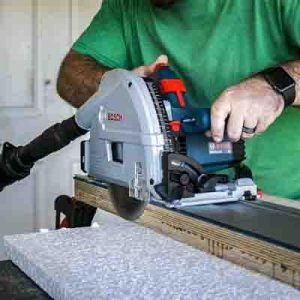
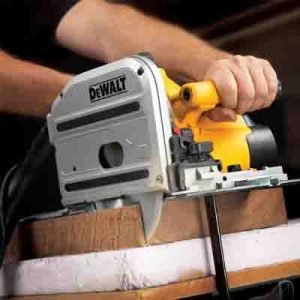
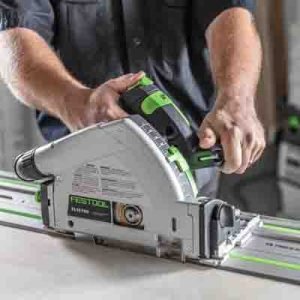
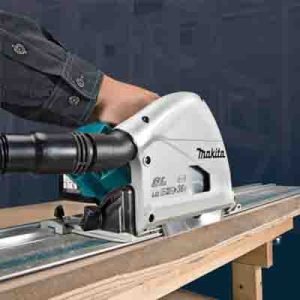
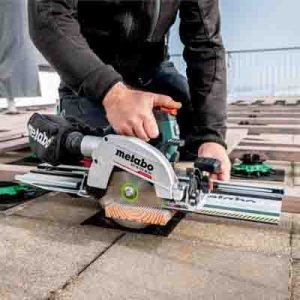


Cordless plunge saws are designed for situations where cutting accuracy, portability and controlled blade entry matter. Unlike a conventional circular saw, a plunge saw allows the blade to enter the material at a controlled point rather than starting from the edge. This makes the design particularly useful for sheet materials, worktops, doors, flooring and other applications where a precise starting position is important.
For UK shoppers, a cordless model can be especially convenient when working on renovation projects, installations or jobs where access to a mains socket is limited. Without a trailing power cable, you have greater freedom to move around a workshop, building site or room. Battery operation can also reduce the need for extension leads, although runtime depends on the battery capacity, material being cut and workload.
A cordless plunge saw is a battery-powered cutting tool that uses a plunge mechanism to lower its blade into a workpiece. Many models are designed to work with guide rails, allowing the saw to travel in a controlled line for accurate straight cuts. This combination of plunge action and guided cutting is useful when precision is more important than simply making a quick rough cut.
When comparing models, consider the blade diameter, maximum cutting depth, battery platform, bevel capacity, speed control, dust extraction options and compatibility with guide rails. A saw with an appropriate cutting depth is important if you regularly work with thicker boards, while a compact model may be preferable for lighter DIY work and installation tasks.
The main advantage of a cordless plunge saw is freedom of movement. There is no mains cable to route around the workpiece, and you can take the tool between different work areas without searching for a nearby socket. This can be useful for tradespeople working across several rooms or locations as well as DIY users completing projects at home.
Another advantage is controlled cutting. The plunge mechanism can help you begin a cut at a selected position, while a compatible guide rail can help maintain a straight cutting path. For applications such as cutting large boards, trimming doors or preparing worktops, this controlled approach can make accurate results easier to achieve.
Battery specifications can influence cutting performance and working time. Check whether the saw is supplied with a battery and charger or sold as a body-only tool. If you already own compatible batteries, staying within the same battery platform may reduce the need to purchase additional charging equipment.
Look at the maximum cutting depth at 90 degrees and, where relevant, at a bevel angle. The required capacity depends on the materials and thicknesses you regularly cut. A saw with adjustable depth control can provide greater flexibility for different jobs.
Guide rails can be valuable when straight, repeatable cuts are required. Check the manufacturer's compatibility information before buying accessories, as rail systems and connections can differ between tools.
Wood cutting can generate significant dust, particularly when working indoors. A plunge saw with an effective dust extraction connection can make it easier to connect a suitable vacuum or extraction system. Good dust management can also help keep the working area cleaner.
For occasional DIY projects, prioritise ease of handling, suitable cutting capacity and compatibility with accessories you actually need. For regular woodworking or professional installation work, you may benefit from a model with strong battery performance, precise depth adjustment, dependable guide-rail compatibility and robust construction.
If you frequently cut large sheet materials, consider the complete cutting setup rather than the saw alone. A suitable guide rail, clamps, spare battery and appropriate extraction equipment can significantly affect the overall workflow. Checking the manufacturer's specifications for blade compatibility and recommended materials is also important before starting a project.
When comparing cordless plunge saws, consider the type of work you do, the materials you cut and how frequently the tool will be used. Think about whether you need a complete kit or a body-only model, whether you already have compatible batteries and whether guide rails or other accessories are included.
It is also worth comparing cutting depth, bevel range, blade size, weight and handling characteristics rather than choosing solely on battery voltage. The best cordless plunge saw for one user may not be the best option for another. Matching the specification to your actual workload can help you avoid paying for features you do not need while ensuring the saw has enough capability for your projects.
Cordless plunge saws combine the mobility of battery power with the controlled cutting action associated with plunge saws. They can be useful for woodworking, renovation, installation and demanding DIY tasks where clean, accurate cuts are required. Compare the available specifications, battery requirements, cutting capacity and accessory compatibility to find a setup suited to your needs.
Find cordless plunge saws designed for accurate, controlled cutting across timber, sheet materials and other suitable woodworking applications. A battery-powered plunge saw gives you the freedom to work without a mains cable while offering the controlled plunge action needed for clean, precise cuts. Whether you are fitting kitchens, cutting worktops, preparing panels or tackling renovation and DIY projects, choosing the right cordless plunge saw can make demanding cuts easier and more convenient.
Primary: Commercial investigation
Secondary: Transactional