

♥ Wishlist
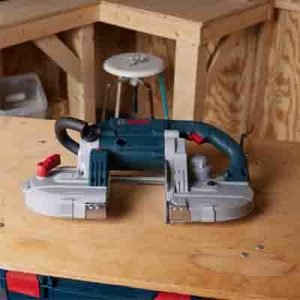
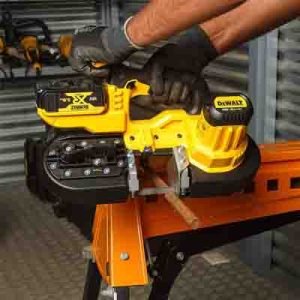
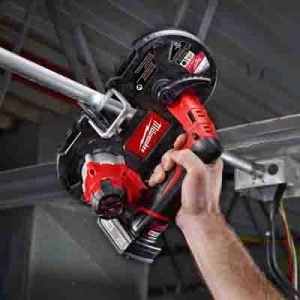


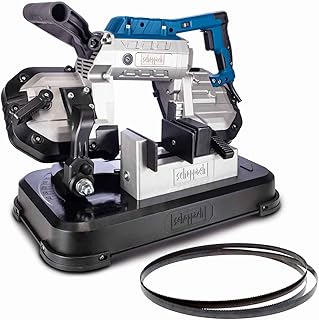


A cordless bandsaw is designed for users who need controlled cutting performance without being tied to a mains socket. Instead of relying on a power cable, these portable bandsaws use a rechargeable battery system, making them particularly convenient for construction, installation, maintenance and workshop applications. The continuous band blade travels around two wheels, allowing the tool to produce steady cuts through suitable materials when the correct blade and settings are used.
For UK shoppers, the main advantage is flexibility. A battery-powered bandsaw can be carried around a workshop, taken to a job site or used in locations where access to mains electricity is limited. The absence of a trailing cable can also make movement around a work area simpler. When choosing a model, however, portability should be balanced against cutting capacity, battery runtime, weight and the type of material you expect to cut.
Cordless bandsaws are useful when mobility matters as much as cutting performance. They can be suitable for cutting metal stock, pipes, tubing, timber and other compatible materials, depending on the model and blade fitted. Their narrow cutting profile can help create controlled cuts while the enclosed blade arrangement provides a compact alternative to larger stationary equipment.
Battery operation is particularly useful for tradespeople and maintenance professionals who frequently move between locations. It can also be helpful in workshops where reducing cable clutter is desirable. Before purchasing, check whether the product is supplied as a complete kit with battery and charger or as a bare tool designed for use with an existing compatible battery platform.
Battery voltage can give an indication of the tool platform and available power, but it should not be considered on its own. Runtime depends on battery capacity, material, blade condition and workload. If you regularly make numerous cuts, consider whether additional batteries are available and whether the model belongs to a battery system you already use.
Cutting capacity is one of the most important specifications to check. Consider the maximum diameter or dimensions of the material you normally work with and compare these requirements with the manufacturer's stated capacity. A compact bandsaw may be easier to handle, while a larger model may be better suited to thicker or wider stock.
Variable speed control can be valuable when working with different materials. Slower settings may be appropriate for some metal-cutting applications, while other materials can require different operating speeds. Always follow the manufacturer's recommendations and select a blade designed for the intended material.
A lightweight cordless bandsaw can be easier to carry and position, especially when working above ground level or moving around a busy site. Look for a comfortable handle, balanced construction and controls that can be reached naturally while maintaining a secure grip.
Blade availability should form part of your buying decision. Check blade dimensions, tooth configuration and material compatibility before ordering. Having access to suitable replacement blades can help keep the tool productive over the long term.
Different applications require different blade types and cutting characteristics. For metalwork, choose a bandsaw and blade combination specifically intended for the material being cut. For timber and woodworking applications, use blades designed for wood and follow the tool's operating guidance. A model marketed for general-purpose use should still be checked carefully for its stated material compatibility and maximum cutting capacity.
Tradespeople working with pipe, conduit or metal sections may value a compact design that can be positioned close to the workpiece. Workshop users may place greater importance on cutting capacity, battery endurance and compatibility with their existing tools. Thinking about the tasks you perform most often makes it easier to identify the right combination of size, power and portability.
Start by identifying the materials and dimensions you need to cut. Next, compare cutting capacity, battery requirements, blade speed and overall weight. If you already own cordless tools, checking battery-platform compatibility can be a practical way to avoid maintaining several different battery systems.
UK shoppers should also consider whether the product is supplied with a battery and charger, the manufacturer's warranty information, replacement blade availability and the intended working environment. For frequent professional use, durability, ergonomic handling and dependable battery availability may be more important than simply choosing the lowest purchase price.
Before purchasing, create a short checklist based on your typical jobs. Confirm the maximum cutting capacity, compatible blades, battery type, expected runtime and tool weight. If the bandsaw will be used for extended periods, pay particular attention to ergonomics and the availability of additional batteries.
It is also worth comparing the complete ownership cost rather than looking only at the headline tool price. A bare tool may be attractive if you already own compatible batteries, while a kit containing a battery and charger may be more suitable for someone starting a new battery platform. The right choice depends on your existing equipment, workload and intended applications.
A cordless bandsaw is a portable cutting tool used for suitable materials such as metal, tubing, timber and other workpieces, depending on the model and blade. It is particularly useful where portability and freedom from a mains cable are important.
Some cordless bandsaws are specifically designed for metal cutting. Always check the manufacturer's specifications and use a blade suitable for the particular metal and application.
It depends on the product. Some are supplied as complete kits with a battery and charger, while others are sold as bare tools. Check the individual product specification before ordering.
Consider the material you will cut, required cutting capacity, battery platform, runtime, blade compatibility, weight and ergonomic design. Matching these features to your normal workload is more useful than choosing based on power alone.
Only blades that meet the tool's specified dimensions and compatibility requirements should be used. Choose the tooth type and blade material according to the workpiece and cutting application.
Neither is universally better. Cordless models provide greater mobility and remove the need for a mains cable, while corded models can be preferable for prolonged work near a reliable power supply. Your working environment should determine which format is more suitable.
Check cutting capacity, battery compatibility, blade specifications, variable speed features, tool weight, included accessories and whether a battery and charger are included. These details help you choose a model that matches your intended work.
Cordless bandsaws offer a practical way to make controlled cuts without relying on a mains power connection. Their compact, portable design makes them useful for workshops, construction sites, maintenance tasks and installation work where moving between cutting locations is part of the job. This category brings together battery-powered bandsaws designed for convenient cutting while giving shoppers the freedom to work away from a fixed socket.