

♥ Wishlist




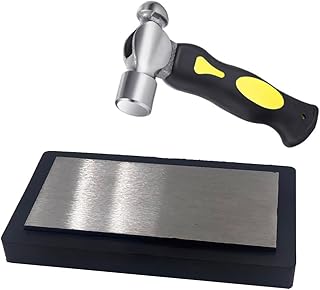


Anvils are essential workshop tools for shaping, bending, straightening and forming metal. Whether you are setting up a traditional blacksmithing workshop, carrying out metal fabrication projects or looking for a dependable surface for occasional DIY work, choosing the right anvil can make forging tasks more controlled and efficient. The Anvils category brings together options designed for different types of metalworking, allowing shoppers to compare practical features before making a purchase.
A quality anvil provides a strong, stable working surface capable of withstanding repeated hammer blows. Traditional designs commonly feature a hardened face, a horn for curved and rounded work, and holes that can accommodate compatible tooling. However, anvils vary considerably in construction, dimensions, weight and configuration. Understanding these differences can help you select a model that suits your workshop space and the type of work you expect to perform.
When comparing anvils, consider how you intend to use the tool. A compact anvil can be useful for smaller projects, jewellery-related metalwork, light fabrication and workshops where available space is limited. Larger and heavier anvils are generally better suited to demanding forging work because their additional mass can help provide a stable platform during repeated hammering.
Weight is an important consideration for UK shoppers because an anvil needs a secure and suitable support. Before ordering, check the product dimensions and weight as well as the available workspace. A substantial anvil may offer excellent stability but can be difficult to move once installed. A smaller model may be easier to position, store and transport while still meeting the requirements of lighter projects.
The working face is one of the most important parts of an anvil. A broad, suitably hardened face provides a practical area for striking and shaping metal. Look for a design that matches the size of your typical workpieces and leaves enough room for controlled hammering.
Many traditional anvils include a rounded horn. The horn can be used for forming curves, rings and other rounded shapes. Some models also include a hardy hole and a pritchel hole, although the exact configuration differs between products. These openings can increase versatility when used with compatible blacksmithing tools and accessories.
Construction is another key consideration. Forging anvils may be manufactured using different combinations of steel, cast materials or forged construction. The intended application, manufacturing method and stated specifications should all be considered rather than choosing solely by appearance. For regular professional or intensive workshop use, prioritise a robust design and specifications appropriate to repeated impact.
Blacksmiths use anvils for a wide range of operations, including drawing out, upsetting, bending, flattening and shaping heated metal. The anvil acts as the foundation beneath the workpiece while a hammer or other tool applies force from above. Different sections of the anvil can support different operations, making a well-designed model a versatile part of a forging setup.
For hobbyists and home workshops, the ideal anvil depends on the scale of the projects being undertaken. Smaller decorative work may not require the same mass or working area as larger fabrication tasks. Conversely, demanding forging applications benefit from a suitably heavy and stable anvil that can remain securely positioned during use.
Before choosing an anvil, measure the area where it will be installed and consider how it will be supported. The height of the working surface can influence comfort and control, while the overall footprint determines how much room is needed around the tool. Adequate space is particularly important because forging requires safe movement around the work area.
It is also worth considering how frequently the anvil will be moved. If your workshop requires regular rearrangement, a lighter model may be more practical. If the anvil will remain in a dedicated forging area, a heavier design may provide the stability you need. Always check the manufacturer's listed specifications and recommended usage before purchase.
Start by identifying the type of metalworking you plan to undertake, then compare the anvil's weight, dimensions, face size, horn design, hole configuration and construction. Think about the materials you normally work with and the size of your projects. Comparing these factors helps prevent choosing a model that is unnecessarily large for light work or insufficiently substantial for demanding forging.
For UK shoppers, it is also sensible to check delivery information, product dimensions and total weight before ordering. Anvils can be heavy workshop equipment, so planning where the item will be delivered, positioned and supported is an important part of the buying process. A suitable anvil should complement your hammer, tongs, tooling and workbench or stand to create a practical forging setup.
Finding the right anvil is about matching the tool to your work rather than simply selecting the heaviest option available. Compare specifications carefully and consider the balance between working surface, mass, portability and available workshop space. Whether you are learning blacksmithing, maintaining a home metalworking setup or completing more demanding forging projects, the right anvil can provide a reliable foundation for shaping metal.
Browse the Anvils category to compare suitable options and identify a model that fits your intended application. Always follow appropriate workshop safety practices, use compatible tools and work in a properly prepared area when forging or shaping metal.
Explore anvils for blacksmithing, metalworking, forging and workshop projects. Compare different anvil styles, sizes, weights and working surfaces to find an option suited to your tools, materials and level of use.