

♥ Wishlist




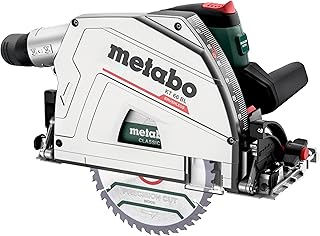


Metabo cordless plunge saws are designed for controlled, accurate cutting where portability and precision matter. Unlike a conventional circular saw, a plunge saw allows the blade to enter the material from above rather than requiring an open edge to start the cut. This makes the category particularly useful for cutting worktops, panels, doors, flooring materials and sheet goods where a clean and predictable cut is important.
For UK tradespeople, installers, joiners and serious DIY users, a cordless design can make cutting more convenient when working away from a fixed power socket. Removing the mains cable can also reduce cable management around the work area, which can be helpful when moving between rooms, working on site or handling large boards. The exact performance and runtime depend on the specific Metabo model, battery capacity, material being cut and workload.
A Metabo cordless plunge saw combines the flexibility of battery power with the controlled cutting action associated with plunge saws. The plunge mechanism is useful when starting a cut in the middle of a panel, while a suitable guide rail can help maintain a straight cutting path. This can be especially valuable when accuracy and repeatability are more important than simply making a fast rough cut.
Cordless operation is another major consideration. Instead of positioning the material close to a socket or managing an extension lead, you can work with a charged compatible battery. This can be useful on construction sites, during installation work and in workshops where materials are frequently moved around. Before choosing a model, check whether the saw is supplied as a complete kit or as a body-only machine, as battery and charger inclusion can vary.
Start by considering the materials and cutting tasks you expect to handle. Cutting depth, blade specification and available power can influence how suitable a particular saw is for your work. If you regularly cut thicker timber or sheet materials, pay close attention to the maximum cutting depth at the angles you are likely to use.
Battery compatibility should also be high on the checklist. If you already own compatible Metabo cordless tools, a body-only saw may provide a convenient way to expand an existing battery system. If you are starting from scratch, compare the total cost of the saw, batteries and charger rather than looking only at the headline machine price.
Cutting depth is one of the most important specifications to compare. Consider the thickness of the boards and panels you normally work with and allow for the cutting angle where relevant. Blade diameter, tooth configuration and the intended material also affect cutting performance and finish, so matching the blade to the application is important.
A plunge saw is often paired with a guide rail when straight, repeatable cuts are required. When comparing products, check the manufacturer's compatibility information for rails and accessories. A suitable guide system can make long cuts easier to control and can be particularly useful for cabinet making, flooring and cutting large panels.
Battery capacity can influence how long you can work between charges. Higher-capacity batteries may be useful for demanding or extended cutting sessions, while smaller batteries can help keep the overall tool setup lighter. Runtime is not a fixed figure because it changes with material, blade condition, cutting depth, technique and workload.
When comparing models, look beyond the basic cutting specification. Consider plunge control, bevel adjustment, dust extraction arrangements, safety features, handling, weight and compatibility with available accessories. A well-designed saw should provide controls that are easy to reach while maintaining a stable cutting position during use.
Dust management can also be important, particularly when cutting indoors. If the saw can be connected to a suitable extraction system, this may help manage airborne dust and keep the working area cleaner. Always follow the manufacturer's instructions for the materials, blades, extraction equipment and personal protective equipment appropriate to the task.
For woodworking and joinery applications, a cordless plunge saw can be useful for producing straight cuts in sheet materials and other suitable workpieces. It can also make controlled plunge cuts where starting from an exposed edge is not practical. Using the correct blade and a stable guide setup is essential when the quality of the finished edge matters.
For installation work, portability can be especially useful. A cordless plunge saw can be taken directly to the material rather than requiring the workpiece to be positioned around a mains connection. This can simplify cutting tasks during kitchen, flooring, furniture and general building projects.
Before buying, compare the specifications that directly relate to your intended work. Check whether the listing includes batteries and a charger, identify the compatible battery platform, review the maximum cutting depth and confirm which accessories are included. Comparing these details can help you select a configuration that offers the right balance of capability, portability and overall value.
Whether you are upgrading an existing cordless tool collection or looking for a portable plunge-cutting solution, the Metabo cordless plunge saw category provides a practical starting point for comparing suitable models. Focus on the specifications you actually need, then consider the complete cost of the saw and accessories before making your decision.