

♥ Wishlist
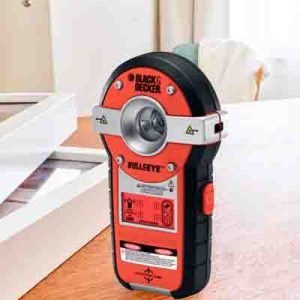
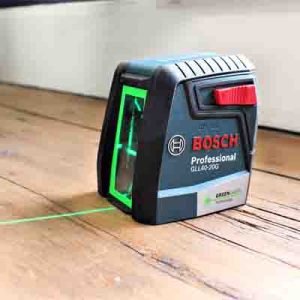
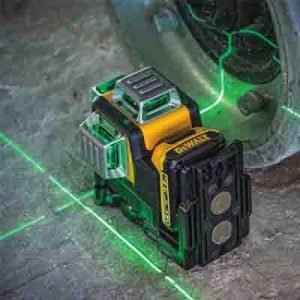
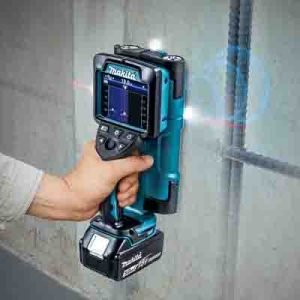
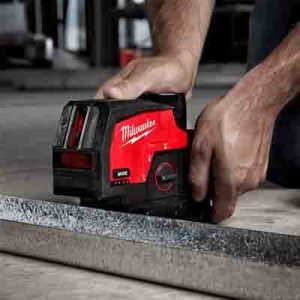


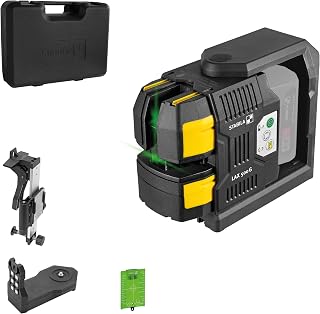


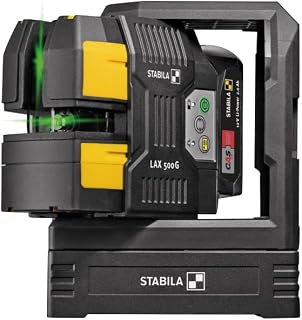


A line laser level is designed to project a straight, highly visible reference line across a surface, helping you establish accurate horizontal, vertical or crossing lines without relying entirely on a traditional spirit level. For UK DIY enthusiasts, decorators, tradespeople and renovation professionals, a suitable line laser level can make marking, positioning and alignment tasks faster and easier.
Line laser levels are useful for a wide range of projects. You can use one when hanging kitchen cabinets, fitting shelves, aligning tiles, installing wall units, positioning sockets, mounting pictures or carrying out general renovation work. On larger projects, a laser line can provide a consistent reference over a greater working area, reducing the need to repeatedly transfer measurements between points.
When comparing line laser levels, consider the type of lines you need for your typical projects. Horizontal lines are useful for establishing level reference points, while vertical lines help with plumb alignment. Models that project both horizontal and vertical lines can be particularly versatile because they support several layout applications with one tool.
Self-levelling is another important feature. A self-levelling laser can automatically compensate for small positioning errors within its specified range, helping create a reliable reference line when the tool is placed on a suitable surface or mounting point. Always check the manufacturer's stated levelling range and operating conditions rather than assuming every model offers the same performance.
Visibility also matters. A laser line needs to be easy to see in the environment where you intend to work. Indoor projects generally offer favourable conditions, while bright rooms or outdoor areas can make laser lines harder to see. Depending on the intended application, look at the laser colour, visibility specifications and whether the tool is designed primarily for indoor use.
For home improvement projects, a compact line laser level can be a practical alternative to repeatedly checking a spirit level. It can help create a clear reference when installing shelving, hanging cabinets, fitting decorative panels or planning wall layouts. A simple model may be all that is needed for occasional household tasks, while frequent DIY users may benefit from additional projection modes, improved mounting flexibility and stronger construction.
Tradespeople may require a line laser level that can withstand regular transport and use. For professional work, consider build quality, accuracy specifications, operating range, battery performance and compatibility with tripods or other mounting systems. A dependable mounting arrangement can be especially useful when the laser needs to remain in a fixed position while measurements or installation work are completed.
Before purchasing, match the specification to the job rather than simply choosing the most feature-rich model. A laser intended mainly for indoor decorating may have different priorities from one used for demanding construction or installation work.
Laser colour can influence visibility. Red laser lines are common and can work well for many indoor applications. Green laser technology is often selected when greater perceived visibility is desirable, particularly in brighter working conditions. The best option depends on the environment, distance and lighting conditions in which the tool will be used.
Accuracy should be considered alongside working distance. Manufacturers commonly state accuracy as a deviation over a specified distance, so compare like-for-like specifications rather than relying on a single accuracy number. Working range can also vary according to ambient lighting and whether a compatible detector is used.
For most indoor DIY tasks, extreme range may not be necessary. If you are working across larger rooms, extended installations or professional sites, a longer operating range may offer greater flexibility. Check the product specification carefully for the conditions under which its stated range applies.
A line laser level is only useful if it can be positioned securely. Depending on the design, mounting may be possible using a tripod, bracket, magnetic mount or another compatible fixing system. Consider where you normally work and whether the tool needs to be positioned on floors, walls, stands or other surfaces.
Other practical considerations include battery type, charging arrangements, portability, controls and protective construction. A straightforward interface can be valuable when the tool is being repositioned frequently during a project.
Start by identifying the work you expect to carry out. For occasional decorating and DIY, prioritise straightforward operation, useful projection modes and suitable indoor visibility. For frequent trade use, look more closely at accuracy, durability, operating range, power options and mounting compatibility.
It is also worth considering the surfaces and spaces where the laser will be used. A compact model can be convenient in smaller rooms, whereas a more robust unit may be preferable for demanding working environments. Comparing specifications before buying helps ensure the laser level matches your actual requirements.
Whether you are preparing a room for decoration, installing fixtures or completing a larger renovation, a line laser level can provide a consistent visual reference for accurate layout work. Compare the available specifications, projection features and practical design details to select a model suited to your project.
For UK shoppers, choosing the right line laser level is ultimately about balancing accuracy, visibility, range, durability and ease of use. Focus on the features that support your regular tasks, and avoid paying for specifications that you are unlikely to use.
Find a line laser level for accurate horizontal and vertical alignment across decorating, installation, renovation and construction projects. Explore practical features such as laser visibility, self-levelling performance and mounting options to help choose the right solution for work in UK homes, workshops and job sites.