

♥ Wishlist
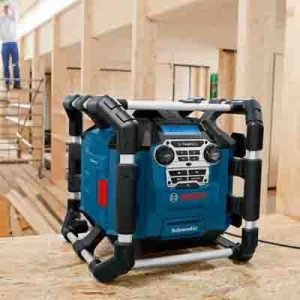
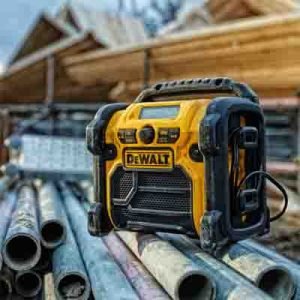
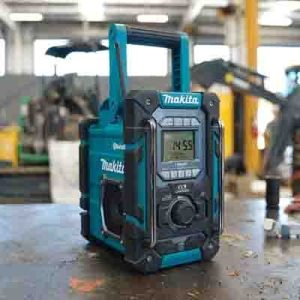
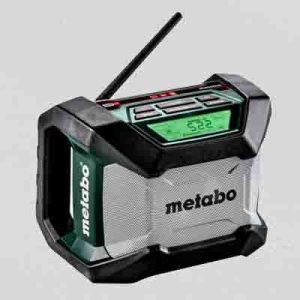
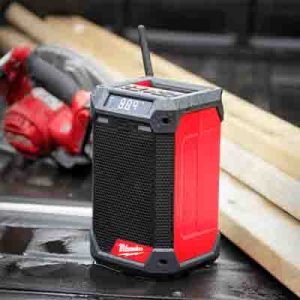


Cordless radios are designed for people who want the freedom to listen without keeping the radio connected to a mains socket. Their portable design makes them useful in workshops, garages, gardens, building projects, outdoor spaces and around the home. Instead of being restricted to one location, a cordless radio can be moved wherever it is needed, making it a practical choice for everyday entertainment, background listening and work environments.
When choosing a cordless radio in the UK, it is worth considering how and where you expect to use it. Some shoppers want a straightforward radio for listening to familiar stations, while others may prefer a model with additional connectivity for playing audio from another device. Battery compatibility can also be important, particularly for people who already use rechargeable battery systems. Checking the required battery type, charging arrangements and expected runtime can help you select a radio that fits naturally into your routine.
The main advantage of a cordless radio is portability. Without a permanent mains connection, you can position the radio in a convenient location and move it when required. This can be particularly useful in areas where sockets are limited or where trailing cables would be inconvenient. A portable radio can provide music, spoken programmes or general background audio while you work, relax or spend time outdoors.
Many modern cordless radios also focus on usability. Clear controls, easy-to-read displays, practical aerial designs and accessible station tuning can make regular operation simpler. Depending on the model, additional functions may include digital radio reception, Bluetooth connectivity, USB charging or other audio features. Because specifications vary between products, checking the individual product information is important before making a purchase.
Start by thinking about where the radio will be used most often. A compact model may be convenient for moving between rooms or taking outdoors, while a more robust design can be better suited to workshops and demanding working environments. If portability is a priority, consider the overall size and weight as well as the battery arrangement.
Battery requirements are an important consideration when comparing cordless radios. Some products use replaceable batteries, while others are designed around rechargeable battery systems. If you already own compatible rechargeable batteries, a radio that uses the same battery platform may offer greater convenience. Also consider how frequently the radio will be used and whether the expected runtime suits longer listening sessions.
Consider which listening options matter to you. Depending on the product, cordless radios may support traditional analogue reception, DAB or DAB+ digital radio, and wireless audio through Bluetooth. A radio with multiple listening options can provide greater flexibility, particularly if you want to switch between broadcast stations and audio stored or streamed from another compatible device.
For use in workshops, garages or outdoor environments, a sturdy construction can be especially useful. Look for practical features such as protective casing, stable positioning and controls that are easy to operate. For occasional household use, a lighter and more compact design may be preferable. Matching the construction to the environment can help ensure that the radio remains convenient over time.
A cordless radio can be useful in many different settings. Tradespeople and DIY users may enjoy having background audio while working in a garage, workshop or renovation area. Gardeners can take a portable radio outside without running an extension cable, while campers and outdoor users may value the freedom of battery operation. At home, cordless radios can also be moved between rooms or used where access to a power socket is inconvenient.
For worksite use, practical design may matter more than having the largest number of features. A radio that is easy to transport, simple to control and compatible with an existing battery setup can be more useful than a feature-heavy model that does not suit the environment. For leisure use, reception quality, sound output, Bluetooth connectivity and portability may be higher priorities.
Comparing products by their most relevant specifications can make the buying process easier. Consider the power source, radio reception, connectivity, dimensions, weight, controls and any protective features. It is also useful to distinguish between features you genuinely need and features that may not be important for your intended use.
| Feature | What to Consider |
|---|---|
| Power | Check battery type, compatibility, charging method and expected runtime. |
| Reception | Consider whether FM, DAB or DAB+ reception is required. |
| Connectivity | Bluetooth and other audio inputs may provide additional listening options. |
| Portability | Compare dimensions, weight, handles and overall ease of transport. |
| Construction | For demanding environments, consider durability and protective design. |
Choosing the right cordless radio is easier when you focus on your intended use rather than simply selecting the model with the longest list of specifications. Think about where you will use it, how often you will move it, what type of radio reception you need and whether you want wireless audio connectivity. Battery compatibility should also be checked carefully, particularly if you already use rechargeable batteries for other equipment.
Explore the cordless radios category to compare suitable options for home listening, workshops, gardens, outdoor activities and portable entertainment. By considering power, reception, connectivity, portability and construction together, you can find a cordless radio that provides the right balance of convenience and functionality for your requirements.
Find cordless radios designed for convenient listening without relying on a fixed mains connection. Whether you need background entertainment in a workshop, a portable radio for the garden, or a dependable option for outdoor activities, cordless models combine mobility with practical everyday features. Explore the category to compare radio formats, power options, connectivity and useful features before choosing the right model for your needs in the UK.