

♥ Wishlist


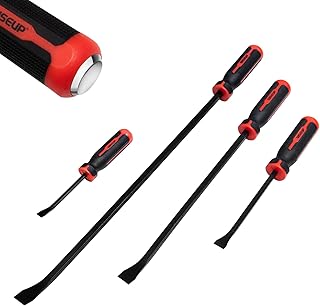


Pry bars are simple but highly useful hand tools for jobs where extra leverage is needed. They are commonly used for lifting, separating, pulling, positioning and dismantling materials during DIY, building, renovation, carpentry, maintenance and general repair work. A suitable pry bar can help you apply force more effectively while giving you better control than trying to manipulate stubborn materials by hand.
For UK shoppers, the best pry bar depends on the type of work you expect to carry out. Smaller pry bars can be useful for lighter jobs where access and control are important, while longer bars provide increased leverage for heavier tasks. Some designs have angled or curved ends to make it easier to get underneath boards, panels or other materials. Others are shaped for pulling nails, separating components or performing general demolition work.
A pry bar can be useful whenever leverage is required. Typical applications include removing timber, lifting boards, separating tightly fitted components, opening gaps, pulling nails and assisting with dismantling work. They are also useful during renovation projects where old materials need to be removed before replacement work begins.
Different pry bar profiles are suited to different applications. A narrow end can help when access is restricted, whereas a wider contact surface can distribute force over a larger area. Longer bars can provide greater leverage, although they may be less convenient in confined spaces. Considering the working environment before choosing a bar can help you select a tool that is easier and safer to handle.
Length is one of the most important factors when choosing a pry bar. A longer bar generally provides more leverage, making it suitable for demanding lifting or dismantling tasks. Shorter options can be easier to control and transport, particularly when working in tight spaces or carrying out smaller repairs.
The shape of the working end affects how the bar contacts the material. Angled, flattened, pointed or claw-style ends can be useful for different jobs. A clawed end may assist with pulling nails, while a flattened end can help with inserting the bar into a narrow gap. Select a profile that matches the tasks you regularly perform.
Pry bars need to withstand substantial force, so construction quality is important. Look for robust materials and a solid design appropriate to the intended workload. A strong bar can be a dependable addition to a DIY or professional toolbox, particularly when used for repetitive renovation or maintenance work.
Pry bars can be useful for homeowners, DIY enthusiasts, builders, carpenters, maintenance workers and other trades. Around the home, they can assist with renovation and repair projects. On building or refurbishment jobs, they can be used for dismantling timber, removing materials and positioning components. Having more than one size available can be beneficial because different jobs often require different levels of leverage and access.
When comparing pry bars, consider where the tool will be used, how much force is likely to be required and whether portability matters. A compact bar may be ideal for a toolbox or vehicle, while a longer heavy-duty model may be better suited to demanding work where additional leverage is valuable.
Start by identifying the tasks you expect the bar to handle most frequently. For general DIY, a versatile medium-sized design can provide a useful balance between leverage and control. For demolition or heavier work, a longer and more robust bar may be preferable. For detailed work or restricted access, a smaller profile can offer better manoeuvrability.
It is also worth considering storage and transport. A pry bar should fit comfortably with your existing tools and be easy to carry to the job. If you work across different locations, choosing durable tools that can withstand regular handling and transport can make your equipment more practical in the long term.
Explore the pry bar category to find options suited to lifting, dismantling, renovation, maintenance and general repair work. Compare designs according to length, working-end shape, construction and intended application. Whether you are preparing for a home improvement project or need a dependable hand tool for regular trade work, selecting a pry bar that matches the task can help you work with greater leverage and control.
Always choose a pry bar suitable for the intended application and inspect it before use. Keep a secure grip, position the working end carefully and avoid using excessive force beyond the tool's intended purpose. Appropriate protective equipment and safe working practices are especially important during dismantling and renovation work.
Find practical pry bars for demanding DIY, renovation, maintenance and trade tasks across the UK. Pry bars are designed to provide controlled leverage when lifting, separating, pulling, positioning or dismantling materials. Whether you need a compact bar for general household work or a longer heavy-duty bar for tougher jobs, choosing the right size, shape and construction can make difficult tasks considerably easier.