

Our experts reviewed the latest {category_name } to help you compare quality, performance, durability and overall value before making your purchase.


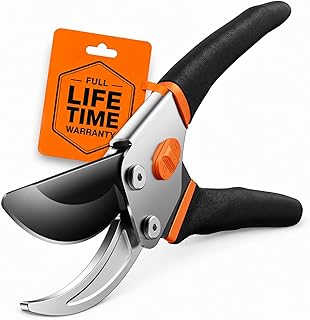
![Kimura® 8" Samurai Garden Secateurs, [Made in Japan], Heavy Duty Premium Japanese Yasugi Steel Blades, Non-Slip Vinyl Coated Handles, Lightweight & Ergonomic, Japanese Bypass Pruning Shears](https://m.media-amazon.com/images/I/71gbBvcp9wL._AC_UL320_.jpg)











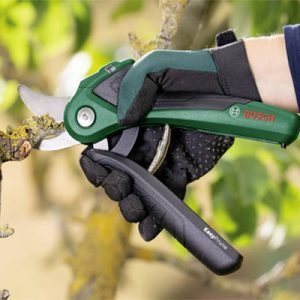
The best cordless pruning shears are not necessarily the most powerful or the most expensive. The right choice depends on the diameter and type of material you normally cut, how long you expect to work between charges, whether you already own compatible batteries, and how much importance you place on tool weight, blade control and long-term maintenance. For occasional pruning of roses, shrubs, fruit trees and ornamental plants, a compact battery secateur can be more practical than a larger professional-style machine. For frequent pruning or thicker green branches, a higher-capacity model with a larger battery system may make more sense. The key is to match the tool to the work rather than choosing solely on voltage, advertised cutting capacity or brand recognition. Cutting capacity is one of the most important specifications, but it should not be treated as an indication of how every branch will perform. A manufacturer may state a maximum diameter under particular conditions, and the practical difficulty of a cut varies according to wood species, moisture, hardness, branch position and blade sharpness. For example, Bosch lists the EasyPrune with a maximum cutting capacity of 25 mm and a bypass cutting system. Its published technical information also distinguishes between harder and softer wood, with the operating documentation specifying 20 mm for hard wood and 25 mm for soft wood. This distinction matters when comparing models. A 25 mm specification should not automatically be interpreted as meaning that every 25 mm branch will be cut with identical ease. If your regular work involves mature, dense or woody growth, allow some headroom rather than choosing a tool whose maximum capacity exactly matches your largest branch. Most powered secateurs intended for general garden pruning use a bypass cutting action. The moving blade passes the opposing blade in a scissor-like motion. This is particularly useful where clean cuts on living stems and branches are important. Anvil designs use a cutting blade that closes against a flatter opposing surface. They can be useful in applications where crushing or splitting characteristics are less critical, but the cutting action is different and should be considered in relation to the plants being pruned. For general pruning of live stems, look closely at the blade configuration, replacement-blade availability and manufacturer's instructions rather than assuming that every cordless secateur produces the same type of cut. A powered secateur is only as useful as its cutting assembly. A sharp, correctly adjusted blade reduces the effort required from the mechanism and helps produce cleaner cuts. Over time, blades can become dull, damaged or contaminated with plant residue, so replacement provision is an important part of the buying decision. STIHL, for example, lists replacement blades specifically for its ASA 20 battery pruning shears and states that the replacement set includes both a blade and an anvil blade. The manufacturer also recommends replacing both blades together to minimise the risk of poor performance. Bosch likewise lists a replacement blade for the EasyPrune. Before buying, check whether replacement blades are available for the exact model rather than simply assuming that a generic blade will fit. Also check whether changing the blade requires specialist tools, a supplied maintenance tool or a particular adjustment procedure. Voltage is an easy specification to compare, but it should not be used as a simple ranking system. A higher nominal voltage does not automatically mean that a pruning shear will cut better, last longer or be more comfortable to use. Compact models may deliberately use a smaller integrated or removable battery because low weight is a major advantage for hand-held pruning. Larger professional-oriented systems may use a higher-voltage battery platform to support longer working periods or a wider range of garden tools. The more useful questions are how much usable working time the manufacturer specifies, whether the battery is removable, how long charging takes, whether a spare battery can be purchased and whether the battery works with other tools you already own. If you already use cordless garden equipment, battery compatibility can substantially change the overall value of a pruning shear. A tool supplied without a battery can be attractive when you already own compatible packs and chargers, but less attractive if buying the complete battery system separately. STIHL's ASA 20 is part of its AS System and can be purchased as either a tool-only product or as a set including an AS 2 battery and AL 1 charger. STIHL states that the AS System is designed around compact, lightweight garden tools and that the AS 2 battery is replaceable across compatible products in the system. Einhell takes a different ecosystem approach with the Power X-Change platform. Its published garden catalogue lists the GE-LS 18 Li Solo cordless pruning shears as an 18 V tool with a maximum branch diameter of 28 mm and a stated tool weight of 0.8 kg, supplied without battery and charger. This is why comparing the price of the tool alone can be misleading. Consider the complete cost of ownership: tool, battery, charger, spare battery if required, replacement blades and other consumables. For gardeners who prune roses, fruit trees, shrubs and smaller branches, weight can be more important than maximum cutting capacity. A tool that is comfortable to hold repeatedly may be preferable to a heavier model with specifications that exceed your actual requirements. Bosch lists the EasyPrune at 0.49 kg, with a 3.6 V battery, a 25 mm maximum cutting capacity, bypass blades and a stated charging time of 3.5 hours. Bosch also states that the tool can make up to 450 cuts on one charge under its specified conditions. STIHL lists the ASA 20 at 0.8 kg without its battery. It is designed for pruning trees, bushes, shrubs, ornamental plants and vines, with a maximum stated cutting diameter of 25 mm for green material. Its design includes two blade opening widths and a progressive cutting function intended to provide greater control over the cut. These specifications illustrate why direct comparisons need context. A lighter integrated-battery model may suit short gardening sessions, while a slightly heavier tool with a removable battery may be more appropriate for repeated pruning across a larger garden. Fruit-tree pruning places particular emphasis on clean cuts, controllability and repetitive use. A suitable cordless secateur should allow the operator to position the blade accurately without excessive hand fatigue. Before choosing a model, consider the typical diameter of the young growth rather than the occasional largest branch. If the majority of cuts are well below the tool's maximum capacity, the machine may work more comfortably and efficiently than one that is constantly being pushed towards its limit. For larger branches, do not assume that a powered secateur is the correct tool simply because its published maximum diameter appears sufficient. A pruning saw or lopper may be more appropriate for material outside the practical operating range of the secateur. The manufacturer's instructions should always take precedence over a general diameter comparison. Smaller ornamental plants often benefit from a compact tool that can be manoeuvred around crowded growth. For this type of work, balance and trigger control can matter as much as raw cutting force. A narrower blade opening can also be useful where many small stems need to be removed. STIHL's ASA 20, for example, has two selectable blade opening widths, allowing the user to choose a smaller opening for thinner twigs and branches. When comparing products for ornamental pruning, examine the shape of the cutting head, trigger position, grip dimensions and visibility of the blade. These details are difficult to capture in a single headline specification but can have a noticeable effect on usability during repetitive work. A useful way to compare cordless pruning shears is to divide typical garden work into approximate categories rather than chasing the largest published diameter. Remember that the largest branch you occasionally encounter should not necessarily determine the entire purchase. If only a small number of branches exceed the comfortable operating range, using a separate pruning saw for those cuts can be more sensible than carrying a heavier secateur throughout the entire job. Manufacturers may describe battery performance using working time, number of cuts or another task-specific measurement. These figures should be treated as comparative manufacturer specifications rather than guarantees of real-world runtime. STIHL states that its ASA 20 can make up to 2,000 cuts when used with the recommended AS 2 battery. It also notes that working time can vary according to factors including battery type, charge level, tool model, operating conditions and user operating style. Bosch states that the EasyPrune can make up to 450 cuts on one charge. These figures should not be compared as though they were equivalent laboratory measurements across identical cutting conditions. Different manufacturers may use different test materials, branch sizes and operating procedures. Instead, use them to understand the intended scale of each product and then consider your own pruning workload. Charging speed becomes more important as the size of the garden and the amount of pruning increase. For occasional use, a longer charging period may be perfectly acceptable if the tool is recharged between gardening sessions. For intensive pruning, a removable spare battery can be more useful than simply choosing a model with a larger headline capacity. Check whether the product has an integrated battery or removable battery, whether the charger is included, whether replacement batteries remain available and how the manufacturer's charging instructions apply to storage and temperature. Do not compare charger wattage or battery voltage in isolation. The practical question is how quickly you can return the tool to useful operation and whether you have a convenient way to keep working when the first battery is depleted. One of the strongest reasons to buy cordless pruning shears instead of conventional secateurs is to reduce repetitive hand effort. However, powered cutting does not automatically make every model equally comfortable. Look at the complete tool weight, including the battery where applicable. Balance is also important: a compact tool that concentrates weight close to the hand can feel quite different from one with a larger battery positioned behind the grip. Consider the following ergonomic factors: STIHL specifically describes the ASA 20 as weighing less than 1 kg with a balance intended to help reduce wrist strain during use. Cordless pruning shears contain powered moving blades, so safety controls deserve as much attention as cutting performance. A suitable model should have clearly explained operating and locking procedures in its manufacturer's instructions. Look for a safety mechanism that helps prevent accidental activation, a blade guard for storage and transport where supplied, and clear instructions covering battery removal, cleaning, blade adjustment and maintenance. STIHL states that the ASA 20 includes a blade guard and an integrated maintenance tool, while the product instructions specify keeping the free hand at least 40 cm away from the cutting blades during use. Never place fingers near the blades to remove a trapped twig while the tool is powered. Follow the manufacturer's shutdown and battery-removal procedure before cleaning, clearing material, changing blades or carrying out maintenance. Pruning tools can accumulate sap, plant residue and moisture during normal garden use. Regular cleaning helps maintain smooth operation and reduces the likelihood of transferring plant material between plants. Husqvarna's pruning guidance recommends cleaning and oiling pruning tools regularly and notes that clean tools can help reduce the spread of disease between plants. Maintenance should follow the specific instructions for the model. Do not assume that a cordless secateur can be washed under running water simply because it is designed for outdoor use. Check the manufacturer's cleaning instructions, remove the battery when instructed and keep electrical components away from unsuitable moisture. Replacement parts are an often-overlooked buying consideration. A cordless pruning shear is more attractive as a long-term purchase when important wear parts remain obtainable and the manufacturer provides clear instructions for maintenance. Before buying, investigate whether the manufacturer lists replacement blades, blade sets, batteries and chargers for the exact model. Also check whether the replacement part is specific to a particular generation or product number. STIHL provides dedicated replacement blades for the ASA 20 and explains that the blade set can be changed using the tool kit integrated into the battery compartment. Bosch also provides a dedicated EasyPrune replacement blade, demonstrating why checking parts availability before purchase can be more useful than comparing the initial tool price alone. A larger cutting specification can look impressive, but it does not tell you everything about ergonomics, battery life, blade control or long-term ownership. Choose based on the work you actually perform. A tool-only package can look cheaper until the price of the correct battery and charger is added. Always compare like-for-like configurations. Voltage is only one part of a cordless tool's design. Motor efficiency, gearing, blade geometry, battery capacity, control electronics and overall tool design all influence the result. If most of your work consists of small branches, a heavy professional-oriented machine may provide little practical benefit. Weight becomes increasingly important when hundreds of repetitive cuts are involved. A good initial specification becomes less attractive if replacement blades are difficult to obtain. Check parts availability before committing to a model. Maximum cutting capacity should not be treated as a target. For branches that are too thick, hard or awkward for safe secateur use, a suitable pruning saw may be the better tool. Statements such as "cuts per charge" are useful but are not necessarily measured under the same conditions between brands. Treat them as manufacturer specifications rather than a universal performance benchmark. Bosch's EasyPrune is a compact powered secateur aimed at lighter garden work. Its UK specification lists a 3.6 V battery, bypass cutting system, 25 mm maximum cutting capacity, 0.49 kg weight and 3.5-hour charging time. Bosch also states that Power Assist Technology responds when resistance is detected and that the battery can provide up to 450 cuts per charge under its stated conditions. The main attraction of this specification is the combination of low weight and powered assistance rather than extreme cutting capacity. It is therefore the type of model worth considering when compactness and ease of handling are more important than compatibility with a larger multi-tool battery platform. Potential buyers should nevertheless check the current package contents and exact model number before purchase, particularly if a battery, charger or replacement blade is important to the intended setup. The STIHL ASA 20 takes a battery-platform approach. It belongs to the AS System and is available as a tool-only version or as a kit with an AS 2 battery and AL 1 charger. STIHL specifies a 0.8 kg tool weight without the battery, an 11 V rated voltage and a maximum cutting diameter of 25 mm for green material. Its feature set is aimed at controlled repetitive pruning. The two blade-opening settings can help when switching between thinner and thicker material, while the progressive cutting function is designed to give the operator more control over the blade movement. The product also has an OLED display showing information such as battery status, selected blade opening and the number of cuts made. For buyers already using compatible STIHL AS System equipment, the replaceable battery architecture can be a significant consideration. For buyers starting from scratch, the cost of the complete battery and charger package should be included when comparing overall value. The Einhell GE-LS 18 Li Solo is positioned within the Power X-Change battery system. The manufacturer's garden catalogue lists an 18 V battery platform, a maximum branch diameter of 28 mm, a 0.8 kg product weight, bypass blades, an ergonomic soft-grip handle and a belt clip. The Solo version is supplied without a battery or charger. This type of package can make particular sense for someone who already owns compatible Power X-Change batteries. However, a buyer starting without the battery ecosystem should compare the total cost of the tool, battery and charger against complete alternatives from other manufacturers. For beginners, simplicity is usually more valuable than a long list of advanced features. A suitable first cordless secateur should be light enough to handle comfortably, have an understandable safety mechanism, offer adequate capacity for the plants being pruned and have replacement parts available. There is little benefit in paying for a professional battery ecosystem if your pruning workload is limited to occasional shrub maintenance. Conversely, someone planning extensive fruit-tree or garden pruning may quickly outgrow an entry-level model. Start by measuring or estimating the diameter of the branches you regularly cut. Then consider how many cuts you make during a typical session and whether you already own compatible batteries. Those two questions eliminate many unsuitable choices before price becomes the deciding factor. Manual secateurs are simpler, lighter in many cases and require no charging. They can be excellent for occasional pruning and very small stems. Cordless pruning shears add powered assistance, which can reduce repetitive hand effort and make larger quantities of pruning less tiring. The trade-off is greater mechanical and electrical complexity. Battery-powered models need charging, contain more components and may require replacement batteries or electronic parts over their lifetime. For a few cuts every fortnight, conventional secateurs may remain perfectly adequate. For prolonged pruning sessions involving many stems, powered assistance can become considerably more useful. Not every branch should be attacked with powered secateurs. Thick, mature wood, awkwardly positioned branches and material beyond the manufacturer's recommended cutting range may be better handled with a pruning saw or suitable loppers. Using a secateur at the very edge of its capacity can also make the job slower and place unnecessary stress on the cutting mechanism. A sensible toolkit often contains more than one cutting tool, with each designed for a particular range of branch sizes. For larger branches, choose the appropriate pruning method based on the manufacturer's guidance and safe working practices rather than attempting to force the powered blades through material outside their intended application. When two models appear similar, compare them in the following order rather than looking at price first: This approach produces a much more meaningful comparison than simply asking which product has the highest voltage or biggest cutting diameter. Customer reviews can provide useful information about everyday usability, but they should be read alongside the manufacturer's specifications rather than used as a replacement for them. Look for recurring comments about battery life, blade sharpness, trigger operation, weight, balance, charging and reliability. A single complaint is less informative than a consistent pattern across a substantial number of verified purchases. Also separate comments about the product from comments about delivery, packaging or retailer service. Those issues may be relevant when choosing where to buy, but they do not necessarily tell you how the pruning shear itself performs. Where possible, compare verified customer reviews with the published technical documentation and check that reviewers are discussing the exact model rather than a visually similar predecessor. There is no single price point that represents good value for every gardener. The appropriate budget depends on frequency of use, battery requirements and expected ownership period. A useful value calculation includes more than the initial purchase price. Consider the complete package and potential future costs: A more expensive tool can represent better value if it matches an existing battery platform and replacement parts remain readily available. Conversely, an inexpensive tool can become poor value if a proprietary battery or replacement blade is difficult to source. Tool selection is only part of the equation. A sharp blade, appropriate branch position and correct cutting technique all influence the result. Avoid forcing the tool through material that exceeds its recommended capacity. Position the branch correctly in the cutting head and allow the powered mechanism to perform the cut rather than applying unnecessary twisting or lateral force. Keep the cutting equipment clean and maintained. Clean tools are easier to operate and can reduce the transfer of plant residue between different plants. Garden tools are often used heavily during particular pruning periods and then stored for weeks or months. Before putting a cordless pruning shear away for an extended period, follow the manufacturer's battery-storage instructions rather than assuming that every lithium-ion battery should be stored in exactly the same condition. Keep batteries and chargers in suitable conditions and inspect them before the next season. Do not use a battery that appears damaged, swollen or otherwise abnormal. Always follow the manufacturer's safety information for charging, storage and disposal. For most domestic UK gardens, the ideal cordless pruning shear combines sufficient cutting capacity with manageable weight, reliable battery performance and accessible replacement parts. Weather and seasonal conditions also make practical maintenance important, particularly where tools are repeatedly exposed to damp plant material. There is no need to select the most powerful model simply because it has the highest specification. A compact 3.6 V tool such as Bosch EasyPrune can be a logical choice for lighter work, while a battery-platform product such as STIHL ASA 20 or Einhell GE-LS 18 Li may appeal to gardeners who value interchangeable batteries and more extensive cordless-tool ecosystems. They can be worthwhile when you make many repetitive pruning cuts and want powered assistance. For very occasional light pruning, conventional secateurs may be simpler and cheaper to operate. There is no universal ideal. A model around 20 to 25 mm can cover many routine pruning applications, but the appropriate capacity depends on the hardness and diameter of the material you normally cut. Models with higher published capacities are available, such as the Einhell GE-LS 18 Li Solo at 28 mm according to Einhell's published specifications. Bypass blades are well suited to many live-wood pruning applications because the blades pass one another in a scissor-like action. The correct choice still depends on the plant material and the manufacturer's intended application. It depends on the package. Some products have an integrated battery, while battery-platform models may be sold as tool-only products or as complete kits. Always check the exact package contents before comparing prices. No. Voltage alone does not determine cutting performance, comfort or value. Battery capacity, motor design, gearing, blade geometry, weight and control systems also matter. There is no reliable universal lifespan because it depends on usage, maintenance, storage, battery condition and the availability of replacement parts. A model with replaceable blades and an established battery system can offer advantages for long-term ownership. Some models can handle particular types of dry or hard material, but the permitted diameter and material vary by product. Check the manufacturer's instructions rather than relying solely on the maximum diameter advertised for green branches. Not completely. Powered secateurs are designed for controlled cuts within their specified capacity. Loppers provide a different cutting geometry and can be more suitable for larger branches. No. A pruning saw remains useful for branches beyond the practical cutting range of secateurs. Keeping both tools available can be more efficient than forcing one tool to perform every type of pruning task. Check the exact model number, maximum cutting capacity, battery arrangement, whether the battery and charger are included, total weight, replacement-blade availability and the manufacturer's maintenance instructions. Also compare verified customer reviews for the exact product variant. For a larger garden, battery-system compatibility and the ability to keep working during extended pruning sessions become particularly important. A model with removable batteries may be more practical than a compact integrated-battery design if you already own compatible packs or expect to purchase several cordless garden tools. Neither is universally more important. Cutting capacity should match the material you need to prune, while battery performance should match the duration and frequency of your work. Choosing excessive capacity at the expense of weight can be counterproductive, just as choosing excellent battery life with insufficient cutting capacity can be frustrating. The strongest cordless pruning shear purchase is the one that fits the actual pruning workload rather than the one with the most impressive specification sheet. Start with branch diameter, then consider blade design, weight, battery system, runtime, ergonomics and replacement parts. For a compact domestic tool, specifications such as the Bosch EasyPrune's 0.49 kg weight, bypass cutting system and 25 mm maximum capacity show how a lightweight design can prioritise manageable garden work. For gardeners already invested in a cordless ecosystem, products such as the STIHL ASA 20 and Einhell GE-LS 18 Li demonstrate the alternative approach of using interchangeable battery platforms. Before making a purchase, compare the exact specification, package contents and current manufacturer information for each model. Check verified customer feedback separately, consider the cost of batteries and replacement blades, and choose a pruning tool that is comfortably within its intended cutting range for the majority of your work. Most importantly, do not judge cordless pruning shears on price or maximum branch diameter alone. Weight, balance, cutting control, battery compatibility, maintenance requirements and long-term parts availability can have a much greater effect on whether a tool proves useful throughout the gardening year.How to Choose the Best Cordless Pruning Shears in the UK
What to Look for When Comparing Cordless Pruning Shears
Maximum cutting capacity
Bypass versus anvil cutting
Blade quality and replacement options
Battery voltage is not the whole story
Battery ecosystem compatibility
Lightweight Cordless Pruning Shears for Home Gardens
Cordless Pruning Shears for Fruit Trees and Orchard Work
Cordless Pruning Shears for Roses, Shrubs and Ornamental Plants
Cutting Capacity: How Much Do You Actually Need?
Battery Runtime and Number of Cuts
Charging Time and Spare Batteries
Ergonomics and Hand Fatigue
Safety Features Worth Checking
Blade Maintenance and Cleaning
Replacement Blades and Long-Term Ownership
Common Buying Mistakes to Avoid
Choosing purely by maximum branch diameter
Ignoring the supplied battery
Assuming higher voltage means better performance
Buying a tool that is unnecessarily heavy
Forgetting replacement blades
Using a secateur for branches better suited to a saw
Comparing manufacturer claims as though they were identical tests
Bosch EasyPrune: What Its Specifications Tell You
STIHL ASA 20: What Its Specifications Tell You
Einhell GE-LS 18 Li: What Its Specifications Tell You
Which Cordless Pruning Shears Are Best for Beginners?
Which Is Better: Cordless Secateurs or Manual Secateurs?
When a Cordless Pruning Shear Is the Wrong Tool
How to Compare Two Cordless Pruning Shears Properly
How to Assess Customer Reviews Without Being Misled
How Much Should You Spend on Cordless Pruning Shears?
Maintenance Checklist for Cordless Pruning Shears
How to Get Cleaner Pruning Cuts
Battery Storage and Seasonal Use
What Makes a Good Cordless Pruning Shear for UK Gardens?
Quick Buying Decision Guide
Frequently Asked Questions About Cordless Pruning Shears
Are cordless pruning shears worth buying?
What is a good cutting capacity for garden pruning?
Are bypass blades better for pruning?
Do cordless pruning shears come with batteries?
Is a higher-voltage pruning shear always better?
How long do cordless pruning shears last?
Can cordless pruning shears cut dead wood?
Can cordless pruning shears replace loppers?
Can cordless pruning shears replace a pruning saw?
What should I check before ordering?
Which cordless pruning shears are best for a large garden?
What is more important: battery life or cutting capacity?
Final Buying Advice