

Our experts reviewed the latest {category_name } to help you compare quality, performance, durability and overall value before making your purchase.

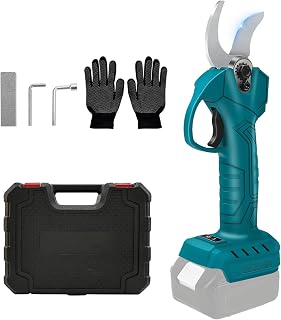
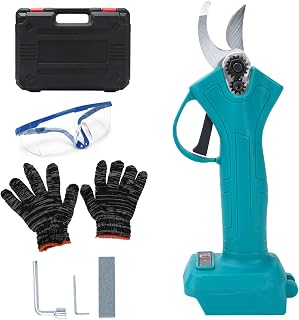


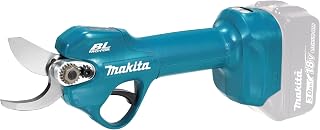


Makita’s cordless pruning-shear range is aimed at jobs where repeated hand pruning would become tiring or inefficient. The important distinction is that the models are not simply different versions of the same tool: battery platform, cutting capacity, torque, tool weight and intended workload all affect which model makes sense. For UK buyers, the current Makita range includes the 12V Max CXT UP100D and DUP180, alongside the 18V LXT DUP361 and DUP362. Makita’s published UK specifications list the DUP361 and DUP362 with a maximum cutting capacity of 33mm, while the DUP180 is rated at 30mm and the UP100D at 25mm. That means maximum branch diameter should not be the only buying criterion. A compact 12V model can be a more sensible choice for light pruning and portability, whereas a larger 18V LXT model may be better suited to demanding repetitive work where cutting force and sustained productivity matter more. The following comparison focuses on published specifications rather than unverified performance claims. Always check the exact model code and kit contents before purchase, because a body-only machine and a complete kit can have very different contents and overall value. Makita’s 2025 UK outdoor-power catalogue identifies the DUP361 and DUP362 as 18V x2 LXT models, while the UP100D and DUP180 sit on the 12V Max CXT platform. A compact CXT model deserves consideration if your priority is keeping the cutting tool itself light and manageable. The UP100D is rated for branches up to 25mm, while the DUP180 increases the stated cutting capacity to 30mm. For gardeners primarily dealing with smaller stems, a lighter tool can be preferable to choosing a larger professional-oriented machine simply because it has a higher specification. The DUP361 and DUP362 both have a published maximum cutting capacity of 33mm. Their 18V x2 LXT configuration and substantially higher published cutting-torque figures make them the more appropriate models to investigate when heavier pruning is a central part of the workload. The DUP362 is particularly notable for its published 250Nm cutting torque, compared with 185Nm for the DUP361. That specification difference is useful when comparing the two models, although torque figures should not be interpreted as a guarantee that either tool will cut every 33mm branch under every condition. Battery compatibility can be one of the most important factors in a cordless-tool purchase. If you already own compatible Makita batteries and chargers, staying within the same platform can reduce the need to acquire another charging system and spare batteries. However, platform compatibility must be checked carefully. The UP100D and DUP180 use the 12V Max CXT system, whereas the DUP361 and DUP362 use two 18V LXT batteries. Do not assume that a battery from one Makita platform can be used on another simply because both products carry the Makita name. The UP100D and DUP180 occupy a similar compact-tool category, but their published specifications are different enough to matter. If your pruning routinely approaches the upper end of the UP100D's rated capacity, the DUP180's 30mm specification gives it additional headroom. If your work consists mainly of smaller branches, however, maximum capacity may be less important than handling, kit contents, battery availability and total purchase cost. Makita's published catalogue also identifies the DUP180 as a brushless model and lists both body-only and 5.0Ah kit configurations. The DUP361 and DUP362 are especially easy to confuse because their maximum cutting capacity is the same. Both are rated for cuts up to 33mm and both have a maximum blade opening of 54mm. The major published specification difference is cutting torque. The DUP362 therefore has the higher published torque figure, but that does not automatically make it the best purchase for every user. The decision should take account of branch size, working frequency, battery requirements, tool weight, budget and whether the additional capability will actually be used. Both models are relatively substantial compared with compact 12V pruning shears. Makita's UK catalogue lists the DUP361 at approximately 3.3–3.8kg and the DUP362 at approximately 3.3–3.9kg. A maximum cutting capacity is a useful starting point, not a target diameter for every cut. A manufacturer's maximum figure describes the upper capability under specified conditions; it should not be treated as an instruction to cut every branch at that diameter. Actual cutting difficulty depends on factors including: A sensible buying rule is to choose a tool whose rated capacity comfortably covers the work you actually expect to perform rather than selecting a model solely because its advertised maximum is the largest. The CXT models are worth considering when compactness is a priority. The UP100D and DUP180 belong to Makita's 12V Max CXT family. Their lower-capacity cutting specifications make them particularly relevant to lighter pruning requirements rather than users who regularly work at the upper end of branch diameter. The DUP361 and DUP362 use two 18V LXT batteries to provide an 18V x2 configuration. This is a substantially different proposition from a compact single-battery pruning shear. Battery ownership and charger requirements therefore become part of the purchasing decision. For someone already invested in LXT equipment, the two-battery architecture may be easier to accommodate. For a buyer starting from scratch, the cost and practicalities of batteries and charging equipment should be considered alongside the bare-tool specification. One of the most common cordless-tool buying mistakes is comparing a body-only listing with a complete kit and assuming they represent equivalent purchases. A body-only Makita tool generally means the battery and charger are not included. Makita explicitly states in its UK catalogue that body-only machines do not come with batteries or chargers. Before comparing retailer prices, establish whether each listing includes: Makita's published equipment lists differ by model and kit configuration, so checking the exact model suffix is essential rather than relying on a product photograph or a generic model name. Look beyond the headline number. If most of your pruning involves 10–20mm stems, a 30mm or 33mm maximum may already provide more capacity than you need. If thicker branches are common, moving up the range can make more sense. Weight matters because pruning can involve hundreds or even thousands of individual cuts. A tool that feels manageable for five minutes can become tiring during a prolonged session. Compare published net weight figures, but remember that the complete working weight can differ once batteries, cables, adapters or accessories are included. Check whether the model uses one battery or two, which battery platform it belongs to and whether you already have compatible batteries. The battery system can affect portability, charging logistics and the overall cost of ownership. Torque is particularly useful when comparing the DUP361 and DUP362 because both have the same stated 33mm cutting capacity but different published torque figures. It provides additional technical context that a maximum branch diameter alone cannot provide. A pruning shear is only as useful as its cutting system. Before buying, investigate whether replacement blades and other wear components are available through established channels, and check what maintenance the manufacturer specifies. Regular cleaning, lubrication, inspection and appropriate blade care can be important for preserving cutting performance. A tool that requires more maintenance is not necessarily inferior, but the maintenance routine should match the way you intend to use it. Accessories can materially change the usefulness of a kit. A holster, carry case, sharpening or dressing equipment and maintenance tools may be valuable to a user who expects to work away from a workshop or storage area. Sharp, correctly maintained blades are important for clean pruning. Dull or damaged cutting components can increase resistance and make the tool work harder. They can also make precise pruning more difficult. A sensible maintenance routine should include: Makita's published specifications for the larger pruning shears list maintenance-related equipment such as oil supply, a wrench set, diamond file, holster, harness and tool bag. Cordless does not mean risk-free. Powered pruning shears have cutting blades capable of causing serious injury, so they should be treated as professional cutting equipment rather than as an electrically assisted pair of secateurs. Makita's UK technical documentation lists vibration and noise information for models including the UP100D, DUP361 and DUP362, demonstrating why published occupational and tool-safety specifications should be considered alongside cutting performance. A larger pruning shear is not automatically a better choice. If your garden contains mostly small branches, the additional capacity of a heavier professional-oriented model may provide little practical benefit. A low advertised price can be misleading when the listing is body-only. Always compare the complete specification and included accessories. The cost of batteries and chargers can change the economics of a cordless tool significantly. If you already own compatible Makita batteries, that can alter the value calculation considerably. Maximum capacity is only one specification. Weight, torque, battery platform, ergonomics, maintenance and workload suitability all matter. Model suffixes can indicate different configurations. Read the technical description carefully and verify exactly what is included before placing an order. Manual secateurs remain entirely appropriate for occasional light pruning. They are simple, portable and do not require batteries or charging equipment. Cordless pruning shears become more compelling when repeated cutting is the main issue. The powered mechanism can reduce the physical effort associated with repeatedly closing conventional secateurs, which may be particularly relevant during long pruning sessions. The trade-off is additional equipment. A cordless shear introduces batteries, charging, blade maintenance, electronic components and a higher purchase commitment. The right choice therefore depends on workload rather than technology alone. Pruning shears and pruning saws solve different cutting problems. A shear is designed around fast scissor-style cutting of branches within its rated capacity. A pruning saw is more appropriate when the branch is beyond the shear's intended diameter or when a sawing action is more suitable. Makita's UK range also includes cordless pruning saws such as the 18V LXT DUC150. Its published specifications include a 150mm guide bar and a maximum chain speed of 8.0m/s, illustrating the different cutting architecture involved. Do not buy a pruning shear as a substitute for a saw if your routine work involves branches that regularly exceed the shear's stated capacity. When comparing two pruning shears, create a like-for-like specification check rather than looking only at the advertised headline. Manufacturer specifications are valuable because they provide a consistent baseline for comparison, but they should not be confused with independent product testing. A specification such as 33mm maximum cutting capacity or 250Nm cutting torque tells you about the manufacturer's stated capability; it does not establish how the tool will perform on every species, moisture level or branch configuration. For that reason, strong buying research combines manufacturer documentation with current retailer information and verified customer feedback. Where specifications conflict between listings, the exact model number should be checked against current manufacturer documentation before drawing a conclusion. A Makita cordless pruning shear is most attractive to buyers who value powered cutting and already have, or are prepared to invest in, the relevant battery ecosystem. It may be less suitable for someone who only prunes a handful of small branches several times a year. In that situation, conventional secateurs may provide a simpler solution with fewer ownership requirements. The strongest case for a powered shear comes when pruning is frequent enough that cutting effort, speed and repeatability become meaningful considerations. There is no single best model for every user. The UP100D and DUP180 are compact 12V Max CXT options, while the DUP361 and DUP362 are larger 18V x2 LXT pruning shears. The best choice depends on branch diameter, workload, battery platform, tool weight and budget. Among the models covered here, the DUP361 and DUP362 have the highest published maximum cutting capacity at 33mm. The DUP180 is rated at 30mm and the UP100D at 25mm. Both are 18V x2 LXT pruning shears with a stated 33mm maximum cutting capacity and 54mm maximum blade opening. The published cutting torque differs: 185Nm for the DUP361 and 250Nm for the DUP362. Makita identifies the UP100D and DUP180 as brushless pruning-shear models in its UK catalogue. The larger DUP361 and DUP362 are also part of Makita's cordless pruning-shear range, but buyers should check the exact current product specification rather than assuming that every model in the category uses identical motor technology. It depends on the model version. Makita lists body-only versions as well as battery-inclusive kits for some pruning-shear models. The exact suffix and retailer listing should therefore be checked before purchase. You should not assume cross-platform compatibility. The CXT and LXT systems are separate battery platforms. Check Makita's compatibility information for the exact tool and battery rather than attempting to adapt batteries without manufacturer approval. They are suitable only within the manufacturer's specified cutting capacity and operating conditions. For branches beyond the rated capacity, a suitable pruning saw or another appropriate cutting method should be considered. Not necessarily. Weight can be influenced by batteries, housing, mechanical components and the overall design. Compare the actual technical specifications rather than using weight alone as a proxy for cutting performance. Battery capacity affects how much work can be completed between charges, but the ideal battery depends on the tool and workload. A larger battery can also add weight, so maximum capacity is not automatically the best choice for prolonged hand-held pruning. Check the exact model number, cutting capacity, battery platform, included batteries and charger, accessories, tool weight, replacement-blade availability, manufacturer specifications and current verified customer feedback. Also confirm that the listing describes the precise version you intend to buy. This buying guide is intended as independent consumer information. Technical specifications should be checked against current manufacturer documentation, while retailer listings should be examined for the exact model suffix and kit contents. Customer reviews can provide useful information about ownership and practical use, but individual experiences should not be treated as controlled product testing. For the strongest buying decision, compare specifications first, then consider the nature of your pruning work, your existing battery platform and the complete cost of ownership. That approach is more reliable than choosing a model solely because it has the highest headline specification.Makita Cordless Pruning Shears: What to Compare Before Buying
Makita Cordless Pruning Shears Compared
Which Makita Pruning Shears Are Best for Different Users?
Best for Lightweight Everyday Pruning
Best for Larger Branches Within the Rated Capacity
Best Choice for Existing Makita Battery Owners
UP100D vs DUP180: Which 12V Max Model Makes More Sense?
DUP361 vs DUP362: The Key Differences
Why Cutting Capacity Matters — and Why It Can Be Misleading
Battery Platform: CXT vs LXT
12V Max CXT
18V LXT
Body-Only vs Complete Battery Kit
What to Look for in a Cordless Pruning Shear
1. Cutting Capacity
2. Tool Weight
3. Battery Arrangement
4. Cutting Torque
5. Blade Design and Replacement Parts
6. Maintenance Requirements
7. Included Accessories
Blade Maintenance and Pruning Shear Care
Safety Considerations When Using Cordless Pruning Shears
Common Buying Mistakes to Avoid
Choosing the Largest Model Automatically
Comparing Prices Without Comparing Kit Contents
Ignoring Battery Ownership
Buying Solely on Maximum Cutting Diameter
Assuming Every Retailer Listing Is Identical
Makita Cordless Pruning Shears vs Manual Secateurs
Makita Cordless Pruning Shears vs a Pruning Saw
How to Choose the Right Model for Your Workload
How to Compare Specifications Properly
Understanding the Published Makita Specifications
Who Should Buy a Makita Cordless Pruning Shear?
Frequently Asked Questions
Which Makita cordless pruning shear is best?
Which Makita pruning shear cuts the largest branches?
What is the difference between the DUP361 and DUP362?
Are Makita pruning shears brushless?
Do Makita pruning shears come with batteries?
Can I use my Makita 18V LXT battery on a 12V Max CXT pruning shear?
Are cordless pruning shears suitable for thick branches?
Are heavier pruning shears necessarily more powerful?
How important is battery capacity?
What should I check before buying a Makita pruning shear online?
Final Buying Checklist
Our Approach to Comparing Makita Cordless Pruning Shears