

Our experts reviewed the latest {category_name } to help you compare quality, performance, durability and overall value before making your purchase.




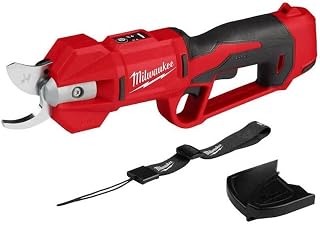



Milwaukee pruning shears are designed for users who want to reduce the physical effort involved in repetitive branch cutting without moving to a much larger garden machine. The key model to examine in the current UK range is the M12 brushless pruning shears, which combine a compact cordless format with a brushless motor and an electronically controlled cutting action. For buyers comparing electric secateurs, however, the maximum branch diameter should not be the only consideration. Battery compatibility, tool weight, blade design, trigger control, opening width, replacement parts, handling and the type of pruning you actually carry out can make a bigger difference to long-term satisfaction than a single headline specification. They are less compelling if your pruning consists of only a few thin stems several times a year. In that situation, a good-quality manual bypass secateur can remain simpler, lighter and easier to store. The value proposition changes substantially when the number of cuts increases or when branch diameter makes repeated manual cutting noticeably more demanding. The current Milwaukee M12 brushless pruning shears are specified for branches up to 32 mm in diameter. Milwaukee also provides a selectable half-opening mode of 16 mm, intended to shorten the blade-opening cycle when repeatedly cutting smaller material. The tool uses the company's M12 battery platform, and the manufacturer states that an M12 2.0 Ah battery can provide more than 1,000 cuts in 1.25 cm material under its stated test conditions. The exact result in practical use will vary according to branch species, diameter, moisture, temperature, blade condition, battery and cutting technique. A quoted 32 mm maximum capacity should be treated as a maximum specification rather than an instruction to cut every 32 mm branch encountered in the garden. Wood hardness, branch condition, access, blade sharpness and the angle of the cut all affect how easily a powered secateur handles a particular branch. For routine pruning, it is sensible to think in terms of the material you normally encounter rather than buying purely according to the largest possible diameter. If most of your work involves young growth and relatively small stems, the faster 16 mm opening mode may be more important to productivity than the headline 32 mm capacity. The selectable half-opening mode is one of the more useful features to consider when comparing powered pruning shears. Conventional electric secateurs can spend unnecessary time opening fully between cuts when the material being removed is small. Milwaukee's mode selection allows the blades to be restricted to half capacity, which is intended to improve cutting speed for smaller branches. This feature matters particularly to users who spend long periods performing repetitive pruning. A small reduction in the time required for each individual cut can become meaningful when hundreds of cuts are made during a session. Milwaukee's trigger tracking technology is designed so that blade movement follows trigger movement. This gives the operator more direct control over the cutting action than a simple open-or-close switch. When comparing cordless secateurs, this is an important distinction. Precise trigger control can be useful when positioning the blade around a stem, making selective cuts in dense growth or avoiding unnecessary damage to nearby shoots. It is also worth considering whether the grip and trigger arrangement feel natural for the hand you intend to use. One of the strongest practical reasons to consider Milwaukee pruning shears is compatibility with the M12 ecosystem. The M12 BLPRS is designed to work with Milwaukee M12 batteries, allowing existing M12 owners to avoid maintaining a completely separate battery platform. Buyers should distinguish carefully between a bare tool and a complete kit. A body-only package can make sense when you already have compatible batteries and a charger. A kit containing a battery and charger can be more appropriate for someone entering the M12 platform for the first time. A smaller battery can be attractive for pruning because battery mass contributes directly to the overall weight carried in the hand. For extended one-handed work, balance can matter almost as much as raw runtime. A larger-capacity battery can potentially reduce the frequency of battery changes, but the trade-off is additional weight. There is therefore no universally best M12 battery for pruning. A homeowner completing short sessions may prioritise minimum weight, whereas a professional user may place greater value on runtime and having fewer interruptions. Do not judge runtime solely by the manufacturer's stated cut figure. Milwaukee's published cutting figure is associated with a specified material diameter and battery configuration, so it should not be interpreted as a universal number of cuts for every garden task. A brushless motor is particularly relevant in a cordless pruning tool because the motor needs to deliver controlled mechanical force in a compact housing. Milwaukee positions the M12 pruning shears as a brushless product intended to provide powered cutting without the manual effort associated with conventional secateurs. For buyers, the important point is not simply that the motor is labelled brushless. The more useful question is how the complete system behaves: motor response, trigger control, blade geometry, battery management, balance and the mechanism that transfers motor power to the cutting blade all contribute to the finished tool. Blade quality is critical because a pruning shear can only perform as well as its cutting edge and mechanical alignment allow. The M12 BLPRS is listed by UK tool retailers with an SK5 steel blade. When comparing powered secateurs, check whether replacement blades are available for the exact model rather than assuming that blades from another Milwaukee product will fit. The cutting assembly is a wear component, particularly for users who prune frequently or encounter abrasive dirt and bark. An electric secateur can remove much of the squeezing effort associated with manual pruning, but it does not remove the need to hold the tool. The combined weight of the tool and battery therefore deserves careful attention. This is particularly important when pruning above shoulder height, working at awkward angles or carrying out continuous trimming for long periods. A tool that feels manageable for five minutes may feel quite different after several hundred cuts. Look at the complete tool-and-battery combination rather than the bare-tool specification alone. Battery position can also affect balance. A well-balanced tool can feel easier to control than a lighter tool whose centre of gravity is poorly suited to the way it is held. Trigger tracking makes the relationship between hand movement and blade movement particularly relevant. Users should consider whether they can comfortably maintain the required grip while reaching into dense vegetation and whether the safety controls can be operated without awkward repositioning. Milwaukee includes a wrist strap and attachment point with the M12 brushless pruning shears, which can provide an additional handling option when working with the tool. Manual bypass secateurs still have several advantages. They are generally compact, require no battery, can be carried all day without the weight of an electric motor and are immediately ready for occasional cuts. Powered pruning shears become more attractive as cutting volume increases. If a gardener spends hours repeatedly squeezing conventional secateurs, powered operation can change the physical nature of the task considerably. Powered secateurs and pruning saws serve different jobs. A pruning shear is primarily a controlled cutting tool for individual branches within its specified capacity. A pruning saw is better suited to larger branches that exceed the safe working range of secateurs. Trying to force a powered shear beyond its intended capacity is not a sensible substitute for choosing the appropriate saw. A well-planned garden tool kit may therefore contain both secateurs and a pruning saw rather than expecting one machine to perform every type of cut. These tools should not be treated as interchangeable. Milwaukee's M12 FUEL hedge trimmer is designed around a 20 cm blade and is intended for detail trimming of hedges, shrubs and small bushes. Pruning shears are more appropriate when the job involves selecting and cutting individual stems or branches. A hedge trimmer is more efficient when the objective is to shape or trim numerous small shoots across a continuous hedge surface. A 32 mm capacity sounds impressive, but maximum capacity is only one part of the buying decision. If your normal pruning involves thousands of smaller stems, speed, opening width, battery management and ergonomics may have greater practical importance. A bare tool may look attractive when compared with a complete kit, but the calculation changes if you need to purchase a battery and charger as well. Existing M12 owners are in a different position from buyers starting a cordless tool collection. More capacity is not automatically better for a hand-held pruning tool. Additional battery mass can affect comfort and balance. Consider expected session length before choosing battery capacity. Electric operation reduces the physical work of cutting but does not eliminate maintenance. Blades still need inspection and cleaning, and batteries need appropriate charging, storage and care. Even a powerful cordless shear has a defined operating range. Larger branches may require a pruning saw or another appropriate cutting tool. Working within the tool's intended capacity is important for safe and efficient operation. When comparing Milwaukee with alternatives such as DeWalt, Makita, Bosch or Stihl, avoid making the decision solely on brand reputation. The better comparison is between complete systems and intended applications. For someone already invested in Milwaukee M12 equipment, battery compatibility can be one of the strongest reasons to shortlist the pruning shears. Milwaukee states that the M12 BLPRS works with all M12 batteries. This can simplify charging and battery management across a collection of compact cordless tools. For a new buyer, however, the wider platform should be considered as part of the overall purchase decision rather than assuming that compatibility automatically makes one product cheaper. Customer reviews can provide useful information about day-to-day ownership, but they should be read alongside manufacturer specifications rather than treated as a substitute for them. For example, current retailer review material includes positive comments about cutting power and reduced effort, while some users also mention the weight of the tool or battery-related considerations. Those differing observations illustrate why a single average rating cannot tell every buyer whether a pruning shear is appropriate. When reading reviews, look for repeated comments about the same characteristic rather than relying on one unusually positive or negative experience. Reviews are particularly useful for identifying practical considerations such as perceived weight, ease of use, battery behaviour and long-session comfort. If you prune only occasionally, calculate whether cordless convenience justifies the additional equipment involved. A manual secateur may remain the more straightforward choice for light workloads. The powered cutting action becomes more attractive when pruning is a recurring task. The combination of 32 mm stated capacity, trigger control and a reduced 16 mm opening mode gives the M12 BLPRS a broad range for individual branch cutting. Professional users should place particular emphasis on workload, battery logistics, replacement blades, handling and compatibility with existing M12 equipment. The most suitable configuration may be different from the one chosen by a homeowner who uses the tool for short seasonal jobs. Powered pruning shears should be treated as cutting machinery rather than as ordinary hand secateurs. Read the manufacturer's instructions before use and understand the safety controls, blade movement and battery procedures. Milwaukee pruning shears make the most sense when the convenience of powered cutting will be used frequently enough to justify the investment. The M12 brushless model offers a substantial stated 32 mm cutting capacity, a 16 mm reduced-opening mode, trigger tracking and compatibility with the M12 battery platform. The strongest case is therefore not simply that the tool is powerful. It is that the combination of powered cutting, controllable blade movement and battery-platform compatibility can make repetitive pruning considerably more convenient for the right user. For occasional light pruning, the calculation is different. A conventional manual secateur remains difficult to beat for simplicity, low weight and immediate availability. Buyers should therefore match the tool to the workload rather than assuming that the most technologically advanced option is automatically the best choice. Milwaukee specifies a maximum cutting capacity of 32 mm for its M12 brushless pruning shears. Actual cutting performance depends on the branch material, condition, blade condition and operating circumstances. Yes. Milwaukee states that the M12 brushless pruning shears are compatible with M12 batteries, making the tool particularly relevant to users who already own equipment within that battery platform. Yes. The M12 BLPRS includes a selectable half-capacity mode that restricts the opening to 16 mm and is intended to increase cutting speed when working with smaller branches. The combination of cordless operation, brushless drive, a 32 mm stated cutting capacity and M12 battery compatibility makes the M12 brushless pruning shears relevant to professional landscaping and grounds-maintenance applications. Suitability ultimately depends on workload, required runtime, tool weight, branch sizes and the user's existing battery system. Neither is universally better. Electric secateurs can be advantageous for repetitive, high-volume cutting because the motor supplies the cutting force. Manual secateurs are generally simpler and lighter, making them attractive for occasional pruning and highly portable garden work. Use a suitable pruning saw or another tool specifically designed for the branch diameter rather than forcing powered secateurs beyond their rated capacity. Choose according to the batteries and charger you already own. Existing M12 users may have little reason to duplicate a charger or battery, while someone entering the M12 system may need a complete kit to begin using the pruning shears. Battery capacity affects the balance between runtime and weight. A larger battery may reduce the frequency of battery changes but can add weight to a hand-held tool. For pruning, handling comfort should therefore be considered alongside nominal capacity. Pay particular attention to repeated comments concerning cutting performance, weight, balance, battery behaviour, trigger control, ease of maintenance and long-session comfort. Use those observations alongside the manufacturer's specifications rather than choosing purely from an overall star rating. The best Milwaukee pruning shears are not necessarily the model with the biggest specification sheet. The better choice is the configuration that fits the branches you normally cut, the amount of pruning you perform, the battery platform you already own and the amount of time you spend holding the tool. For buyers comparing the Milwaukee M12 brushless pruning shears, the most important specifications to verify are the 32 mm maximum cutting capacity, 16 mm reduced-opening mode, trigger tracking, M12 battery compatibility, included equipment and the availability of appropriate replacement components. Before purchasing, compare the exact model number, battery configuration and current specifications from the manufacturer and trusted UK retailers. Then consider verified customer reviews as a secondary source of practical ownership information. This approach gives you a more reliable basis for deciding whether Milwaukee pruning shears are the right investment for your particular pruning workload.Milwaukee Pruning Shears: What to Look For Before Buying
Who Are Milwaukee Cordless Pruning Shears Best Suited To?
Milwaukee M12 Brushless Pruning Shears: Key Specifications Explained
32 mm Cutting Capacity: What It Actually Means
16 mm Half-Opening Mode
Trigger Tracking and Cutting Control
Battery Choice: M12 Compatibility Matters
2.0 Ah Battery Versus Larger M12 Batteries
Brushless Motor Technology: Why It Matters in Pruning Shears
Blade Material and Replacement Considerations
Keeping the Blade in Good Condition
Ergonomics and Weight: An Often-Overlooked Buying Factor
Trigger Design and Hand Position
Milwaukee Pruning Shears Compared With Manual Secateurs
Choose Manual Secateurs If:
Choose Cordless Pruning Shears If:
Milwaukee Pruning Shears Versus a Pruning Saw
Milwaukee M12 Pruning Shears Versus an M12 Hedge Trimmer
What to Check Before Buying Milwaukee Pruning Shears
Common Buying Mistakes With Cordless Pruning Shears
Buying on Maximum Cutting Diameter Alone
Ignoring Battery Costs
Choosing the Largest Battery Automatically
Assuming Powered Means Maintenance-Free
Using Secateurs for Every Branch
How to Compare Milwaukee Pruning Shears With Other Brands
Milwaukee M12 Battery Ecosystem: A Buying Advantage for Existing Users
Using Customer Reviews Properly When Comparing Milwaukee Secateurs
How to Choose the Right Milwaukee Pruning Shears for Your Garden
For Occasional Home Gardening
For Regular Shrub and Tree Maintenance
For Landscaping and Grounds Maintenance
Safety and Good-Practice Considerations
Maintenance Checklist for Milwaukee Cordless Pruning Shears
Are Milwaukee Pruning Shears Worth Buying?
Milwaukee Pruning Shears Buying Guide: Quick Decision Checklist
Frequently Asked Questions About Milwaukee Pruning Shears
What is the maximum branch size for Milwaukee M12 pruning shears?
Can Milwaukee M12 pruning shears use existing M12 batteries?
Do Milwaukee pruning shears have a smaller blade-opening mode?
Are Milwaukee pruning shears suitable for professional use?
Are electric pruning shears better than manual secateurs?
What should I use for branches larger than the stated cutting capacity?
Should I buy a bare tool or a kit?
How important is battery size?
What should I look for in Milwaukee pruning shear reviews?
Final Buying Advice