
Our experts reviewed the latest {category_name } to help you compare quality, performance, durability and overall value before making your purchase.


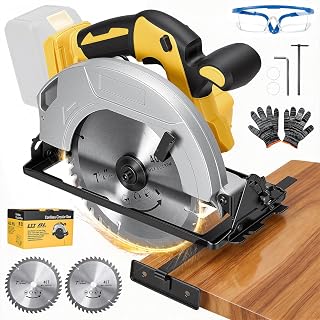

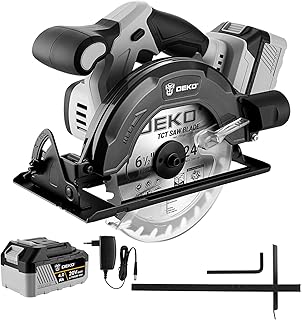


Choosing a cordless circular saw is not simply a matter of selecting the model with the highest voltage, largest battery or lowest advertised price. The most suitable saw depends on the materials you intend to cut, the frequency of use, the blade size you need, the battery platform you already own and the level of accuracy expected from the tool. For occasional DIY work, a compact saw with a manageable blade diameter can be easier to handle than a larger professional machine. For regular construction, carpentry or renovation work, however, cutting capacity, battery compatibility, brushless motor technology, ergonomics and accessory availability become much more important. Think about the material rather than the saw first. A circular saw used mainly for sheet materials has different priorities from one used for structural timber, decking, worktops or thicker construction timber. Battery compatibility can be one of the most important purchasing decisions. If you already own cordless tools, staying within the same battery platform can reduce the need to buy another charger and a separate collection of batteries. Popular professional and DIY-oriented platforms include Makita, DeWalt, Bosch Professional, Milwaukee, Ryobi, HiKOKI and Einhell. The exact range of compatible batteries, chargers and tools differs between manufacturers and product generations, so compatibility should always be checked against the specific saw rather than assumed from the brand name alone. A bare tool can appear considerably cheaper than a complete kit, but the comparison is only meaningful if you already have a compatible battery and charger. Conversely, buying a kit when you already have several suitable batteries may unnecessarily increase the total cost. Battery voltage is useful information, but it should not be treated as a simple ranking system. A cordless circular saw's real-world capability is influenced by the motor, electronics, blade, battery design, load, material and cutting technique. Some manufacturers also use different naming conventions for battery systems. A tool marketed using a nominal voltage and another marketed using a maximum voltage figure should not automatically be judged on those numbers alone. Battery capacity, commonly expressed in ampere-hours (Ah), is more closely related to how much electrical energy a battery can store than to the cutting power of the saw itself. A higher-capacity battery can provide longer working time in suitable conditions, but it can also add weight. Runtime is impossible to reduce to a single guaranteed figure because cutting conditions vary substantially. Continuous cutting of thick timber places a different demand on the battery from occasional short cuts through thin sheet material. When comparing cordless circular saws, consider battery weight as part of the overall tool weight. A specification that looks impressive on paper can be less appealing if the complete setup becomes tiring during overhead, awkward or prolonged cutting. Blade diameter has a direct relationship with the thickness of material a saw can cut, although the actual maximum depth also depends on the saw's design and whether the cut is made at 90 degrees or an angled bevel. Common cordless circular saw formats include compact models using blades around 165mm and larger machines using blades around 184mm, 185mm or 190mm. Exact blade sizes vary between manufacturers and individual models. Do not compare blade diameter alone. Check the manufacturer's stated cutting depth at 90 degrees and at the bevel angle you expect to use. For example, a saw may have adequate capacity for ordinary board thicknesses at 90 degrees but substantially less capacity when tilted for an angled cut. If you regularly work with thicker timber, this difference can determine whether a compact model is appropriate. A larger blade does not automatically produce a better finish. Tooth configuration, tooth count, kerf, blade material and suitability for the material being cut all affect performance. Always check the blade specification, bore size and permitted blade diameter for the particular saw. Never fit a blade simply because it physically appears to fit. Brushless motors are now common across many cordless circular saw ranges. Unlike traditional brushed motors, they do not use conventional carbon brushes to transfer electrical current to a rotating commutator. For a cordless tool, the potential advantages of brushless technology include reduced routine brush wear, efficient electronic control and the ability for manufacturers to build sophisticated motor and battery management systems into the tool. That does not mean every brushless saw is automatically superior to every brushed alternative. Tool design, blade quality, electronics, ergonomics, battery technology and intended application still matter. Brushless technology should therefore be treated as one feature within the overall specification rather than the sole reason to buy a particular model. If straight, repeatable cuts are important, guide-rail compatibility deserves careful attention. A guide rail can make it easier to maintain a consistent cutting path across sheet materials and other large workpieces. However, compatibility is not universal. Different manufacturers may use different rail profiles, interfaces or saw bases. Some saws are designed specifically around a manufacturer's own rail system, while others may work with additional adapters or accessories. Before buying a saw for rail-guided work, verify the exact compatibility of the saw, rail and any required accessories. A general statement that a saw is “rail compatible” is not sufficient for a purchasing decision. Bevel capacity determines how far the blade can be tilted from a conventional 90-degree cut. Many circular saws provide a bevel adjustment around 45 degrees, while some designs extend beyond that. A greater bevel range can be useful for roofing, framing, joinery and other angled applications, but maximum bevel angle is only part of the equation. The adjustment mechanism should also be easy to set, secure and read accurately. A circular saw is a hand-held cutting tool, so comfort and control should be considered alongside headline specifications. Weight distribution can be particularly important because two saws with similar listed weights can feel quite different in use. Look at the position of the main handle, auxiliary handle, trigger, battery and motor. A well-balanced design can reduce the effort required to keep the saw aligned with the intended cutting path. If possible, compare the complete tool configuration rather than the bare-tool weight. Battery size can substantially change the balance and total weight. Dust management is an important consideration when cutting timber-based materials and manufactured boards. A suitable extraction connection can help direct airborne debris towards a compatible dust extractor or vacuum. Not every dust port is equally convenient. Check the connector size, position and whether an adapter is required for your existing extraction equipment. Dust extraction should not be viewed solely as a cleanliness feature. Keeping the cutting area clearer can make it easier to see the workpiece and cutting line, although appropriate respiratory protection, ventilation and workplace controls remain important where dust exposure is a concern. Circular saws should be treated as high-powered cutting tools, regardless of whether they are cordless or mains powered. A good buying decision therefore includes examination of the safety design as well as performance. The lower blade guard should move correctly and return to its protective position as designed. It should not be treated as an optional convenience feature. Inspect the mechanism before use and follow the manufacturer's instructions for checking, cleaning and maintaining it. A well-designed switch arrangement can help reduce accidental operation. Follow the manufacturer's instructions regarding the safety lock, trigger and starting procedure. Some cordless circular saws incorporate electronic braking intended to bring the blade to a stop more quickly after the trigger is released. This can be a useful convenience and safety-related feature, but the precise stopping behaviour varies by model and operating conditions. Where fitted, a riving knife helps maintain separation behind the blade during suitable cutting operations. Its presence and design vary between saws, so it should be considered alongside the manufacturer's instructions for the permitted applications. Kickback is one of the most important hazards to understand when using a circular saw. It can occur when the blade binds, stalls or becomes improperly engaged with the workpiece, causing the saw to move unexpectedly. Buying a saw with modern electronic controls does not eliminate the need for correct technique. Workpieces should be supported appropriately, the blade should be allowed to cut at a controlled rate and the operator should follow the manufacturer's safety instructions. The physical layout of a circular saw affects visibility, balance and handling. Traditional sidewinder-style designs place the motor alongside the blade, while other configurations can position components differently to alter the balance and handling characteristics. Neither layout should automatically be considered the universal winner. For most buyers, the more useful question is whether the particular design provides the cutting depth, visibility, balance and control required for the intended work. The blade position relative to the motor and operator can affect visibility of the cutting line. Depending on whether the user is right- or left-handed and how the saw is held, one configuration may provide a more natural sightline. Do not choose solely on the assumption that one blade position is better. Consider your normal cutting stance, the position of the workpiece and which side of the saw gives you the clearest view of the blade path. Higher-specification cordless saws can include electronic systems designed to regulate motor behaviour and protect the tool or battery under demanding conditions. Depending on the manufacturer, terminology may include overload protection, electronic current management, temperature monitoring or other proprietary control systems. These features can be useful when a saw is subjected to repeated heavy loads. However, electronic protection should not be interpreted as permission to continuously overload the tool. If the blade is struggling, investigate the blade condition, cutting technique and material rather than simply pushing harder. A specification table can contain dozens of numbers, but only a few are likely to influence the purchasing decision significantly. Price alone is a poor comparison method. Instead, compare each saw against the same set of requirements. Decide whether the saw will mainly be used for DIY, renovation, carpentry, joinery, construction timber, sheet goods or occasional maintenance. Measure the thickest material you expect to cut and compare that requirement with the manufacturer's stated capacity at both 90 degrees and your intended bevel angle. If you already own cordless tools, determine whether the saw is compatible with the batteries you have. If not, include the cost and weight of the required battery and charger when comparing alternatives. Check whether each option includes a battery, charger, blade, dust adapter, guide accessory or other equipment you would otherwise need to purchase separately. Consider total weight, handle position, visibility and balance. These factors can be decisive when making numerous cuts in one session. Check the availability and compatibility of replacement blades, guide rails, batteries, chargers and extraction accessories. Customer reviews can reveal recurring usability issues, but they should be interpreted in context. Look for patterns across multiple reviews rather than relying on a single highly positive or negative comment. Brand reputation can help narrow the field, but it should not replace model-by-model comparison. Established manufacturers often offer broader battery ecosystems and accessory ranges, yet the best choice still depends on the particular saw. When comparing these manufacturers, pay attention to the specific model rather than assuming that a more expensive brand or product line is automatically better suited to your work. Voltage does not provide a complete picture of cutting performance. Motor design, electronics, blade choice, battery characteristics and tool design all contribute. A bare tool can look like the better bargain until the price of a suitable battery and charger is included. Compare complete ownership cost. A large professional saw can be unnecessary for occasional light DIY. Extra size and weight can make a compact saw more practical for simple jobs. The opposite mistake can be frustrating. If the saw cannot cut through your regular workpiece in one pass, a smaller and lighter tool may ultimately be less useful. The saw is only as effective as the blade installed. Make sure replacement blades in suitable specifications are readily available. Buying into an unfamiliar battery platform for a single tool may be less convenient than choosing a suitable model within a system you already use. Manufacturers may state tool weight differently. Check whether the quoted figure includes the battery and compare like with like. Guide-rail interfaces are not universally interchangeable. Check the exact compatibility before buying a rail or saw on the assumption that they will work together. Premium features only provide value when they solve a real problem. A professional-grade specification can be unnecessary if the saw will only make a handful of cuts each month. For home users, ease of handling is often more valuable than maximum cutting performance. A practical DIY saw should be comfortable to control, straightforward to adjust and supported by readily available batteries and blades. Prioritise a suitable cutting depth, manageable weight, good visibility and dependable safety features. If most projects involve sheet goods, rail compatibility may be more useful than additional motor power. Carpenters and joiners may place greater emphasis on accuracy, repeatability, bevel control and blade quality. A compatible guide rail can be especially valuable for long straight cuts in sheet material. Battery availability also matters because downtime can become inconvenient during a busy working day. A platform with several compatible batteries may therefore have practical advantages over an otherwise comparable standalone system. Construction users often require greater cutting capacity and the ability to perform repeated cuts in structural timber and boards. In this environment, battery capacity, motor performance, durability, ergonomics and efficient blade changes can all become important. For regular professional use, consider the complete cordless ecosystem rather than evaluating the circular saw in isolation. Batteries, chargers, impact drivers, drills, grinders and other tools may share the same platform. Changing the blade can transform the suitability of a circular saw for a particular job. The correct blade should match both the material and the finish required. Before purchasing a replacement, check the blade diameter, bore diameter, maximum permitted speed and compatibility requirements specified by the saw manufacturer. Regular maintenance can help preserve performance and identify problems before they become more serious. Storage conditions can affect the long-term condition of both the tool and its battery. Keep the saw in a dry environment and protect it from unnecessary impact, moisture and contamination. Remove the battery when the tool is not in use if recommended by the manufacturer, and store batteries in accordance with their specific instructions. Avoid leaving a battery-powered tool exposed to excessive heat or other unsuitable conditions. There is no single price point that defines the best cordless circular saw. The sensible budget depends on how frequently the tool will be used and whether you already own compatible batteries and accessories. Instead of asking whether a particular saw is “worth the money” in isolation, ask whether its features solve the problems you regularly encounter. Customer feedback can be useful, but the most informative reviews tend to describe the actual application rather than simply assigning a star rating. Look for recurring observations about battery life, balance, blade visibility, cutting performance, adjustment mechanisms and build quality. A complaint about runtime may be highly relevant to someone making hundreds of cuts but largely irrelevant to a homeowner making occasional short cuts. Also distinguish between a product problem and an expectation problem. A compact saw may receive criticism for not handling heavy structural timber quickly even though that was never its intended role. When comparing several cordless circular saws side by side, record the following information from each manufacturer's specification sheet: The main advantage of a cordless circular saw is freedom from the mains cable. This can be particularly useful on renovation sites, outside projects and locations where access to mains power is inconvenient. A corded saw can still make sense where the tool is used continuously in a fixed workshop environment and uninterrupted mains power is more valuable than portability. For many buyers, the decision is less about which technology is universally superior and more about where and how the tool will be used. A conventional circular saw and a track saw overlap in some applications but are designed with different priorities. A standard circular saw is generally the more versatile choice for general-purpose cutting, while a track-oriented system can be attractive when highly controlled, repeatable straight cuts in sheet material are central to the work. If most projects involve breaking down large boards, a conventional saw with compatible guide accessories may provide a useful compromise. If precision sheet cutting is the dominant requirement, compare the complete track-saw ecosystem as well as individual circular saw specifications. The difference between cheaper and more expensive circular saws is not necessarily visible in one headline specification. Premium models may offer more refined ergonomics, advanced electronic control, larger professional battery ecosystems, stronger construction or more extensive accessory support. Budget models can nevertheless be perfectly appropriate when the workload is modest and the required cutting capacity is limited. The correct comparison is therefore based on application, not simply on price category. A cordless circular saw should be viewed as part of a system. The saw itself is only one component of the ownership equation. Batteries, chargers, blades, rails, extraction accessories and replacement parts all influence convenience and long-term cost. For a buyer starting from scratch, the wider ecosystem can be more important than a small difference between two individual saws. For someone who already owns several compatible cordless tools, battery compatibility may immediately narrow the shortlist. For a more objective comparison, score each shortlisted saw against the criteria that matter to your work. Give greater weight to essential requirements and less weight to features you are unlikely to use. The highest-scoring saw is not necessarily the most expensive or most powerful model. It is the one that best matches the user's actual requirements without paying for capabilities that will rarely be used. There is no single best model for every DIY user. A suitable general-purpose choice should provide enough cutting depth for the materials normally encountered, comfortable handling, straightforward adjustments and access to suitable batteries and blades. Existing battery ownership can also make one platform considerably more practical than another. Brushless technology can be worthwhile, particularly for frequent cordless use, because it can support efficient motor control and avoids conventional brush replacement. Whether the additional cost represents good value depends on workload, battery platform and the rest of the specification. A 165mm saw can be entirely suitable for many DIY, carpentry and sheet-material applications. The important specification is its actual cutting depth and whether that capacity covers your intended materials. Larger blade diameter is not automatically necessary. Buyers who already own compatible batteries may find a bare tool more practical. Someone entering a new battery ecosystem will generally need to consider the combined cost of the saw, battery and charger. They require blades that match the saw's permitted diameter, bore, speed rating and intended application. The correct tooth configuration should also match the material and desired finish. Many cordless circular saws can cut suitable hardwood when equipped with an appropriate blade and operated within the manufacturer's intended specifications. Cutting performance depends on wood species, thickness, blade condition, battery, saw design and feed rate. Yes, circular saws are commonly used for sheet materials, provided the saw and blade are appropriate for the material. For cleaner and more repeatable long cuts, guide-rail compatibility can be particularly useful. Battery capacity affects available runtime, but it also affects weight. Choose enough capacity for your workload without overlooking the handling penalty of a heavier battery. No. Voltage is only one part of the system. Motor design, electronics, battery technology, blade selection and load conditions all influence cutting performance. No. A premium model can provide useful advantages for demanding users, but an expensive professional saw may offer little additional value for someone who only makes occasional light cuts. Check the permitted blade diameter, bore size, maximum rotational speed and manufacturer's compatibility requirements. Then choose the tooth configuration according to the material and finish required. There is no universal replacement interval. Replace a blade when it becomes excessively worn, damaged or unsuitable for the quality of cut required. Cutting performance, material, frequency of use and blade type all influence service life. It is particularly important if you regularly make long, straight or repeatable cuts in sheet material. Always verify compatibility between the exact saw and rail rather than assuming products from different systems will connect directly. For buying decisions, the manufacturer's stated cutting depth is usually more useful because it tells you directly what thickness of material the saw can handle. Blade diameter provides useful context but does not by itself guarantee a particular cutting capacity. Compare the total system cost, not just the advertised tool price. Consider batteries, charger, blades, rails and other accessories, then select the specification that covers your real requirements without paying for features you will rarely use. The best cordless circular saw is ultimately the one that fits the job rather than the one with the longest specification sheet. Cutting capacity, battery compatibility, blade availability, handling, accuracy, safety features and accessory support should all be considered together. For occasional DIY users, simplicity and manageable weight may be the deciding factors. For frequent tradespeople, the wider battery ecosystem, durability, cutting performance and accessory compatibility can be considerably more important. For users working primarily with sheet material, guide-rail capability and cutting accuracy may take priority over maximum depth. Before making a purchase, compare the exact model specifications, confirm battery and accessory compatibility, consider the complete cost of ownership and read verified customer feedback alongside the manufacturer's technical information. This approach makes it easier to distinguish genuinely useful features from specifications that look impressive but have little relevance to the work you actually do.How to Choose the Right Cordless Circular Saw
Start With the Materials You Cut Most Often
Consider Your Existing Battery Ecosystem
Battery Voltage: What It Really Tells You
Battery Capacity and Runtime
Blade Diameter and Cutting Capacity
Why Maximum Cutting Depth Matters
Blade Size Is Not the Same as Blade Quality
Brushless Motors Explained
Guide-Rail Compatibility and Cutting Accuracy
When a Guide Rail Is Worth Considering
Bevel Adjustment and Cutting Versatility
What to Look for in a Bevel Mechanism
Ergonomics Can Matter More Than Peak Specification
Features That Can Improve Usability
Dust Extraction and Worksite Cleanliness
Safety Features Worth Checking
Blade Guard
Trigger and Switch Design
Electric Brake
Riving Knife
Understanding Kickback
Direct Drive, Motor Position and Saw Layout
Left-Blade and Right-Blade Designs
Soft Start, Electronic Controls and Intelligent Protection
Cordless Circular Saw Comparison: The Specifications That Matter Most
How to Compare Cordless Circular Saws Fairly
Step 1: Establish the Intended Work
Step 2: Identify the Required Cutting Depth
Step 3: Check Your Battery Situation
Step 4: Compare the Complete Configuration
Step 5: Assess Handling
Step 6: Examine the Accessory Ecosystem
Step 7: Read Verified Customer Feedback Carefully
Professional Brands Worth Comparing
Common Buying Mistakes to Avoid
Choosing on Voltage Alone
Ignoring Battery Cost
Buying Too Much Saw
Buying Too Little Cutting Capacity
Overlooking Blade Availability
Ignoring the Battery Ecosystem
Comparing Bare-Tool Weight With Kit Weight
Assuming Every Guide Rail Is Compatible
Choosing the Most Expensive Model Without a Clear Need
Choosing a Saw for DIY and Home Renovation
Choosing a Saw for Carpentry and Joinery
Choosing a Saw for Construction Work
Blade Selection: One of the Most Important Upgrades
Preventing Poor Cuts
Maintenance Checklist for a Cordless Circular Saw
How to Store a Cordless Circular Saw
How Much Should You Spend?
Best Cordless Circular Saw Features by Use Case
Questions to Ask Before Buying
How to Interpret Customer Reviews
Specification Checklist for Comparing Models
Cordless Circular Saw vs Corded Circular Saw
Cordless Circular Saw vs Track Saw
What Matters Most When Comparing Premium and Budget Models?
Expert Buying Advice: Prioritise the Complete System
Final Buying Decision: A Practical Scoring Method
Frequently Asked Questions
What is the best cordless circular saw for general DIY?
Is a brushless cordless circular saw worth buying?
Is a 165mm cordless circular saw powerful enough?
Should I buy a bare tool or a kit?
Do cordless circular saws need special blades?
Can a cordless circular saw cut hardwood?
Can I use a circular saw for plywood and MDF?
How important is battery capacity?
Does a higher-voltage battery always mean more power?
Are expensive cordless circular saws always better?
What should I check before buying replacement blades?
How often should a circular saw blade be replaced?
Is guide-rail compatibility important?
What is more important: cutting depth or blade diameter?
How can I get the best value from a cordless circular saw?
Editorial Buying Checklist
Final Thoughts on Choosing a Cordless Circular Saw