

Our experts reviewed the latest {category_name } to help you compare quality, performance, durability and overall value before making your purchase.


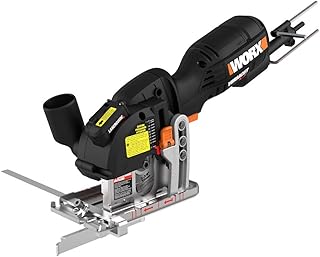


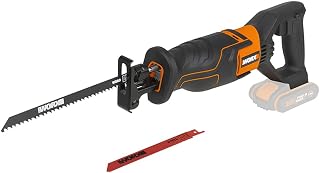


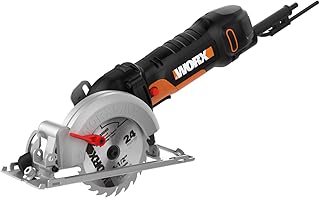

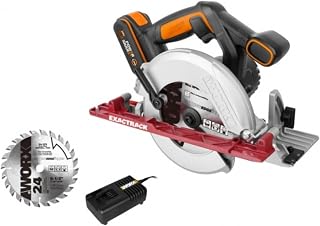
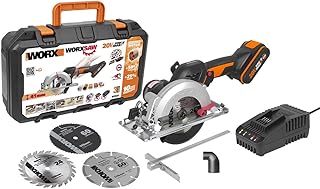
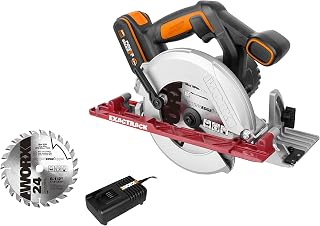


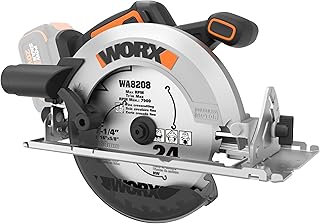


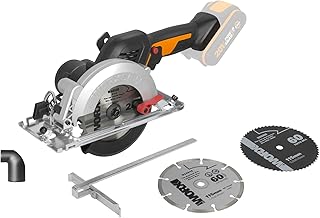


Choosing a Worx cordless circular saw is less about finding a single model that is universally “best” and more about matching blade size, cutting capacity, motor design, battery configuration and handling characteristics to the work you actually intend to do. The current Worx range includes compact one-handed equipment, a 165 mm ExacTrack model designed around guided straight cuts, and a larger 190 mm brushless saw aimed at deeper timber cutting.
For UK buyers, the most useful comparison is therefore between the different approaches rather than simply comparing headline RPM figures. A saw with a smaller blade may be easier to control for sheet material and trimming, while a larger 190 mm model offers substantially greater cutting depth. Similarly, a tool-only version can be considerably more sensible for an existing PowerShare owner than a kit containing another battery and charger.
The current UK Worx range includes the WX531 and WX531.9 120 mm brushless models, the WX530 and WX530.9 165 mm ExacTrack models, and the WX520 and WX520.9 190 mm brushless models. The precise specification and kit contents should always be checked before purchase because battery-included and tool-only versions are separate products. :contentReference[oaicite:0]{index=0}
Worx WX520: The larger, full-size option for buyers who need substantial cutting depth and want a brushless motor, 190 mm blade and a battery-and-charger kit.
Worx WX520.9: The tool-only equivalent to consider when you already own compatible Worx PowerShare batteries and want the larger 190 mm saw without duplicating the battery and charger.
Worx WX530: The 165 mm ExacTrack model supplied with a 2.0 Ah battery and charger, particularly interesting for users who place a high value on straight, repeatable cuts.
Worx WX530.9: The bare-tool version of the ExacTrack concept, making it more attractive to an established PowerShare user.
Worx WX531: A compact 120 mm brushless circular saw with one-handed operation and a quoted maximum cutting depth of 41 mm, suited to lighter cutting where manoeuvrability matters more than maximum capacity.
Worx WX531.9: The tool-only version of the compact 120 mm brushless saw, intended for users who already have compatible batteries.
These models should not be treated as simple upgrades from one to the next. The WX531 prioritises compact handling, the WX530 adds the ExacTrack approach for guided cutting, and the WX520 prioritises blade diameter and cutting capacity. Worx lists all three families within its current UK circular-saw range. :contentReference[oaicite:1]{index=1}
The WX520 is the model to investigate if your projects regularly involve thicker timber and you would rather have additional cutting capacity available than compromise with a compact saw. It uses a 190 mm blade and a brushless motor, with Worx specifying a no-load speed of up to 6,100 rpm and a bevel range reaching 57 degrees.
Worx specifies the 190 mm saw at up to 67.5 mm cutting depth at 90 degrees and 47.5 mm at 45 degrees in its detailed specifications. The manufacturer also lists an electric brake, LED work light, dust-extraction connection, spindle lock and parallel guide. :contentReference[oaicite:2]{index=2}
That combination makes the WX520 a more logical choice for substantial timber work than a compact 120 mm saw. The trade-off is that a larger blade and more capable cutting platform can be unnecessary for occasional small jobs where portability and ease of handling are the priorities.
The WX530 takes a different approach. Its 165 mm blade provides a useful middle ground between the compact WX531 and larger WX520, while the ExacTrack guide system is the feature that most clearly distinguishes it from the other models.
Worx specifies a maximum cutting depth of 55 mm at 90 degrees and 39 mm at 45 degrees, with a no-load speed of up to 4,900 rpm. The saw also has depth adjustment, bevel adjustment, an electric blade brake, LED lighting and a dust-extraction connection. :contentReference[oaicite:3]{index=3}
The ExacTrack design is particularly relevant when straight longitudinal cuts are important. Rather than judging the saw purely by motor speed, buyers should consider whether the guiding system could make their particular workflow easier. For sheet goods, boards and repeated straight cuts, guidance and control can be more useful than having the highest available RPM.
The WX531 is the smallest of these three circular-saw families. It uses a 120 mm blade, a brushless motor and one-handed operation, with Worx quoting a maximum cutting depth of 41 mm and a no-load speed of up to 6,100 rpm. :contentReference[oaicite:4]{index=4}
This is not simply a smaller version of the WX520. Its compact format is the main reason to choose it. If your work involves trimming boards, cutting sheet material, making relatively shallow cuts or working where a full-size saw feels cumbersome, the smaller form factor can be a significant advantage.
Conversely, a compact circular saw should not be selected for heavy timber work simply because its advertised RPM figure looks impressive. Cutting capacity, blade diameter, motor characteristics, battery condition and material thickness all matter.
Blade diameter is one of the most important specifications when comparing cordless circular saws because it places a practical ceiling on cutting depth and influences the overall size and handling of the machine.
120 mm: Compact and manoeuvrable, making this format attractive for lighter-duty cutting and situations where tool size matters.
165 mm: A versatile middle size that offers considerably more cutting depth while retaining a relatively manageable format.
190 mm: The better choice when deeper single-pass cuts through substantial timber are a priority.
Do not compare blade diameters independently of cutting-depth specifications. The number that matters for a project is the manufacturer's stated cutting capacity at the angle you intend to use. A saw may have enough capacity at 90 degrees but substantially less at 45 degrees.
Maximum cutting depth is one of the easiest specifications to misunderstand. A product may quote a headline maximum capacity at 90 degrees, but angled cuts reduce the effective depth because the blade enters the material differently.
For example, Worx specifies the WX530 at 55 mm at 90 degrees and 39 mm at 45 degrees. For the WX520, the detailed manufacturer specification lists 67.5 mm at 90 degrees and 47.5 mm at 45 degrees. :contentReference[oaicite:5]{index=5}
When comparing saws for a specific project, measure the thickest material and then compare that measurement with the appropriate cutting-depth specification. If you regularly make bevel cuts, use the 45-degree capacity rather than the headline 90-degree figure as your starting point.
Motor technology is another useful distinction between models. Brushless motors are electronically controlled rather than relying on conventional physical brushes to transfer electrical current to the rotating motor assembly.
In practical terms, a brushless cordless saw can be attractive to buyers who expect regular use because the motor design is intended to operate efficiently without the brush components found in traditional brushed motors. Worx uses brushless motors in the WX520 and WX531 families. :contentReference[oaicite:6]{index=6}
However, “brushless” should not automatically be treated as a guarantee of better cutting performance in every situation. The blade, battery, material, feed pressure, saw design and cutting depth all affect real-world results. A good buying decision considers the complete tool rather than one marketing specification.
No-load RPM indicates how quickly the blade rotates when the saw is not cutting material. It is useful for comparing models, but it should not be interpreted as a direct measurement of cutting speed under load.
The WX520 and WX531 are specified at up to 6,100 rpm, while the WX530 is specified at up to 4,900 rpm. :contentReference[oaicite:7]{index=7}
A lower published no-load speed does not automatically mean a saw is inferior. Blade diameter, tooth geometry, motor characteristics, cutting capacity and the intended application all influence how a circular saw behaves when actually cutting.
For buying decisions, treat RPM as one specification within a wider group rather than as a league table.
Battery compatibility can make a major difference to the total cost and practicality of a cordless power tool. Worx PowerShare is designed as a shared battery platform, allowing compatible batteries to be used across a range of Worx tools.
The current circular-saw range includes battery-and-charger kits as well as tool-only variants. The WX520.9, WX530.9 and WX531.9 are particularly relevant to buyers who already have suitable PowerShare batteries. :contentReference[oaicite:8]{index=8}
If you are new to the platform, compare the complete kit rather than the tool-only price. A seemingly cheaper bare tool may require a separate battery and charger, potentially changing the overall value calculation.
Amp-hour capacity is broadly related to how much electrical energy a battery can store. In general, a higher-capacity battery can provide more energy before needing to be recharged, although actual runtime depends heavily on the workload.
Heavy cutting, thick timber, long continuous cuts and demanding materials can consume considerably more energy than occasional trimming. Conversely, a smaller battery may be attractive where keeping overall tool weight down is important.
For a cordless circular saw, the best battery is therefore not necessarily the one with the largest capacity. Consider how long each cutting session lasts, whether you already own spare batteries and whether additional battery weight will affect control or fatigue.
This is one of the most important purchasing decisions when comparing Worx cordless circular saws.
Choose a kit with battery and charger if you are entering the PowerShare system or do not already own a compatible battery.
Choose a tool-only version if you already own suitable PowerShare batteries and want to avoid buying duplicate charging equipment.
Check the exact battery included because battery capacity can influence weight, runtime and the overall value of a kit.
Check the box contents rather than assuming every version includes identical accessories.
Worx's current listings demonstrate why model suffixes matter: the WX520 is offered with a 4.0 Ah battery and charger, whereas the WX520.9 is a tool-only version. Similar distinctions exist between the WX530 and WX530.9 and between the WX531 and WX531.9. :contentReference[oaicite:9]{index=9}
The ExacTrack system on the WX530 deserves separate consideration because it changes the way the saw is positioned for straight cutting.
For long cuts, the difficulty is not necessarily producing enough power. Maintaining a consistent line while controlling the saw, keeping the base correctly positioned and preventing the tool from wandering can be the bigger challenge. A purpose-designed guide system can therefore be more relevant to a particular buyer than a higher motor-speed figure.
The WX530's manufacturer description specifically positions ExacTrack around straight, precise longitudinal cuts, while the saw remains capable of cross, rip, plunge and bevel cuts. :contentReference[oaicite:10]{index=10}
If your projects involve frequent straight cuts in boards or sheet materials, examine the guiding arrangement carefully before choosing between the WX530 and a conventional circular-saw format.
Bevel capacity determines how far the base can be tilted from a conventional 90-degree cut. This matters for roofing, framing, furniture construction, joinery, cabinetry and other projects involving angled edges.
The WX520 offers a bevel range reaching 57 degrees according to Worx's detailed specification.
The WX530 provides bevel adjustment up to 50 degrees in its detailed product specification.
The WX531 is the compact option, so buyers should prioritise its overall cutting capacity and intended applications rather than comparing it purely with the larger models.
When buying a saw for bevel work, also consider how easy the adjustment mechanism is to read and lock securely. A theoretical maximum angle is less important than whether you can repeatedly set the angle you actually need.
Sawing wood produces airborne dust and loose debris, so dust management should be considered alongside power and cutting depth. The WX520 and WX530 include dust-extraction connections for attachment to a suitable vacuum system. :contentReference[oaicite:11]{index=11}
A dust port does not mean that every cutting operation will be dust-free. Extraction effectiveness depends on the vacuum, hose arrangement, material and cut. Nevertheless, compatibility with workshop extraction can be a useful feature for indoor work and repeated cutting.
When comparing models, check the supplied adaptor and the diameter or connection arrangement required by your existing extraction equipment rather than assuming every workshop vacuum will connect directly.
A cordless circular saw is a high-speed cutting tool and should be treated accordingly. Features such as an electric blade brake can reduce the time the blade continues rotating after the trigger is released. Worx lists electric braking on the WX520 and WX530. :contentReference[oaicite:12]{index=12}
Other useful features can include a lock-off switch, blade guard, spindle lock, LED illumination and a stable base. These features should support correct working technique rather than being regarded as substitutes for safe operation.
Use the blade specified as suitable for the saw and material.
Allow the blade to reach the appropriate operating speed before beginning the cut.
Keep hands away from the blade path and never place a hand underneath the workpiece in line with the blade.
Support the material properly so that the cut does not close on the blade.
Remove the battery before changing a blade or carrying out maintenance where appropriate.
Use suitable eye and hearing protection and manage wood dust appropriately for the working environment.
Follow the manufacturer's instructions for the specific model rather than relying solely on general circular-saw advice.
The supplied blade is only part of the buying decision. Tooth count, tooth geometry, kerf, diameter, bore size and material compatibility can all influence cutting behaviour.
A blade with fewer teeth can be useful where faster, more aggressive cutting through suitable timber is required. The resulting cut can be less refined than one produced by a blade designed for a finer finish.
More teeth can provide a finer cutting action in appropriate materials and applications. This can be advantageous when edge appearance matters, although the correct blade specification remains essential.
Never assume that a blade will fit simply because its diameter looks correct. The blade must be compatible with the saw's diameter, bore and other relevant requirements. The WX520 uses a 190 mm blade with a 30 mm bore according to Worx's specification, while the WX530 uses a 165 mm blade with a 20 mm arbor. :contentReference[oaicite:13]{index=13}
Always check the individual model manual and manufacturer specification before buying replacement or specialist blades.
These tools are primarily intended for cutting suitable wood-based materials with the correct blade. The precise material range depends on the individual model, blade and manufacturer's instructions.
For timber, plywood, OSB and similar sheet materials, the most important factors are blade selection, material thickness, support and cutting technique. Do not select a blade solely because its diameter matches the saw.
For laminate, veneered boards or materials where splintering is a concern, blade tooth configuration and cutting direction become especially important. Test cuts on scrap material can help establish the most suitable setup before committing to visible finished work.
A circular saw is held and guided through the workpiece, so weight matters beyond simple carrying convenience. A lighter tool may be easier to control during repeated cuts, while a larger saw may provide the cutting capacity needed for heavier work.
The manufacturer's stated weight should also be interpreted carefully. Battery weight can be additional to the quoted bare-tool weight. For example, Worx lists the WX520.9 at 2.9 kg without its battery. The complete working weight will therefore depend on the battery fitted. :contentReference[oaicite:14]{index=14}
For overhead work, repetitive cuts or long sessions, ergonomics can become as important as maximum power. Look at handle position, trigger access, base stability and sight lines to the cut. A specification sheet cannot fully describe how a particular design will suit every user's working position.
A parallel guide can help maintain a consistent distance from an edge when making repeated cuts. This is particularly useful when cutting boards or sheet materials where repeatability matters.
However, a guide is only effective when correctly adjusted and securely locked. Before beginning a production run, make a test cut and measure the resulting width. Small setup errors can be repeated across multiple pieces if the guide is not checked.
The WX520 includes a parallel guide in its listed box contents, while the WX530's ExacTrack system is central to its straight-cutting design. :contentReference[oaicite:15]{index=15}
The answer depends on whether your priority is cutting depth or guided accuracy.
Choose the WX520 when thicker material and deeper cuts are the priority. Its 190 mm blade and larger cutting capacity make it the more appropriate of the two for substantial timber work.
Choose the WX530 when 55 mm of 90-degree cutting capacity is sufficient and the ExacTrack approach is more useful to your projects than the additional capacity of the larger saw.
Choose the WX520 for a larger brushless platform and a bevel range reaching 57 degrees.
Choose the WX530 when straight longitudinal cuts and the integrated guide concept are central to your workflow.
Neither should automatically be labelled the overall winner. They solve slightly different problems.
The comparison becomes more interesting when choosing between the 165 mm WX530 and compact 120 mm WX531.
The WX531 is substantially more focused on portability and one-handed operation. Its quoted 41 mm maximum cutting depth makes it suitable for many lighter applications, but it cannot replace the deeper cutting capability of the WX530.
The WX530 is the more versatile choice if you expect to cut thicker boards, make bevel cuts regularly or benefit from guided straight cutting. The WX531 makes more sense when compact handling is the defining requirement. :contentReference[oaicite:16]{index=16}
This is essentially a choice between capability and manoeuvrability.
The WX520's 190 mm blade and substantially greater cutting depth make it the stronger candidate for thicker timber and demanding cutting tasks. The WX531's 120 mm brushless design is more appropriate where a compact one-handed saw is preferable.
For occasional DIY users, the smaller tool can be attractive if the project list consists mainly of thinner material. For users who regularly work with thick timber, buying a compact saw and subsequently discovering that it cannot complete a required cut can be a more expensive mistake than selecting the larger tool from the outset.
High no-load RPM is not the same thing as superior performance in every material. Look at blade diameter, cutting capacity, motor design and intended application together.
A tool-only product may appear inexpensive until the cost of a compatible battery and charger is considered. Conversely, a kit can be unnecessary for an existing PowerShare owner.
More cutting capacity is not automatically better. If your work involves thin boards and frequent repositioning, a compact saw can be easier to manage.
Portability has a limit. Check the thickest material you expect to cut before prioritising compact size.
If your projects include angled cuts, compare the actual 45-degree cutting depth as well as the maximum bevel angle.
PowerShare compatibility should be verified against the individual tool and battery specifications. Do not rely solely on the general appearance or nominal voltage printed on a battery.
The saw is only part of the cutting system. The appropriate blade for the material and desired finish can make a significant difference to the result.
Maximum cutting depth at 90 degrees.
Maximum cutting depth at 45 degrees.
Blade diameter.
Blade bore or arbor specification.
Maximum bevel angle.
Brushless or brushed motor design.
No-load RPM.
Battery platform and compatibility.
Whether the listing includes a battery and charger.
Battery capacity supplied with the kit.
Tool weight with and without the battery where available.
Electric brake and other safety-related features.
Dust-extraction provision.
LED work light.
Parallel guide or other cutting-guide system.
Replacement blade availability and compatibility.
Manufacturer's manual and operating instructions.
Retailer-specific warranty, returns and delivery terms.
The cheapest purchase price is not necessarily the lowest-cost option over several years. For cordless tools, consider the complete ecosystem.
Initial tool cost.
Battery and charger requirements.
Additional batteries for longer work sessions.
Replacement blades.
Suitable dust-extraction equipment if required.
Storage and transport requirements.
The likelihood that you will add other PowerShare tools later.
Existing PowerShare owners may derive more value from a tool-only model because the battery ecosystem is already in place. A new buyer should compare the complete kit price against the cost of purchasing the components separately.
A cordless circular saw is often not an isolated purchase. Once you own compatible batteries and a charger, future bare-tool purchases can become more attractive. This is one reason platform compatibility deserves more attention than a simple comparison of individual saw prices.
Worx positions PowerShare as a shared battery system across its cordless tools. Before committing to a platform, consider the other tools you might realistically use, such as drills, impact drivers, jigsaws, reciprocating saws, garden equipment or other compatible products.
The value of a battery platform increases when the same batteries genuinely cover the tools you expect to use. It is less compelling if the platform does not match your longer-term requirements.
Good maintenance is primarily about keeping the saw clean, correctly adjusted and used within its intended limits.
Remove accumulated sawdust from accessible areas after use.
Keep ventilation openings clear of excessive dust and debris.
Inspect the blade regularly for damage, excessive wear or unsuitable tooth condition.
Check that adjustment mechanisms operate correctly and lock securely.
Inspect the blade guard and other safety components before use.
Keep the base plate clean so it moves smoothly across the workpiece.
Use the manufacturer's recommended procedure for blade changes.
Store batteries and tools according to the manufacturer's instructions.
Do not continue using a saw that develops an unusual noise, smell, vibration or other abnormal behaviour until it has been properly inspected.
Cut quality depends on more than the saw itself. A sharp, appropriate blade, stable workpiece and controlled feed rate are fundamental.
Mark the cut accurately and support the material so the waste section cannot fall in a way that pinches the blade. For sheet material, support it at multiple points while keeping the intended cut line clear. When a very clean visible edge is required, use an appropriate fine-tooth blade and test the setup on scrap first.
Do not force the saw through the material. Excessive feed pressure can reduce control and place unnecessary load on the tool and battery. Let the blade perform the cutting while maintaining a steady, controlled movement.
For general DIY, the most appropriate model depends on the typical thickness of the materials rather than how often the tool is used.
A homeowner cutting shelving, laminate boards, plywood and relatively thin timber may prefer the compact WX531. Someone undertaking a wider range of renovation work may find the WX530's greater cutting capacity and guided-cutting arrangement more versatile. A DIYer working with thicker structural timber should consider the WX520 before choosing a smaller saw.
The important question is not “Which Worx saw has the most power?” but “Which Worx saw has enough capacity for my work without adding unnecessary size and cost?”
Furniture and joinery work can place greater emphasis on accuracy and edge quality than raw cutting depth. In these applications, blade selection, repeatable measurements, guide systems and control can be more important than selecting the largest available motor.
A compact saw can be useful for smaller components, while the WX530's guided-cutting approach may appeal when repeated straight cuts are required. The WX520 becomes relevant when the project involves thicker stock that approaches the capacity limits of smaller saws.
For visible furniture edges, remember that a circular saw is often used to prepare stock rather than provide the final finished edge. Depending on the project, subsequent routing, sanding or other finishing operations may still be required.
Renovation work can be more demanding because material thickness varies considerably. A saw that is sufficient for sheet material may not be suitable for thicker timber, so cutting capacity becomes particularly important.
The WX520's larger blade gives it a clear capacity advantage over the smaller models. Its manufacturer specification lists up to 67.5 mm at 90 degrees and 47.5 mm at 45 degrees. :contentReference[oaicite:17]{index=17}
For renovation work involving many long straight cuts, the WX530 remains worth considering because its ExacTrack design targets guided cutting. The best choice depends on whether your workload is dominated by depth or repeatable straight-line work.
When comparing cordless circular saws, the most useful specification sheet is one that lets you answer practical questions.
Can it cut through the thickest material in one pass?
Can it make the bevel cuts required by the project?
Is the blade format easy to source?
Do you already own compatible batteries?
Will the saw work comfortably with your existing extraction setup?
Is the tool light enough for the intended work?
Does the supplied guide or parallel fence suit the cuts you need?
Are the included accessories actually useful to you?
These questions produce a more meaningful comparison than simply ranking tools by RPM, advertised watt-equivalent claims or headline price.
Worx model numbers can look almost identical while representing different packages. The “.9” suffixes in this range are particularly important because they identify tool-only versions.
For example, the WX530 and WX530.9 share the core ExacTrack saw concept, but the kit contents differ. Likewise, WX520 and WX520.9 represent the battery-and-charger and tool-only configurations of the 190 mm brushless saw. :contentReference[oaicite:18]{index=18}
Before purchasing, compare the full product description, model number, included accessories and battery contents. Do not assume that two listings with similar photographs contain the same package.
Customer reviews can be useful, but they are most valuable when interpreted against the specification sheet. Look for recurring comments about the specific use case you care about rather than relying on an overall star rating.
Look for reviews from buyers cutting similar materials.
Pay attention to comments about handling and balance.
Look for discussion of battery compatibility and runtime in comparable workloads.
Separate comments about the tool itself from complaints about delivery or retailer service.
Check whether the reviewer is discussing the exact model and suffix you are considering.
Give greater weight to detailed descriptions than to one-line praise or criticism.
A customer review is evidence of one person's experience, not a universal performance guarantee. Combining several detailed reviews with the manufacturer's specifications gives a more balanced picture.
When browsing trusted retailers, compare like for like. A lower advertised price can represent a tool-only package while a higher price may include a battery, charger and accessories.
Check the exact model number, package contents, battery capacity, blade supplied, delivery terms, retailer return policy and applicable warranty information. Availability can change, so current retailer information should be checked immediately before purchase.
For UK shoppers, also pay attention to whether a listing is intended for the UK market and whether the supplied charger and electrical accessories are appropriate for UK use.
Best for maximum cutting capacity: Worx WX520, because its 190 mm blade and published cutting-depth specification put it at the top of this range for deeper cuts.
Best for straight guided cuts: Worx WX530, because ExacTrack is specifically designed around controlled longitudinal cutting.
Best compact option: Worx WX531, because its 120 mm blade and one-handed design prioritise compact handling.
Best for existing PowerShare owners: The appropriate .9 tool-only model, provided you already have compatible batteries and do not need another charger.
Best choice for a new PowerShare user: Compare the complete battery-and-charger kits first, then select the saw according to cutting requirements.
Consider the WX520 if you regularly work with thicker timber, want a 190 mm blade and prefer the additional cutting capacity of a full-size cordless circular saw. Its brushless motor, 6,100 rpm no-load speed, electric brake and 0–57-degree bevel range make it the most capability-focused circular saw in the current Worx selection considered here. :contentReference[oaicite:19]{index=19}
It is less compelling if almost all of your work involves thin material and you value minimum size more than cutting depth.
Consider the WX530 if you want a middle-sized circular saw and expect to make plenty of straight cuts where its ExacTrack design could be useful. Its 165 mm blade and 55 mm maximum 90-degree cutting capacity provide a useful balance between compactness and capability. :contentReference[oaicite:20]{index=20}
It is particularly worth investigating when your projects involve sheet goods, boards and repeated longitudinal cuts but do not demand the greater capacity of a 190 mm saw.
Consider the WX531 if compact size and one-handed operation are more important than maximum cutting depth. Its 120 mm brushless format and 41 mm quoted maximum cutting depth make it a different proposition from the larger WX520 and WX530 rather than simply a cheaper alternative. :contentReference[oaicite:21]{index=21}
It is most sensible for buyers whose normal materials fall comfortably within its capacity.
Cordless technology is convenient, but it is not automatically the best choice for every workshop. If you perform prolonged cutting sessions near a reliable mains supply, a corded saw can avoid battery changes and charging requirements.
A cordless Worx model becomes particularly attractive when portability, working away from mains electricity or compatibility with an existing PowerShare battery collection are important. The right choice depends on the working environment rather than a blanket preference for cordless tools.
A circular saw is excellent for straight cuts, but it is not the universal answer to every cutting job.
For curved cuts, a jigsaw is generally the more appropriate tool.
For demolition-style cutting, a reciprocating saw may be more suitable.
For highly controlled crosscuts and repeatable angles, a mitre saw may be preferable.
For extremely clean, guided sheet-material work, a dedicated track-saw arrangement can be worth considering.
Worx also sells other cordless cutting tools, so choosing the correct tool category can be more important than selecting the most advanced circular saw.
Identify the thickest material you need to cut.
Check the 90-degree cutting capacity.
Check the 45-degree cutting capacity if bevel cuts are required.
Decide whether 120 mm, 165 mm or 190 mm blade capacity best fits the work.
Consider whether a brushless motor is worthwhile for your expected workload.
Decide whether compact one-handed handling or greater cutting capacity is more important.
Consider whether the WX530's ExacTrack system would improve your straight-cut workflow.
Check whether you already own compatible PowerShare batteries.
Compare tool-only and battery-and-charger packages.
Check the exact model suffix.
Check blade diameter and bore before purchasing replacement blades.
Consider dust extraction if you will work indoors or make repeated cuts.
Read detailed customer reviews for the exact model.
Compare current specifications with the manufacturer's latest documentation.
Check current retailer pricing, availability, warranty information and returns terms before ordering.
There is no single best model for every buyer. The WX520 is the stronger choice when deep cutting capacity is the priority, the WX530 is particularly suited to guided straight cuts, and the WX531 is the compact option for buyers who value manoeuvrability and one-handed operation.
Not in every situation. The WX520 offers a larger 190 mm blade and greater cutting depth, while the WX530 uses a 165 mm blade and adds the ExacTrack guided-cutting concept. Choose according to the work rather than treating the larger model as a universal upgrade.
It can be suitable for many DIY applications provided the material thickness and cutting requirements fall within its specification. Its 120 mm blade and 41 mm quoted maximum cutting depth make it a compact tool rather than a replacement for a full-size 190 mm saw.
The WX520 is the battery-and-charger kit version listed by Worx, while the WX520.9 is the tool-only configuration. The same principle applies to the WX530 and WX530.9 and to the WX531 and WX531.9. Always check the exact box contents before buying. :contentReference[oaicite:22]{index=22}
The circular-saw models discussed in this guide are part of the Worx PowerShare system, but compatibility should still be checked against the individual tool and battery specification. Worx identifies the WX520, WX530 and WX531 as PowerShare-compatible products. :contentReference[oaicite:23]{index=23}
The WX520 uses a 190 mm TCT blade, with Worx specifying a 30 mm bore in its detailed specifications. Always verify replacement-blade requirements against the latest model documentation before purchasing. :contentReference[oaicite:24]{index=24}
The WX530 uses a 165 mm blade. Worx's detailed specification lists a 20 mm arbor and a maximum cutting depth of 55 mm at 90 degrees. :contentReference[oaicite:25]{index=25}
The WX531 is the compact 120 mm model. Worx specifies a maximum cutting depth of 41 mm and a no-load speed of up to 6,100 rpm. :contentReference[oaicite:26]{index=26}
Brushless technology can be attractive for frequent users because of its motor design and efficiency characteristics, but whether it represents good value depends on workload, budget and how often the tool will be used. Compare the complete specification rather than paying extra solely for the word “brushless”.
Not necessarily. A higher-capacity battery can be useful for longer or more demanding cutting sessions, but it can also add weight. If you already have compatible batteries, assess your actual workload before purchasing additional capacity.
A suitable circular saw and blade can be used for many plywood-cutting applications. Blade selection, support, cutting direction and technique have a major influence on the quality of the resulting edge.
There is no universal replacement interval. Blade life depends on material, tooth design, cutting frequency, contamination, technique and damage. Replace or sharpen the blade when its condition no longer provides the required cutting performance, subject to the manufacturer's guidance.
If you already own compatible PowerShare batteries, a bare tool can avoid unnecessary duplication. If you are new to the battery platform, a complete kit may be more practical. Compare the total cost of obtaining a usable saw rather than the tool-only price in isolation.
Start with cutting depth, blade size and intended materials. Then consider bevel range, motor type, battery configuration, weight, guiding features, dust extraction, included accessories and the availability of suitable replacement blades.
The current Worx cordless circular-saw range is best understood as a set of different solutions rather than a simple ranking. The WX520 is the capacity-focused 190 mm brushless model, the WX530 is the 165 mm ExacTrack saw aimed at accurate guided cuts, and the WX531 is the compact 120 mm brushless alternative.
For thick timber, start with the WX520's cutting capacity. For straight, repeatable cuts where integrated guidance is valuable, investigate the WX530. For lighter work where compact size and one-handed handling matter, consider the WX531. If you already own PowerShare batteries, compare the corresponding .9 tool-only models before paying for another battery and charger.
Most importantly, choose according to the material thickness, cut angles, frequency of use and working environment you actually have. Compare the latest manufacturer specifications, confirm the exact model suffix and package contents, read detailed customer feedback, and check current retailer terms before making a purchase. That approach is more reliable than choosing a saw simply because it has the highest RPM, largest battery or most impressive headline specification.