

♥ Wishlist
Our experts reviewed the latest {category_name } to help you compare quality, performance, durability and overall value before making your purchase.

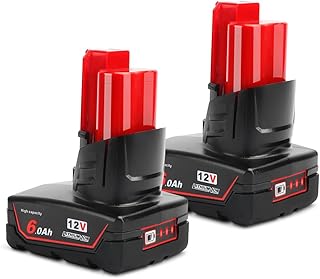


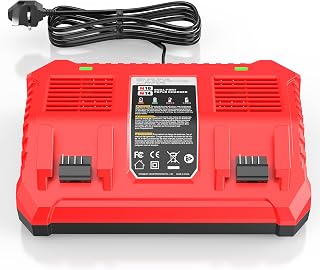




Choosing the right Milwaukee battery and charger is about more than selecting the highest amp-hour rating or the fastest charger available. The best combination depends on the Milwaukee cordless tools you already own, the amount of power those tools require, how frequently they are used, how much weight you are prepared to carry and how quickly batteries need to be returned to service. Milwaukee's cordless range is built around several battery platforms, with M12 and M18 being particularly important for professional and serious DIY users. Within those platforms, different battery capacities and technologies are designed to balance runtime, output, size, weight and charging speed. That means a compact battery can be the better choice for a drill or installation tool, while a higher-capacity pack may make much more sense for a demanding saw, grinder or other high-load application. This expanded guide focuses on the practical differences that matter when comparing Milwaukee batteries and chargers in the UK. It also explains compatibility, capacity, charging technology, battery construction, heat management, storage, maintenance and the buying mistakes that can make an apparently inexpensive battery package poor value over time. For occasional work, a smaller Milwaukee battery can provide a useful combination of low weight and adequate runtime. For general professional use, mid-capacity packs often provide a more balanced compromise between portability and endurance. For demanding M18 applications, higher-capacity HIGH OUTPUT or REDLITHIUM FORGE batteries can be preferable where sustained power and reduced downtime matter more than minimum pack weight. The first decision should normally be the battery platform rather than the amp-hour rating. M12 and M18 are separate Milwaukee systems, and a battery should only be selected when it is designed for the tool platform in question. M12 is Milwaukee's compact cordless platform. Its smaller battery format is particularly useful when tools are used overhead, inside cabinets, around fittings or in confined working areas where a bulky battery can make positioning more difficult. The main advantage of an M12 battery is therefore not simply its energy capacity. Physical size, balance and reduced tool weight can be equally important. A compact battery may be preferable on an installation tool even if a larger pack could theoretically provide more runtime. M12 also includes HIGH OUTPUT battery options. These are intended for applications where users want more capability from the compact platform, although the correct battery still depends on the individual tool and its recommended operating requirements. M18 is the larger 18V cordless platform and covers a much broader range of professional applications. It includes compact batteries as well as higher-capacity HIGH OUTPUT and FORGE packs. The M18 platform is particularly relevant when comparing batteries for saws, grinders, rotary hammers, heavy-duty drills, impact wrenches and other tools where sustained electrical output can have a major influence on performance. Milwaukee states that its M18 FORGE batteries remain compatible with M18 solutions, making platform compatibility an important distinction between upgrading a battery and changing to an entirely different cordless ecosystem. Ah stands for ampere-hours. It is a measure of battery capacity, but it should not be interpreted as a simple guarantee of how many minutes a particular tool will run. A higher Ah rating generally means greater stored electrical capacity within the battery category, but actual runtime varies according to the tool, workload, material, operating conditions, temperature and the way the tool is used. A smaller battery is normally attractive when portability is more important than maximum runtime. A 5.0Ah-class pack can provide substantially more capacity, but it can also add physical size and weight. For a drill used intermittently, the lighter option may be more comfortable. For repeated cutting or fastening, the larger pack may reduce battery changes and interruptions. Moving to an 8.0Ah-class battery makes more sense when extended runtime and sustained performance justify the additional size and weight. It can be especially relevant to users who would otherwise need to stop frequently to change packs. However, buying a larger battery purely because its Ah number is higher can be a mistake. If the tool is normally used for short bursts, a smaller battery may deliver the better overall experience. High-capacity 12.0Ah batteries are primarily interesting for users who place a premium on runtime and high-demand applications. They are not automatically the best choice for every M18 tool. Milwaukee's current FORGE range includes 6.0Ah, 8.0Ah and 12.0Ah M18 batteries. The manufacturer positions FORGE as its high-end M18 battery technology, with emphasis on power, charging speed, durability and thermal management. Battery branding can make comparisons confusing because capacity and battery technology are separate considerations. Two batteries can have similar Ah ratings while being designed around different performance characteristics. REDLITHIUM is Milwaukee's lithium-ion battery technology family. The important point for buyers is that the battery should be considered as part of a complete tool, battery and charger system rather than as an isolated power source. HIGH OUTPUT batteries are designed to provide increased performance compared with conventional M18 battery technology. They are particularly relevant when a tool places greater demands on the battery under load. Milwaukee's UK material lists HIGH OUTPUT batteries in several capacities, including 3.0Ah and 5.5Ah M18 options, alongside larger battery technologies. FORGE is the higher-performance end of the M18 battery range. The current M18 FORGE family includes 6.0Ah, 8.0Ah and 12.0Ah packs. Milwaukee highlights improved construction, thermal management, resistance to common job-site contaminants and faster charging as key characteristics of the range. The M18 FB8 and FB12 also use a newer cell design intended to reduce electrical resistance and heat generation. Milwaukee states that the tabless cell design used in those batteries can reduce electrical resistance by up to 50% and heat generation by up to 45% compared with the previous design. These are manufacturer claims rather than independent test results, so they should be treated accordingly. One of the most common mistakes when comparing cordless batteries is assuming that the biggest Ah rating automatically provides the best performance in every situation. Battery performance involves several interacting factors: This is why a smaller, modern battery can sometimes be a more sensible choice than an older, heavier pack with a similar nominal capacity. Heat is an important consideration in cordless power tools. Heavy loads can increase electrical and mechanical heat, while charging also generates heat. Excessive temperatures can influence charging behaviour and battery longevity. Milwaukee's FORGE ecosystem includes COOL-CYCLE technology on compatible batteries. The company's M18 dual-bay super charger uses active cooling and adaptive charging to manage charging across compatible packs. For a homeowner who charges a battery occasionally, advanced cooling may be less important than it is for a tradesperson who repeatedly empties and recharges several packs during a working day. A charger should be selected according to the battery platform, the number of batteries you need to maintain and the amount of downtime your work can tolerate. A standard charger is suitable for users who can leave batteries charging between jobs and do not regularly depend on rapid turnaround. The principal advantage is simplicity. If batteries are normally charged overnight or between working sessions, paying a premium for the fastest charging technology may not provide much practical benefit. Rapid charging becomes more useful when a battery must return to service quickly. It can be particularly valuable for professionals working with a small number of battery packs. When comparing rapid chargers, look at the complete charging system rather than relying on marketing descriptions alone. Charging speed can vary according to battery type, capacity, temperature and the portion of the charging cycle being measured. Multi-bay chargers are useful when several batteries need to be maintained. They can simplify charging routines on busy jobsites, in workshops and in vehicles or storage areas where multiple packs are rotated throughout the day. Milwaukee's charger range includes multi-bay options for M18 batteries, including six-bay models. Its published specifications distinguish between chargers that charge batteries simultaneously and those that charge sequentially, so this is a specification worth checking rather than assuming all multi-bay chargers behave identically. The M18 DBSC is designed for faster charging and can charge two compatible M18 batteries. Milwaukee states that the charger can deliver up to six times faster charging to 80% compared with a standard charger, with charging performance dependent on the battery being used. Milwaukee also states that an M18 FORGE 6.0Ah battery can reach 80% in 15 minutes using the M18 DBSC, while the FORGE 8.0Ah pack can reach 80% in 35 minutes. These figures are manufacturer specifications and should not be interpreted as a universal charging time for every M18 battery. A battery-and-charger kit can be a sensible option when entering a cordless platform or expanding an existing collection. It can also be inefficient if you already own several suitable chargers. Compatibility should always be confirmed before purchase. Do not assume that a battery is suitable simply because it carries the Milwaukee name or looks physically similar to another pack. Milwaukee's European battery and charger catalogue distinguishes between M12, M18, MX FUEL and REDLITHIUM USB products, demonstrating why the platform name should be treated as a fundamental buying criterion. There is no universal ideal number. The right quantity depends on your working pattern. One battery can be enough for occasional DIY work, especially if the tool is used intermittently and charging between jobs is convenient. Two batteries create a simple rotation: one can be in use while the other is charging. This can make a significant difference when a tool is used regularly but not continuously. Several batteries make more sense for professionals using multiple cordless tools throughout the day. A larger battery rotation can reduce the frequency of interruptions and make a rapid or multi-bay charger more useful. However, owning many batteries is not automatically better. Batteries are consumable electrical components, so the goal should be to maintain a practical rotation rather than accumulating packs that spend most of their time unused. For drilling and general fastening, balance is often more important than maximum capacity. A compact battery can make the tool easier to control, particularly during repetitive overhead work. Impact drivers are frequently used for repeated fastening, so both weight and available output matter. A compact pack may be ideal for installation work, while a higher-performance pack can be more appropriate for demanding fastening applications. Circular saws can place a substantially greater demand on the battery than intermittent drilling. Capacity and sustained output therefore deserve more attention, especially when cutting thicker or denser material repeatedly. Grinders can create high continuous loads. Battery selection should therefore take account of sustained output and heat management rather than simply choosing the lightest pack. For heavy drilling and masonry work, battery performance under load becomes particularly relevant. Higher-output M18 batteries can be worth investigating where the tool is designed to take advantage of them. High-torque impact wrenches can benefit from batteries capable of supplying substantial power under load. The appropriate battery should be selected according to the exact tool and application rather than by Ah rating alone. The most useful way to compare batteries is to ask what you are trying to optimise. Weight is easy to overlook because online product comparisons tend to focus on capacity. In actual use, however, battery weight can influence comfort, fatigue and tool handling. This matters particularly for overhead drilling, installation work, cabinet fitting, electrical work and other applications where the tool is held away from the body for long periods. A larger battery can be an excellent choice for a saw or high-load tool while being unnecessarily cumbersome on a compact drill. The correct battery is therefore application-specific. Runtime should be treated as an application-dependent characteristic rather than a fixed number. A drill performing occasional holes in soft timber can consume much less energy than the same drill working continuously in dense material. A grinder under sustained load can behave very differently from a drill used in short bursts. When comparing batteries, ask whether the manufacturer specifies a particular runtime test, tool and operating condition. Without that context, a simple runtime figure may not translate directly to your work. Fast-charging claims often refer to the time needed to reach a particular percentage rather than a complete charge. This distinction matters when comparing chargers. A charger advertised as extremely fast to 80% should not automatically be compared with another product's full-charge time. Look for the percentage used in the specification and compare like with like. Milwaukee's published M18 FORGE charging information specifically distinguishes charging to 80% from reaching a full charge, including its stated 15-minute 80% figure for the FORGE 6.0Ah battery with the M18 DBSC. Adaptive charging refers to a charger adjusting how charging resources are distributed according to the batteries connected and their charging requirements. For a multi-battery setup, this can be more useful than simply having a high headline charging rate. Milwaukee describes the M18 DBSC as using adaptive charge distribution for simultaneous charging of multiple compatible batteries. When comparing chargers, therefore, check whether charging is simultaneous or sequential, how many bays are available and how the charger prioritises multiple batteries. A workshop setup benefits from a charger that fits the way batteries are stored and rotated. Milwaukee's published multi-bay charger specifications include differences in bay count, charging rate, charging sequence, cooling and wall-mounting capability, so these are worthwhile comparison points when selecting a workshop charger. Mobile tradespeople should think about charging as part of the whole workflow. Battery quantity, charger size, mains access and the time available between jobs can all influence the most practical solution. A compact charger may be preferable where space is limited. Conversely, a professional who routinely returns to a vehicle between jobs may benefit more from a faster charging arrangement. Do not assume that a charger designed for workshop use is automatically appropriate for vehicle charging. Always check the manufacturer's stated electrical requirements and use only suitable power arrangements. Job-site conditions can be harsh on batteries. Dust, vibration, moisture, temperature changes, impacts and exposure to substances such as oils and greases can all affect equipment over time. Milwaukee highlights protective construction and resistance to common oils, greases and solvents as features of its M18 FORGE battery design. That does not mean a battery should be treated as indestructible. Good storage and sensible handling remain important regardless of the advertised protection level. Battery storage should be treated as part of battery maintenance rather than an afterthought. Battery longevity depends on usage, charging, temperature, storage and the physical condition of the pack. No battery can be expected to retain its original performance indefinitely. Practical habits include avoiding unnecessary heat, using the correct charger, keeping batteries clean and dry, rotating multiple packs rather than repeatedly exhausting one battery and following Milwaukee's instructions for charging and storage. If a battery becomes visibly damaged, behaves abnormally or shows signs of electrical or physical failure, it should not simply be forced back into service. Reduced runtime is one obvious sign, but it is not the only factor worth watching. Do not attempt to open, rebuild or modify a lithium-ion power-tool battery unless you are specifically qualified and equipped to work safely with that technology. Damaged lithium-ion packs should be handled according to appropriate manufacturer and waste-disposal guidance. The biggest battery is not automatically the best battery. Additional capacity can mean additional weight and cost, while the extra runtime may be unnecessary for short jobs. Two packs with similar capacity can have different output and thermal characteristics. Look beyond the Ah number. Check the battery platform and exact charger compatibility before purchase. This is particularly important when buying from marketplaces where product titles may be abbreviated. Charging rates vary by battery and charger combination. Check the manufacturer's specifications and whether advertised charging times refer to 80% or 100%. A very large pack can become tiring on a compact hand tool. Consider how the tool is actually held and used. A premium battery and fast charger cannot completely eliminate downtime if one battery is doing all the work. A sensible battery rotation can be more useful than upgrading to the largest possible pack. The cheapest battery is not necessarily the best value. Consider capacity, technology, expected workload, charger compatibility, manufacturer support and the cost of replacing the battery sooner than expected. Battery packs are safety-critical electrical components, so buyers should be cautious when considering products that claim compatibility without clearly establishing their provenance. When comparing a genuine Milwaukee battery with an unverified alternative, look at the complete product information, manufacturer identification, compatibility information, safety documentation and seller reputation rather than focusing solely on the advertised Ah rating. For professional users, the consequences of unreliable batteries can extend beyond replacement cost. Unexpected shutdowns, poor load performance and charging problems can interrupt work and create additional risk. A useful comparison should score each battery against the job rather than against a generic idea of what constitutes the "best" pack. The following framework can be used when comparing individual batteries or battery-and-charger kits. FORGE is most compelling when its performance characteristics address a genuine requirement. The premium technology makes more sense for users who regularly work with demanding M18 tools, value fast charging or need a battery designed for intensive job-site use. For occasional DIY work, a less advanced battery can be perfectly adequate. Paying for a high-end battery makes less sense when the tool is used for short periods and there is plenty of time to recharge. Milwaukee positions M18 FORGE as its most advanced M18 battery technology and highlights faster charging, increased power and longer life as central features. HIGH OUTPUT becomes more interesting when a tool's workload justifies the additional battery capability. For high-demand tools, the difference between a conventional pack and a higher-output battery can be more meaningful than simply increasing capacity. For lighter-duty applications, the additional size or weight may not provide enough practical benefit to justify the upgrade. Rather than buying batteries randomly, build a collection around your actual tools. Professional users should assess the complete cost of ownership. A battery that appears expensive may be economically sensible if it reduces interruptions, while an inexpensive battery can become poor value if it does not provide the expected working performance. Consider how many tools are used simultaneously, how far the tools are carried, whether work takes place indoors or outdoors, how often batteries are recharged and whether charging time directly affects productivity. For a busy trade environment, charger organisation can be just as important as battery capacity. Several appropriately sized batteries paired with a well-matched charging setup can provide a more dependable workflow than a small collection of very large batteries. DIY users should usually prioritise compatibility, convenience, sensible capacity and value rather than maximum specifications. If a drill is used only occasionally, there may be little reason to buy the largest battery or most advanced charger. If several tools are being added to the same cordless platform, however, investing in a sensible battery ecosystem can reduce duplication and make future purchases easier. Battery prices can be misleading when packs, chargers and kits are compared without accounting for what is included. When checking today's prices, compare like-for-like products and note whether the package contains one battery, two batteries, a charger, a rapid charger or additional accessories. It is also worth calculating the effective cost of a battery-and-charger setup rather than comparing a battery-only price against a complete kit. Customer reviews can provide useful information, but they should be interpreted carefully. The most helpful reviews explain the tool used, workload, charging routine and practical experience rather than simply assigning a star rating. Look for repeated comments about: Do not treat isolated reviews as proof of a universal performance characteristic. Different tools and working conditions can produce very different results. Before purchasing, record the following information for each product you are comparing: There is no single best Milwaukee battery for every user. The right choice depends on the tool, workload, required runtime, acceptable weight and charging arrangements. Compact packs suit users prioritising portability, while HIGH OUTPUT and FORGE batteries are more relevant to demanding M18 applications. No. A higher Ah rating generally provides greater capacity, but it can also increase battery size and weight. The best choice is the capacity that matches the tool and workload. Neither platform is universally better. M12 prioritises compact cordless tools, while M18 covers a larger and more powerful range of applications. Choose the platform that matches your tools and work. No. M12 and M18 are different Milwaukee battery platforms. Always use the battery specified for the tool. Both are higher-performance battery technologies, but FORGE represents a newer, premium M18 battery range with further developments in power delivery, charging speed, construction and thermal management. Milwaukee states that M18 REDLITHIUM FORGE batteries maintain compatibility with M18 solutions. Always check the exact tool and battery documentation when confirming compatibility for a particular application. Charging time depends on the battery and charger combination. Milwaukee states that the M18 DBSC can charge a FORGE 6.0Ah battery to 80% in 15 minutes and a FORGE 8.0Ah battery to 80% in 35 minutes. The complete charge takes longer, and other battery and charger combinations have different specifications. It can be worthwhile if battery downtime affects your work. For occasional DIY use, a standard charger may be sufficient. For professional users with frequent battery changes, faster charging can have considerably more practical value. Two batteries are often more convenient than one because one can be used while the other charges. The ideal number depends on how continuously the tools are used. They can be worthwhile for demanding applications where high capacity and extended runtime are valuable. They are less attractive when tool weight and compactness are more important than maximum runtime. A compact or mid-capacity battery is often the sensible starting point for drills because balance and weight matter. The appropriate capacity depends on how frequently and heavily the drill is used. For demanding grinder applications, compare HIGH OUTPUT and FORGE options supported by the tool. Sustained output, thermal management and capacity can matter more than choosing the smallest pack. A higher-capacity, higher-output M18 battery can be worth considering for repeated cutting. However, the exact battery should be matched to the saw, material and workload. Follow the manufacturer's charging and storage instructions for the particular battery and charger. Do not use generic charging advice as a substitute for the product documentation. Store them in a suitable clean, dry environment and protect them from excessive heat, physical damage and contamination. Follow Milwaukee's instructions for the specific battery model. There is no single guaranteed service life. Battery longevity depends on usage, charging frequency, temperature, workload, storage and general treatment. Heavy professional use can place substantially different demands on a battery than occasional DIY work. A kit can be good value when you need both batteries and a charger. If you already own enough compatible chargers, buying battery-only products may make more sense. Check battery compatibility, charging speed, number of bays, simultaneous or sequential operation, cooling features, physical size and UK electrical specification. Choose based on your charging workflow rather than headline speed alone. The best Milwaukee battery and charger combination is the one that fits the complete working system rather than the one with the largest number printed on the packaging. Start with platform compatibility, then consider battery capacity, output technology, weight and workload. After that, assess how many batteries you actually need and whether your charger can keep them available when required. For compact work, portability can be more valuable than maximum capacity. For demanding M18 applications, HIGH OUTPUT and FORGE technologies deserve closer consideration. For professionals, charger speed and battery rotation can be just as important as individual battery capacity. Before purchasing, compare the exact model number, specifications, included items and current UK price. Read verified customer reviews for evidence about real-world use, but separate individual experiences from manufacturer specifications. Where a product's compatibility or technical information is unclear, check the manufacturer's current documentation before committing to a purchase. Milwaukee's current M18 FORGE range and charger ecosystem demonstrate why a modern battery comparison should consider power delivery, charging speed, thermal management, construction and system compatibility alongside Ah capacity. Ultimately, the strongest buying decision is not necessarily the most expensive battery or the largest capacity. It is the combination that gives your particular tools the required performance, keeps weight manageable, minimises unnecessary downtime and makes sensible use of the cordless platform you already own.
Milwaukee Battery and Charger Buying Guide for the UK
Quick Answer: Which Milwaukee Battery and Charger Should You Choose?
Milwaukee M12 vs M18 Batteries
M12 Battery System
M18 Battery System
What Does Battery Ah Mean?
2.0Ah vs 5.0Ah
5.0Ah vs 8.0Ah
8.0Ah vs 12.0Ah
Understanding Milwaukee REDLITHIUM, HIGH OUTPUT and FORGE
REDLITHIUM
HIGH OUTPUT
REDLITHIUM FORGE
Battery Size Is Not the Same as Battery Performance
Why Heat Management Matters
Milwaukee Charger Types Explained
Standard Chargers
Rapid Chargers
Multi-Bay Chargers
M18 Dual-Bay Super Charger
Should You Buy a Battery and Charger Kit?
When a Kit Makes Sense
When Buying Batteries Separately May Be Better
Battery and Charger Compatibility: What to Check Before Buying
How Many Milwaukee Batteries Do You Actually Need?
One Battery
Two Batteries
Three or More Batteries
Battery Choice by Tool Type
Drills and Combi Drills
Impact Drivers
Circular Saws
Angle Grinders
Rotary Hammers
Impact Wrenches
Compact Battery vs High-Capacity Battery
Battery Weight and Tool Balance
Battery Runtime: Why Advertised Runtime Can Be Misleading
Charging to 80% vs Charging to 100%
What Is Adaptive Charging?
Choosing a Charger for a Workshop
Choosing a Charger for a Van or Mobile Workshop
Battery Construction and Durability
How to Store Milwaukee Batteries Properly
How to Extend Milwaukee Battery Life
Signs That a Battery May Need Replacing
Common Milwaukee Battery Buying Mistakes
Buying the Highest Ah Available
Ignoring Battery Technology
Buying an Incompatible Charger
Assuming Every Fast Charger Is Equally Fast
Ignoring Battery Weight
Buying Too Few Batteries for Continuous Work
Choosing on Price Alone
Genuine Milwaukee Batteries vs Unverified Alternatives
How to Compare Milwaukee Batteries Like a Professional
Milwaukee Battery Comparison Framework
Is a Milwaukee FORGE Battery Worth It?
Is a Milwaukee HIGH OUTPUT Battery Worth It?
How to Build a Sensible Milwaukee Battery Collection
Battery and Charger Buying Guide for Tradespeople
Battery and Charger Buying Guide for DIY Users
Questions to Ask Before Buying
How to Compare Prices Fairly
What to Check in Customer Reviews
Milwaukee Battery and Charger Specifications Checklist
Milwaukee Battery and Charger Maintenance Checklist
Frequently Asked Questions
What is the best Milwaukee battery to buy?
Is a higher Ah Milwaukee battery always better?
Is Milwaukee M12 better than M18?
Can I use an M18 battery on an M12 tool?
What is the difference between Milwaukee HIGH OUTPUT and FORGE?
Is Milwaukee FORGE compatible with M18 tools?
How quickly can a Milwaukee FORGE battery charge?
Is a fast charger worth buying?
Should I buy two Milwaukee batteries?
Are Milwaukee 12Ah batteries worth it?
What is the best Milwaukee battery for drills?
What is the best Milwaukee battery for a grinder?
What is the best Milwaukee battery for a circular saw?
Can I leave a Milwaukee battery on the charger?
How should Milwaukee batteries be stored?
How long do Milwaukee batteries last?
Are Milwaukee battery kits good value?
What should I look for in a Milwaukee charger?
Final Buying Advice