

Our experts reviewed the latest {category_name } to help you compare quality, performance, durability and overall value before making your purchase.


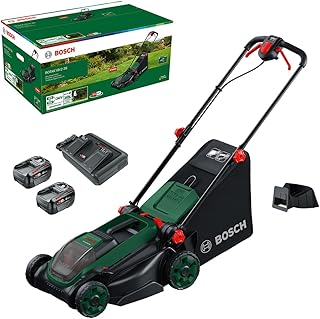


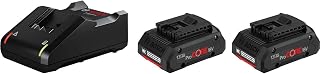


Choosing the right Bosch battery and charger is less about selecting the largest capacity available and more about matching the battery system, capacity, physical size, charging requirements and intended workload. Bosch cordless tools are sold across different battery platforms, so compatibility should always be checked before comparing capacity or charging speed. For UK buyers, the most important distinction is between the Bosch Professional system and the Bosch DIY 18V POWER FOR ALL system. Both use 18V lithium-ion technology, but they are separate ecosystems and should not be treated as interchangeable simply because the voltage is the same. Bosch Professional products are aimed at demanding trade and professional applications, while POWER FOR ALL is designed primarily around DIY, home, garden and compatible household applications. This guide expands the buying considerations behind Bosch battery and charger comparisons, including battery capacity, charging performance, compatibility, weight, runtime, heat management, charging habits, storage, replacement considerations and the practical differences between compact and high-capacity batteries. One of the easiest mistakes when shopping for a Bosch battery is assuming that every Bosch 18V battery will fit every Bosch 18V tool. The voltage figure alone is not enough to establish compatibility. Bosch Professional has its own Professional 18V System, while Bosch DIY uses the 18V POWER FOR ALL platform. These systems have different tool ranges, battery designs and intended applications. Before buying a replacement battery, identify the exact system used by the tool and then check the manufacturer's compatibility information for that platform. This distinction is particularly important when shopping through marketplaces where product titles may contain several Bosch product families. A listing that simply says “Bosch 18V battery” does not provide enough information to make a safe purchasing decision. The Bosch Professional 18V System is designed around professional power tools and includes standard GBA batteries alongside higher-performance ProCORE18V batteries. The system is particularly relevant to tradespeople, contractors, installers, maintenance professionals and serious users who regularly operate cordless tools for extended periods. Another consideration is AMPShare compatibility. Bosch Professional batteries and chargers that are specified as compatible with AMPShare can form part of a wider multi-brand professional battery ecosystem. This can be useful when a user owns compatible tools from more than one participating manufacturer. The Bosch 18V POWER FOR ALL system is intended for DIY, home and garden applications and extends beyond individual power tools. Its appeal is the ability to use compatible batteries across a broad selection of products within the same system. This makes the system particularly attractive to household users who may want one battery platform for drills, screwdrivers, garden equipment and other compatible products rather than maintaining several unrelated battery formats. Battery capacity is normally expressed in ampere-hours, or Ah. In simple terms, a higher Ah rating means that the battery stores more electrical charge. It does not, by itself, mean that a tool will automatically deliver proportionally more power in every situation. For example, two batteries may both be 18V but have different Ah ratings. The higher-capacity battery will generally be capable of supplying energy for longer before recharging is required, assuming comparable operating conditions and compatible tool requirements. Actual runtime varies considerably. The type of tool, material being worked on, pressure applied by the operator, motor efficiency, operating temperature, battery condition and workload can all influence how quickly a battery is depleted. Lower-capacity batteries are particularly useful when portability and low weight matter more than maximum runtime. They can make a noticeable difference when a cordless drill, impact driver or other handheld tool is being used above shoulder height or for prolonged periods. Compact batteries can also be a sensible choice for intermittent tasks where a full day's runtime is unnecessary. A smaller battery can make the tool easier to manoeuvre and may reduce operator fatigue. Around 4.0Ah is often an appealing middle ground for users who want a balance between battery size and working time. It can be suitable for general drilling, screwdriving, installation and other routine cordless work, although the ideal capacity still depends on the specific tool. For buyers comparing battery-only prices, remember that a larger Ah rating is not automatically the better value. If the additional capacity adds weight that you do not need, a compact battery may be the more practical option. Higher-capacity batteries become increasingly attractive for users who perform longer tasks or want fewer interruptions for charging. They can be particularly useful with tools that consume considerable energy during sustained operation. The trade-off is weight and physical size. A high-capacity battery may improve endurance but can make a compact cordless tool less comfortable to use. The best choice therefore depends on whether runtime or manoeuvrability is the bigger priority. Bosch Professional's standard battery range and ProCORE18V batteries should be compared on more than Ah capacity alone. Cell technology, thermal management, physical dimensions, weight and the tool's ability to take advantage of higher-performance batteries can all influence the practical difference. ProCORE18V batteries are positioned as Bosch Professional's higher-performance battery option. They are particularly relevant where a tool can benefit from greater sustained performance and where thermal management becomes an important consideration during demanding work. For a user who mainly operates a compact drill or screwdriver for short periods, paying extra for a high-performance battery may provide less practical benefit than buying an additional standard battery. Conversely, a professional using demanding cordless equipment throughout the working day may place much greater value on higher-performance battery technology. Voltage indicates an electrical characteristic of the battery system, but it is not a standalone measurement of tool performance. A compact 12V system can be an excellent choice for lightweight installation work, while an 18V platform is better suited to applications requiring a broader range of cordless power tools. Bosch Professional also offers a 12V system alongside its 18V range. Buyers should therefore start by identifying the voltage and battery platform specified for their tool rather than trying to upgrade a lower-voltage tool by purchasing a physically different battery. For most buying decisions, compatibility comes before capacity, and capacity comes before theoretical performance comparisons. The charger is just as important as the battery when building a cordless tool setup. A battery with a large capacity can be useful for long jobs, but a slow or poorly matched charging arrangement may create unnecessary downtime. When comparing Bosch chargers, examine the charging current, compatible battery voltages, published charging times, physical size, mounting options and whether the charger is intended for the same battery ecosystem as your tools. A standard charger can be perfectly adequate for occasional DIY use. If a battery is charged overnight or between infrequent jobs, paying significantly more for faster charging may not make financial sense. A faster charger becomes more valuable when cordless tools are used intensively and the same batteries need to return to service quickly. In a professional environment, reducing charging downtime can be more important than saving a relatively small amount on the initial charger purchase. Most basic users will find a single-battery charger sufficient. However, people operating several cordless tools may benefit from a charging setup that allows batteries to be managed more efficiently. Multi-bay charging can be particularly useful for users with several batteries, although the charging architecture varies between models. Check whether batteries are charged sequentially or in parallel rather than assuming that two charging bays automatically mean twice the charging speed. Charging speed should be assessed using the manufacturer's stated charging times for the exact battery capacity. A charger described as “fast” is not enough information to determine how quickly a particular battery will charge. Charging performance can also vary according to battery capacity and battery type. A charger that charges a smaller battery relatively quickly may take considerably longer with a high-capacity pack. For example, Bosch Professional publishes separate charging figures for different battery capacities on its charger specifications. This is a useful reminder to compare the charging time for the battery you actually intend to buy rather than relying on a headline description. Published Ah capacity provides a useful comparison point, but real-world runtime is application-dependent. A battery used with a cordless drill for light screwdriving can behave very differently from the same battery used with a grinder, circular saw or other high-demand tool. Important factors include: More runtime is useful only if the additional battery weight does not make the tool uncomfortable to use. This is one of the most important considerations when choosing between compact and high-capacity Bosch batteries. For work involving ladders, overhead drilling, repetitive fastening or prolonged one-handed operation, a lighter battery may be preferable even if it requires more frequent charging. For floor-level cutting, workshop applications or extended heavy-duty work, additional battery capacity may be more valuable because the extra weight is less intrusive and fewer battery changes are required. The best battery is therefore not necessarily the one with the highest Ah rating. It is the one that provides an appropriate balance between endurance and handling for the job. Modern lithium-ion tool batteries incorporate electronic controls and thermal management features designed to protect the battery and support consistent operation. Bosch uses technologies such as COOLPACK within its Professional battery range. Thermal management matters because demanding cordless applications can generate significant heat. Excessive heat can influence battery performance and long-term durability, so battery design should be considered alongside capacity. High-performance batteries may use different cell configurations and construction techniques to achieve a particular balance between power delivery, size, weight and heat management. For professional users, these characteristics can be more significant than simply choosing the highest Ah figure. A common buying mistake is to treat Ah as a direct measure of power. It is better understood as a measure of stored capacity. Power delivery also depends on factors including voltage, cell characteristics, electronics, tool design and the current demanded by the motor. This is why a compact high-quality battery can sometimes be more appropriate than a physically larger battery with a greater nominal capacity. The tool and battery are designed as a system rather than as independent components. A battery and charger starter set can make sense when entering a battery ecosystem for the first time. It gives the buyer the essential components needed to operate compatible cordless tools without purchasing the battery and charger separately. Starter sets are particularly worth comparing when the individual battery and charger prices differ significantly from the combined package. However, always check precisely what is included. Some packages contain one battery, some contain multiple batteries, and tool-only products may exclude both the battery and charger. If you already own a compatible charger and several batteries, buying another battery without an additional charger can be the more economical route. This is one of the main advantages of committing to a battery platform. Once the necessary charging infrastructure is established, additional cordless tools can sometimes be purchased in body-only or “solo” form, avoiding unnecessary duplication. Two medium-capacity batteries can sometimes be more practical than one very large battery. The advantage is flexibility: one battery can be used while the other is charging, allowing work to continue with fewer interruptions. This approach is especially useful for users with several compatible tools. Instead of asking one battery to cover every task, the batteries can be rotated according to workload. However, the best arrangement depends on the charging speed, number of tools, expected workload and whether the user prioritises minimum weight or maximum uninterrupted runtime. A structured comparison makes it easier to avoid choosing a battery solely because it has the highest capacity. The highest Ah rating is not automatically the best choice. A heavy battery may be unnecessarily cumbersome for light installation work. This is perhaps the most important mistake to avoid. Bosch Professional and Bosch DIY POWER FOR ALL are separate systems. Confirm the exact battery platform before purchasing. A battery purchase should be considered together with the charger. If charging takes too long for your working pattern, the theoretical runtime advantage of a large battery may not translate into a convenient overall setup. Not every cordless tool benefits equally from a large battery. A compact drill used occasionally may be more pleasant with a smaller pack. The opposite mistake can be equally frustrating. Constantly changing small batteries during demanding work can introduce unnecessary interruptions and reduce productivity. When buying from a third-party marketplace, pay attention to the condition of the battery and the credibility of the seller. A product described as new should be checked carefully against the listing details, packaging and model information. Before placing an order, compare the information printed on the battery with the information in the product listing. Useful identifiers can include the battery family, voltage, capacity and Bosch part or order number. Where possible, compare the listing against the manufacturer's product information. This is particularly valuable when marketplace listings use generic titles or photographs that may not clearly distinguish between Bosch product families. Also check whether the product is a genuine Bosch battery, an original battery sold separately, a complete starter kit or a third-party replacement. These are not equivalent purchasing decisions. Third-party batteries can appear attractive because of their lower purchase price, but buyers should consider compatibility, build quality, protection electronics, battery cells, charging behaviour and seller reliability rather than comparing price alone. For an expensive cordless tool ecosystem, using batteries and chargers specified for the system can provide greater confidence about compatibility. Buyers who nevertheless consider alternatives should carefully investigate the exact tool models supported and the safety information provided by the manufacturer. Good storage practices can help protect cordless batteries when they are not being used regularly. Batteries should be kept in accordance with the manufacturer's instructions and protected from extreme temperatures, moisture, physical damage and other unsuitable conditions. A battery should not be stored where it can easily be crushed, punctured or exposed to conductive objects that could create an electrical short. Keeping battery contacts protected and maintaining a clean, dry storage environment are sensible precautions. For long periods without use, follow Bosch's guidance for the specific battery and system rather than relying on generic charging advice. Rechargeable batteries are consumable components. Their performance can change over time as they undergo repeated use and charging. The rate of change depends on usage patterns, storage conditions, operating temperature, workload and other factors. Heat is particularly important when considering battery longevity. Avoid deliberately exposing batteries to excessive temperatures and follow the manufacturer's recommendations for charging, use and storage. Regular visual inspection is also sensible. Look for signs of damage, unusual swelling, cracked housings, damaged contacts or other changes. A battery showing physical damage should not simply be returned to service because it still appears to hold a charge. For a meaningful comparison, the following specification checklist is more useful than a simple “best battery” ranking: An occasional DIY user generally benefits from a compact, versatile battery and a straightforward charger. If the tools are used only periodically, there may be little reason to prioritise the highest available capacity. The greater priority should be platform compatibility and having enough capacity for typical jobs without unnecessarily increasing tool weight. Someone undertaking several rooms of renovation work may benefit from a larger battery or multiple compatible batteries. Drilling, screwdriving, sanding and cutting can create very different energy demands, so flexibility becomes increasingly useful. A two-battery setup can be especially convenient because one battery can remain available while the other is being charged. For cordless garden equipment, battery capacity can have a major effect on how often the battery needs to be changed. Weight also matters because garden tools may be carried or operated for extended periods. Bosch POWER FOR ALL can be attractive to household users who want to share batteries between compatible garden and home products. A professional user should consider the entire battery ecosystem rather than a single battery. Several compatible batteries, a suitable high-performance charger and batteries matched to individual tools can create a more efficient setup. For demanding applications, Bosch Professional's ProCORE18V family deserves consideration alongside standard Professional batteries, particularly where sustained performance and thermal management are important. There is no universal winner. One large battery provides simplicity and can reduce the number of battery changes, while two smaller batteries provide flexibility and can allow one battery to charge while another is in use. Consider the following questions: Start with your actual working pattern rather than choosing a battery based on the largest specification. If a tool is used for short bursts throughout the day, a compact battery may provide everything required. If the same tool is used continuously for demanding work, a larger capacity becomes more compelling. A practical way to assess your needs is to estimate how often you currently stop to recharge or change batteries. If interruptions are rare, moving to a much larger battery may add weight without solving a meaningful problem. If battery changes are one of the main constraints on productivity, increasing capacity or adding a second battery may be worthwhile. The cheapest battery is of little value if it does not belong to the correct platform. Start by identifying the tool model and the battery family specified by Bosch. Once compatibility has been established, compare capacity, weight, battery technology, charger performance and total cost. This approach also reduces the risk of buying a battery that appears compatible because of a shared “18V” label but belongs to a different Bosch ecosystem. Prioritise compatibility, compactness and reasonable charging performance. A basic charger can be sufficient where there is plenty of time between jobs. Look for a charger that can replenish your chosen battery capacity within the gaps between working sessions. If several batteries are available, a faster charger can make the entire system more convenient. Compare charging speed against the capacity and performance class of the batteries being used. The charger should be considered part of the productivity system rather than simply an accessory supplied with a battery. Not every premium feature provides equal value to every buyer. Paying more can be justified when the feature addresses a genuine requirement. Marketing language can make battery specifications appear more complicated than they need to be. Buyers should concentrate on the characteristics that affect their actual work. A very high Ah rating does not automatically make a battery the best option. Likewise, an exceptionally fast charger may offer little benefit to someone who uses a cordless tool only occasionally. The most appropriate purchase is usually the one that balances compatibility, runtime, handling, charging requirements and overall cost without paying for performance that will not be used. No. Bosch has different 18V battery ecosystems, including Bosch Professional and Bosch DIY POWER FOR ALL. Always verify compatibility for the exact tool and battery family. Not necessarily. A higher Ah rating generally provides greater stored capacity, but it can also increase battery size and weight. Choose the capacity that matches the workload. It can be a useful middle-ground option for many general DIY applications, but the correct capacity depends on the tool, workload and desired balance between runtime and weight. Do not assume that they are. They are different battery platforms, so compatibility should be confirmed through the relevant Bosch system specifications. ProCORE18V is primarily relevant to Bosch Professional users who need higher-performance battery technology for demanding applications. For light DIY work, a standard compatible battery may be a more sensible choice. It depends on how frequently you use your tools. Faster charging is most valuable when batteries need to be returned to service quickly and charging downtime affects the job. Two batteries can be useful if you work continuously, use several cordless tools or want to keep working while one battery charges. For occasional DIY, one battery may be sufficient. A battery should only be used when it is specified as compatible with the tool. Do not choose a battery simply because its voltage appears similar or because the physical connector looks suitable. There is no single lifespan that applies to every battery. Service life depends on usage, charging patterns, temperature, storage, workload and battery condition. Manufacturer guidance for the specific battery should take priority over generic lifespan estimates. Modern lithium-ion battery systems are designed for flexible charging, but users should follow Bosch's instructions for the specific battery and charger, including temperature and safety requirements. There is no universal best option. A compact battery can be preferable for lightweight drilling and overhead work, while a higher-capacity battery may be better for prolonged drilling or intensive use. The best charger is the compatible model that provides suitable charging performance for your batteries and workload. Compare charging current, published charging times, compatibility and physical requirements rather than relying on the word “fast” alone. The strongest Bosch battery and charger choice is the one that fits the complete working system rather than the one with the most impressive individual specification. Start with compatibility, then consider capacity, weight, battery technology and charging speed. For occasional DIY, compact batteries and straightforward charging can offer an excellent balance. For regular home projects, a mid-capacity battery or two-battery setup can provide useful flexibility. For demanding professional applications, Bosch Professional batteries and ProCORE18V options deserve closer consideration, particularly when sustained performance and thermal management matter. Above all, do not compare Bosch batteries solely by Ah, price or headline charging speed. Check the exact battery platform, tool compatibility, physical characteristics, charger specification and intended workload. This produces a much more meaningful comparison and helps avoid purchasing an expensive battery that is unnecessarily heavy, insufficient for the task or incompatible with the tool. Buying a Bosch battery or charger is ultimately a compatibility and workload decision. The right product depends on which Bosch system your tool belongs to, how much runtime you need, how much weight you are comfortable carrying and how quickly you need batteries recharged. Compact batteries favour handling and portability, while larger-capacity packs favour endurance. Standard batteries can suit everyday tasks, while higher-performance Professional batteries are more appropriate when demanding tools and sustained workloads justify their additional capability. Chargers should be evaluated according to their compatibility and actual charging performance, not simply their advertised category. By comparing these factors together, UK buyers can make a more informed Bosch battery and charger purchase and build a cordless tool system that is easier to expand, maintain and use efficiently throughout 2026.Bosch Battery and Charger Buying Guide for the UK
Quick Guide: Which Bosch Battery Should You Choose?
Bosch Professional vs Bosch DIY: The First Compatibility Check
Bosch Professional 18V
Bosch 18V POWER FOR ALL
Understanding Bosch Battery Capacity: What Does Ah Mean?
2.0Ah and Compact Batteries
4.0Ah Batteries
5.0Ah and Larger Batteries
Standard Bosch Batteries vs ProCORE18V
Battery Voltage: Why 12V and 18V Should Not Be Compared Like-for-Like
Choosing the Right Bosch Charger
Standard Charger vs Faster Charger
Single-Bay vs Multi-Bay Charging
What Charging Speed Really Means
Battery Runtime: The Factors That Matter Most
Battery Weight vs Runtime: The Overlooked Buying Decision
Battery Cell Technology and Thermal Management
Why Battery Capacity Is Not the Same as Power
Buying Bosch Batteries as a Starter Set
When a Battery-Only Purchase Makes More Sense
When to Buy an Extra Battery Instead of a Larger Battery
How to Compare Bosch Batteries Before Buying
Common Bosch Battery Buying Mistakes
Buying Solely on Ah
Assuming All Bosch 18V Batteries Are Interchangeable
Ignoring the Charger
Buying More Capacity Than the Tool Needs
Buying Too Little Capacity for Heavy Work
Ignoring Battery Age and Condition
How to Check a Bosch Battery Before Purchase
Genuine Bosch Batteries vs Third-Party Replacements
How to Store Bosch Lithium-Ion Batteries
Charging Best Practice
Battery Maintenance and Expected Long-Term Use
Bosch Battery and Charger Comparison Criteria for 2026
Best Bosch Battery Choice by Type of User
Occasional DIY User
Home Renovation User
Gardener
Tradesperson
How to Choose Between One Large Battery and Two Smaller Batteries
How Much Battery Capacity Do You Really Need?
Why Tool Compatibility Should Come Before Price
How to Compare Bosch Chargers for Different Workloads
For Occasional DIY
For Frequent Home Projects
For Professional Work
Features Worth Paying More For
Features That Should Not Be Overemphasised
Questions to Ask Before Buying a Bosch Battery
Questions to Ask Before Buying a Bosch Charger
Frequently Asked Questions About Bosch Batteries and Chargers
Are all Bosch 18V batteries compatible?
Is a higher Ah Bosch battery better?
Is a 4.0Ah battery enough for DIY?
Are Bosch Professional and Bosch DIY batteries interchangeable?
Should I buy a Bosch ProCORE18V battery?
Is a faster Bosch charger worth it?
Should I buy two batteries?
Can a larger battery damage a cordless tool?
How long does a Bosch lithium-ion battery last?
Can Bosch batteries be charged at any time?
What is the best Bosch battery for a drill?
What is the best Bosch charger?
Editorial Buying Verdict
Final Bosch Battery and Charger Buying Checklist
Summary: Finding the Right Bosch Battery and Charger