

Our experts reviewed the latest {category_name } to help you compare quality, performance, durability and overall value before making your purchase.


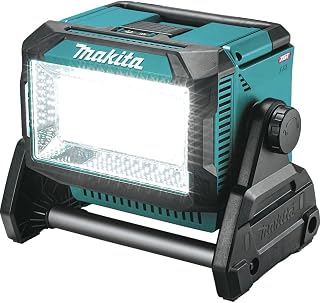


The best Makita work light is not necessarily the brightest model or the most expensive option. The right choice depends on where the light will be used, how much illumination is required, whether mains power is available, how often the light needs to be moved and, importantly, which Makita battery platform you already own. For occasional DIY tasks, a compact LED light can be more useful than a large site lamp. For renovation, decorating, electrical work or construction, a broader beam and adjustable positioning may matter more than portability. If the light is going to remain in one place for several hours, battery runtime and the ability to use mains power become much more significant buying considerations. Makita's cordless lighting range includes compact directional lights as well as larger area worklights. Understanding the distinction helps avoid buying a lamp that is technically powerful but poorly suited to the job. A compact light is designed for situations where the user needs illumination close to the workpiece. The Makita DML801 is an example of this approach. It uses the 14.4V and 18V LXT battery platform, has a folding and rotating head, offers two brightness modes and is designed to provide directional illumination rather than flood an entire room. The DML801 is specified at 240 lumens on its higher setting and 120 lumens on its lower setting. Its head can be folded through multiple positions and rotated horizontally, making positioning a major part of its usefulness. Makita specifies continuous-use figures that vary substantially with battery capacity, illustrating why battery size should be considered alongside the light itself. A larger area worklight makes more sense when the objective is to illuminate a workspace rather than a single component. The Makita DML811 is a useful example. It uses 30 LEDs and provides three brightness settings, with a specified maximum luminous flux of 3,000 lumens and maximum illuminance of 1,800 lux. The DML811 supports Makita's 14.4V and 18V LXT batteries and can also be powered from mains electricity using its detachable power supply. Makita specifies an IP65 rating when operating from DC power. Its vertical adjustment range is 240 degrees, giving considerably more flexibility for directing light around a room, workshop or work area. When broad illumination is the priority, a larger high-output model can be a better fit. The Makita DML809 is a substantially more powerful area worklight, using 96 LEDs and offering three brightness levels. Its stated maximum luminous flux is 10,000 lumens, with maximum illuminance of 3,800 lux. The DML809 is compatible with 14.4V and 18V LXT batteries and can also operate from mains power through its detachable power cord. Makita specifies IP65 protection when using DC power and a 240-degree vertical angle range. The DML809 is consequently a very different proposition from a compact inspection light. Its larger physical size and greater weight make it better suited to stationary area lighting than to carrying around continuously. These three models illustrate why comparing lumen figures alone can lead to the wrong buying decision. The practical lesson is simple: choose according to the size and character of the area you need to illuminate. A compact light may be the better purchase for detailed work even though a larger model produces dramatically more light. Two of the most frequently misunderstood specifications on work lights are lumens and lux. Lumens describe luminous flux — broadly, the total amount of visible light produced by the source. A higher lumen figure generally indicates a greater quantity of light, but it does not by itself tell you how well a particular work surface will be illuminated. Lux describes illuminance: the amount of light falling on a given surface area. Beam pattern, distance, reflector design and positioning therefore affect the practical result. This distinction explains why a compact lamp with a relatively modest lumen rating can still be highly useful for close-up work. Conversely, a very high-output floodlight may be unnecessary if the job requires only a small, precisely illuminated area. When comparing Makita work lights, examine both the lumen and lux specifications where they are provided, then consider how the lamp will actually be positioned. If you already own Makita cordless tools, battery compatibility can have a major influence on the best choice. The DML801, DML811 and DML809 models referenced above are part of the 14.4V and 18V LXT system. However, battery compatibility should never be assumed merely because two products carry the Makita name. Makita has multiple cordless platforms and product generations, so the exact model specification should be checked before purchase. A worklight's stated operating time is not a universal figure. Runtime changes according to battery capacity and the selected brightness level. A larger battery can provide longer operation, but it also increases the overall weight of a cordless lighting setup. Makita's published figures demonstrate the difference. For example, the DML801 has substantially different continuous-use figures with 2.0Ah, 4.0Ah, 5.0Ah and 6.0Ah batteries. The DML811 likewise has different specified runtimes depending on battery capacity and brightness setting. This means a buyer should not ask simply, "How long does this work light last?" The more useful question is, "How long will this work light run at the brightness I actually need with the battery I intend to use?" Some larger Makita worklights provide the flexibility of both cordless and mains-powered operation. This can be particularly valuable for decorating, refurbishment and workshop applications where the light may remain in one position for an extended period. The DML811 and DML809 specifications include detachable AC power cords. That means the buyer does not necessarily have to choose permanently between cordless convenience and continuous mains operation. For a fixed indoor workspace with reliable electrical access, mains operation can reduce the need to monitor battery charge. On a construction site, however, cordless operation can be considerably more convenient where trailing cables would restrict movement or create additional trip hazards. Always follow the manufacturer's instructions regarding electrical connections, environmental conditions and the circumstances in which water and dust resistance ratings apply. An IP rating provides information about resistance to the ingress of solids and water under specified test conditions. It should not be interpreted as meaning that a product can be used in every wet environment without limitation. For the DML811 and DML809, Makita specifies IP65 protection when operating from DC power. Buyers should therefore pay attention to the exact operating configuration rather than treating the rating as an unconditional characteristic of every possible use. For UK building sites and outdoor work, this distinction is particularly important. Weather, condensation, standing water, pressure washing and exposure to fine dust are different conditions, and an IP rating does not remove the need for sensible placement and care. Colour temperature can influence how a workspace appears under artificial lighting. Makita specifies a 5,000K colour temperature for the DML811 and DML809, producing a daylight-white appearance. For decorating, finishing and inspection work, consistent illumination can be useful because the appearance of paint, plaster, timber and other surfaces can change noticeably under different lighting conditions. A worklight should therefore be judged not only on raw brightness but also on whether its light is suitable for the type of work being performed. A powerful lamp is not automatically a good lamp if its light cannot be placed where it is needed. Adjustable heads, stands and positioning mechanisms can make a significant practical difference. Directional lights such as the DML801 are particularly useful where the light needs to follow the workpiece. Larger area lights such as the DML811 and DML809 are better suited to lighting a broader working zone and provide substantial vertical adjustment. When assessing positioning, consider whether the lamp will be placed on the floor, bench, scaffold, worktop or another stable surface. Also consider whether its controls remain accessible after positioning. A stand can transform the usefulness of a large worklight by raising the light source above the working area and allowing more even illumination. Makita specifies compatible stand options for certain larger worklights, including the DML809 and DML811. Before buying a stand, check the precise compatibility information for the lamp. A stand should be treated as part of the overall lighting system rather than an automatic accessory for every Makita worklight. Work lights intended for trades and construction face very different conditions from decorative household lamps. They may be moved repeatedly, exposed to dust, placed on rough surfaces and transported with other tools. Look for practical durability features such as protected controls, robust housing, stable support, sensible cable storage and battery protection. A rugged design is valuable only when it is combined with a configuration appropriate to the working environment. Do not confuse a robust exterior with permission to use a light outside its stated operating conditions. The manufacturer's technical documentation remains the appropriate reference for environmental limitations. Battery-powered worklights are not simply lamps with a battery attached. Modern cordless models can incorporate electronic protection designed to reduce the risk associated with conditions such as over-discharge, overheating or excessive load. Makita specifies battery protection features on the DML801, DML811 and DML809 documentation. Such systems are useful, but they do not replace normal battery care. Use compatible batteries, inspect batteries and chargers for damage, and follow the manufacturer's charging and storage guidance. Maximum brightness is only one part of the decision. A 10,000-lumen area light can be excessive for a small inspection task, while a compact directional lamp may be far easier to position. A cordless worklight is considerably less convenient if it requires a battery platform you do not already use. Always check the exact voltage and system compatibility before ordering. Runtime figures normally depend on the selected lighting mode. A lamp operating on its lowest setting may last considerably longer than the same lamp on maximum output. Compare like-for-like settings wherever possible. The weight listed for a bare worklight is not necessarily the weight you will carry around. If portability matters, consider the complete lamp-and-battery combination. Ingress protection ratings have specific meanings and test conditions. They should not be interpreted as a guarantee for unrestricted use in rain, standing water or high-pressure cleaning environments. Makita cordless products are commonly offered in configurations that differ in whether batteries, chargers or other accessories are included. Check the exact retailer listing and model designation before comparing prices. A useful comparison should go beyond price and star ratings. The following specification checklist gives a more meaningful basis for evaluating competing Makita worklights. There is considerable overlap between DIY and professional requirements, but frequency of use changes the buying priorities. A homeowner who needs a worklight several times a year may reasonably prioritise versatility, storage size and value. A tradesperson who uses a lamp every working day may place greater emphasis on battery-system compatibility, physical durability, runtime, positioning and ease of operation. Professionals should also consider whether several tools already use the same Makita battery platform. Sharing batteries across compatible equipment can simplify charging and reduce the number of different battery systems required on site. Customer reviews can be useful evidence, but they are most valuable when read for recurring, specific observations rather than treated as a simple average score. The cheapest listing is not necessarily the cheapest complete solution. A meaningful comparison should account for what is included. The Makita DML801 is the more natural choice when compactness and directional control matter more than wide-area illumination. Its folding and rotating head makes it suitable for directing light into awkward positions, while its compatibility with 14.4V and 18V LXT batteries can make it particularly attractive to existing LXT users. The Makita DML811 occupies a useful middle ground. It offers substantially more light than a compact inspection lamp while remaining smaller and less powerful than the DML809. Three brightness settings, a broad area-lighting design, mains compatibility and a 240-degree vertical adjustment range make it a versatile option for larger work areas. The Makita DML809 is the model to consider when high light output is the overriding requirement. Its specified 10,000-lumen maximum output and 96 LEDs place it firmly in the high-output area-light category. Its larger size and weight should nevertheless be considered before choosing it for jobs where frequent carrying is required. Good care can help preserve the usefulness of a worklight. Allow the unit to cool when appropriate, keep ventilation areas clear and remove accumulated dust according to the manufacturer's instructions. Buying a brighter lamp is not always the best solution to poor visibility. Positioning can have a surprisingly large effect on the quality of illumination. For detailed work, place the light so that it illuminates the workpiece without creating distracting glare. For larger areas, raising the light source can help spread illumination more evenly. When inspecting walls, ceilings or finished surfaces, changing the angle of the light can reveal shadows and surface irregularities that are less obvious under direct frontal lighting. Using multiple lower-output lights can also be more practical than relying on one extremely bright source when the workspace contains several separate work areas. The appropriate arrangement depends on the job, available power and the manufacturer's intended use of the equipment. They can be a sensible choice when their features match the intended application, particularly for people already using compatible Makita cordless batteries. The key is to select the right type of light rather than assuming every Makita worklight offers the same performance or portability. Among the models covered here, the Makita DML809 has the highest specified maximum luminous flux at 10,000 lumens. That does not automatically make it the best option for every task because brightness, portability, beam coverage, runtime and positioning all affect suitability. The DML811 is designed as a substantial area worklight and offers features such as three brightness settings, 14.4V/18V LXT battery compatibility, mains operation and a specified IP65 rating when operating from DC power. Whether it is suitable for a particular professional application depends on the working environment and required output. Not necessarily. Its high output can be useful for large renovation or construction areas, but its larger dimensions and greater weight mean that a smaller model may be more convenient for occasional indoor DIY or close-up work. The main advantage is freedom from a mains cable when working away from fixed power. Cordless operation can also make it easier to reposition the light around a room, vehicle or construction area. It depends on the exact product configuration and retailer listing. Some cordless tools are sold as bare units while others are supplied as kits. Always check the stated contents before comparing prices. Battery capacity and brightness are different concepts. An Ah rating primarily indicates battery capacity, whereas the light's output is determined by its design and selected operating mode. A higher-capacity battery can generally provide longer operation, but it does not automatically mean the lamp produces more light. 5,000K refers to the light's colour temperature. It describes a daylight-white appearance rather than the total quantity of light produced. Makita specifies a 5,000K colour temperature for models such as the DML811 and DML809. Use both where available. Lumens describe the total light output, while lux describes illuminance on a surface. Beam design, distance and positioning mean that the lumen figure alone cannot predict exactly how well a particular work area will be lit. No. Compatibility depends on the specific battery platform and product specification. The DML801, DML811 and DML809 are specified for Makita's 14.4V and 18V LXT system, but buyers should always confirm the exact model and battery requirements before purchasing. Choose a small model when portability and directional illumination are the priority. Choose a larger area light when you need to illuminate a wider workspace. The amount of light required, expected runtime, positioning options and total weight should all be considered together. Before choosing a Makita work light, identify the job first and the specification second. Decide whether you need directional or area lighting, establish the approximate size of the workspace, then check the required brightness and runtime. After that, confirm battery compatibility, mains operation, environmental protection, adjustment range and weight. For a compact directional option, the DML801 has a very different purpose from the high-output DML809. The DML811 sits between those approaches and offers a combination of area lighting, three output levels and dual power options. Comparing these models on their intended use rather than simply their headline lumen ratings is a more reliable way to narrow down the choices. Finally, verify the exact specification, package contents, current retailer pricing, availability and customer feedback before purchasing. Product ranges and retailer listings can change, so current information should always take precedence over older buying advice.How to Choose the Right Makita Work Light
Start With the Type of Work
Makita Work Light Types Explained
Compact and Directional Lights
Medium-Duty Area Worklights
High-Output Area Worklights
Makita DML801 vs DML811 vs DML809
Lumens vs Lux: Which Specification Matters?
Battery Compatibility: One of the Most Important Buying Checks
Why Battery Capacity Matters More Than Many Buyers Expect
Choosing Battery Capacity for Different Jobs
Mains Power vs Cordless Operation
Understanding IP Ratings on Work Lights
Colour Temperature and Work Quality
Beam Spread and Positioning
Work Light Stands and Mounting Considerations
Build Quality and Site Durability
Battery Protection and Electrical Safety Features
Common Buying Mistakes
Choosing the Highest Lumen Rating Automatically
Ignoring the Battery Platform
Comparing Runtime Without Comparing Brightness
Forgetting the Weight of the Battery
Assuming an IP Rating Means Waterproof
Buying a Bare Tool Without Checking What Is Included
What Specifications Should You Compare?
Makita Work Lights for DIY vs Professional Use
How to Assess Customer Reviews Properly
How to Compare Prices Fairly
Which Makita Work Light Is Best for Different Needs?
Best for Portable Inspection Work
Best for General Workspace Illumination
Best for Maximum Area Illumination
Decision Guide: Which Specification Should Matter Most?
Maintenance and Care for Makita Work Lights
How to Get Better Lighting on a Worksite
What to Check Before Buying a Makita Work Light in the UK
Frequently Asked Questions
Are Makita work lights worth buying?
Which Makita work light is brightest?
Is the Makita DML811 suitable for professional work?
Is the Makita DML809 too large for DIY?
What is the advantage of a cordless Makita work light?
Do Makita work lights come with batteries?
Does a higher Ah battery make a work light brighter?
What does 5,000K mean on a Makita work light?
Should I choose lumens or lux when comparing work lights?
Are Makita LXT work lights compatible with all Makita batteries?
How should I choose between a small and large Makita work light?
Final Buying Checklist