

♥ Wishlist
Our experts reviewed the latest {category_name } to help you compare quality, performance, durability and overall value before making your purchase.

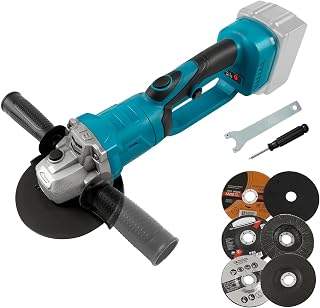


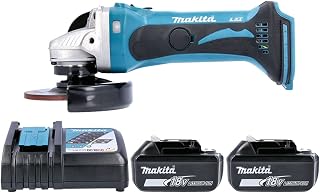
Choosing between Makita cordless angle grinders is less straightforward than simply selecting the model with the highest specification. Different machines are designed around different priorities, including cutting speed, grinding control, handling, electronic protection, disc size, battery compatibility and the type of work being carried out. A grinder used occasionally for cutting bolts and tidying welds has different requirements from one used repeatedly for fabrication, installation, maintenance or construction work. The most useful comparison therefore starts with the job rather than the product name. Consider the material you regularly work with, the accessories you intend to use, the amount of continuous grinding or cutting involved, the battery platform already available to you and how important compact handling is. Makita's cordless grinder range includes several closely related models, so understanding these distinctions can prevent paying for features that do not materially improve your work. When comparing models, assess the following specifications together rather than in isolation. Several Makita DGA-series grinders can appear very similar when viewed in a retailer listing, yet their specifications and equipment can differ. The DGA504, DGA505 and DGA506 are useful examples of why model numbers should be checked carefully rather than assuming that a higher or later number automatically means a universally better tool. Makita's published UK technical information lists the DGA504 as a cordless angle grinder and records declared vibration and noise information for surface-grinding applications. The same documentation also lists the DGA505 and DGA506, with their own declared values. These figures demonstrate an important point for buyers: specifications can vary between closely related models and should be checked against the exact version being considered. The practical buying decision should therefore focus on the feature combination rather than model numbering. If two grinders appear to offer broadly similar capability, compare their control systems, switch design, safety features, speed characteristics, vibration figures, included accessories and intended applications before deciding. The DGA511, DGA512 and DGA513 sit within another closely related group of Makita cordless angle grinders. Manufacturer documentation identifies all three as cordless angle grinders and provides model-specific vibration and noise information. The published figures differ according to model and configuration, reinforcing the need to check the exact product specification rather than relying on generic descriptions of the DGA range. For buyers comparing these models, pay particular attention to whether the grinder's speed and control characteristics suit the accessories and materials being used. A grinder selected for frequent cutting may need to be assessed differently from one intended mainly for surface grinding or finishing. It is also worth checking the supplied side handle configuration and whether the retailer's package contains a battery, charger, case or accessories. Model names can be identical while package contents differ, so the exact product description is more important than a photograph or abbreviated title. Variable speed can be valuable when one grinder is expected to perform several different jobs. Cutting, grinding, flap-disc work, finishing and some specialised accessories can place different demands on rotational speed and control. However, variable speed should not be treated as an automatic reason to choose one model over another. The accessory manufacturer's permitted operating speed remains critical. The maximum rated speed of the disc or accessory must be compatible with the grinder's operating range, and the correct accessory, guard and working method should always be used. For buyers who primarily cut steel or remove material aggressively, the benefits of variable speed may be less important than straightforward power delivery and handling. For users who regularly switch between grinding, finishing and other compatible applications, adjustable speed can provide more flexibility. Motor technology is another useful comparison point. Brushless motors eliminate conventional motor brushes, changing the maintenance requirements and allowing manufacturers to incorporate electronic motor management in different ways. A brushless design should not be interpreted as meaning that every brushless grinder will outperform every brushed grinder in every application. Overall performance depends on the motor, electronics, gearing, battery, thermal management, tool design and accessory being used. For frequent professional use, brushless models can be particularly attractive because buyers may value reduced brush-related maintenance and modern electronic control. For occasional domestic or workshop use, the decision should be based on the complete specification and total cost rather than motor terminology alone. Battery capacity is often expressed in amp-hours, but a larger capacity battery is not automatically the best choice for every angle grinder. A higher-capacity pack can increase runtime while also adding weight. That extra weight may be worthwhile during extended cutting but less desirable for overhead work or detailed grinding. Battery age, temperature, load, material, accessory condition and working technique can all affect practical runtime. Continuous heavy grinding places a very different demand on a battery from intermittent cutting or deburring. This is one of the easiest areas in which to make an inaccurate price comparison. A bare Makita grinder may look substantially cheaper than a kit, but the kit can include a battery and charger that would otherwise need to be purchased separately. Compare the complete ownership cost rather than the headline product price. If you already own compatible Makita batteries and a charger, a bare tool may be the logical choice. If you are entering the battery platform for the first time, calculate the combined cost of the grinder, suitable battery capacity and charger. Also check whether a carrying case, side handle, guard, wrench and other accessories are included. Package contents can vary between retailers and product bundles, so the exact listing should always be checked before purchase. Disc size is a fundamental specification because it affects the accessories that can be fitted and the type of work the grinder is intended to perform. Never assume that an accessory suitable for one Makita grinder is automatically suitable for another simply because the tools look similar. Cutting discs, grinding wheels, flap discs, wire brushes and other accessories have different intended applications. Their maximum permitted speed, dimensions, mounting arrangement and material suitability all need to be checked. A common buying mistake is choosing a grinder first and thinking about accessories afterwards. A better approach is to make a short list of the tasks you actually perform, identify the accessories required for those tasks and then select a grinder that is compatible with them. For cutting steel and similar materials, control, guard positioning and the correct cutting disc are critical. A grinder used mainly for cutting should be evaluated for handling and the ability to maintain a suitable working position throughout the cut. Weld removal and surface preparation can involve sustained load. Here, motor behaviour, battery capacity, heat management, vibration and ergonomic balance become more significant than they might be for occasional cutting. Deburring is generally more about precision and control than maximum material removal. A manageable grinder with an appropriate accessory can be preferable to a heavier, more aggressive machine. Flap discs and other suitable accessories can be used for preparation and finishing tasks where compatible with the grinder and accessory specifications. The correct speed range and working method should always be observed. Angle grinders are high-speed tools capable of removing material rapidly, so safety should be part of the buying decision rather than an afterthought. Look for manufacturer-documented protective functions and read the operating instructions for the exact model. These features should be verified against the specification of the exact model. Do not assume that every function is present throughout the DGA range. Vibration figures deserve more attention when comparing grinders for frequent use. Makita's UK published technical documentation provides model-specific declared vibration values for a range of cordless angle grinders, including the DGA504, DGA505, DGA506, DGA511, DGA512, DGA513 and DGA517 families. Published vibration values are not a prediction of exactly what an individual user will experience. Actual exposure depends on the task, accessory, material, pressure applied, duration and operating technique. Nevertheless, manufacturer-declared figures provide a useful basis for comparing models when prolonged use is expected. Grip and balance also matter. A grinder that feels easy to position can reduce the temptation to apply excessive pressure. The side handle should be used in the appropriate position and the tool should be held securely with both hands where the manufacturer's instructions require it. Makita's published technical documents provide declared sound pressure and sound power information for several DGA cordless angle grinders. For example, the documentation includes model-specific noise data for the DGA504, DGA505 and DGA506 as well as other models in the range. Noise data should be treated as a planning aid rather than a substitute for appropriate hearing protection. The actual working environment can make exposure considerably more complex, particularly in enclosed workshops, near reflective surfaces or when several tools are operating simultaneously. Model numbers do not provide enough information to establish which grinder is best for a particular user. Closely related machines can have different electronic features, operating characteristics and declared technical values. Always establish whether batteries and chargers are included before deciding that one option is cheaper. A high-capacity battery can increase runtime but also changes the overall weight and balance of a cordless grinder. If the tool will be used overhead or for detailed work, this deserves particular consideration. Maximum power is not the only measure of suitability. Control, size, speed, ergonomics, battery compatibility and accessory requirements may be more important for the work actually being performed. A grinder is only part of the system. Cutting discs, grinding wheels, flap discs, wire brushes and other compatible accessories can become a significant ongoing expense for frequent users. Check the contents of the exact retailer listing. A model number alone does not necessarily tell you whether a battery, charger, case or additional accessories are included in the particular package. For professional use, prioritise the factors that affect productivity over a full working day. Battery change frequency, handling, control, vibration, accessory compatibility and serviceability can have a greater practical effect than a small difference in headline specifications. If several grinders are being considered for regular site work, create a comparison sheet containing the exact model number, disc size, motor type, speed characteristics, safety functions, vibration data, noise data, weight, battery requirement and package contents. This avoids relying on retailer shorthand or product photographs. It is also sensible to consider whether the chosen grinder fits an existing Makita cordless system. Makita UK describes its business as supplying a broad range of cordless tools and associated equipment, making platform compatibility a potentially important consideration for users already invested in the brand. Occasional users should resist over-specifying the tool. If the grinder will only be used for infrequent cutting, maintenance or small fabrication projects, a compact model with suitable safety and control features may make more sense than a larger machine designed around sustained professional workloads. On the other hand, buying too far below your actual requirements can be false economy. If you regularly remove welds, cut substantial quantities of steel or perform extended grinding sessions, prioritise a specification capable of handling those demands. Good maintenance begins with keeping the grinder and its ventilation openings reasonably clear of dust and debris. Follow the manufacturer's cleaning and maintenance instructions for the exact model rather than using a generic procedure. A grinder does not necessarily need replacing simply because it has become dirty or the accessory wears out. Cutting discs and grinding accessories are consumables and should be replaced as required. Replacement becomes more relevant when there is persistent mechanical damage, unusual operation, damaged switches, compromised guards, electrical faults or other conditions that make the tool unsuitable for safe use. Repairs and servicing should be handled according to the manufacturer's instructions and appropriate professional procedures. Choose a compact option if your priorities are manoeuvrability, portability and occasional cutting or finishing. Choose a higher-capacity battery setup if extended cordless working time is more important than minimising overall weight. Choose a variable-speed model if you genuinely use compatible accessories and applications that benefit from adjustable speed. Choose a more feature-rich grinder if electronic control, safety functions and versatility are important for frequent professional use. Choose a bare tool if you already own the required compatible batteries and charger. Choose a kit if you need to establish the battery system as well as purchase the grinder. Rather than ranking grinders from one to another using a single specification, compare them across several categories. This provides a more useful picture of which model fits a particular job. There is no single best Makita cordless angle grinder for every buyer. The most suitable model depends on the required disc size, battery system, application, control features, working duration, ergonomics and budget. Compare the exact specifications of the models that fit your workload rather than choosing solely by model number. Makita offers cordless angle grinders aimed at demanding users, but suitability depends on the exact model and application. Professional buyers should compare battery requirements, operating characteristics, vibration, safety features, accessory compatibility and expected workload before purchasing. A brushless grinder can be attractive for frequent users because brushless motor technology changes the motor's maintenance requirements and can be paired with sophisticated electronic control. However, the value depends on the complete specification and how often the tool will be used. A bare tool can make sense when you already own compatible Makita batteries and a charger. If you do not, compare the combined cost of the grinder, battery and charger with complete kit options. No. A larger-capacity battery can provide greater runtime but normally adds weight. The right choice depends on whether your priority is extended operation or keeping the grinder as light and manoeuvrable as practical. Use a battery that is explicitly compatible with the exact grinder model. Do not rely on appearance alone, and check the manufacturer's documentation for the required battery platform and compatible packs. Depending on the model, suitable accessories can include cutting discs, grinding wheels, flap discs and wire brushes. Every accessory must be compatible with the grinder, correctly mounted and rated for the intended application and operating speed. Suitable cordless grinders can be used for a range of metalworking applications, including compatible cutting and grinding tasks. The appropriate model depends on material thickness, workload, accessory choice, battery capacity and required working time. Vibration becomes increasingly relevant as usage time increases. Manufacturer-declared values provide a useful comparison point, but actual exposure depends on the job, accessory, material, pressure and duration of use. Makita publishes model-specific vibration information for a number of its cordless angle grinders. No. Rotational speed is only one part of the specification. Disc compatibility, electronic control, motor behaviour, handling, safety functions, battery requirements and the intended application can all materially affect suitability. The biggest mistake is treating the grinder as an isolated purchase. The battery, charger, accessory system, intended application and working duration all influence the real value of a cordless angle grinder. For an informed 2026 purchase, the strongest approach is to compare exact model numbers rather than relying on broad claims such as "professional", "powerful" or "best". Makita's UK technical documentation demonstrates that even related DGA models can have different declared vibration and noise values, while retailer packages can vary in what is supplied. Start with your work, then narrow the choice by disc size, battery platform, handling, control and safety features. Once two or three suitable grinders remain, compare the exact specifications, package contents and current retailer pricing. This method is more reliable than selecting a model simply because it has the largest battery, highest stated speed or latest-looking model number. Most importantly, treat the grinder, battery and accessory as one working system. The best Makita cordless angle grinder is ultimately the one whose specifications align with the materials you work on, the accessories you use, the duration of your typical jobs and the level of control you require.
How to Choose the Right Makita Cordless Angle Grinder
Makita Cordless Angle Grinder Comparison: What Matters Most
Makita DGA504, DGA505 and DGA506: Understanding the Differences
Makita DGA511, DGA512 and DGA513
Variable-Speed Makita Cordless Grinders
Brushless Versus Brushed Makita Cordless Angle Grinders
Battery Choice: Why Amp-Hours Are Not the Whole Story
Bare Tool or Complete Kit?
Disc Size and Accessory Compatibility
Grinding, Cutting and Finishing: Match the Tool to the Job
Cutting Metal
Grinding Welds
Deburring
Surface Preparation
Safety Features Worth Comparing
Vibration and Ergonomics
Noise Levels and Hearing Protection
Common Makita Angle Grinder Buying Mistakes
Choosing Solely by Model Number
Comparing Bare-Tool Prices With Kit Prices
Ignoring Battery Weight
Buying the Most Powerful Model Automatically
Forgetting Accessory Costs
Assuming All Packages Are Identical
How Professionals Should Compare Makita Cordless Angle Grinders
How DIY Users Should Compare Makita Grinders
Maintenance and Care
When to Replace an Angle Grinder
What to Check Before Buying in the UK
Makita Cordless Angle Grinder Decision Guide
Makita Cordless Angle Grinder Specifications: A Better Way to Compare
Frequently Asked Questions
Which Makita cordless angle grinder is best?
Are Makita cordless angle grinders suitable for professional use?
Is a brushless Makita grinder worth buying?
Should I buy a bare Makita grinder?
Is a larger battery always better?
What battery should I use with a Makita cordless angle grinder?
What accessories can be used with a Makita angle grinder?
Are cordless angle grinders powerful enough for metal?
How important is vibration when buying a cordless grinder?
Should I compare Makita angle grinders by RPM alone?
What is the biggest mistake when comparing cordless grinders?
Final Buying Checklist
Editorial Buying Advice for 2026