

Our experts reviewed the latest {category_name } to help you compare quality, performance, durability and overall value before making your purchase.










Choosing a Makita dust extractor is less about finding the machine with the largest tank or highest quoted suction figure and more about matching the extractor to the type of dust, power tool, working environment and frequency of use. A compact extractor can be the sensible choice for a mobile tradesperson, while a larger unit may be preferable where several hours of continuous extraction are expected.
For UK buyers, the most useful comparison points are dust class, airflow, vacuum pressure, filter-cleaning system, tank capacity, tool-start functionality, hose compatibility, portability and the availability of suitable consumables. Looking at these characteristics together gives a much more meaningful comparison than relying on wattage alone.
Dust extraction performance is not determined solely by how much material the container can hold. Dust class is particularly important when the extractor is being connected to a power tool that produces substantial quantities of fine particulate.
Many Makita wet-and-dry extractors aimed at general workshop, construction and tool-connected applications are classified as L. The VC2512L and VC3011L, for example, are specified as Dust Class L machines. This makes the classification an important part of the comparison when deciding whether a particular model is appropriate for the material and application involved. :contentReference[oaicite:0]{index=0}
Do not treat an L-class extractor as automatically equivalent to an M-class or H-class system. If your work involves particularly hazardous dust, specialist materials or regulated occupational exposure requirements, check the applicable guidance and the extractor's exact certification before purchase.
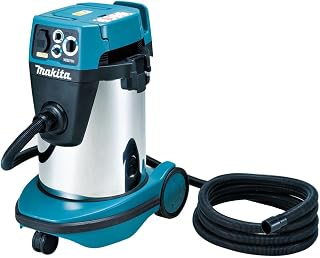
Three models that illustrate the differences between Makita extractors particularly well are the VC2512L, VC3011L and VC4210L. They occupy different positions in terms of capacity, size, weight and extraction capability, so the "best" model depends heavily on how the machine will be used.
The VC2512L is a relatively compact corded wet-and-dry extractor designed for general cleaning and connection to power tools. Makita specifies a 1,000W continuous input, 21.0kPa maximum sealed suction and 3.6m³/min maximum peak airflow. Its listed dry tank capacity is 21 litres and wet capacity is 18 litres, with a 5m power cord. :contentReference[oaicite:1]{index=1}
Its compact dimensions and comparatively low weight make this type of extractor attractive where portability matters. It also has automatic start/stop functionality for a connected electric power tool and a Push & Clean semi-automatic filter-cleaning system. :contentReference[oaicite:2]{index=2}
The main reason to consider a VC2512L is therefore not simply its headline suction specification. Its appeal is the balance between portability, tool connectivity and adequate capacity for smaller or mobile jobs.
The VC3011L increases the container size while retaining a 1,000W input and 210mbar maximum sealed suction specification. Makita's UK product documentation lists a 30-litre gross tank, 26-litre dust capacity and 23-litre liquid capacity. The machine is specified as Dust Class L and includes a Push & Clean semi-automatic filter-cleaning system. :contentReference[oaicite:3]{index=3}
The larger tank can be useful when emptying the extractor frequently would interrupt work. The trade-off is a larger and heavier machine than a compact extractor, so buyers should consider whether the extra capacity is actually useful for their normal jobs.
For a workshop or tradesperson who regularly produces more debris than a compact 20-to-25-litre machine can conveniently handle, the VC3011L can make more sense than simply choosing the smallest available extractor.
The VC4210L is a substantially larger and more performance-focused extractor. Makita's specifications for the UK version identify a 1,200W power consumption, maximum airflow of 4,500 litres per minute and 250mbar vacuum. The published specifications also identify a 42-litre maximum tank volume, with the usable capacities depending on whether dust or liquid is being collected. :contentReference[oaicite:4]{index=4}
Makita describes the VC4210L as having a redesigned filter system, an automatic Infini Clean filter-cleaning system and an LED warning system associated with airflow monitoring. Its product information also specifies a PTFE upstream main filter and PET filter cartridge for additional filtration and protection. :contentReference[oaicite:5]{index=5}
This is the sort of specification profile that becomes more interesting for demanding workshop and trade applications where maintaining extraction performance over longer periods is more important than keeping the machine as small and light as possible.
There is no universal best Makita dust extractor. The right choice changes according to the tool being connected, the dust being generated and how portable the setup needs to be.
Two specifications frequently cause confusion when comparing dust extractors: airflow and vacuum pressure. They describe different aspects of extraction performance and neither should be assessed in isolation.
Airflow describes how much air the extractor can move, often expressed in litres per minute or cubic metres per minute. Vacuum pressure describes the pressure difference the extractor can generate under specified conditions. A machine with a high vacuum figure is not automatically the best extractor for every application.
Airflow becomes particularly relevant when the extractor needs to transport dust and debris through a hose. Vacuum pressure can be important when overcoming resistance within the extraction system or lifting heavier material. In practical use, the complete extraction system also includes the hose, bends, connectors, tool outlet and filter condition.
This is why comparing only the wattage of two Makita extractors can produce a misleading conclusion. Motor input is an electrical specification; it does not directly tell you how efficiently the finished system will move dust through a particular tool and hose arrangement.
A dust extractor's filter gradually becomes loaded with fine material. As the filter becomes restricted, airflow can fall and extraction performance can deteriorate. A good filter-cleaning system is therefore an important consideration for anyone using an extractor with dusty power tools.
Makita uses different filter-cleaning approaches across its range. The VC2512L and VC3011L use Push & Clean semi-automatic filter cleaning, while the VC4210L incorporates the Infini Clean automatic system. :contentReference[oaicite:6]{index=6}
The practical distinction is significant. Semi-automatic cleaning requires the operator to intervene, whereas an automatic system is designed to perform cleaning cycles without the same level of manual input. For intermittent DIY work, the simpler approach may be perfectly adequate. For prolonged dusty work, automatic cleaning can become a more meaningful feature.
Filter condition should be treated as part of the extractor's running costs. A machine can have excellent specifications when new but perform poorly if its filter is heavily loaded, incorrectly fitted or unsuitable for the material being collected.
Before buying, identify the correct replacement filter, dust bags and disposal bags for the exact model. Product names can look very similar across the Makita range, so checking the model number and accessory compatibility is safer than assuming that a bag or filter designed for one extractor will fit another.
Automatic start/stop functionality is particularly useful when a dust extractor is permanently paired with an electric power tool. Instead of switching the extractor on separately, the connected tool can control the extractor's operation.
The VC2512L and VC3011L include automatic start/stop functionality for a connected electric tool, while the VC4210L also provides an Auto/On/Off power outlet. Makita's published specifications identify a maximum connected appliance load for these systems, so buyers should check the precise rating before connecting a high-powered tool. :contentReference[oaicite:7]{index=7}
This feature is convenient, but it should not be confused with wireless tool connectivity. A conventional mains-powered tool-start socket and Makita's cordless Auto-Start Wireless System are different technologies.
A dust extractor is only as useful as the connection between the extractor and the tool. Hose diameter, adapters and connector design can affect both compatibility and extraction performance.
The VC3011L documentation, for example, lists a 32mm diameter, 3.5m suction hose. :contentReference[oaicite:8]{index=8}
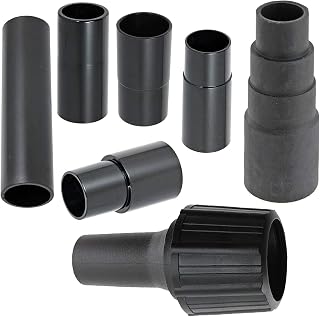
Before ordering an extractor, identify the outlet on each power tool you intend to connect. Do not assume that a hose will fit directly simply because both products are manufactured by Makita. Some applications require a tool adapter or adjustable connection.
A larger hose can be useful when collecting larger chips or debris, whereas a smaller hose may be easier to connect to compact power tools. The ideal arrangement depends on the tool's dust port and the material being removed.
For fine dust extraction, a poorly matched or leaking connection can undermine the performance of an otherwise capable extractor. Check every joint and use the appropriate adapter rather than relying on improvised connections.
Several Makita extractors are designed for both wet and dry applications, but wet extraction should not be treated as identical to ordinary dry dust collection.
Always follow the model-specific operating instructions regarding filters, bags and liquid collection. A configuration suitable for dry dust may not be the correct configuration for liquids, and the usable capacity can differ between dry and wet collection.
The VC2512L, for example, is specified with a 21-litre dry capacity and 18-litre wet capacity, while the VC3011L documentation gives separate dust and liquid capacities for its 30-litre gross tank. :contentReference[oaicite:9]{index=9}
Tank capacity is an easy specification to compare, but it should not automatically determine the purchase decision. A large extractor that is awkward to transport can be less practical for a tradesperson who moves between sites every day.
Consider the complete carrying and storage situation: machine weight, overall height, footprint, cable length, hose length, accessory storage and the route between the vehicle and work area.
A compact extractor can also be easier to position close to a bench or power tool. Conversely, a larger workshop extractor may be worthwhile where the machine remains in one location and fewer emptying interruptions are preferred.
Noise is easy to overlook when comparing technical specifications. A dust extractor can operate for long periods, so sound pressure and sound power figures are worth considering alongside extraction performance.
Makita's published specifications illustrate how models can differ. The VC3011L documentation lists a sound pressure level of 64dB(A), while the VC4210L product information gives a sound level of 60dB(A). Measurement conditions and standards should always be considered when comparing figures from different products, so the numbers should not be interpreted as a simple guarantee of perceived loudness in every environment. :contentReference[oaicite:10]{index=10}
A useful comparison should begin with the application and work backwards towards the machine.
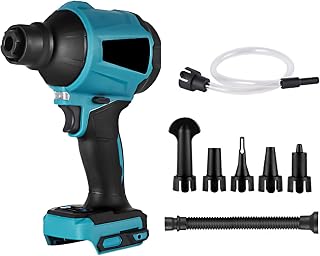
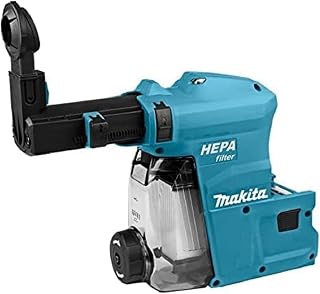
Cordless extraction can be attractive when working where mains power is inconvenient, particularly when the rest of the tool setup is cordless. Makita's cordless range includes extractors using battery platforms such as XGT, with some models offering features including wireless tool communication and HEPA filtration. :contentReference[oaicite:11]{index=11}
The key disadvantage is that cordless extraction introduces battery capacity, charging and runtime into the buying decision. A corded extractor can be preferable for long, uninterrupted workshop sessions where mains power is readily available.
When comparing a cordless and corded Makita extractor, do not judge them solely by motor power. Compare the complete working system: battery requirements, runtime expectations, mobility, suction control, filter arrangement, hose compatibility and the type of work being performed.
Regular maintenance can be just as important as the original choice of extractor. A sensible maintenance routine begins with checking the filter and collection system rather than waiting until suction has noticeably deteriorated.
Makita documentation also emphasises the importance of cleaning filters when they become clogged and replacing worn filter components when necessary. :contentReference[oaicite:12]{index=12}
Customer reviews can provide useful information, but they are most valuable when read for recurring practical observations rather than isolated praise or criticism.
A review from someone using a compact extractor for occasional DIY work should not automatically influence a decision for a professional workshop application. The context behind the review matters.
The cheapest Makita dust extractor can be poor value if it lacks a feature that is essential to your work. Likewise, buying the most expensive model can waste money if its additional capacity or automatic systems will rarely be used.
A better definition of value is whether the extractor provides the required dust classification, extraction characteristics, capacity, connectivity and maintenance features without unnecessary specification.
For example, someone who regularly moves equipment between jobs may reasonably value a lighter machine over a larger tank. A fixed workshop user may make the opposite decision. Neither is inherently right or wrong.
Before buying, record the following specifications for each shortlisted model so that comparisons are made on a like-for-like basis.
A larger extractor generally becomes more attractive when the work produces substantial quantities of dust or debris, when the machine will remain in a workshop, or when reducing the frequency of emptying is a priority.
However, a larger tank does not necessarily mean better filtration or better extraction for every application. Dust classification and filter design remain critical considerations.
The VC4210L demonstrates the advantages of moving into a larger, higher-capacity format, with Makita specifying a higher airflow and vacuum rating than the VC2512L and VC3011L, alongside automatic filter cleaning and a larger tank. :contentReference[oaicite:13]{index=13}
A compact model is usually more attractive where storage space, transport and manoeuvrability are major concerns. The VC2512L is an example of a smaller L-class wet-and-dry extractor that combines tool connection, filter cleaning and automatic start/stop functionality in a relatively compact format. :contentReference[oaicite:14]{index=14}
Compact does not necessarily mean basic. The important question is whether its capacity and extraction characteristics are sufficient for the tools and materials involved.
The best Makita dust extractor depends on the application. A compact L-class model may suit portable DIY and trade work, while a larger extractor with greater capacity and automatic filter cleaning may be more appropriate for demanding workshop use.
An L-class extractor can be suitable for applications for which L-class extraction is appropriate, but the correct dust classification depends on the material and working conditions. Check the requirements for the specific dust generated by your work rather than choosing solely on brand or model.
The VC2512L is specifically described by Makita as suitable for use with power tools and includes automatic start/stop functionality for a connected electric tool. It also has a 1,000W continuous input, 21.0kPa maximum sealed suction and 3.6m³/min maximum peak airflow according to Makita's published product information. :contentReference[oaicite:15]{index=15}
Both are L-class wet-and-dry extractors with 1,000W input, 210mbar maximum sealed suction and automatic tool-start functionality. The VC3011L has the larger 30-litre gross tank, compared with the VC2512L's 25-litre gross tank in Makita's product documentation, making capacity and physical size key differences between them. :contentReference[oaicite:16]{index=16}
No. Tank capacity and extraction performance are separate characteristics. A larger container primarily gives you more collection capacity; airflow, vacuum, filtration and the complete hose system determine how effectively dust is transported.
Not necessarily. Wattage describes electrical input rather than directly measuring the extraction performance available at the tool. Compare airflow, vacuum, filtration and application suitability as well as motor input.
Automatic filter cleaning can help maintain extraction performance by periodically removing accumulated dust from the filter. This becomes particularly useful during longer periods of dusty work. Makita's VC4210L uses an automatic Infini Clean system, whereas models such as the VC2512L and VC3011L use Push & Clean semi-automatic cleaning. :contentReference[oaicite:17]{index=17}
Several Makita models are designed for wet-and-dry extraction, including the VC2512L and VC3011L. Always follow the instructions for the exact model because dry and wet collection can involve different filter, bag and operating requirements. :contentReference[oaicite:18]{index=18}
Choose corded extraction when continuous mains-powered operation and higher-capacity workshop use are priorities. Choose cordless when mobility and freedom from mains cables are more important. Battery platform compatibility and expected runtime should form part of the comparison.
There is no single interval that applies to every application. Filter cleaning should follow the manufacturer's instructions and should also reflect the amount and type of dust being collected. If suction deteriorates or the filter becomes visibly loaded, maintenance should not be postponed.
Makita offers extractors designed for connection to power tools and demanding workshop and construction applications. Suitability for professional work should nevertheless be assessed against the specific dust classification, extraction requirements, operating environment and applicable workplace rules.
The strongest Makita dust extractor comparison is not simply a ranking from smallest to largest. It is a process of matching the extractor to the work.
For a compact setup, examine the VC2512L's balance of portability, L-class extraction, wet-and-dry capability and power-tool connectivity. For additional collection capacity, the VC3011L offers a larger tank while retaining the same broad 1,000W and 210mbar specification profile. For more demanding workshop requirements, the VC4210L moves to a larger-capacity format with higher stated airflow and vacuum, automatic filter cleaning and additional monitoring features. :contentReference[oaicite:19]{index=19}
Before making a purchase, compare the exact specifications for the model and UK version you are considering, confirm dust-class requirements, check tool and hose compatibility, and investigate the ongoing cost and availability of appropriate filters and collection bags. Product specifications can change, so the manufacturer's current documentation should take precedence over older listings or generic comparison pages.