

Our experts reviewed the latest {category_name } to help you compare quality, performance, durability and overall value before making your purchase.



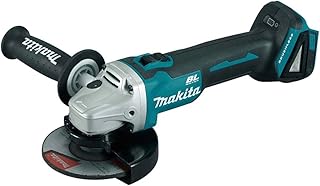




Choosing a cordless die grinder is less straightforward than simply looking at voltage or maximum revolutions per minute. For workshop, fabrication, automotive, engineering and metalworking applications, the shape of the grinder, collet compatibility, access to the workpiece, battery system, vibration characteristics and suitability of the accessory can all affect how useful the tool is in practice. For buyers considering Makita cordless die grinders in the UK, the DGD800 and DGD801 are particularly important models to understand. Both are 18V LXT cordless machines designed for grinding and deburring work, but their physical layouts are different. Makita's published specifications identify the DGD800 as the longer model at 402 mm, while the DGD801 is considerably shorter at 307 mm. Both models are specified with a maximum wheel-point diameter of 36 mm, a maximum mandrel or shank length of 46 mm and a no-load speed of 26,000 rpm in the manufacturer's published documentation. That difference in overall length is not a minor specification when the grinder is being used around brackets, welds, castings, engine components or other confined areas. A buyer should therefore select the model according to access and handling requirements rather than assuming that the newer-looking or shorter tool is automatically better. The most useful starting point is to understand what separates these two closely related 18V LXT die grinders. They share the same basic purpose and speed class, but their body configurations give them different strengths. Makita's product information also highlights differences in the design emphasis. The DGD800 uses a compact barrel-grip format, stepped neck and slide switch with lock-on function, while the DGD801 uses a shorter nose, rubberised grip area and an anti-restart function with a warning lamp. For confined spaces, overall tool geometry deserves more attention than headline power figures. A long-nose grinder can be useful where the extra reach helps the operator keep the battery and main body away from an obstruction. Conversely, a shorter grinder can be easier to manoeuvre when the working area is restricted around the sides or behind the tool. The DGD801 has a published overall length of 307 mm compared with 402 mm for the DGD800. That 95 mm difference can materially change the way the tool sits in the hand and how far the operator must reach into an assembly. Neither configuration should be described as universally superior. The correct choice depends on whether the job benefits more from reach or compactness. Before buying, consider the largest obstruction around the grinding area, the direction from which the accessory needs to approach the workpiece and whether the battery will interfere with nearby components. Specifications are useful only when they are interpreted in relation to the job. A high no-load speed, for example, does not automatically mean faster material removal with every accessory. Likewise, a larger battery does not necessarily make a cordless die grinder easier to use if added weight compromises control. Both DGD800 and DGD801 are part of the 18V LXT family. For existing Makita users, this can be a major purchasing consideration because the bare-tool format can make sense when compatible batteries and charging equipment are already available. However, buyers entering the platform should calculate the cost of the complete system rather than looking only at the tool-body price. Makita's published documentation specifies a no-load speed of 26,000 rpm for the DGD800 and DGD801. High rotational speed is particularly relevant to small grinding points and other accessories designed for high-speed operation. It also means accessory selection cannot be treated as an afterthought. The accessory must be rated for the grinder's operating speed and used within its stated limitations. Collet compatibility is one of the most important specifications for a die grinder because it determines which shank sizes can be securely held. Published Makita information lists 3 mm, 6 mm and 8 mm collet sizes for the DGD800/DGD801 family, with imperial equivalents also documented. Before purchasing accessories, check the exact collet supplied with the particular UK package and confirm that the accessory shank is compatible. Do not assume that every package contains every available collet size. The published maximum wheel-point diameter for these models is 36 mm. This is an important limit rather than a recommendation to use the largest possible accessory. The correct accessory size depends on the job, material, accessory design and manufacturer's operating instructions. Makita lists the DGD800 at 402 mm overall length and the DGD801 at 307 mm. Published weight figures vary according to the market, battery configuration and measurement convention, so buyers should check the specification for the exact UK variant rather than comparing an unladen tool weight with a battery-equipped figure from another source. It is easy to assume that every modern cordless power tool should use a brushless motor. That is not a reliable way to judge a die grinder. The DGD800 and DGD801 use externally accessible carbon brushes, and Makita specifically identifies brush serviceability as a feature of the design. A brushed design can therefore remain relevant where serviceability, established platform compatibility and purchase requirements matter more than having brushless technology. Buyers should compare the complete tool rather than rejecting a model solely because it is not brushless. At the same time, users with exceptionally heavy daily workloads should consider the maintenance implications of a brushed motor and compare the manufacturer's current range if brushless operation is an essential requirement. Battery capacity affects the balance between operating duration, battery weight and overall tool handling. A larger-capacity battery may provide greater runtime, but it can also make a compact grinder feel less nimble. The ideal battery is therefore determined by the duty cycle. Intermittent deburring jobs can have very different battery requirements from prolonged grinding sessions. If the tool is being used for short bursts throughout a working day, a lighter battery may be preferable. For continuous work, battery rotation can become more important than the capacity of an individual pack. A die grinder is a platform for accessories rather than a complete cutting or grinding solution by itself. Grinding stones, burrs and other mounted accessories must be selected according to material, shank size, maximum permitted speed and intended application. Makita's published DGD800/DGD801 accessory information includes different wheel-point and shank combinations, illustrating why buyers should verify the exact accessory specification rather than purchasing purely by appearance or diameter. The DGD800 and DGD801 are intended for grinding ferrous materials and deburring castings according to the published manual information. Typical applications can include removing small amounts of material, smoothing suitable metal edges, dressing weld areas and deburring suitable cast or fabricated components. The exact application depends on the accessory and material, so a die grinder should not be treated as a universal substitute for an angle grinder, bench grinder, rotary tool or dedicated polishing machine. A die grinder can be useful where controlled access around a weld is more important than removing a large volume of material. Its smaller mounted accessories allow the operator to work around localised areas that may be awkward for a larger grinder. Deburring is one of the most natural applications for a die grinder. The compact accessory format can make it easier to address individual edges, holes, castings and fabricated components. Material removal should remain controlled; excessive pressure can reduce accessory life and make the tool harder to control. In automotive and engineering environments, compact cordless grinders can be useful when access to a component is restricted. However, the suitability of a particular accessory depends on the material and the required finish, so accessory selection should always be made before starting the job rather than treating the grinder as a one-accessory tool. The main advantage of cordless operation is freedom from the mains cable. That can simplify work around vehicles, fabrication benches, machinery and temporary work areas. It also removes the need to position an extension lead around the operator's workspace. A corded die grinder can still be attractive for users who work in a fixed workshop and prioritise uninterrupted operation. The choice should therefore be based on working environment rather than assuming cordless is always better. A die grinder and a rotary tool can appear similar because both use small rotary accessories, but they occupy different parts of the tool market. A die grinder is generally chosen for more demanding grinding and deburring work, whereas a rotary tool is often selected for lighter-duty precision tasks. When comparing the two, consider accessory diameter, shank compatibility, duty cycle, required material removal rate, ergonomics and the manufacturer's intended applications. Choosing a smaller tool simply because it looks more precise can be a mistake if the work requires a machine designed for heavier use. An angle grinder is normally the better choice for larger cutting, grinding and surface-preparation jobs where a larger abrasive disc is appropriate. A die grinder is more useful when the task requires a smaller mounted accessory and greater access around a localised area. Noise and vibration should be considered when comparing power tools, particularly if a grinder is used regularly. Makita's published UK vibration and noise data lists the DGD800 with a declared vibration value of 5.5 m/s² and the DGD801 at 4.5 m/s² for the specified surface-grinding test, with a stated measurement uncertainty of 1.5 m/s². The same data lists sound-pressure values of 72 dB for the DGD800 and 70 dB for the DGD801 under the specified no-load measurement conditions, with a 3 dB uncertainty. These figures should not be interpreted as guaranteed noise or vibration levels for every real-world task. Actual exposure can change substantially with the accessory, material, pressure, workpiece and operating conditions. They are most useful as declared test data for comparing the models within the same manufacturer's documentation. For regular professional use, follow the manufacturer's safety instructions and carry out appropriate workplace risk assessment rather than relying on a single specification figure. Safety features should form part of the purchasing decision, particularly for a high-speed tool. Makita identifies several protective features across the DGD800 and DGD801 designs, including battery protection against overload, over-discharge and overheating. The DGD801 also includes an anti-restart function and warning lamp. Electronic protection does not remove the need for correct operating technique. A grinder should be used with appropriate personal protective equipment, a suitable accessory and a secure workpiece. Maximum rpm is one specification, not a complete performance rating. The accessory, material, tool geometry and operator technique all influence the result. A grinder with a high no-load speed is not necessarily the best choice for every job. The difference between the 402 mm DGD800 and 307 mm DGD801 can be more important than small differences in secondary specifications. Consider access before deciding which model is best. A bare-tool listing may appear attractive until the cost of a compatible battery and charger is added. Existing 18V LXT users have a different buying calculation from someone starting a cordless platform from scratch. Check the shank diameter before purchasing accessories. A visually suitable burr or grinding point is not suitable if its shank does not match the available collet. The maximum permitted accessory size is a limit, not a target. The best accessory is the one appropriate for the task, material and required finish. Retail packages can contain different combinations of batteries, chargers, cases and accessories. Always compare the exact model suffix and package contents rather than assuming two listings with the same base model name are equivalent. When comparing retailer listings, use a consistent checklist. This prevents a bare tool from being compared unfairly with a complete kit. The lowest purchase price is not necessarily the lowest total cost. A better value assessment considers the complete equipment required for the job and how often the grinder will be used. Good maintenance helps preserve the usefulness of a die grinder and can identify problems before they become more serious. Makita specifically highlights externally accessible brushes on these models, which makes brush inspection and replacement part of the serviceability consideration. Performance depends heavily on technique. A die grinder generally works best when the operator allows the correct accessory to do the cutting or grinding rather than forcing the tool aggressively into the workpiece. A Makita 18V cordless die grinder is particularly worth considering for users who already operate within the LXT battery platform and need a portable high-speed grinding or deburring tool. It can also make sense for workshop users who regularly work away from a fixed bench or need to reach awkward areas without managing a mains cable. It may be less suitable if the primary requirement is heavy stock removal, large-area grinding or cutting. In those cases, an angle grinder or another dedicated machine may be a more appropriate tool category. The DGD800 is the logical choice for buyers who prefer its long-nose geometry and want additional reach. Its published 402 mm overall length and 26,000 rpm no-load speed make it a clearly specified member of the 18V LXT die-grinder range. It is especially worth comparing where the tool needs to reach into a component while keeping the main body away from the immediate working area. The DGD801 is the better match for buyers who prioritise a shorter tool configuration. At a published 307 mm overall length, it is substantially shorter than the DGD800. Makita also highlights its short-nose design, anti-restart function, battery warning lamp and rubberised heat-insulating grip area. For users who regularly work in restricted areas or prefer a more compact body, those characteristics can be more valuable than additional reach. Yes. The DGD800 is an 18V LXT cordless die grinder. Makita describes it as a cordless 18V machine and lists battery protection features designed to protect against overload, over-discharge and overheating. Yes. The DGD801 is also an 18V LXT cordless die grinder. Makita identifies it as a short-nose design and lists an anti-restart function with warning lamp among its features. The principal physical difference is their body configuration. The DGD800 is the longer model at 402 mm, while the DGD801 is the shorter model at 307 mm. Both are specified with a 36 mm maximum wheel-point diameter, 46 mm maximum shank length and 26,000 rpm no-load speed in Makita's published documentation. Makita documentation lists 3 mm, 6 mm and 8 mm collet sizes for the DGD800/DGD801 family, with 1/8-inch and 1/4-inch equivalents also referenced. Check the exact package and supplied collet before buying accessories. Published Makita specifications list 3 mm, 6 mm and 8 mm collet sizes for the DGD801, alongside the corresponding imperial sizes. The exact supplied configuration should be checked for the particular market and package. The published Makita specification gives the DGD800 a no-load speed of 26,000 rpm. The published Makita specification gives the DGD801 a no-load speed of 26,000 rpm. Not universally. The DGD801 is shorter, whereas the DGD800 provides the longer configuration. The better model depends on whether compactness or reach is more important for the intended work. Not in every application. A die grinder is designed around small mounted accessories and controlled localised grinding or deburring. An angle grinder is generally better suited to larger discs and higher-volume cutting or grinding work. They can be relevant to professional workshop and fabrication applications, but suitability depends on the specific workload, material, accessory and duty cycle. Buyers should compare the manufacturer's intended use, maintenance requirements and safety information with the demands of their particular job. Yes. Makita identifies an anti-restart function with warning lamp as one of the DGD801's features. Makita's product information describes the DGD800 as having a slide switch with lock-on function. These models use externally accessible carbon brushes; Makita's published product information specifically lists the brushes as accessible for serviceability. Buyers who require a brushless motor should compare the current Makita range and confirm the motor technology of the exact model being considered. The best Makita cordless die grinder is not determined by one specification. The DGD800 and DGD801 share the same 18V LXT platform and high-speed 26,000 rpm specification, but their different lengths make them suited to different working conditions. Choose the DGD800 when the long-nose configuration and additional reach are useful. Choose the DGD801 when a shorter overall tool is more valuable for access and manoeuvrability. In either case, check the exact UK package, battery requirements, collet arrangement and accessory specifications before purchasing. For commercial buyers and professional users, the most sensible comparison is the complete working system: grinder, battery, charger, accessories, maintenance requirements and expected workload. For occasional users, prioritising compatibility and ergonomics can prevent spending more on features that do not materially improve the intended job. Specifications and package contents can change between markets and model variants, so the final step before purchase should always be to verify the current manufacturer's documentation and the exact retailer listing for the model you intend to buy.Makita Cordless Die Grinders: What to Look for Before Buying
Makita DGD800 vs DGD801: Key Differences
Which Makita Die Grinder Is Better for Confined Spaces?
When the DGD800 Makes More Sense
When the DGD801 Makes More Sense
Technical Specifications That Actually Matter
18V LXT Battery Platform
26,000 RPM No-Load Speed
Collet Size
Maximum Wheel-Point Diameter
Tool Length and Weight
Brushed Motor vs Brushless: An Important Buying Consideration
Battery Choice: How Much Capacity Do You Need?
Accessory Compatibility Is Just as Important as the Grinder
What Can a Makita Cordless Die Grinder Be Used For?
Grinding Weld Areas
Deburring Metal Components
Automotive and Engineering Work
Makita Cordless Die Grinder vs Corded Die Grinder
Makita Die Grinder vs Rotary Tool
Makita Die Grinder vs Angle Grinder
Noise and Vibration: What the Published Data Shows
Safety Features Worth Checking
Common Buying Mistakes
Buying on RPM Alone
Ignoring the Tool Length
Forgetting the Battery Cost
Using the Wrong Collet
Choosing the Largest Accessory Automatically
Assuming Bare Tool and Kit Specifications Are Identical
How to Compare Makita DGD800 and DGD801 Listings in the UK
How to Judge Value for Money
Maintenance and Care
How to Get the Best Results from a Cordless Die Grinder
Who Should Buy a Makita Cordless Die Grinder?
Who Should Choose the DGD800?
Who Should Choose the DGD801?
What to Check Before You Order
Frequently Asked Questions
Is the Makita DGD800 cordless?
Is the Makita DGD801 cordless?
What is the difference between DGD800 and DGD801?
What size collet does a Makita DGD800 use?
What size collet does the DGD801 use?
How fast does a Makita DGD800 run?
How fast does a Makita DGD801 run?
Is the DGD801 better than the DGD800?
Can a Makita die grinder replace an angle grinder?
Are Makita cordless die grinders suitable for professional use?
Does the DGD801 have an anti-restart function?
Does the DGD800 have a lock-on switch?
Are Makita DGD800 and DGD801 brushless?
Final Buying Verdict