

Our experts reviewed the latest {category_name } to help you compare quality, performance, durability and overall value before making your purchase.


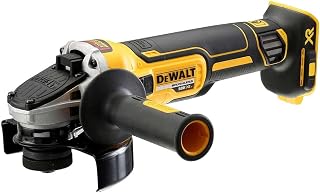


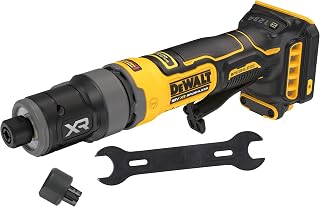


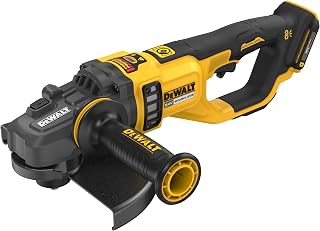
The DEWALT cordless die grinder range is worth assessing as a family rather than treating every model as an interchangeable option. The established 18V XR Brushless Die Grinder, including the DCG426, is now joined by newer compact designs such as the DCG420N-XJ and the right-angle DCG421N-XJ. DEWALT's current UK die-and-straight-grinder range lists four products, including tool-only and kit configurations. This means the most suitable choice depends not simply on battery voltage or headline power, but on the shape of the tool, access requirements, speed control, collet compatibility and the way the grinder will actually be used. For buyers comparing cordless die grinders in the UK, this distinction is particularly important. A conventional inline grinder can be an excellent general-purpose choice for deburring and metal preparation, while a compact design may be preferable where access and reduced bulk matter more. A right-angle die grinder changes the working position again, making it particularly relevant when the accessory needs to approach a component from a difficult angle. The DCG426 remains an important reference point when comparing DEWALT cordless die grinders. The current DCG426P2-GB configuration uses an 18V XR brushless motor and provides three selectable speed ranges, with DEWALT specifying no-load speeds of 10,000, 17,500 and 25,000 rpm. The manufacturer describes the motor as delivering 760W performance and lists features including a dual-position variable-speed switch, LED nose ring, mesh debris covers, textured rubber nose and directed airflow. That specification makes the DCG426 particularly interesting to users who want a conventional inline die grinder with a broad speed range. It is a sensible model to investigate for workshop metalworking, fabrication, engineering and general finishing work where a familiar straight-grinder configuration is more important than having the smallest possible housing. The newer DCG420N-XJ takes the inline die-grinder concept and places greater emphasis on compact ergonomics. DEWALT describes it as an 18V XR brushless compact die grinder with a slim body, lightweight ergonomic design and variable-speed operation. The supplied equipment includes both 1/4-inch and 6mm collets, together with a spanner. This is an important alternative for buyers who frequently work in restricted spaces or who value manoeuvrability over the larger physical format of an established die grinder. The compact design does not automatically make it the better tool for every application, however. Buyers should still consider the accessories they intend to use, the required working speed and whether their existing battery collection is compatible. The DCG421N-XJ is a more significant change in format. It is an 18V XR Compact Right Angle Die Grinder designed around access at challenging angles. DEWALT specifies four selectable speed settings of 10,000, 15,000, 20,000 and 24,500 rpm, together with a variable-speed trigger. It also incorporates an LED work light, electronic brake, electronic clutch, spindle lock and both 6mm and 1/4-inch collets. For buyers working inside confined assemblies, around awkward edges or where a straight tool body is inconvenient, the right-angle configuration can be a more meaningful upgrade than simply choosing a different battery capacity. The key question is therefore not whether the DCG421 is technically more advanced, but whether its geometry suits the job better. The DCG426N-XJ represents the tool-only version of the established DCG426 platform. Buyers should distinguish the tool model from the kit contents when comparing specifications. A tool-only package can make considerably more sense for someone who already owns compatible 18V XR batteries and a suitable charger, whereas a complete kit may be more practical for a new user entering the platform. DEWALT currently lists both the DCG426N-XJ and DCG426P2-GB within its UK die-and-straight-grinder category. The physical shape of a cordless die grinder is one of the most overlooked buying decisions. It affects reach, wrist position, visibility, accessory alignment and how easily the tool can be controlled around a workpiece. DEWALT positions its newer 18V XR Compact metalworking tools around improved access, manoeuvrability and reduced tool volume. The company states that its compact die grinders can be up to 35% smaller by volume than the traditional cordless 18V XR die grinder, using the DCG426 as the comparison reference. That figure is a manufacturer claim rather than an independent laboratory measurement, so it is best treated as a design comparison rather than a guarantee of real-world productivity. A die grinder is primarily a precision material-removal and finishing tool. Its small accessories allow it to reach areas where larger angle grinders cannot work effectively. The correct accessory matters as much as the grinder itself. A high-speed die grinder should not be treated as a universal substitute for every abrasive or cutting tool. Always match the accessory's permitted operating speed, size, shank specification and intended application to the grinder and follow the accessory manufacturer's instructions. High no-load speed is one of the headline specifications on a die grinder, but the highest available RPM is not automatically the most useful setting. Different accessories and materials can require different operating speeds, and excessive speed can damage an accessory, overheat the workpiece or reduce control. The DCG426 provides three speed settings, while the DCG421 offers four selectable speed settings alongside trigger-based variable-speed control. This makes speed selection a genuine buying consideration rather than a minor convenience feature. When comparing models, consider whether you regularly switch between coarse grinding, controlled finishing and polishing-style applications. A grinder with useful intermediate settings may be easier to control than one selected solely because its maximum RPM appears higher on a specification sheet. Collet compatibility should be checked before buying. The current DCG426P2-GB specification includes a 6mm collet, while the newer DCG420N-XJ and DCG421N-XJ are supplied with both 6mm and 1/4-inch collets. Although 6mm and 1/4-inch accessories are widely encountered in professional and workshop applications, they are not the same measurement. Buyers should check the actual shank diameter of their existing accessories rather than assuming that every mounted point or rotary accessory will fit. DEWALT's cordless die grinders in this comparison use brushless motor technology. In general terms, brushless motors eliminate conventional carbon brushes and use electronic commutation. This can support efficient operation and reduce one type of mechanical wear associated with brushed motors. However, the presence of a brushless motor should not be treated as a guarantee of longer service life under every working condition. Battery condition, abrasive dust, accessory choice, loading, operating temperature, maintenance and the nature of the work all affect the service life of a cordless power tool. The practical buying benefit is that brushless technology is most useful when considered alongside the complete tool design: motor electronics, speed control, cooling, debris management, battery system and ergonomics. DEWALT specifically highlights brushless efficiency and durability across the current compact die-grinder range. One of the easiest ways to make a poor cordless-tool purchase is to compare a bare tool directly with a complete kit without accounting for what is included. A tool-only model can be attractive when you already have compatible DEWALT 18V XR batteries and a charger. In that situation, buying another battery and charger may add unnecessary cost and equipment. Conversely, someone without compatible batteries should compare the complete system cost rather than judging a bare unit by its advertised price. The DCG426P2-GB kit is supplied with two DCB184 5Ah batteries, a charger and a TSTAK case, in addition to the grinder and its standard accessories. The exact contents of any retailer listing should still be checked before purchase because package configurations can vary by market and product suffix. A battery's Ah rating describes its capacity, but it should not be interpreted as a guaranteed number of minutes of grinding. Actual runtime depends heavily on load, accessory type, material removal rate, speed setting, battery condition and operator technique. For occasional workshop work, a smaller and lighter compatible battery may be preferable because it can reduce the overall tool weight. For demanding work where extended operation matters, higher-capacity batteries may make more sense. The best balance depends on how much of the job is spent actively grinding rather than moving between tasks. Die grinders are often used with two hands, repositioned repeatedly and held close to the workpiece. As a result, ergonomics can matter more than a small difference in headline power. Look for a body that allows a secure grip without forcing the wrist into an awkward position. A textured rubber nose can also improve control where the front section of the tool is used as a secondary contact point. DEWALT includes textured rubber nose sections on the DCG426 and DCG420, while the DCG421 adds a rubber overmould and is specifically designed around compact right-angle operation. Remember that the quoted tool weight is not necessarily the weight you will hold during normal work. Adding a battery and accessory changes the balance. For prolonged use, the position and size of the battery can be as relevant as the bare-tool specification. Grinding environments can be particularly hostile to power-tool electronics because fine abrasive particles and metal debris are produced during use. For that reason, debris management deserves attention when comparing professional die grinders. DEWALT lists mesh debris covers on the DCG426 and DCG421, while the DCG426 also incorporates an airflow arrangement intended to direct exhaust air away from the user. These features are designed to reduce the effects of contamination and improve comfort, but they do not make the grinder maintenance-free. After dusty work, follow the manufacturer's maintenance instructions rather than assuming that compressed air or another cleaning method is always appropriate. Never operate a tool with damaged guards, covers, switches or other safety-critical components. Safety features can vary substantially between grinder formats, so they should be assessed individually rather than assuming every cordless die grinder provides the same protection. The DCG421 includes an electronic brake and electronic clutch. DEWALT states that the electronic brake is designed to stop the tool in under one second under its specified test conditions, while the electronic clutch is intended to reduce kickback reaction during a pinch or stall. These systems can improve control, but electronic assistance is not a substitute for correct operating technique. Users should still wear appropriate eye and face protection, hearing protection where required, suitable work gloves where appropriate, and task-specific protective equipment. The workpiece should be secured, accessories should be inspected before use and the manufacturer's safety instructions should be followed. A maximum RPM figure can look impressive, but the accessory determines whether that speed is appropriate. Always check the accessory's maximum permitted operating speed. Tool-only packages can appear inexpensive until the cost of a compatible battery and charger is added. If you are new to the DEWALT 18V XR platform, compare complete-system costs. An inline grinder and a right-angle grinder can behave very differently around confined components. Think about access before comparing motor specifications. Check whether your existing accessories use 6mm, 1/4-inch or another supported shank size. Do not assume that an accessory will fit simply because it is marketed for die grinders. Power figures do not describe every aspect of a cordless grinder's performance. Motor control, gearing, battery capability, speed selection, thermal management and the accessory all influence how effectively the tool performs under load. A kit containing batteries, charger and storage can represent a very different proposition from a bare tool. Check the complete contents before deciding which listing offers better value. When creating a shortlist, work through the specifications in this order: A cordless die grinder should not automatically be chosen simply because it is described as versatile. Its principal advantage is the ability to use smaller, high-speed accessories for controlled work in areas where a conventional angle grinder is too large or aggressive. An angle grinder is generally better suited to larger abrasive discs, cutting discs and broader surface work. A die grinder is more appropriate where precision, access and smaller accessories matter. The two tools can therefore complement one another rather than compete directly. If your typical tasks involve cutting large sections of steel, grinding substantial welds or working across broad surfaces, investigate the appropriate angle-grinder category instead. If your work involves small areas, internal edges, deburring or detailed metal preparation, a die grinder is more likely to fit the job. Good maintenance is especially important for tools used around abrasive dust and metal particles. Before and after use, inspect the grinder and accessories for visible damage, excessive wear or contamination. Routine maintenance cannot compensate for an incorrectly rated accessory. Accessory inspection should therefore be treated as part of normal grinder maintenance rather than as an optional extra. Controlled material removal is generally more useful than simply applying maximum pressure. Allow the abrasive accessory to do the work and maintain a stable grip and predictable movement. Use an appropriate speed for the accessory and material, keep the workpiece securely supported, and avoid forcing a small abrasive accessory into a heavy cutting or grinding load for which it was not designed. Excessive pressure can increase heat, reduce accessory life and make the tool harder to control. For detailed finishing, make several controlled passes rather than attempting to remove a large amount of material in one movement. This can make it easier to maintain the intended shape and minimise accidental gouging of the workpiece. Product suffixes and package configurations can differ, so UK buyers should verify the exact model number rather than relying on a shortened product name. DEWALT's UK catalogue currently distinguishes between products such as the DCG426N-XJ tool-only model, the DCG426P2-GB two-battery kit and the newer DCG420N-XJ and DCG421N-XJ compact models. Before ordering, check the following against the retailer's current listing: Searching for a product by a broad description such as “DEWALT 18V cordless die grinder” can produce multiple packages that look almost identical. Model numbers are a more reliable way to establish exactly what is being compared. For example, DCG426, DCG426N-XJ and DCG426P2-GB should not be treated as identical listings without checking their package contents and regional specification. DEWALT's current UK catalogue explicitly lists the tool-only DCG426N-XJ alongside the DCG426P2-GB kit. The same principle applies when older listings appear in search results. A discontinued model or regional suffix may still be useful to compare, but buyers should establish whether it is a current UK product and whether the advertised package matches the intended purchase. They are designed for professional-style applications, and DEWALT specifically positions its 18V XR die grinders towards metal fabricators, engineers and related users. Suitability for a particular professional task still depends on the material, accessory, workload and operating environment. Yes, it remains relevant to buyers who prefer the established inline format and its three-speed configuration. However, the newer DCG420N-XJ and DCG421N-XJ should also be compared if compact size or right-angle access is important. The key distinction is the physical configuration. The DCG420N-XJ is a compact inline die grinder, whereas the DCG421N-XJ is a compact right-angle die grinder. The DCG421 also specifies four selectable speed settings, an electronic brake, electronic clutch and integrated LED work light. Yes. DEWALT lists both a 6mm collet and a 1/4-inch collet as included with the DCG421N-XJ, giving buyers compatibility with both supported shank sizes. Always confirm the accessory specification before use. No. Battery capacity should be matched to the workload. A larger-capacity battery can be useful for extended work, while a smaller compatible battery can reduce overall weight where long runtime is not essential. Not completely. A die grinder is designed around smaller, high-speed accessories and controlled work in restricted areas, while an angle grinder is generally more suitable for larger discs and broader cutting or grinding tasks. Choosing between them should begin with the workpiece and accessory rather than the battery platform. Choose a bare tool when you already have compatible batteries and a charger and want to minimise duplicated equipment. A complete kit can be more appropriate when starting from scratch. Compare the complete package rather than the tool-only price. Modern 18V brushless die grinders are intended for demanding professional applications, but “heavy work” needs to be defined by the material-removal requirement, accessory and duty cycle. A die grinder is still a precision tool with a different job profile from a large angle grinder. Start with tool format and application. Then check speed control, collet compatibility, battery platform, ergonomics, safety features, debris protection and package contents. Price should be considered after establishing that the tool is suitable for the job. Customer ratings can be useful when they are read in context. A high rating does not necessarily mean that a grinder is the best choice for every application, while a small number of negative reviews does not automatically establish a product defect. Look for recurring themes rather than isolated comments. Useful review signals include reports about battery compatibility, ergonomics, accessory changes, speed control, balance, noise, heat, durability and whether the product matches its advertised package contents. Where reviews describe a particular failure, consider whether the issue relates to the tool itself, an accessory, battery condition or operating technique. For an independent buying guide, specifications supplied by the manufacturer should be distinguished from customer opinions. Manufacturer specifications are appropriate for dimensions, included accessories and stated technical features; customer feedback can provide additional context about ownership but should not be presented as controlled product testing. The cordless power-tool market changes frequently, with new compact designs, revised battery technologies, updated kits and regional model numbers appearing over time. DEWALT's UK catalogue currently shows a broader compact metalworking range alongside established 18V XR products, making periodic model-by-model comparison important. For the most useful buying decision, check the exact product specification, package contents, current warranty terms and retailer listing immediately before purchase. A product that represented excellent value at one point may be less attractive after a new model or revised kit becomes available.DEWALT Cordless Die Grinders: What Has Changed in 2026?
DEWALT Die Grinder Comparison: The Main Models to Consider
DEWALT DCG426 — The Established Full-Size 18V XR Option
DEWALT DCG420N-XJ — Compact Inline Die Grinder
DEWALT DCG421N-XJ — Compact Right-Angle Die Grinder
DEWALT DCG426N-XJ — Tool-Only Configuration
Inline vs Compact vs Right-Angle Die Grinders
What Can a Cordless Die Grinder Be Used For?
Speed Control: Why RPM Matters More Than a Big Number
Collet Size and Accessory Compatibility
Questions to Ask Before Buying
Brushless Motors: What the Technology Means in Practice
Battery Choice: Tool-Only or Complete Kit?
Battery Capacity Is Not the Same as Runtime
Ergonomics and Tool Weight
Dust and Debris Protection
Electronic Safety Features Worth Comparing
DEWALT Cordless Die Grinder Buying Mistakes to Avoid
Choosing the Highest RPM Without Considering the Accessory
Buying a Bare Tool Without Checking Battery Compatibility
Assuming Every Die Grinder Has the Same Geometry
Ignoring Collet Size
Judging Performance From Wattage Alone
Comparing Prices Without Comparing Package Contents
How to Compare DEWALT Die Grinders on a Specification Sheet
Which DEWALT Cordless Die Grinder Is Best for Different Users?
Die Grinder vs Angle Grinder: Which Tool Do You Actually Need?
Maintenance Advice for a Cordless Die Grinder
How to Get Better Results From a Cordless Die Grinder
What to Check Before Buying in the UK
Why Model Numbers Matter When Comparing DEWALT Tools
Frequently Asked Questions About DEWALT Cordless Die Grinders
Are DEWALT cordless die grinders suitable for professional metalworking?
Is the DCG426 still worth considering in 2026?
What is the difference between the DCG420 and DCG421?
Does the DCG421 use 6mm accessories?
Is a 5Ah battery always the best choice?
Can a die grinder replace an angle grinder?
Should I buy a bare DEWALT die grinder or a kit?
Are cordless die grinders powerful enough for heavy work?
What should I prioritise when buying a cordless die grinder?
Final Buying Checklist
Editorial Guidance: How to Interpret Reviews and Ratings
Keeping This DEWALT Cordless Die Grinder Guide Current