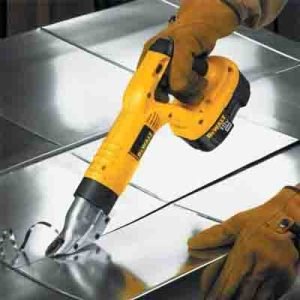
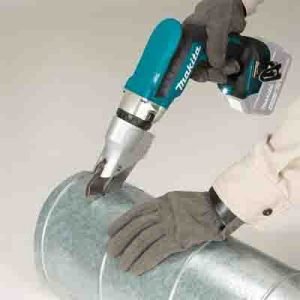
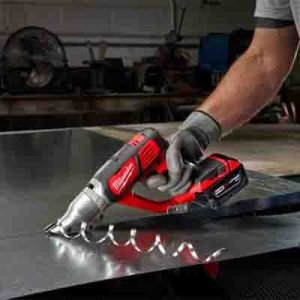


Our experts reviewed the latest {category_name } to help you compare quality, performance, durability and overall value before making your purchase.


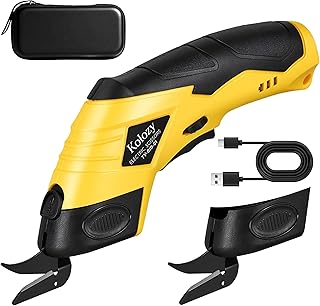


Choosing cordless metal shears is less about finding the tool with the highest headline specification and more about matching the cutting mechanism, capacity, battery platform and handling characteristics to the material and work you actually undertake. A compact shear that is excellent for thin sheet metal can be a poor choice for heavier steel, while a higher-powered professional model may be unnecessarily bulky and expensive for occasional fabrication or roofing work. For a meaningful comparison, look beyond voltage and advertised power. The most useful questions are: what metal will be cut, how thick is it, how frequently will the tool be used, how tight are the curves, how important is cut visibility, which battery platform is already available, and how easily can blades or cutting components be replaced? Established manufacturers such as Bosch Professional, DEWALT and Milwaukee offer cordless metal-cutting tools designed around different priorities. For example, Bosch's current professional cordless shear range includes 12V and 18V models, while DEWALT's 18V XR range includes both straight and offset metal shears. Milwaukee's UK range includes M18 metal shears with a rotating head, alongside nibbler-style alternatives for applications where a different cutting action is preferable. Cordless metal shears are primarily intended for controlled cutting of sheet and relatively thin metal rather than general-purpose cutting of thick structural steel. Typical applications include sheet-metal fabrication, roofing, ductwork, ventilation components, cladding, flashing, metal panels and workshop fabrication. The correct tool depends heavily on the grade and thickness of the material. A manufacturer's maximum capacity is normally stated against a particular material strength, so two specifications that both say "1.6 mm steel" should not automatically be treated as equivalent. Higher-strength steel can require substantially more cutting force than softer sheet. Never assume that a shear rated for a particular thickness of mild steel will deliver the same result in stainless steel. Always check the manufacturer's material-specific specification for the exact model and version being considered. Cutting capacity is one of the most important specifications in a cordless metal shear comparison, but it needs to be interpreted correctly. The stated maximum is a boundary, not necessarily the thickness at which the tool will feel most comfortable during continuous work. A buyer who routinely cuts 1.2 mm mild steel may be better served by a tool whose published capacity comfortably exceeds that requirement than by a model whose maximum rating is exactly 1.2 mm. Working below the maximum capacity can provide greater headroom and may make the tool more appropriate for repeated work. Bosch, for example, publishes separate cutting capacities for different steel strengths on its GSC 18V-16 E. Its stated maximum is 1.6 mm for steel rated at 400 N/mm², falling to 1.2 mm at 600 N/mm² and 0.7 mm at 800 N/mm². The same model is specified for up to 2.2 mm aluminium under the manufacturer's stated material conditions. That distinction demonstrates why a simple "maximum thickness" ranking can be misleading. When comparing cordless metal shears, record the material, material strength and maximum thickness together rather than treating thickness as an isolated number. The choice between 12V and 18V should not be reduced to the assumption that 18V is always better. Voltage is part of the system design, not a direct measurement of cutting performance. A compact 12V shear can be attractive when portability, manoeuvrability and access are more important than maximum cutting capacity. Smaller tools can be particularly useful for overhead work, detailed fabrication and jobs involving frequent repositioning. The Bosch Professional GSC 12V-13 illustrates this category. Bosch specifies a 12V battery system, a no-load stroke rate of 3,600 strokes per minute, a minimum curve radius of 15 mm and a maximum steel capacity of 1.3 mm at 400 N/mm². An 18V platform is generally the more natural choice for users who already operate a professional 18V battery ecosystem or who need a broader range of cutting applications. Higher-capacity tools can also make more sense for repeated sheet-metal work where a compact 12V machine may not provide sufficient capacity. The Bosch Professional GSC 18V-16 E, for example, is an 18V cordless shear specified for up to 1.6 mm steel at 400 N/mm², with a 3,200 spm no-load stroke rate and a 20 mm minimum curve radius. Bosch also describes the model as compatible with its Professional 18V battery system and AMPShare multi-brand battery alliance. If you already own cordless tools, battery compatibility can have a major effect on the true cost of a new metal shear. A tool-only purchase may appear considerably cheaper than a kit, but the saving disappears if you need to buy batteries and a charger as well. Before comparing prices, establish whether the product is supplied as a bare tool, a tool with one battery, or a complete kit. Then check the exact battery family rather than simply the voltage. Batteries from different manufacturers are not interchangeable merely because they have the same nominal voltage. Battery ecosystem compatibility can be particularly valuable for tradespeople who already carry several cordless tools. A metal shear that shares batteries with drills, impact drivers, grinders or other site equipment can reduce the need to manage additional chargers and battery types. Brushless motor technology is increasingly common in professional cordless cutting tools. It can offer advantages in efficiency, electronic control and motor durability, although the presence of a brushless motor should not be treated as proof that one model will outperform every brushed alternative in every application. Bosch describes the GSC 18V-16 E as using brushless motor technology and states that its design and maintenance-free components are intended to support long tool life. For buyers, the more useful question is whether the complete tool design suits the workload. Motor technology should be considered alongside cutting capacity, thermal management, battery consumption, ergonomics, replacement cutting components and manufacturer support. No-load stroke rate, usually expressed as strokes per minute, indicates how rapidly the cutting mechanism cycles when the tool is not cutting material. It is useful for comparing designs, but it should not be interpreted as a direct measurement of real-world cutting speed. A higher no-load stroke rate can contribute to rapid cutting, but actual performance depends on the motor, cutting geometry, material thickness, material hardness, battery state, blade condition and how the tool is controlled. For example, Bosch specifies 3,600 spm for the GSC 12V-13 and 3,200 spm for the GSC 18V-16 E. Those numbers should therefore be viewed as part of the overall tool specification rather than as a standalone ranking. One of the most important buying decisions is choosing the correct cutting mechanism. "Metal cutter" is a broad description covering several different tool designs. Traditional metal shears use a shearing action to remove material progressively along the cut line. They can be highly effective for sheet-metal work where a relatively clean, continuous cut is required. They are often a strong choice for long cuts, trimming sheet and general fabrication where the operator needs to follow a marked line with reasonable control. Offset designs alter the position and orientation of the cutting head to improve access or control in particular applications. This can be useful when the sheet profile, surrounding material or installation position makes a conventional straight shear awkward. DEWALT's DCS496N-XJ, for example, is an 18V XR offset metal shear designed with offset jaws for profiled sheets and complex shapes. The manufacturer also lists an LED worklight and variable-speed trigger among its features. A nibbler removes small portions of material rather than making a conventional scissor-like shear cut. This can make nibblers useful for certain profiles, tight shapes and applications where controlling the cutting path is more important than producing a continuous sheared edge. Milwaukee's UK range includes M12 and M18 FUEL nibbler models alongside its metal shears. The manufacturer presents these as alternatives within its broader cordless metal-cutting range, with different capacities and features from its M18 metal shear products. The correct choice therefore depends on the shape of the cut as much as the thickness of the material. If your work includes circles, apertures, corners or curved sheet-metal profiles, minimum curve radius deserves more attention than it receives in many buying guides. A tool with a smaller published minimum radius may be easier to manoeuvre through tighter curves. Bosch specifies a 15 mm minimum curve radius for its GSC 12V-13 and 20 mm for the GSC 18V-16 E. Do not confuse minimum curve radius with the ability to cut any shape. The geometry of the sheet, the approach angle, access around the workpiece and the operator's ability to maintain the intended line all affect practical manoeuvrability. Metal cutting can involve long periods of wrist and forearm movement, particularly when trimming panels or working above shoulder height. Tool weight matters, but balance can matter just as much. A well-balanced shear may feel easier to control than a theoretically lighter tool with an awkward centre of gravity. Examine the position of the battery, handle, motor and cutting head together. Bosch states that the GSC 18V-16 E has a slim 156 mm grip and a design intended to improve handling, while the published bare-tool weight is 1.6 kg. Always check whether a published weight includes the battery. Manufacturers may publish both bare-tool and battery-equipped weights, and comparisons become misleading if these are mixed. For example, Bosch lists the GSC 18V-16 E at 1.6 kg excluding the battery and gives a 3 kg figure with a stated battery configuration. For overhead or installation work, the working weight is the figure that matters. If you already own several battery sizes, consider how the smallest compatible battery compares with the largest one in both runtime and balance. A variable-speed trigger can be useful where precise positioning is more important than maximum cutting speed. Slower control can help when starting a cut, approaching a corner or aligning the tool with a marked line. DEWALT lists a variable-speed trigger on its DCS491N-XJ 18V XR metal shear, along with an LED intended to improve visibility of the cut. Not every application needs variable speed, but it is a feature worth prioritising if your work involves detailed fabrication, awkward access or frequent changes in cutting direction. The cutting head determines how easily the tool can enter a sheet, follow a profile and reach restricted areas. A compact head can be more useful than additional theoretical power when working inside ducting, around installed panels or close to structural obstructions. Rotating or adjustable heads can offer additional flexibility. Milwaukee highlights a 360-degree tool-free rotating head on its M18 metal shear range, specifically positioning the feature as a way to improve access to tight spaces and user comfort. When comparing head designs, consider the actual direction from which you approach the workpiece. A feature that looks impressive on a specification sheet only has value if it solves a problem encountered in your particular applications. Cordless does not mean silent. Metal shears produce mechanical noise and vibration during operation, and extended use can still be tiring. Published sound figures can help establish a baseline, but they should not be used to predict exactly how a tool will feel in every working environment. Bosch lists a 77 dB(A) sound-pressure level for the GSC 18V-16 E and 69 dB(A) for the GSC 12V-13 under its stated measurement conditions. Use suitable hearing protection and follow the manufacturer's safety instructions whenever the application and environment require it. Metal cutting also creates sharp edges and potentially hazardous fragments, so appropriate eye and hand protection should be considered alongside hearing protection. The cutting components are effectively the interface between the tool and the material. Even a high-quality cordless shear cannot maintain good results if its cutting components are damaged, incorrectly adjusted or excessively worn. Availability of replacement cutting components can be an important long-term ownership consideration. A cheaper tool is less attractive if essential wear parts are difficult to identify or obtain. Battery runtime cannot be predicted accurately from voltage alone. The current drawn by the motor varies with material thickness, cutting resistance, speed, technique and the condition of the cutting components. A larger battery can extend working time, but it also increases the weight of the tool. For repetitive overhead work, a compact battery may be preferable even if it requires more frequent changes. For workshop or site use, having two or more compatible batteries can sometimes be more practical than choosing the largest possible battery. The right arrangement depends on whether your priority is minimum interruptions, minimum weight or compatibility with other cordless tools. Many professional cordless tools are sold in tool-only form. This is attractive for existing users of the manufacturer's battery platform because there is no need to purchase duplicate chargers or batteries. New users should compare the total system cost. A tool-only price is not an apples-to-apples comparison with a kit containing a battery, charger and case. Brand comparison is useful when it helps identify the most appropriate ecosystem and tool design, rather than simply declaring one manufacturer universally superior. Bosch Professional offers both compact 12V and higher-capacity 18V cordless metal shears. The GSC 12V-13 prioritises compact handling and curve manoeuvrability, while the GSC 18V-16 E moves to the Professional 18V platform and a higher stated steel capacity. Bosch can therefore be particularly interesting for buyers already invested in the Professional 12V or 18V ecosystem, or for those who place significant value on compact professional cutting tools. DEWALT's 18V XR metal-shear range includes both conventional and offset configurations. The DCS491N-XJ is specified for sheet-metal applications up to 1.2 mm in mild steel and 1.2 mm in stainless steel, while the DCS496N-XJ uses offset jaws aimed at profiled sheets and more complex shapes. The main attraction for an existing DEWALT user may therefore be platform compatibility combined with a choice of head configuration. Milwaukee's UK metal-cutting range includes M18 metal shears with features such as a rotating head and overload protection, as well as M12 and M18 FUEL nibblers for applications where nibbling is preferable to conventional shearing. This makes the Milwaukee range worth considering where a buyer wants to compare several cordless metal-cutting mechanisms rather than restricting the shortlist to traditional shears. A useful comparison should place specifications into context instead of producing a long list of numbers. Start with the requirements that can eliminate a tool entirely, then compare secondary features. Higher voltage does not automatically mean better cutting for every user. Tool geometry, motor design, material capacity, weight and ergonomics all matter. A published maximum should be treated as a specification boundary. If most of your work is close to that limit, consider a tool with additional capacity or a different cutting technology. Stainless steel can have a significantly different cutting requirement from mild steel. Always check the manufacturer's stated stainless-steel capacity for the exact model. A bare tool may not represent the final cost if you are entering a new battery platform. Nibblers and shears perform different cutting actions. Decide whether you prioritise continuous shearing, access around profiles, tight shapes or controlled material removal. Cutting components are wear items. Check how the manufacturer identifies replacement parts and whether the product has a clear spare-parts system. A tool that is easy to hold for five minutes may become tiring after repeated cutting. Consider the working position, battery size and balance together. Roofing work creates a particularly strong case for cordless metal shears because access, portability and the ability to work without a mains lead can be important. However, the ideal tool depends on the sheet type and the number of cuts required. For roofing applications, pay particular attention to curved cuts, visibility of the cutting line, tool balance, battery availability and the ability to work safely in awkward positions. A compact tool can be valuable where the operator must repeatedly reposition the tool or work around installed materials. Roofing professionals should also check the manufacturer's cutting capacities against the exact sheet specification rather than assuming that all roofing sheet is equivalent. Ductwork often involves thin sheet, repetitive cuts, corners and confined access. In this environment, manoeuvrability can be more important than maximum thickness. A compact shear or an offset model may be advantageous where access around profiles is difficult. A rotating head can also be useful where changing the cutting direction reduces wrist strain or improves visibility. For high-volume duct fabrication, also consider how quickly cutting components can be inspected, adjusted or replaced. Downtime can matter more than a small difference in purchase price. Workshop users often have more flexibility because access to the workpiece is better and battery changes are easier to manage. Here, cutting capacity, edge quality, curve performance and compatibility with existing batteries may become the most important factors. If the workshop handles a broad range of thicknesses, do not force one cordless shear to perform every metal-cutting task. A conventional shear may be ideal for sheet work, while a nibbler, grinder, saw or other specialised tool may be better suited to thicker or differently shaped material. Cordless metal shears are highly useful, but they are not universal metal-cutting machines. A different tool may be more appropriate when the material is substantially thicker than the shear's rating, when the work requires a different edge profile, or when the application calls for a completely different cutting mechanism. Depending on the job, alternatives can include corded metal shears, nibblers, metal-cutting saws, angle grinders or dedicated fabrication equipment. The safest approach is to select the tool around the material and cut rather than attempting to make one tool cover every application. Cut quality is more than whether the tool can pass through the sheet. For finished fabrication, consider the straightness of the cut, distortion around the edge, burr formation, surface damage and how easily the tool follows a marked line. Cut quality can be affected by blade condition, material thickness, cutting speed and operator technique. If appearance matters, allow sufficient material for finishing and inspect sample cuts before committing to a production workflow. A used cordless shear can be worthwhile, particularly when it comes from a professional battery ecosystem you already own. However, condition matters more than cosmetic appearance. For older professional tools, the availability of replacement components can be a more important buying factor than the original specification. Metal sheet can produce extremely sharp edges, and cutting operations can create small fragments or debris. Read the manufacturer's instructions before use and use protective equipment appropriate to the task and working environment. Manufacturer specifications are the most reliable starting point for technical comparisons, but they should always be read in context. Terms such as "maximum capacity", "no-load stroke rate" and "weight excluding battery" describe specific test or measurement conditions and should not be treated as direct promises of identical results on every job. For example, Bosch publishes separate material-strength figures for its cordless shears rather than presenting one universal steel thickness. This is a useful reminder that engineering specifications need to be interpreted rather than simply copied into a ranking. Good value is not necessarily the lowest purchase price. A better measure is how well the tool meets the intended workload over its useful service life. A more expensive professional shear can make sense if it provides the required capacity, belongs to a battery platform you already own, has suitable replacement components and offers the ergonomics needed for repeated work. Conversely, paying for a premium model can be poor value if your normal work involves only thin sheet and occasional cuts. Customer reviews can add useful information that specifications cannot fully capture, but they should be interpreted carefully. Look for reviews from people performing similar work with similar materials rather than relying on an overall star rating. Reviews are most useful when combined with manufacturer specifications rather than used as a substitute for them. Maintenance frequency depends on workload, material and environment. A tool used daily for fabrication requires more frequent inspection than one used occasionally for home workshop projects. Instead of relying on an arbitrary calendar interval, inspect the tool regularly and follow the manufacturer's maintenance instructions. Pay particular attention to cutting components, fasteners, debris accumulation, battery contacts, housing damage and changes in cutting behaviour. The best cordless metal shear is the one whose cutting capacity, battery system, head design and ergonomics match the work you actually do. There is no universally superior model for every UK buyer. For a compact approach, consider whether a 12V professional shear provides enough capacity. For broader sheet-metal work, an 18V platform may offer a better balance of capability and ecosystem compatibility. If your work involves profiled sheet or restricted access, investigate offset or rotating-head designs. If complex shapes are common, compare conventional shears with nibblers rather than assuming a standard shear is automatically the right solution. Above all, compare like-for-like specifications. Check material strength, thickness, battery configuration, tool weight, curve radius and cutting mechanism before comparing price. Current manufacturer information shows meaningful differences even among established professional options, which is why a specification-led shortlist is more useful than a generic "best" ranking. Yes, suitable professional cordless models can handle substantial sheet-metal applications, provided the material and thickness remain within the manufacturer's specifications. The key is choosing the correct tool rather than assuming every cordless shear is suitable for heavy-duty fabrication. Not automatically. An 18V model can provide greater capacity in some product ranges, while a 12V model may be preferable where compact size, lower weight and manoeuvrability are more important. Compare the actual cutting specifications and intended application. Some can, but the permitted thickness may be lower than the corresponding mild-steel capacity. Always check the exact manufacturer's specification for stainless steel before buying or cutting. Many metal shears are designed for aluminium as well as steel, and published aluminium capacity can be higher than steel capacity. The manufacturer's specification should be treated as the definitive guide for the particular model. Neither is universally better. Shears make a continuous shearing cut, whereas nibblers remove small pieces of material. The better option depends on the shape, thickness, access requirements and desired edge characteristics. They use model-specific cutting components that should be inspected and replaced according to the manufacturer's instructions. Always identify the exact tool model before ordering replacement parts. No. No-load stroke rate is only one part of the design. Material capacity, cutting geometry, motor performance, control, battery condition and blade condition all influence practical cutting performance. A bare tool can be the sensible choice if you already own compatible batteries and a charger. If you are new to the battery platform, compare the complete cost of the tool, batteries and charger before deciding. For most buyers, material-specific cutting capacity is the first specification to verify. After that, battery compatibility, cutting mechanism, weight, manoeuvrability, curve capability and replacement-component availability become important. No. Cordless shears are specialised tools. Thick material, unusual profiles, heavy fabrication and certain precision applications may be better served by nibblers, saws, grinders, corded shears or dedicated fabrication equipment. A useful buying guide should distinguish manufacturer specifications from editorial judgement and customer feedback. Product specifications should be checked against the relevant manufacturer's information, while buying recommendations should be based on the requirements of different user types rather than an unsupported universal ranking. For this reason, comparisons should consider performance potential, material compatibility, handling, battery ecosystem, cutting geometry, serviceability and overall suitability. Where manufacturers publish different capacities for different material strengths, those distinctions should be retained rather than simplified into a single headline number. Product availability, retailer pricing, bundle contents and customer ratings can change. Readers should therefore verify the current specification and purchase configuration before ordering, particularly when comparing tool-only products with complete kits. When searching for the best cordless metal shears in the UK, start with the job rather than the brand. Identify the material, thickness and type of cut, then select the battery platform and tool design that provide enough capacity without introducing unnecessary weight or cost. Bosch Professional, DEWALT and Milwaukee all illustrate different approaches to cordless metal cutting, from compact 12V shears and conventional 18V models to offset heads and nibbler-style tools. The strongest buying decision is therefore not simply the model with the largest number on the specification sheet. It is the model that gives you sufficient cutting capacity, useful control, suitable ergonomics, compatible batteries and a practical ownership proposition for the work you actually perform.How to Choose the Best Cordless Metal Shears in the UK
What Cordless Metal Shears Are Designed to Cut
Cutting Capacity: The Specification That Matters Most
Why Maximum Capacity Should Not Be Your Only Criterion
12V Versus 18V Cordless Metal Shears
When a 12V Shear Makes Sense
When an 18V Shear Makes Sense
Battery Platform Compatibility
Brushless Motors and Long-Term Use
Stroke Rate and Cutting Speed
Straight Shears, Offset Shears and Nibblers
Straight Metal Shears
Offset Metal Shears
Nibblers
Cutting Curves and Minimum Radius
Ergonomics: Why Tool Shape Matters
Weight: Bare Tool Versus Working Weight
Variable-Speed Control and Cutting Precision
Head Design and Access to the Workpiece
Noise, Vibration and Operator Comfort
Blade and Cutting Component Maintenance
Battery Runtime: What Really Determines It?
Tool-Only Versus Complete Kit
Comparing Bosch, DEWALT and Milwaukee Cordless Metal Shears
Bosch Professional
DEWALT
Milwaukee
How to Compare Specifications Properly
Common Buying Mistakes to Avoid
Choosing by Voltage Alone
Using the Maximum Thickness as the Normal Working Thickness
Ignoring Stainless Steel Requirements
Forgetting the Battery
Buying a Nibbler When You Need a Shear
Ignoring Replacement Parts
Overlooking Tool Balance
Buying Cordless Metal Shears for Roofing
Buying Cordless Metal Shears for Ductwork and HVAC
Buying Cordless Metal Shears for Workshop Fabrication
When a Cordless Metal Shear Is Not the Right Tool
How to Assess Cut Quality
Used and Refurbished Cordless Metal Shears
Safety Considerations When Using Cordless Metal Shears
Understanding Manufacturer Specifications
What Represents Good Value in a Cordless Metal Shear?
Questions to Ask Before Buying
Quick Decision Guide
How to Read Customer Reviews Without Being Misled
How Often Should a Cordless Metal Shear Be Maintained?
Final Buying Advice for 2026
Frequently Asked Questions About Cordless Metal Shears
Are cordless metal shears powerful enough for professional work?
Are 18V metal shears better than 12V models?
Can cordless metal shears cut stainless steel?
Can cordless metal shears cut aluminium?
Are metal shears better than nibblers?
Do cordless metal shears need special blades?
Is a higher stroke rate always better?
Should I buy a bare cordless metal shear?
What is the most important specification when comparing cordless metal shears?
Can one cordless metal shear replace every other metal-cutting tool?
Editorial Checklist Before Purchasing
Our Approach to Cordless Metal Shear Comparisons
Bottom Line