

Our experts reviewed the latest {category_name } to help you compare quality, performance, durability and overall value before making your purchase.


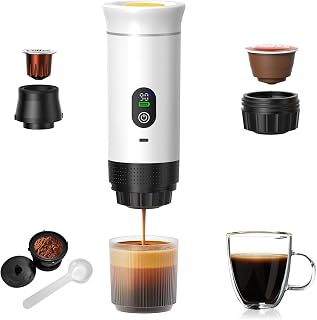

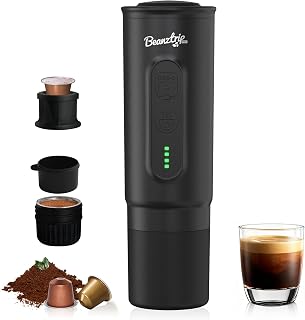

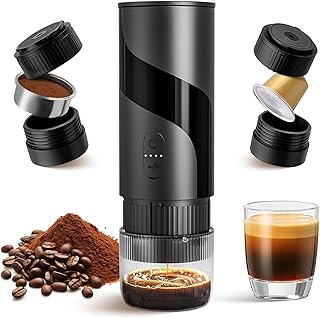

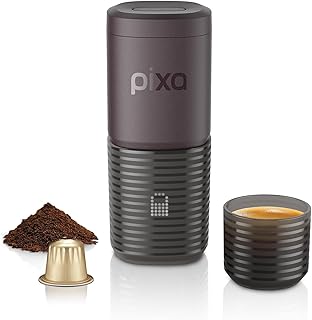


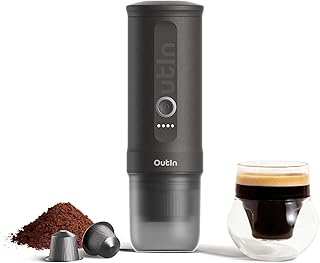

A good cordless coffee maker should do more than simply remove the power cable. The most useful models combine genuinely portable construction with dependable brewing, sensible battery management, straightforward cleaning and a coffee format that suits the way you actually drink coffee. For UK buyers, the first distinction to make is between a battery-powered coffee maker and a manual portable coffee maker. Battery-powered models can heat water and operate the brewing pump without mains electricity, whereas manual models such as Wacaco Nanopresso rely on hand pressure and require hot water from another source. That difference has a major effect on where and how you can use the machine. The latest generation of portable electric espresso makers is particularly interesting because some models can heat room-temperature water internally. For example, OutIn Nano is designed to heat water before extraction, while HiBREW H4C combines battery-powered heating and brewing with a removable battery system. These features make a meaningful difference for camping, commuting, road trips, travel and working away from a conventional kitchen. Not every portable coffee maker should be judged by the same criteria. A compact manual brewer can be an excellent choice for a hiker who already carries a thermos, while a self-heating electric model is more appropriate for somebody who wants to turn cold drinking water into espresso at a campsite. These are the closest match to what most people mean by a truly cordless coffee machine. An integrated battery powers both the heating system and the brewing mechanism, allowing the machine to operate without a mains socket. The principal advantage is independence from a kettle. Add water, prepare the coffee or insert a compatible capsule, and the machine can handle the heating and extraction process itself. OutIn Nano, for example, is specified with a 3 x 2,500mAh lithium battery arrangement and an 80ml maximum water level, and the manufacturer states that it can heat room-temperature water for multiple espresso shots on a full charge. The trade-off is energy consumption. Heating water requires considerably more battery power than simply pumping water that is already hot. A specification claiming many cups from hot water therefore should not automatically be interpreted as the number of cups you can expect when starting with cold water. Some portable coffee makers use their battery primarily for pumping rather than heating. These machines can be extremely efficient when paired with a flask of hot water, but they are not equivalent to a self-heating coffee maker. They can nevertheless make sense if your routine already includes boiling water at home or carrying a reliable insulated flask. The lower energy requirement can also make battery life less of a concern during longer trips. Manual machines eliminate batteries altogether. Wacaco's portable range, for example, includes manual espresso makers such as Nanopresso, which uses a hand-operated pumping system and does not heat water itself. Wacaco specifies Nanopresso at 336g, with an 80ml water capacity and up to 18-bar pressure. This approach can be remarkably practical. There is no battery to charge, no electronic heating element and no dependence on a particular charging cable. However, you must provide hot water separately, so a manual machine is better described as a portable espresso maker than a fully self-contained cordless coffee machine. For a genuinely cordless experience, heating capability is one of the most important specifications. A machine that merely pumps water through coffee is not comparable with one that can heat cold water to brewing temperature. Look for clear information about: OutIn states that Nano can heat room-temperature water in roughly three minutes and offers substantially more brewing cycles when hot water is used instead. Its published figures are based partly on internal manufacturer testing, so they should be treated as specification guidance rather than a universal guarantee for every user. Battery capacity is useful, but mAh alone does not tell you how many coffees you will make. Heating water is energy-intensive, so a machine may produce significantly more drinks when starting with hot water than when heating cold water from the battery. When comparing cordless coffee makers, ask three questions: Also check whether the battery is built in or replaceable. HiBREW H4C is notable for its detachable battery design, allowing the specified battery to be replaced rather than permanently integrating the power pack into the main machine. The manufacturer states that a full charge can heat approximately three 100ml portions, four 75ml portions or five 50ml portions, while substantially more drinks are possible when using already-hot water. A larger tank is convenient but adds size and weight. Portable espresso makers therefore tend to prioritise compactness over the generous reservoirs found on domestic countertop machines. Do not confuse tank capacity with finished drink volume. Some water remains within the brewing system, and espresso extraction does not necessarily produce a cup equal to the quantity of water added. For example, OutIn Nano has an 80ml maximum water level, making it primarily an espresso-style portable brewer rather than a replacement for a large-filter coffee machine. HiBREW H4C specifies a 100ml stainless-steel water tank. Compatibility can be more important than headline pressure figures. A machine may be excellent technically but inconvenient if it does not accept the coffee format you already use. The main options are: OutIn Nano supports ground coffee and compatible Nespresso Original-style capsules, while its manufacturer specifies around 6–8g of ground coffee in the standard basket and a larger basket option for higher doses. HiBREW H4C offers different configurations with support for ground coffee and, depending on the version, capsule formats including NS and DG. The exact configuration should therefore be checked before purchase rather than assuming every H4C variant has identical accessories. Portable espresso makers often advertise pressure figures such as 15, 18 or 20 bar. This can be useful as a technical specification, but it should not be treated as a direct ranking of espresso quality. Espresso extraction depends on several interacting variables, including coffee dose, grind size, puck preparation, water temperature, pressure profile, flow rate and extraction time. A higher maximum pump-pressure number does not automatically mean better coffee. For commercial comparison, treat pressure as one specification within a larger brewing system. A well-designed machine with sensible temperature control and a suitable basket can be more useful than a machine chosen solely because its packaging displays the highest pressure figure. Temperature is particularly important when comparing portable electric machines because battery-powered heating systems have to balance speed, energy consumption and consistency. Buyers should look for information about the target brewing temperature, whether temperature can be adjusted and whether the manufacturer specifies how the temperature is measured. If a machine offers selectable temperature settings, this may be useful for experimenting with different coffee styles, although greater adjustability can also make the machine more complex. The advertised weight of the machine is only part of the carrying burden. A realistic travel load may also include: Wacaco Nanopresso weighs 336g, illustrating how much lighter a manual brewer can be when it does not need a battery and heating element. OutIn Nano is around 670g according to the manufacturer's published product information, reflecting the additional hardware needed for electric heating and brewing. There is no universally best portable coffee maker because these products solve different problems. A useful comparison starts with the type of coffee-making experience you want. OutIn Nano is particularly relevant for buyers who want a compact, self-heating electric espresso maker. Its published specifications include a 20-bar pressure system, an 80ml maximum water level, USB-C charging and support for compatible Nespresso Original-style capsules as well as ground coffee. The manufacturer also states that it can heat room-temperature water internally. Potential advantages: Potential limitations: HiBREW H4C takes a different approach, with a detachable battery and several configurations aimed at different coffee preferences. The manufacturer specifies a 100ml stainless-steel water tank, up to around four minutes for heating and brewing, and different versions with varying coffee-format compatibility. Potential advantages: Potential limitations: Nanopresso is an important alternative because it demonstrates why “cordless” and “portable” should not be treated as identical categories. It has no electrical power requirement at all, uses manual pumping and requires hot water separately. Wacaco specifies an 80ml water capacity, 336g weight and up to 18-bar pressure. Potential advantages: Potential limitations: The right choice depends primarily on your access to hot water. One of the easiest buying mistakes is to rank portable espresso machines according to their maximum advertised pressure. Pressure matters, but it is only one part of extraction. The coffee bed needs water to pass through it at an appropriate rate. If the grind is too fine, the coffee can restrict flow excessively. If the grind is too coarse, water may pass through too quickly. Dose, tamping, basket design and the machine's pressure and flow behaviour all influence the final result. For this reason, a sensible comparison should consider: The practical question is not “Which machine has the biggest pressure number?” but “Which machine gives me the combination of control, convenience and consistency that matches my coffee routine?” Ground coffee is the more flexible option. You can select different beans, roasts and blends and adjust the dose or grind when the machine permits it. The disadvantage is preparation. You need to carry coffee, measure an appropriate amount, potentially manage a grinder and clean the basket after brewing. Finely ground coffee can also be messy when space and water are limited. Capsules are attractive for travel because the dose is already contained and the preparation process is straightforward. They can also simplify cleanup. The crucial issue is compatibility. Nespresso Original and Nespresso Vertuo are different systems, and a machine designed for one should not be assumed to accept the other. Nespresso itself states that Vertuo machines use Vertuo capsules exclusively, illustrating why capsule format should always be checked before buying. Portable espresso makers commonly support a particular capsule format through a dedicated adapter. The exact capsule compatibility should therefore be confirmed against the manufacturer's current specification rather than inferred from a product photograph or a generic marketplace description. Battery-life claims are among the most difficult specifications to compare directly between manufacturers because testing conditions differ. A machine may advertise a high number of cups when using pre-heated water, while another may quote the number of cups achievable from cold water. Those figures describe very different workloads. When assessing battery claims, prioritise information presented in this order: This approach produces a much more useful comparison than simply placing battery capacities in a table. A cordless machine is only as convenient as its charging system. Before buying, check whether it charges through USB-C, a proprietary cable or another connection and whether the included or recommended power supply meets the required output. OutIn specifies a 5V/3A adapter for Nano and supplies a USB-C cable. For travel, it is worth considering whether the machine can be charged from the same equipment you already carry, such as a suitable USB power source or vehicle charging system. Never assume that every USB-C port can supply the power required for every coffee maker; the manufacturer's charging requirements should take precedence. For espresso, a small reservoir can be perfectly sensible. For filter coffee, Americano-style drinks or large travel mugs, it can become restrictive. Portable espresso makers are generally designed around concentrated coffee rather than the large-volume brewing associated with countertop filter machines. If you want a 300–500ml drink, you may need to brew a concentrated shot and add additional hot water separately. Before choosing a model, decide whether your normal drink is: This simple decision can eliminate unsuitable machines before you even compare prices. They can be excellent for camping when their limitations match the trip. A self-heating machine is especially useful when there is no dependable kettle or campsite power supply. For camping, prioritise: HiBREW H4C, for example, is specified as IPX2 splash-resistant, but that does not make it waterproof or suitable for immersion. The manufacturer also states that it is not dishwasher-safe. For outdoor use, a machine should therefore be treated like an electronic appliance, not like camping cookware. Keep the battery and electronics protected from unnecessary water exposure, follow the manufacturer's cleaning instructions and store the machine dry after use. A portable electric espresso maker can be useful in an office where access to a kitchen is limited, particularly if the machine is quiet, compact and simple to clean. However, a small portable machine is not automatically the best office coffee solution. If you have reliable mains electricity and a kettle, the advantages of cordless operation may be less important than water capacity, brewing speed and ease of cleaning. For desk use, consider: Road trips present a slightly different set of requirements. If you regularly stop at service stations or carry a flask, a manual or battery-powered brewer may be sufficient. If you want the machine to heat cold bottled water, a self-heating electric model becomes more compelling. For commuting, portability and speed normally matter more than maximum coffee customisation. A capsule-compatible machine can reduce preparation time, while a ground-coffee machine is more appealing to coffee enthusiasts who already carry their own beans or pre-ground coffee. Materials matter because portable machines experience more handling, vibration and movement than countertop appliances. Look for clear information about: HiBREW H4C, for example, specifies a stainless-steel water tank. Wacaco Nanopresso uses a combination of plastics, stainless steel and silicone in its construction. Do not assume that a metal exterior automatically means a more durable machine. The quality of seals, moving components, battery system and internal construction can be just as important. Portable coffee makers often need more frequent attention than users expect because coffee oils, fine grounds and water residue accumulate in compact brewing components. Descaling is particularly important for machines that heat water internally because mineral deposits can accumulate in the water path and heating system. The correct frequency depends on water hardness, usage and the manufacturer's instructions, so avoid applying a single universal schedule to every model. A 20-bar specification can look impressive, but pressure alone does not determine espresso quality. Consider temperature, flow, basket design and coffee preparation as well. Some portable machines have no cable because they are manually operated. Others use a battery only for pumping. Confirm whether the machine actually heats water before purchase. If your aim is to make coffee at a campsite without a kettle, hot-water battery figures are not the most useful measurement. Find the cold-water performance instead. An 80ml or 100ml tank may be perfectly adequate for espresso but unsuitable if you expect one machine to produce a large mug without additional water. “Pod compatible” is not a sufficient specification. Determine the exact capsule family and whether the adapter is included with the version you are buying. A machine can appear compact until the charging cable, capsule adapters, coffee basket, tamper, cleaning tools and case are added to the travel kit. A rechargeable battery is a consumable component over the long term. If the machine will be used frequently, check whether the battery is replaceable and whether replacement packs are officially supported. An IP rating has a specific meaning and should not be interpreted as permission to submerge or wash the machine under running water. Check the manufacturer's exact cleaning and water-resistance instructions. When comparing two or more cordless coffee makers, create a like-for-like checklist rather than relying on headline marketing claims. Brand recognition should not replace technical comparison, but an established manufacturer with clearly documented specifications can make ownership easier. Brands and product families worth considering during research include OutIn, HiBREW, Wacaco and STARESSO. Their approaches are different: OutIn focuses heavily on self-heating electric portability, HiBREW offers several electric portable configurations, while Wacaco and STARESSO have strong representation in manual portable espresso brewing. For any brand, verify the current UK specification, included accessories, warranty terms, charging requirements and capsule compatibility before making a purchase. Product generations and regional configurations can change, so an older review should not automatically be treated as the specification for a current model. The right budget depends on how much of the coffee-making process you want the machine to automate. Do not compare the purchase price in isolation. Consider coffee consumables, capsule costs where applicable, replacement batteries, accessories, cleaning products and the equipment you would otherwise need to carry. A useful cordless coffee maker does not necessarily have the lowest price or the longest list of specifications. Value comes from how well the machine solves your particular problem. For example, paying more for self-heating technology can be worthwhile if it eliminates the need to carry a kettle or thermos. Conversely, if you always have hot water available, a lightweight manual machine may provide better practical value. Think in terms of cost per useful feature rather than cost per advertised specification. A feature that you never use has little value, however impressive it looks on a product page. A cordless coffee maker is particularly attractive for people who value coffee away from a conventional kitchen. Portability comes with compromises. If you make several large coffees every morning in one kitchen, a countertop espresso machine, bean-to-cup machine, pod machine or filter coffee maker may be substantially more convenient. Similarly, if you always have access to mains electricity and a kettle, the battery and heating system of a cordless machine may add cost and weight without providing a meaningful benefit. The strongest reason to buy cordless is therefore not simply that the machine is small. It is that you genuinely need coffee-making capability away from a normal powered kitchen. There is no single best model for every buyer. A self-heating machine such as OutIn Nano is suited to users who want electric, battery-powered brewing with cold-water heating, while HiBREW H4C is worth considering where a detachable battery and multiple coffee formats are priorities. A manual Wacaco Nanopresso can be the better choice where weight and simplicity matter more than self-heating. Some can. Self-heating electric models use battery power to raise water temperature before extraction. Others require hot water to be supplied separately. Always check the manufacturer's specification because “cordless” does not necessarily mean “self-heating”. Many portable espresso machines accept ground coffee, although the required dose, basket and grind size vary. OutIn Nano supports ground coffee, while HiBREW H4C configurations also support ground coffee. Some models accept Nespresso Original-style capsules through a compatible adapter. This does not mean that every portable machine accepts every Nespresso capsule. Nespresso Original and Vertuo capsules belong to different systems, so check the exact compatibility before buying. Neither is universally better. Manual machines are lighter, simpler and independent of batteries but require hot water and manual pumping. Electric cordless models provide greater independence because some can heat water themselves, but they are heavier and require charging. Battery life varies according to the model, water volume and starting temperature. Heating cold water consumes substantially more energy than pumping already-hot water. For meaningful comparison, look for manufacturer figures specifically describing cold-water brewing rather than relying solely on a headline cup count. Some models are designed around USB charging and can potentially be used with a suitable vehicle power source, but the charger and power requirements must be checked first. Never assume that any USB or vehicle socket can safely provide the required power. Yes, particularly self-heating models. They can remove the need for a separate kettle, although battery capacity, charging arrangements, water supply and cleaning still need to be considered. Most portable espresso makers are designed for concentrated espresso-style drinks and have relatively small water reservoirs. If you prefer a large mug, check the maximum water capacity and consider whether you are comfortable diluting an espresso shot with additional water. Not necessarily. Pressure is only one part of espresso extraction. Temperature, grind, dose, basket design, flow and extraction time can all affect the result. Both matter, but they answer different questions. Heating speed affects how quickly you receive your drink, while battery capacity affects how many cold-water brews you can make before recharging. Frequent travellers should consider both together. It can be valuable for frequent users because battery capacity naturally declines over time. A supported replaceable battery can also be useful on longer trips if spare batteries are available and permitted for the intended travel arrangements. The best cordless coffee maker is the one that removes the inconvenience you actually encounter. If the problem is the absence of hot water, prioritise self-heating. If the problem is weight and battery management, a manual Wacaco or STARESSO-style portable brewer may be more practical. If convenience and repeatability are most important, consider capsule compatibility. If coffee quality and control come first, look for a machine that supports properly prepared ground coffee. For 2026 buying research, the most meaningful comparison is therefore not simply “which cordless coffee maker is rated highest?” It is whether the machine offers the right combination of heating capability, battery endurance, water capacity, coffee compatibility, portability, maintenance and long-term practicality for the way you intend to use it. Before purchasing, verify the latest manufacturer specifications, current UK warranty information, included accessories, compatible coffee formats and today's retailer pricing. Product configurations and availability can change, so the current specification should always take precedence over an older listing or review.How to Choose a Cordless Coffee Maker in the UK
Quick Answer: What Makes the Best Cordless Coffee Maker?
Cordless Coffee Maker Types Compared
Self-Heating Battery Espresso Makers
Battery-Powered Brewing Machines
Manual Portable Espresso Makers
Best Cordless Coffee Maker Features to Compare
1. Heating Performance
2. Battery Capacity and Real-World Battery Life
3. Water Capacity
4. Coffee Compatibility
5. Brewing Pressure
6. Temperature Control
7. Weight and Portability
OutIn Nano vs HiBREW H4C vs Manual Alternatives
OutIn Nano
HiBREW H4C
Wacaco Nanopresso
Manual vs Electric Cordless Coffee Makers
Why “20 Bar” Does Not Automatically Mean Better Espresso
Ground Coffee vs Capsules for Portable Brewing
Ground Coffee
Capsules
How to Judge Cordless Coffee Maker Battery Claims
Charging and USB-C Considerations
Water Capacity: Is 80ml or 100ml Enough?
Are Cordless Coffee Makers Good for Camping?
Are Cordless Coffee Makers Good for the Office?
Cordless Coffee Makers for Commuting and Road Trips
Material Quality and Build Construction
Cleaning and Maintenance
After Every Brew
Regular Deep Cleaning
Common Buying Mistakes
Buying Based Only on Pressure
Assuming “Cordless” Means “Self-Heating”
Ignoring Cold-Water Battery Performance
Choosing a Machine That Makes Too Little Coffee
Overlooking Capsule Compatibility
Forgetting the Accessories
Ignoring Battery Replacement
Assuming Water Resistance Means Waterproofing
How to Compare Specifications Properly
What to Look for in a Reliable Brand
How Much Should You Spend?
How to Assess Value for Money
Questions to Ask Before Buying
Who Should Buy a Cordless Coffee Maker?
Who May Be Better Off With a Conventional Coffee Machine?
Frequently Asked Questions
What is the best cordless coffee maker in the UK?
Can a cordless coffee maker heat cold water?
Can I use ground coffee in a cordless coffee maker?
Can I use Nespresso capsules in a portable coffee maker?
Are manual coffee makers better than cordless electric models?
How long does a cordless coffee maker battery last?
Can I charge a cordless coffee maker in a car?
Are cordless coffee makers suitable for camping?
Do cordless coffee makers make normal-sized mugs of coffee?
Is higher bar pressure better?
What is more important: battery capacity or heating speed?
Is a replaceable battery worth having?
Final Cordless Coffee Maker Buying Checklist
Bottom Line