

Our experts reviewed the latest {category_name } to help you compare quality, performance, durability and overall value before making your purchase.


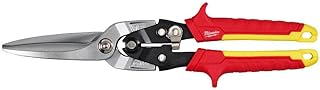


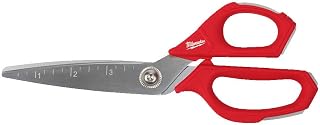


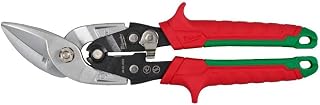


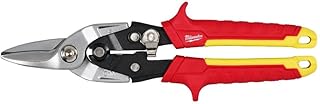
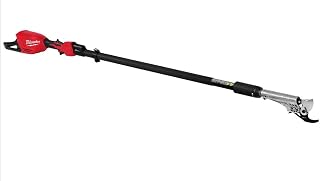


Choosing a Milwaukee metal shear is less about selecting the most powerful cordless tool and more about matching the cutting mechanism, material thickness and working environment to the job. A shear designed for relatively thin sheet steel is not automatically the right choice for heavier fabrication, stainless steel or applications where the cut-off waste needs to be controlled. For UK buyers, the Milwaukee M18 range includes the M18 BMS12 and M18 BMS20 metal shears. Milwaukee's UK product information lists the BMS12 with a maximum cutting depth of 1.2 mm in steel and the BMS20 with a maximum cutting depth of 2.0 mm in steel. Both use an 18V M18 battery platform and incorporate a rotating cutting head with 12 locking positions. The most useful comparison is between the two dedicated M18 metal shears rather than assuming that every cordless metal cutter performs the same job. The capacity figures should be treated as specification limits rather than targets. Regularly working at the maximum stated thickness can place greater demands on the cutting mechanism, battery and operator. Where material thickness varies considerably, it is sensible to select equipment based on the thickest material you routinely expect to cut while also considering whether another cutting method would be more appropriate. Maximum cutting capacity is one of the easiest specifications to misunderstand. A statement such as “2.0 mm in steel” does not mean that every 2.0 mm steel sheet, profile or grade will behave identically. Before purchasing, identify the material you actually cut. Consider: Milwaukee's published specification for the M18 BMS20 gives a maximum steel cutting depth of 2.0 mm, while its UK product information describes the BMS12 as having a 1.2 mm maximum cutting depth in steel. A rotating head can be more important in practical use than a headline power figure. Milwaukee specifies a 360-degree tool-free rotating head with 12 locking positions on the M18 metal shears. This arrangement is intended to help the operator position the cutting head for different access requirements while maintaining a more comfortable working position. This is particularly relevant when cutting sheet metal that has already been installed. A tool may have sufficient cutting capacity on paper but become awkward if the operator has to twist the wrist or work at an unsuitable angle to keep the blades aligned with the intended cut. When comparing metal shears, therefore, look beyond the number of locking positions. Consider whether the head adjustment helps you approach the workpiece naturally, whether the tool remains controllable during curved cuts and whether the selected position keeps your hands away from sharp sheet edges. Metal cutting can involve repetitive trigger operation, awkward sheet positions and long periods of handling. Ergonomics should consequently be treated as a performance consideration rather than a comfort extra. The M18 BMS12 and M18 BMS20 incorporate an in-line wrist design and variable-speed trigger, features intended to provide greater control during cutting. Variable speed is particularly useful when beginning a cut or following a marked line. Maximum speed is not necessarily desirable for every operation. Controlled progress can make it easier to maintain the intended cutting path and reduce the temptation to force the tool through material. When comparing cordless shears, assess the complete working configuration rather than only the bare-tool specification. Battery size affects the overall handling characteristics, and the battery supplied with a kit may not be the same configuration used in every comparison. A compact battery may make sense where manoeuvrability and reduced weight are priorities. A larger battery can be more attractive for users who value longer working intervals between battery changes. The best choice depends on the balance between runtime, handling, tool weight and the rest of the M18 equipment already owned. Many Milwaukee metal shears are sold as bare tools, meaning the battery and charger are not necessarily included. The M18 BMS20-0, for example, is listed by Milwaukee as an M18 metal shear and its standard equipment includes a belt clip; the tool is part of the wider M18 battery system. This makes the “tool price” an incomplete way to compare options if you do not already own compatible batteries and a charger. When assessing the overall purchase, calculate the cost of the complete working setup. Existing Milwaukee users may place greater value on platform compatibility because a battery already owned for another M18 tool can potentially be used with the shear. Milwaukee states that the M18 BMS20 works with all M18 batteries. A common buying mistake is comparing all cordless metal cutters as though they are interchangeable. Metal shears and nibblers remove material in different ways and can produce different results. A conventional shear cuts along the sheet using opposing cutting elements. A nibbler instead removes small portions of material as it progresses. The choice affects the kerf, waste material, manoeuvrability and the way the tool behaves around curves and corners. Milwaukee's current UK cutting range separates its M18 metal shears from its nibbler products, including the M12 FUEL 1.6 mm nibbler and M18 FUEL 3.5 mm nibbler. The published capacities for those products demonstrate why they should be considered separate tool categories rather than simple alternatives based on voltage alone. Material selection deserves more attention than simply checking one maximum thickness number. A tool's quoted capacity can vary according to material, and a specification for steel should not automatically be interpreted as an equivalent capacity for every other metal. Aluminium, for example, can have a different relationship between thickness and cutting resistance than steel. Stainless steel can present a different cutting challenge again. Always use the manufacturer's specifications for the particular model and material rather than extrapolating from a single steel capacity figure. For the M18 BMS20, published technical information identifies 2.0 mm as the maximum cutting depth in steel, with third-party technical listings also reporting a higher capacity for aluminium. When making a purchasing decision, the manufacturer's current specification for the exact model should take priority over retailer descriptions or copied catalogue data. Maximum thickness is only one dimension of cutting performance. If your work includes curved profiles, the minimum cutting radius can become equally important. The published technical data for the M18 BMS20 identifies a minimum cutting radius of 180 mm. A tighter curve than the tool is designed to follow may lead to poor control, an unwanted cutting path or unnecessary stress on the cutting mechanism. If curved work is routine, compare minimum cutting radius alongside maximum material thickness rather than choosing a tool based solely on its voltage or maximum capacity. Professional metal-cutting tools can encounter demanding conditions, so electronic protection and battery management are worth considering when comparing models. Milwaukee lists REDLINK overload protection electronics and individual battery-cell monitoring among the features of its M18 metal shears. The stated purpose is to help protect the tool and battery system and support durability and battery management. These features should not be interpreted as making the tool immune to misuse. A protection system is not a substitute for staying within the manufacturer's specified material limits, keeping the cutting mechanism in suitable condition and using the tool correctly. An 18V cordless tool is not automatically better for every application than a lower-voltage alternative. Cutting mechanism, capacity, ergonomics, access and battery platform are all relevant. If your regular workload is close to the published maximum, examine whether the tool is genuinely appropriate for the application. A specification limit should not be treated as an indication that every job should be performed at that limit. A bare tool can appear substantially cheaper than a complete kit. Always compare like-for-like configurations. The two tools have different cutting actions. If your work involves intricate shapes, unusual access or particular edge requirements, selecting by capacity alone can result in the wrong tool. When curved cuts are important, check the stated minimum cutting radius before buying. Product pages can remain online after specifications, kits or availability have changed. Verify the exact model number and manufacturer information before making a final purchasing decision. A useful comparison should begin with the application rather than the product name. Work through the following criteria in order. The M18 BMS12 is worth considering when your regular sheet-metal work falls within its stated 1.2 mm steel cutting capacity and you value the flexibility of the M18 platform. Its rotating head, variable-speed trigger and in-line design make the configuration particularly relevant to users who need controlled cordless sheet cutting rather than a general-purpose saw. It becomes less compelling if your normal work regularly approaches or exceeds the stated capacity. In that situation, compare the M18 BMS20 or an appropriate nibbler with the actual material and cutting method required. The M18 BMS20 is the stronger candidate of the two dedicated M18 shears when your application requires the additional stated steel capacity of up to 2.0 mm. Milwaukee also specifies the same 360-degree rotating head concept, 12 locking positions, variable-speed trigger and in-line wrist design. It is not automatically the best choice simply because it has the higher capacity. If most of your work involves thinner sheet and compact handling is more important than additional capacity, the BMS12 may warrant consideration instead. Correct maintenance can help preserve cutting performance and reduce avoidable wear. Follow the manufacturer's instructions for inspection, cleaning, lubrication and replacement parts rather than applying generic maintenance procedures that may not be suitable for the particular tool. Metal shears can produce sharp edges and small fragments, while the workpiece itself can move unexpectedly as the cut progresses. Appropriate personal protective equipment and safe work practices are therefore essential. “Body only” or “bare tool” normally means the power tool is supplied without a battery and charger. This distinction is particularly important when comparing UK listings because a bare-tool price and a ready-to-use kit price are not directly comparable. For the M18 BMS20-0, Milwaukee's UK product page identifies the model as M18 BMS20-0 and lists a belt clip as standard equipment. If you already have suitable M18 batteries and a charger, a bare tool can be a logical way to expand an existing cordless setup. If you are entering the platform for the first time, compare the complete system cost instead. Customer reviews can be useful, but they should be treated as one part of the buying process rather than proof that a tool is suitable for every application. Look for comments that describe the material being cut, thickness, frequency of use, battery configuration and type of work. A review saying that a shear is “powerful” provides little information without knowing what material was being cut. A more useful review explains whether the tool maintained control through the reviewer's typical sheet thickness, how easy it was to manoeuvre and whether the cutting method matched the intended job. Where possible, compare several reviews and separate comments about the product itself from comments about delivery, packaging or retailer service. Those factors may be relevant to the purchase experience but do not necessarily tell you how well the metal shear performs. The right comparison is determined by the job rather than by brand alone. A cordless metal shear should be compared with other specialist tools according to cutting method, material capacity, access and finished-edge requirements. There is no single best model for every user. The M18 BMS12 is specified for up to 1.2 mm steel, while the M18 BMS20 is specified for up to 2.0 mm steel. The better option depends on your material thickness, cutting requirements, access, battery platform and budget. The principal specification difference is stated steel cutting capacity: 1.2 mm for the BMS12 and 2.0 mm for the BMS20. Both are M18 cordless metal shears and share features including a 360-degree rotating head with 12 locking positions and variable-speed trigger control. Yes, both the M18 BMS12 and M18 BMS20 are specified for steel cutting. The relevant maximum capacity differs between models, so the exact thickness and material should be checked against the manufacturer's specification before use. The M18 BMS20 is specified for aluminium as well as steel, with manufacturer and technical listings providing material-specific capacity information. Always check the current specification for the exact model and material rather than assuming that the steel capacity applies unchanged to aluminium. Not necessarily. Some model numbers are sold as bare tools, so check the exact kit contents before purchasing. The M18 BMS20-0 is identified by Milwaukee as a specific model and its listed standard equipment includes a belt clip rather than a battery and charger. Neither is universally better. Shears and nibblers use different cutting methods and suit different applications. Consider the material, thickness, shape, waste produced and required finish before choosing between them. Check the exact model, material compatibility, maximum cutting thickness, cutting radius, battery requirements, kit contents, ergonomics and whether a shear is actually the best cutting method for your work. No. Additional capacity is valuable only when your work requires it. If most jobs involve thinner sheet, a lower-capacity model may provide a more appropriate balance of capability, handling and cost. The best Milwaukee metal shear is the one whose specifications match the work you actually perform. Start with material and thickness, then consider cutting geometry, access, ergonomics and battery compatibility. Only after those requirements are clear should price become the deciding factor. For buyers choosing between the dedicated M18 models, the BMS12 and BMS20 provide a straightforward capacity-based comparison: 1.2 mm versus 2.0 mm maximum stated steel cutting depth respectively. The BMS20 therefore deserves particular attention where the additional capacity is genuinely needed, while the BMS12 can make sense where 1.2 mm steel capacity covers the regular workload. Before ordering, compare the exact model number, current manufacturer specification, kit contents and current retailer pricing. If your work extends beyond the practical range of a conventional shear, compare Milwaukee's nibbler range as well rather than forcing one cutting method to cover every application.Milwaukee Metal Shears: What to Look For Before You Buy
Milwaukee M18 BMS12 vs M18 BMS20
Cutting Capacity: The Specification That Matters Most
Rotating Cutting Head and Access to Tight Areas
Ergonomics and Operator Control
Why Balance Matters
Battery Compatibility and Bare-Tool Buying Decisions
Metal Shears vs Nibblers: Which Cutting Method Is Better?
Choose a Shear When
Consider a Nibbler When
Material Choice: Steel, Aluminium and Stainless Steel
Cut Quality, Curves and Minimum Cutting Radius
Build Quality and Protection Features
Common Buying Mistakes to Avoid
Buying on Voltage Alone
Choosing the Maximum Capacity as the Normal Working Capacity
Ignoring Battery and Charger Costs
Confusing Shears with Nibblers
Forgetting the Cutting Radius
Relying on Old Retailer Specifications
How to Compare Milwaukee Metal Shears Like a Professional Buyer
Who Should Consider the M18 BMS12?
Who Should Consider the M18 BMS20?
Maintenance and Care for Cordless Metal Shears
Safe Working Practices When Cutting Sheet Metal
What Does “Body Only” Mean?
Specification Checklist Before Ordering
How to Read Retailer Reviews Without Being Misled
Milwaukee Metal Shears: Key Pros and Cons to Consider
Potential Advantages
Potential Limitations
Milwaukee M18 Metal Shears vs Other Cutting Tools
Frequently Asked Questions
Which Milwaukee metal shear is best?
What is the difference between the Milwaukee M18 BMS12 and BMS20?
Are Milwaukee M18 metal shears suitable for steel?
Can Milwaukee M18 metal shears cut aluminium?
Do Milwaukee metal shears come with a battery?
Are metal shears better than nibblers?
What should I check before buying a Milwaukee metal shear?
Is a higher-capacity metal shear always the better choice?
Final Buying Advice for UK Buyers