

Our experts reviewed the latest {category_name } to help you compare quality, performance, durability and overall value before making your purchase.
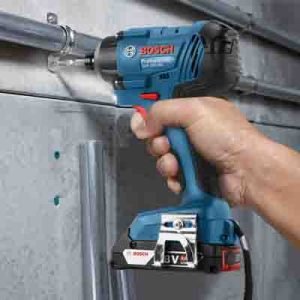
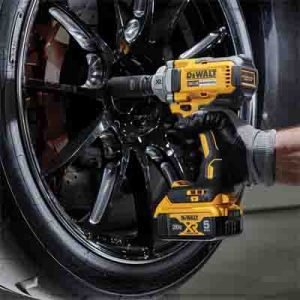
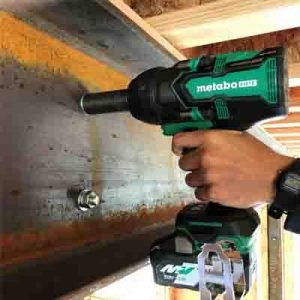
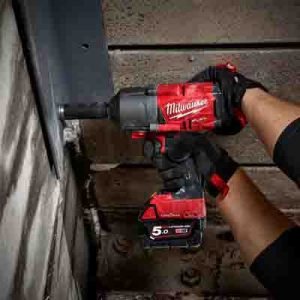


Choosing a cordless impact wrench involves more than comparing the highest torque figure on a product listing. The most suitable tool depends on the type of fasteners you work with, the space available around them, how frequently the wrench will be used, the battery platform you already own and the balance between power, size and weight that you can comfortably manage. A compact impact wrench can be the better choice for vehicle servicing and work in restricted areas, while a larger high-torque model may be more appropriate for stubborn fasteners, heavy machinery or demanding workshop applications. For many buyers, the best cordless impact wrench is therefore not the model with the biggest headline specification, but the one whose performance and physical design match the work it will actually perform. Torque is one of the first specifications shoppers encounter, but published torque figures should be interpreted carefully. Manufacturers may distinguish between fastening torque, breakaway torque, nut-busting torque or other measurements, and testing conditions can differ between brands. A larger number does not automatically mean that one wrench will perform better in every practical situation. When comparing cordless impact wrenches, look at the complete specification rather than relying on a single maximum figure. Consider the tool's operating modes, speed, impact rate, control system, battery voltage and physical dimensions alongside its stated torque. An impact wrench is primarily a fastening and loosening tool, not a substitute for a calibrated torque wrench. This distinction is particularly important when working on vehicles, machinery or assemblies where the manufacturer specifies a precise tightening torque. An impact wrench can be useful for removing wheel nuts and rapidly running fasteners down, but final tightening of critical fasteners should follow the vehicle or component manufacturer's procedure. Where an exact torque value is specified, use an appropriate calibrated torque wrench rather than assuming that an impact wrench's electronic or mechanical setting provides the same level of accuracy. Cordless impact wrenches are commonly sold within battery ecosystems. The battery platform can be as important as the tool itself because batteries and chargers may represent a significant part of the overall ownership cost. If you already own compatible cordless tools, staying within the same platform can make financial and practical sense. A compatible battery may work across drills, impact drivers, saws, grinders, lights and other equipment from the same system, depending on the manufacturer's compatibility rules. Higher-voltage platforms are often associated with larger and more powerful tools, but platform voltage alone should not be treated as a direct measure of real-world performance. Motor design, battery technology, electronic controls and the overall tool architecture also influence capability. Battery capacity also matters. A higher-capacity battery can extend working time, but it can increase the weight and physical size of the tool. For occasional jobs, a smaller battery may make the wrench easier to handle. For prolonged professional use, additional batteries or higher-capacity packs may be more practical. One of the most useful ways to compare cordless impact wrenches is by intended torque class rather than brand name. Compact models are designed around accessibility and portability. Their shorter heads can make a noticeable difference when working inside wheel arches, engine bays or other confined spaces. They are worth considering when the majority of your work involves routine automotive maintenance, light mechanical repairs, assembly or fasteners that do not require extreme loosening force. The main advantage is usability. A smaller tool is generally easier to position, carry and operate for extended periods. The trade-off is that it may not have the reserve power required for heavily seized or exceptionally large fasteners. Mid-torque models occupy the versatile middle ground. They can be appealing to home mechanics, mobile technicians and tradespeople who need considerably more capability than a compact wrench without wanting the bulk of a heavy-duty machine. For buyers who perform varied tasks rather than one specialised job, this category can offer an attractive balance of power, size and battery consumption. However, the actual suitability still depends on the fastener sizes and materials involved. High-torque impact wrenches are intended for demanding fastening and loosening applications. They are particularly relevant to heavy mechanical work, agricultural machinery, larger vehicles, industrial maintenance and stubborn fasteners. The additional capability comes with compromises. Larger tools and batteries can be heavier, more expensive and less convenient in restricted spaces. If most of your work involves ordinary vehicle servicing, buying the most powerful available model may therefore provide little practical benefit. The square-drive size determines the sockets and accessories the impact wrench can accept. It should be matched to the fasteners and socket range used for the intended application. Do not choose a drive size purely because it sounds more powerful. Socket availability, fastener dimensions, clearance and the amount of torque required should all influence the decision. Socket retention is another practical detail that is easy to overlook when comparing models. A friction-ring or hog-ring system allows sockets to be fitted and removed relatively conveniently while providing retention during normal use. A pin-detent arrangement provides a more positive mechanical hold, which can be useful where socket retention is particularly important. The best option depends on the user's workflow. Mechanics who change sockets frequently may prioritise convenience, whereas users who regularly work in awkward positions may value secure socket retention. Always use impact-rated sockets and accessories designed for the forces generated by an impact wrench. Brushless motor technology is common among modern cordless power tools. Compared with conventional brushed motor designs, brushless systems can offer advantages in efficiency, durability and electronic control, although the precise implementation differs between manufacturers. Electronic controls can also provide useful operating modes. Depending on the model, these may limit speed, reduce impact intensity, stop or slow the tool when a particular condition is detected, or provide different settings for fastening and loosening. These features can be more valuable in day-to-day work than a headline torque increase. A tool that provides controllable output can be easier to use safely and consistently than one that simply delivers maximum power at every opportunity. Some advanced impact wrenches incorporate modes designed to reduce the risk of over-tightening or to control the tool during removal. Such functions can be particularly useful when working with a mixture of fasteners. However, electronic assistance should not be interpreted as a guarantee of a precise final torque. If a component has a specified tightening torque, follow the manufacturer's procedure and use suitable calibrated measuring equipment where required. Weight becomes increasingly important when an impact wrench is used repeatedly. A powerful tool that is uncomfortable to hold may be less productive than a slightly less powerful model that can be positioned quickly and used accurately. Look beyond the bare tool weight. The battery contributes significantly to the total working weight, and a large battery can alter the balance of the tool. The position of the grip, trigger design, head length and centre of gravity all influence how natural the wrench feels during use. For automotive work, head length can be especially important. Two tools with similar published power may feel completely different when used around suspension components or inside restricted engine compartments. Impact wrenches and impact drivers are related but serve different purposes. An impact driver normally uses a hexagonal bit interface and is designed primarily for driving screws, smaller bolts and other fastening applications. An impact wrench uses a square drive intended for sockets. For vehicle wheel nuts, suspension fasteners and larger mechanical fasteners, an impact wrench is normally the more appropriate tool. For construction screws, fixings and general timber work, an impact driver is often more suitable. Some users may benefit from owning both because their strengths overlap only to a limited extent. Using the correct tool reduces the temptation to force an unsuitable accessory beyond its intended application. The main attraction of a cordless impact wrench is freedom from an air hose or mains cable. This can be particularly useful for mobile work, driveway repairs, outdoor maintenance and workshops where compressed-air infrastructure is unavailable. Pneumatic impact wrenches remain relevant in professional environments with an established compressed-air system. They can be durable and effective, but the compressor, hose and air supply become part of the working setup. Corded electric tools can provide continuous mains power but are constrained by cable access and are less convenient for mobile mechanical work. Battery runtime depends on much more than the battery's stated capacity. The amount of torque being demanded, frequency of impacts, fastener size, operating mode, battery condition and ambient conditions can all affect practical runtime. A user removing occasional wheel nuts may achieve a very different working duration from someone repeatedly loosening large industrial fasteners. Manufacturer runtime claims, where provided, should therefore be treated as application-dependent rather than as a universal operating-time guarantee. For intensive use, owning multiple compatible batteries can be more useful than relying on a single very large battery. It also allows one pack to charge while another is being used. Before buying a bare tool, confirm exactly which battery platform it requires. Battery systems that look similar are not necessarily interchangeable, even within the same broad voltage category. Brands such as Makita, DeWalt, Milwaukee, Bosch Professional, Ryobi and HiKOKI have established cordless tool ecosystems, but compatibility should always be checked against the manufacturer's current specifications rather than assumed from voltage or physical appearance alone. If you are starting from scratch, compare the wider ecosystem rather than choosing solely on the impact wrench. Consider whether the same batteries could later power a drill, grinder, saw, work light or other tools you are likely to need. Product specifications are useful for narrowing down a shortlist, but they should be read in context. Different manufacturers can present performance figures using different testing procedures, terminology and operating conditions. Two apparently similar listings can represent very different purchases. One may contain only the bare tool, while another may include one or more batteries, a charger and a case. For a fair comparison, calculate the complete equipment required for immediate use. A bare tool is not necessarily the cheaper option once the cost of a compatible battery and charger is considered. Conversely, a kit may be unnecessary for an existing user who already owns several compatible batteries and chargers. In that situation, a bare tool can avoid purchasing duplicate equipment. More torque is not automatically better. Excessive power can make a tool heavier and more expensive while offering little advantage for routine work. Select the performance level based on the largest and most difficult fasteners you genuinely expect to encounter. A long impact wrench can be awkward in areas where a compact head would fit easily. Check dimensions before purchasing if the tool will be used around suspension components, engine bays or machinery with limited access. A lightweight bare tool can feel substantially different once a large battery is attached. Compare the complete working configuration whenever possible. The impact wrench may be only the beginning of a cordless tool collection. A platform that also meets your future needs can provide greater flexibility over time. It does not. An impact wrench is designed for rapid fastening and loosening; a torque wrench is used when controlled final torque is required. Standard chrome sockets are not a substitute for impact-rated sockets when working with an impact wrench. Use accessories appropriate for impact applications and inspect them regularly for damage. A cordless impact wrench should be paired with suitable accessories. Impact-rated sockets are designed to withstand repeated shock loading, whereas conventional hand-tool sockets may not be appropriate for this application. Socket size should correspond accurately to the fastener. A poorly fitting socket can increase the risk of rounding the fastener or damaging the socket. For automotive users, a useful socket selection should reflect the actual vehicles and fasteners being serviced rather than simply buying the largest possible assortment. Impact wrenches can deliver substantial mechanical force, so appropriate protective equipment and working practices are important. Read the manufacturer's instructions before use and follow the operating limitations specified for the tool and accessories. Routine care can help preserve the condition of a cordless impact wrench. Maintenance requirements vary by manufacturer, so the tool's instructions should take precedence. Use only batteries and chargers approved for the relevant cordless platform. Follow the manufacturer's charging, storage and temperature guidance. Damaged, swollen or otherwise abnormal battery packs should not be used. Battery storage conditions can influence long-term performance. Avoid exposing battery packs to unnecessary heat, moisture or physical damage, and follow the platform manufacturer's recommendations for storage and charging. When comparing products online, build quality can be difficult to assess from photographs alone. Instead of assuming that a particular finish or colour indicates durability, examine the information provided by the manufacturer and compare construction details, protection features, warranty terms where applicable and the intended user category. Look for clear documentation and a well-defined specification. Established professional tool manufacturers commonly provide detailed information about compatible batteries, operating modes, accessories and usage limitations. Customer feedback can provide additional context, but reviews should be interpreted carefully. Individual experiences may reflect a particular application, battery, accessory or usage pattern rather than the universal performance of the tool. A homeowner who removes wheel nuts or carries out periodic repairs may not need a flagship high-torque impact wrench. Ease of handling, battery availability, sensible power and overall value can be more relevant. Frequent use places greater emphasis on ergonomics, durability, battery availability, heat management and serviceability. A broader battery ecosystem can also become more valuable if other cordless tools are already used in the workshop. Users working with large fasteners, agricultural machinery or heavy equipment should prioritise the appropriate torque class, drive size, battery system and duty requirements. Compactness may become less important than sustained capability and access to suitable heavy-duty accessories. Brand comparison should focus on the complete ownership proposition rather than reputation alone. Established names such as Makita, DeWalt, Milwaukee, Bosch Professional, Ryobi and HiKOKI offer broad cordless tool ranges, but individual impact-wrench models within those ranges can target very different users. When comparing two brands, examine the specific tools rather than assuming that every model within one brand is superior to every model from another. Compare equivalent torque classes, drive sizes, battery configurations and intended applications. Customer ratings can be useful, but a single average score does not tell the whole story. Read reviews for recurring patterns and pay particular attention to comments from buyers using the tool for a similar purpose. A review from someone using an impact wrench for occasional domestic repairs may provide very different information from feedback supplied by a professional mechanic using it every day. When reading verified customer reviews, look for recurring comments about battery performance, ergonomics, accessibility, reliability, socket retention and whether the tool delivers the expected level of performance for its intended application. The most useful definition of value is not simply the lowest purchase price. A better comparison considers the equipment required, expected usage, battery ecosystem, capabilities and suitability for the work. Paying more may make sense when a tool provides a feature you will regularly use, such as greater access, better control or compatibility with batteries you already own. Paying substantially more for unused performance may be difficult to justify for occasional work. A structured shortlist makes it easier to avoid being distracted by headline specifications. Start by defining the work, then narrow the options according to the physical and technical requirements. There is no single best cordless impact wrench for every UK buyer. The right choice depends on the application, access requirements, required torque, preferred drive size and existing battery ecosystem. The best cordless impact wrench depends on the application. For general vehicle maintenance, a well-balanced model with appropriate torque and a practical drive size may be preferable to a much larger high-torque machine. For heavy machinery, the requirements are different. No. Higher torque can be useful for stubborn fasteners, but it can also mean a larger, heavier and potentially more expensive tool. Choose a torque class that matches the work rather than automatically selecting the highest available figure. A 1/2-inch-drive impact wrench is a common choice for automotive work because it accommodates a broad range of commonly used impact sockets. However, compact 3/8-inch models can be useful where access and lower weight are more important, while heavy-duty applications may require a larger drive. Yes, an appropriately specified impact wrench can be used for removing suitable wheel nuts. The correct socket should be used, and final tightening should follow the vehicle manufacturer's specified procedure rather than relying on the impact wrench alone. No. An impact wrench is designed primarily for powered fastening and loosening. A torque wrench should be used where a manufacturer specifies an exact final tightening torque. Many cordless impact wrenches are designed for professional applications, but suitability depends on the particular model and workload. Professional buyers should compare torque class, duty requirements, battery capacity, ergonomics, operating modes and manufacturer specifications. Brushless motor systems can provide benefits such as efficiency and electronic control, but the motor type alone does not determine whether an impact wrench is right for a particular application. Compare the complete tool specification and design. Yes, when using an impact wrench, use sockets specifically intended for impact applications. Conventional hand-tool sockets are not a suitable substitute simply because they fit the same square drive. A bare tool can make sense if you already own compatible batteries and a charger. If you do not, compare the total cost of purchasing the tool, battery and charger against the available kit configurations. Battery runtime varies according to capacity, fastener size, torque demand, operating mode, battery condition and frequency of use. There is no single runtime figure that applies to every application. Prioritise appropriate torque, durable construction, comfortable ergonomics, battery compatibility, control features, suitable drive size, accessibility and a specification that matches the expected workload. These are all established cordless-tool brands, but the better choice depends on the specific impact wrench and battery ecosystem. Compare equivalent models by torque class, drive size, dimensions, battery requirements, control features and intended use rather than selecting solely by brand. They can be worthwhile when their additional performance, control, ergonomics or battery-platform advantages are relevant to your work. For occasional use, a less expensive model may provide sufficient capability without paying for features that will rarely be used. The strongest shortlist is one based on your actual working requirements. Start with the fasteners, space constraints and frequency of use, then use torque, drive size, battery compatibility and ergonomics to narrow the field. After that, compare individual specifications and package contents. This approach helps prevent a common buying mistake: paying for maximum performance when a smaller, lighter and more convenient impact wrench would be more useful. Equally, it avoids choosing a compact model that cannot provide enough reserve power for the fasteners you regularly encounter. For the latest buying decision, compare the manufacturer's current specifications, check exactly what each package contains, read relevant verified customer reviews and confirm current retailer information. Specifications, product configurations and availability can change, so the individual product listing should always be treated as the final reference for the specific model being considered.How to Choose the Right Cordless Impact Wrench
Torque Is Important, but It Is Not the Whole Story
Why Controlled Torque Matters for Vehicle Work
Voltage and Battery Platform: What Buyers Should Know
Choosing Between Compact and Higher-Powered Platforms
Compact, Mid-Torque or High-Torque Impact Wrench?
Compact Impact Wrenches
Mid-Torque Impact Wrenches
High-Torque Impact Wrenches
Drive Size: 1/4-Inch, 3/8-Inch, 1/2-Inch and 3/4-Inch
Friction Ring, Hog Ring or Pin-Detent Retention
Brushless Motors and Electronic Controls
Automatic Modes and Fastener Protection
Ergonomics, Weight and Balance
What to Check Before Buying
Impact Wrench Versus Impact Driver
Cordless Impact Wrench Versus Corded or Pneumatic Alternatives
When Cordless Makes the Most Sense
Battery Runtime and Charging Considerations
Battery Compatibility and Platform Lock-In
Understanding Manufacturer Specifications
Specifications Worth Comparing
How to Compare Cordless Impact Wrench Kits
Check What Is Actually Included
Common Buying Mistakes to Avoid
Choosing the Highest Torque Number
Ignoring Tool Length
Forgetting Battery Weight
Buying a Battery Platform Without Considering Future Tools
Assuming an Impact Wrench Replaces a Torque Wrench
Using Ordinary Sockets
Impact-Rated Sockets and Accessories
Safety Considerations When Using an Impact Wrench
Maintenance and Care for a Cordless Impact Wrench
After Regular Use
Battery Care
How to Judge Build Quality Without Hands-On Testing
Professional Versus Occasional Use
For Occasional Home Mechanics
For Frequent Automotive Work
For Heavy Mechanical Work
How to Compare Brands
What Matters More Than Brand Name
How to Compare Customer Reviews Properly
Value for Money: What Should You Actually Pay For?
Consider Total Ownership Cost
A Practical Shortlisting Method
Which Cordless Impact Wrench Is Best for You?
Questions to Ask Before Buying
Frequently Asked Questions
What is the best cordless impact wrench?
Is higher torque always better?
What size impact wrench is best for cars?
Can an impact wrench remove wheel nuts?
Can an impact wrench replace a torque wrench?
Are cordless impact wrenches powerful enough for professional use?
Are brushless impact wrenches better?
Do I need an impact-rated socket set?
Is a bare impact wrench worth buying?
How long do cordless impact-wrench batteries last?
What should I look for in a professional impact wrench?
Should I choose Makita, DeWalt or Milwaukee?
Are expensive impact wrenches worth it?
Final Buying Checklist
How to Use This Guide When Comparing Models