

Our experts reviewed the latest {category_name } to help you compare quality, performance, durability and overall value before making your purchase.
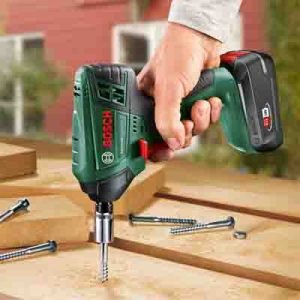
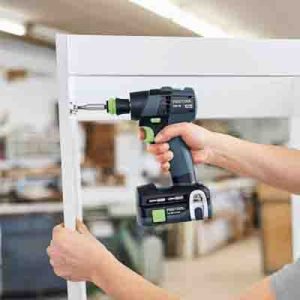
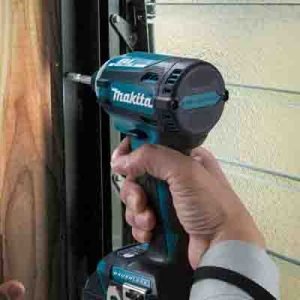
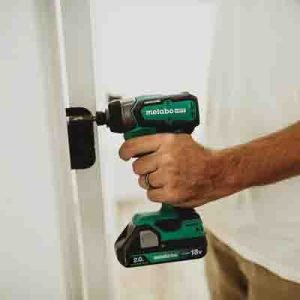
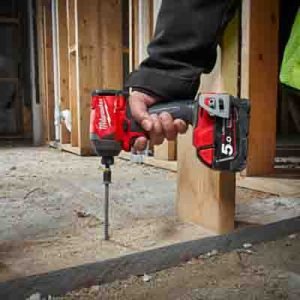


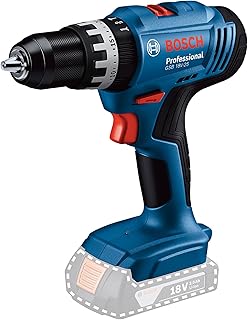
Choosing a cordless impact driver is less about finding the tool with the biggest torque figure and more about matching the tool, battery platform, control system and accessories to the work you actually intend to do. A compact 18V model can be a better choice for repeated screwdriving in confined spaces than a larger, more powerful machine, while a high-output professional model can make considerably more sense for structural timber, heavy fixings and demanding site work.
When comparing cordless impact drivers, look beyond the headline specification. Important considerations include maximum torque, speed range, impact rate, physical length, tool-only weight, battery compatibility, drive-control settings, brushless motor technology, LED lighting, bit retention and the quality of the manufacturer's wider battery ecosystem.
An impact driver and a drill driver are complementary tools rather than direct substitutes. A drill driver normally offers a conventional chuck, adjustable clutch and smooth rotational action, making it the more versatile choice for drilling holes and controlled screwdriving. An impact driver uses a 1/4-inch hex drive and an internal impact mechanism that adds short bursts of rotational force when resistance increases.
This makes an impact driver particularly useful when repeatedly driving long screws, structural timber fixings, decking screws, coach screws and other fasteners where a conventional drill driver may require more effort. The impact mechanism can also reduce some of the twisting force transmitted back through the user's wrist.
However, the additional impact action is not automatically an advantage for every task. Delicate cabinetry, small screws, soft materials and applications where precise depth control is critical can favour a drill driver with a mechanical clutch. An impact driver should therefore be regarded as a specialist fastening tool that complements a drill rather than replacing it.
Torque is one of the most visible specifications when comparing impact drivers, but it should not be used as the sole measure of performance. Manufacturers quote torque in newton metres (Nm), and higher maximum figures indicate greater potential rotational force. The practical result, however, depends on the fastener, material, accessory, battery, operating mode and the way the manufacturer measures and reports torque.
For example, current manufacturer specifications illustrate why headline figures need context. The Bosch Professional GDR 18V-200 is specified at 200 Nm, the DEWALT DCF887 at 205 Nm, the Makita DTD173 at 180 Nm, and the Milwaukee M18 FUEL M18 FID3 at 226 Nm. These numbers should not be treated as a laboratory league table because manufacturers can use different test methods and specifications, while the tools also differ in size, control systems and intended applications.
RPM means revolutions per minute and describes rotational speed. A higher maximum RPM can help with fast driving when the application permits it, but speed is only useful when it remains controllable.
Impact rate is normally expressed as impacts per minute (IPM or BPM). It describes how frequently the impact mechanism delivers its blows. A higher figure can contribute to rapid fastening, but impact rate should be assessed alongside torque and speed rather than treated as a standalone performance score.
For example, the Bosch Professional GDR 18V-200 is specified at up to 3,400 rpm and 4,000 impacts per minute, while the DEWALT DCF887 is specified at up to 3,250 rpm and 3,800 impacts per minute. The Makita DTD173 reaches up to 3,600 rpm and 3,800 impacts per minute, while Milwaukee's M18 FID3 is specified at up to 3,900 rpm and 4,400 impacts per minute.
These specifications demonstrate why a meaningful comparison should consider the entire operating range and control system rather than simply declaring the model with the highest number the winner.
Brushless motors are now common in mid-range and professional cordless impact drivers. Compared with traditional brushed designs, brushless systems can offer advantages in efficiency, durability and electronic control because they do not rely on conventional motor brushes rubbing against a commutator.
The practical benefits are particularly relevant for people who use an impact driver frequently. Less energy lost through mechanical brush friction can contribute to efficient battery use, while electronic motor management can provide more sophisticated control and protection.
Brushless technology should nevertheless be considered one part of the buying decision. A well-designed tool with good ergonomics and appropriate power control can be more useful than a nominally more powerful model whose size or weight makes it awkward for the intended application.
Voltage is another specification that is easy to overinterpret. A higher-voltage battery platform can support more demanding tools, but it does not automatically mean that every higher-voltage impact driver is better for every user.
Compact systems can be attractive for light-duty fastening, furniture assembly, installation work and confined spaces. Their smaller batteries and tool bodies can make them easier to carry and manoeuvre.
For UK buyers, 18V cordless platforms are among the most useful categories to investigate because they span DIY, trade and professional applications. DEWALT, Bosch Professional, Makita, Milwaukee and Ryobi all have established cordless ecosystems in this general category, although battery compatibility is specific to each manufacturer's platform.
A key buying advantage comes from sharing batteries and chargers with tools you already own. Someone already invested in a compatible 18V platform may find a bare tool considerably more attractive than purchasing a complete kit with additional batteries and a charger.
Always check exactly what is included before comparing prices. A listing described as a cordless impact driver may refer to a bare unit, whereas another package may include one or more batteries, a charger, a case and accessories.
Do not compare a bare-tool price directly with a complete kit and assume the cheaper product represents better value. The battery and charger can represent a substantial part of the overall cordless system investment.
Battery capacity is commonly expressed in ampere-hours (Ah). In broad terms, a higher Ah rating represents greater stored electrical capacity, although actual runtime varies with the tool, workload, battery generation, temperature and operating conditions.
A larger battery is not necessarily the best battery for an impact driver. If the priority is low weight and frequent overhead or ladder work, a compact battery may be preferable. For prolonged structural fastening, a higher-capacity battery may reduce interruptions.
The most sensible approach is to choose the battery around the job rather than automatically selecting the largest available pack.
Most cordless impact drivers use a 1/4-inch hex quick-change holder. This is one of the key differences between an impact driver and a conventional drill driver.
The quick-change system makes it convenient to swap screwdriver bits and compatible accessories, but buyers must make sure that accessories are designed for impact applications when the manufacturer requires this. Standard non-impact accessories can be unsuitable for the forces generated by an impact mechanism.
Look for bits and adapters specifically designed for impact-driver use. Impact-rated accessories are engineered to tolerate repeated shock loading more effectively than ordinary accessories.
It is also worth keeping several common bit types available rather than relying on the bit supplied with the tool. The correct bit profile and size can reduce cam-out, improve engagement and help protect both the fastener and workpiece.
Multiple speed or torque modes are among the most useful features on a modern impact driver. Instead of operating at full power for every fastening job, the user can select a more appropriate setting for the material and fastener.
DEWALT's DCF887, for example, has three speed and torque modes, including PrecisionDrive for additional control in screwdriving applications. Bosch Professional's GDR 18V-200 C provides three speed settings, while Makita's DTD173 offers four impact-power stages plus dedicated assist modes. Milwaukee's M18 FID3 provides four speed and torque settings through DRIVE CONTROL.
The exact implementation varies, but the principle is important: more control can be more valuable than maximum torque when working with different fasteners and materials.
Tool dimensions can have a surprisingly large effect on usability. A short impact driver can reach into spaces where a longer model becomes awkward, particularly when working between studs, inside cabinets or around framing.
As an example of the compact designs available, Bosch specifies a 126 mm head length for the GDR 18V-200, Makita lists an overall length of 111 mm for the DTD173, and Milwaukee lists 113 mm for the M18 FID3. These figures illustrate why dimensions deserve consideration alongside torque.
When comparing models, examine overall length rather than judging compactness from photographs alone. Also consider the additional length introduced by the battery.
Weight matters most when the tool is used repeatedly. A difference that appears minor on a specification sheet can become noticeable during prolonged overhead fastening, ladder work or installation tasks.
Check whether the quoted weight is tool-only or includes a battery. Manufacturers do not always present weight figures in identical ways, so comparisons should use like-for-like measurements.
Good ergonomics also include grip shape, trigger position, balance, belt-hook placement, switch accessibility and the position of the battery. A tool that sits naturally in the hand can be easier to control than a heavier model with greater theoretical output.
Integrated LEDs are particularly useful when fastening inside cabinets, beneath worktops, in roof spaces or in other poorly lit areas. The arrangement of the LEDs can be just as important as their presence.
Some impact drivers use multiple LEDs around the nose of the tool to reduce shadows cast by the bit. Makita's DTD173, for example, uses ring illumination around the hammer case, while DEWALT's DCF887 uses a three-LED light ring.
Lighting should be viewed as a practical usability feature rather than a deciding factor on its own.
The most useful premium features are those that change how the tool behaves rather than simply adding another headline specification.
If you expect to build a cordless tool collection, the battery platform may be more important than the impact driver itself. Buying into one system can allow the same batteries to power several compatible tools.
Makita LXT, DEWALT XR, Bosch Professional 18V, Milwaukee M18 and Ryobi ONE+ are examples of established cordless systems. Their tool ranges and battery compatibility differ, so check the manufacturer's current compatibility information before buying.
This can make a slightly more expensive impact driver worthwhile if it avoids purchasing a completely separate battery and charger ecosystem later.
There is no universally best cordless impact driver brand. Each major manufacturer has models aimed at different levels of DIY, trade and professional use.
Makita is particularly relevant to buyers already using the 18V LXT platform. The DTD173 demonstrates the emphasis placed on compactness, with a specified 180 Nm maximum torque, four impact-power stages, additional assist modes and an 111 mm overall length.
Its specification illustrates an important point about premium impact drivers: compact dimensions and control features can be more useful than simply chasing the highest torque number.
DEWALT's XR range provides a broad selection of cordless fastening tools. The established DCF887 is specified at 205 Nm, up to 3,250 rpm and up to 3,800 impacts per minute, with three speed and torque modes and PrecisionDrive.
Buyers should pay attention to model numbers because DEWALT sells numerous impact drivers with different generations, sizes, battery packages and feature sets.
Milwaukee's M18 FUEL M18 FID3 sits towards the high-performance end of the compact 18V impact-driver category. Its manufacturer specification lists 226 Nm of torque, up to 3,900 rpm, up to 4,400 impacts per minute and four DRIVE CONTROL settings.
Its compact 113 mm length also shows why torque and physical size should be assessed together.
Bosch Professional's GDR 18V-200 provides a useful balance of compact dimensions and power, with a stated 200 Nm maximum torque, 3,400 rpm maximum speed and 4,000 impacts per minute. The GDR 18V-200 C adds three selectable speed settings.
The Bosch Professional 18V battery system is particularly worth considering if you already own compatible Bosch Professional tools.
Ryobi's ONE+ system is particularly relevant to home users who want to share batteries across a broad range of DIY and garden tools. The R18ID3 has been specified by Ryobi at up to 220 Nm, with three power levels and a 1/4-inch hex holder.
The key attraction for many buyers is not necessarily maximum performance but the breadth of the battery ecosystem and the ability to use one battery platform across multiple household tools.
A useful comparison should score each model against the requirements of the intended user rather than simply ranking the largest torque figure first.
Maximum torque is easy to compare but difficult to use as a complete quality measure. A powerful impact driver operated without adequate control can be less suitable for delicate fastening than a slightly less powerful model with well-designed speed settings.
A bare tool can look inexpensive until the price of batteries and a charger is added. Compare complete ownership cost rather than tool-only prices when entering a new battery platform.
If drilling is a major part of your work, an impact driver should not be expected to replace a drill driver. The 1/4-inch hex holder and impact mechanism make it primarily a fastening tool.
Impact drivers generate repeated shock loads. Use accessories appropriate for impact applications and inspect bits regularly for wear or damage.
A high-output tool that cannot comfortably reach the fastening point can be less useful than a compact model with slightly lower specifications.
The impact driver may be the first purchase in a much larger cordless collection. Consider what tools you might realistically add over the next few years before committing to a platform.
Routine care can help maintain safe and reliable operation. Follow the manufacturer's instructions for cleaning, battery storage, charging, inspection and servicing rather than relying on generic maintenance intervals.
High torque does not make an impact driver a universal fastening solution. Excessive torque can damage fasteners, strip heads, break accessories or damage the workpiece. Always use appropriate personal protective equipment and follow the safety instructions supplied with the tool.
Eye protection is particularly important when working with power tools and impact-rated accessories. Keep hands away from moving parts, secure the workpiece where appropriate and make sure the correct bit is fully seated before applying power.
When working with structural fixings, machinery or safety-critical fasteners, follow the relevant manufacturer's specifications and fastening procedures. An impact driver's maximum torque should not be treated as a substitute for a specified tightening torque.
Before buying, record the specifications that actually matter for your application:
For occasional DIY, maximum torque is rarely the only priority. A compact 18V impact driver with several power settings, a comfortable grip and a battery system that can support other household tools can be a more sensible long-term choice.
Ryobi is worth considering for buyers interested in the ONE+ ecosystem, while Bosch Professional, Makita and DEWALT offer extensive professional-oriented 18V platforms. The best choice depends heavily on whether you already own batteries and what other tools you expect to use.
Tradespeople should place greater emphasis on repeated-use ergonomics, battery availability, compactness, control, durability and the wider service and accessory ecosystem. A tool used every day deserves a different assessment from one used for a few DIY projects each year.
Milwaukee, DEWALT, Makita and Bosch Professional all have established professional cordless platforms with impact drivers covering different performance levels. Compare the specific model rather than assuming that every tool from the same manufacturer has identical capabilities.
A compact impact driver can be preferable when access is more important than maximum output. Cabinet installation, interior framing, electrical installation, furniture assembly and work around existing structures can all involve restricted spaces where every millimetre matters.
Compactness also affects balance. A shorter tool can keep the centre of mass closer to the user's hand, potentially making repetitive fastening more comfortable.
Higher-output models become more relevant when routinely working with large structural screws, heavy timber, substantial fixings or applications where a lower-powered driver struggles under load.
Even in these applications, use the lowest appropriate power setting and the correct accessory. Maximum available torque should be treated as a capability rather than a target for every fastening operation.
The cheapest impact driver is not necessarily the lowest-cost option over its lifetime. A tool that uses a battery platform you already own may reduce the need for additional chargers and battery packs. Conversely, buying into a new platform solely because one impact driver is discounted can become expensive if every future tool requires another battery system.
Consider the total system rather than the individual tool: impact driver, batteries, charger, bits, adapters, storage and the other cordless tools you are likely to purchase.
The principal advantage is its ability to deliver high rotational force through an impact mechanism while remaining relatively compact. This makes it particularly effective for repetitive screw and fastener driving.
Neither is universally better. An impact driver is generally better suited to demanding screwdriving, while a drill driver is more versatile for drilling and controlled fastening.
For many DIY and trade fastening applications, a tool in this performance class can provide substantial capability. Whether it is appropriate depends on the size and type of fastener, material and application. A 200 Nm rating should not be interpreted as a required torque for ordinary screws.
A brushless model can be a strong choice for frequent use because brushless motors can provide efficient operation and sophisticated electronic control. For occasional DIY, however, the overall specification, price and battery platform should still be considered.
Some compatible hex-shank drill accessories can be used with an impact driver, but an impact driver is primarily designed for fastening. If drilling is a major requirement, a drill driver is normally the more versatile tool.
It can be useful for certain fastening applications when an appropriate impact-rated socket adapter and socket are used, but a dedicated impact wrench is generally the better choice for regular nut-and-bolt work, particularly at higher torque levels.
No. Battery compatibility is normally restricted to a manufacturer's particular platform and compatible tool range. Always check the manufacturer's compatibility information before buying a bare tool or battery.
No. A higher-capacity battery can provide more stored energy, but it can also add weight and bulk. A compact battery may be preferable for light work, confined spaces or overhead use.
Most standard cordless impact drivers use a 1/4-inch hex quick-change holder. Always check the individual model specification and use accessories suitable for impact applications.
For decking, prioritise a comfortable tool with good speed control, suitable torque, reliable battery runtime and readily available impact-rated bits. A compact 18V model is often a sensible category to investigate because decking involves repetitive fastening rather than occasional single-screw work.
Look for a professional-grade model with substantial torque, a brushless motor, multiple control modes, a robust battery platform and appropriate impact-rated accessories. Do not select solely on maximum Nm; physical size, control and ergonomics can have a significant effect on productivity.
Follow the manufacturer's maintenance and inspection instructions. Regularly check the tool, battery, bit holder, accessories and ventilation openings, particularly when the driver is used heavily or in dusty environments.
The best cordless impact driver is the one whose capabilities match the work rather than the one with the most impressive specification sheet. For many UK buyers, the most important decision is choosing the right cordless battery platform first, followed by the right combination of torque, compactness, control and battery capacity.
Makita, DEWALT, Milwaukee, Bosch Professional and Ryobi all provide credible options across different parts of the market. Current specifications show that models can vary considerably in torque, speed, impact rate and dimensions, so compare the exact model numbers rather than judging a brand as a whole.
Before purchasing, compare the manufacturer's specifications, confirm the battery package, check accessory compatibility and consider the jobs you will perform most often. If you already own compatible batteries, a bare tool may offer the most practical route into the range; if you are starting from scratch, compare the complete kit and the wider cordless ecosystem instead.
For the most reliable buying decision, treat maximum torque as one specification among many. Control, ergonomics, size, battery compatibility, accessory availability and intended application ultimately determine whether an impact driver is genuinely the right tool for your workshop, home or job site.