

Our experts reviewed the latest {category_name } to help you compare quality, performance, durability and overall value before making your purchase.


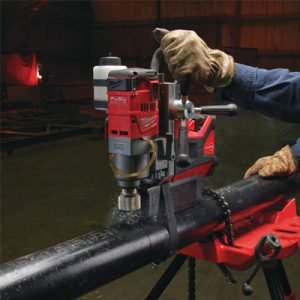
A cordless drill press can mean two quite different things: a dedicated battery-powered drilling press, or a portable drill guide that converts a compatible cordless drill into a more controlled, press-like drilling system. Understanding that distinction is important before comparing specifications, because a compact drill guide and a cordless magnetic drilling press are designed for very different jobs. For woodworking, cabinetry, furniture assembly and general DIY, a drill guide used with a suitable cordless drill can provide substantially better alignment and repeatability than freehand drilling while retaining portability. For structural metalwork and site-based fabrication, a dedicated cordless magnetic drill press is a much more specialised machine, designed to anchor itself securely to ferrous material. There is no single specification that determines which option is best. The right choice depends on the material being drilled, hole diameter, required accuracy, working position, drilling frequency, battery platform, available space and whether portability matters more than the rigidity of a conventional workshop drill press. A conventional cordless drill is primarily designed to be held by the user. It offers mobility and versatility, but the operator is responsible for maintaining the drilling angle and applying pressure consistently. A drill guide adds a mechanical structure around the drill. The guide supports the tool and helps control its movement, making it easier to produce perpendicular or repeatable holes. Some systems also permit controlled angled drilling, depth limitation and workpiece centring. A dedicated cordless magnetic drill press is different again. It incorporates its own drilling mechanism and a magnetic base intended to secure the machine to suitable steel surfaces. Milwaukee, for example, offers cordless magnetic drilling equipment within its M18 system, with features including a permanent magnet, brushless motor technology, overload management and a dual-speed gearbox. This distinction prevents one of the most common buying mistakes: comparing a portable drill guide with a dedicated magnetic drilling press as though they were competing versions of exactly the same machine. Battery voltage is useful as a broad indication of the class of cordless tool, but it should not be treated as a complete measure of drilling performance. A well-designed 18V machine can have very different performance characteristics from another 18V model because motor design, gearing, electronics, chuck construction and torque delivery all affect the result. For many UK DIY and trade applications, 18V cordless tools occupy a particularly useful middle ground between compact lower-voltage equipment and heavier specialist machinery. Current cordless drill ranges from brands such as Bosch Professional, Makita and DEWALT illustrate how much performance can vary within the same nominal voltage category. The battery platform can be just as important as voltage. If you already own compatible batteries and chargers, staying within the same ecosystem may reduce the overall cost and avoid maintaining several incompatible battery systems. Battery capacity is normally expressed in amp-hours, or Ah. In general terms, a higher Ah rating provides more stored energy, although actual runtime depends on the workload, drilling diameter, material, speed, temperature and tool efficiency. A larger battery can also increase the overall weight of a cordless drill. That matters when the tool is mounted in a portable guide, used overhead or carried around a worksite. A compact battery may be preferable for short precision tasks, while higher-capacity packs can make more sense for sustained drilling. Brushless motors have become common in higher-specification cordless power tools. Instead of conventional mechanical brushes, electronic control manages the motor. Manufacturers commonly associate brushless systems with improved efficiency, durability and control. That does not mean that every brushless drill is automatically better for every user. If a tool is only used for occasional light DIY, paying a premium for a brushless model may not provide the best overall value. For frequent drilling, heavier workloads or long-term ownership, however, motor efficiency and thermal management become more significant considerations. The chuck is one of the most important interfaces between the drill and the cutting tool. Check both the chuck type and its maximum capacity rather than assuming that every cordless drill accepts the same accessories. Many general-purpose cordless drills use keyless chucks, making bit changes quick and convenient. Specialist drilling applications can require different interfaces, particularly when larger cutters, annular cutters or dedicated accessories are involved. As an example of the range available, DEWALT publishes 1.5–13mm chuck capacities on several of its 18V hammer drill models. That specification is useful for comparison, but it should not be interpreted as the maximum practical diameter for every material or drilling application. Rotational speed is measured in revolutions per minute, or RPM. More speed is not necessarily better. Drill diameter and material determine the appropriate cutting speed, and larger bits generally require slower rotation than small bits. A two-speed mechanical gearbox is therefore valuable because it allows the operator to select a more appropriate speed range. Lower speeds can provide greater control for demanding drilling, while higher speeds can suit smaller bits and certain materials. When comparing products, look at the complete speed range rather than a single maximum RPM figure. A high headline speed tells you little about how useful the machine will be at controlled low-speed drilling. Torque describes rotational force. It matters when drilling larger holes, driving screws or working in materials that place greater resistance on the motor. However, maximum torque figures should not be compared in isolation. Different manufacturers can measure or present torque under different conditions, so a larger number does not automatically establish that one drill will outperform another in every application. Adjustable clutch settings are particularly useful for screwdriving and controlled applications. Variable-speed triggers can also make starting a hole easier because the operator can begin slowly before increasing speed. If the purpose of buying a drill press or drill guide is precision, accuracy deserves more attention than headline battery voltage. A freehand cordless drill can produce excellent results when operated carefully, but keeping the chuck perfectly perpendicular to a workpiece becomes difficult as hole diameter, material thickness and required repeatability increase. A mechanical guide reduces some of that dependence on hand control. Portable drill guides from manufacturers such as Kreg and UJK demonstrate the type of mechanical features worth investigating, including depth control, angle adjustment, non-slip support and provisions for round workpieces. Angle adjustment is particularly useful for furniture making, joinery, cabinetry and projects where holes cannot simply be drilled at 90 degrees. Do not judge an adjustable guide solely by its advertised maximum angle. Examine how the angle is set and locked, whether there are positive stops, how securely the mechanism holds its position and whether changing the angle alters the position of the drill relative to the workpiece. A depth stop is similarly valuable for repeatability. When producing a series of holes, being able to set a consistent drilling depth can make a noticeable difference to both accuracy and workflow. Woodworking is one of the strongest use cases for a portable drill guide. Accurate perpendicular holes are useful for dowels, hinges, furniture hardware, shelf supports and other joinery operations. Different woods behave differently. Softwood can be relatively forgiving, whereas hardwood can generate greater resistance and heat. Laminated boards, MDF and veneered materials also require attention to bit selection and cutting technique to minimise breakout and surface damage. Metal drilling requires more careful consideration of speed, cutter type, lubrication and machine stability. A portable drill guide may improve alignment, but it does not turn a general-purpose cordless drill into a dedicated metalworking machine. For steel fabrication, a dedicated magnetic drilling press can be a more appropriate category because the machine is designed around secure positioning and controlled drilling. Milwaukee's cordless M18 magnetic press range is an example of this specialist approach. Masonry presents a different challenge because drilling often involves impact action. A drill guide designed primarily for woodworking should not automatically be assumed to be suitable for hammer drilling. For brick, block and concrete, the correct drill type and bit are essential. A conventional cordless drill driver is not interchangeable with a rotary hammer or SDS machine simply because both can rotate a drill bit. Plastic can melt or deform if drilled at an unsuitable speed or with excessive pressure. Controlled feed and an appropriate bit can be more important than raw power. A rigid guide can help maintain alignment, but the cutting conditions still need to match the material. A magnetic drilling press deserves its own category in any serious comparison. Unlike a portable drill guide, it is a dedicated machine intended to drill while anchored to a suitable metal surface. Milwaukee's M18 FUEL magnetic drilling press, for example, uses a permanent magnet to secure the machine to compatible steel and incorporates electronic protection and a brushless motor. The manufacturer's published specifications include a maximum solid-drilling capacity and a separate annular-cutter capacity, demonstrating why accessory compatibility must be considered alongside the motor itself. For buyers considering this category, investigate: Established cordless-tool manufacturers offer extensive battery ecosystems, but their platforms are not interchangeable simply because two tools have similar voltage ratings. The best platform is often the one that matches the batteries you already have, provided the available tools meet the requirements of your work. Specification tables can look impressive while concealing important differences. A better comparison separates headline specifications from practical suitability. One of the easiest ways to make an apparently cheap cordless drill considerably more expensive is to overlook what is included in the box. A bare-tool model normally makes the most sense when you already own compatible batteries and a charger. A complete kit may be better for a first-time buyer because it provides the power source needed to use the tool immediately. Always compare the complete ownership requirement rather than comparing the bare-tool price against the price of a fully equipped alternative. For a precision drilling setup, weight is more complicated than a single number. The position of the battery, handle and motor affects balance, while a heavier battery can change how comfortably the drill moves within a guide. For extended use, examine grip shape, trigger position, auxiliary handles and vibration characteristics. A compact drill can be easier to position accurately, whereas a larger machine may provide more capability for demanding applications. If the drill will remain mounted in a guide for repeated operations, consider the combined weight of the drill, battery and guide rather than assessing the cordless drill by itself. 18V does not automatically mean one tool will outperform another. Motor efficiency, gearing, torque delivery and control electronics all matter. A portable guide can significantly improve alignment and repeatability, but it does not necessarily provide the same rigidity, throat depth, worktable support or continuous-duty capability as a dedicated workshop drill press. A guide or accessory may require a particular chuck size, drive interface or drill configuration. Confirm compatibility before buying. A high-capacity battery can improve working time while making the complete tool substantially heavier. For precision work, that trade-off can matter. Different bits and materials require different speeds. A flexible speed range is usually more useful than an impressive maximum number. A low headline price may refer to a bare tool, while another product may include batteries, charger and accessories. Compare like for like. Magnetic drilling, SDS drilling, large-diameter hole cutting and heavy metal fabrication each have specific tool requirements. Selecting a cordless drill simply because it can physically accept a bit does not make it the right machine for that operation. A conventional pillar drill can remain the better choice for a permanent workshop where accuracy, rigidity and repeatable production are more important than portability. A compact cordless drill with a suitable guide may be more practical than purchasing a dedicated drill press. Prioritise ease of use, battery compatibility, chuck quality and storage convenience. Accuracy, depth control, angle adjustment and low mechanical play should receive more attention than maximum torque. A well-made drill guide can be particularly useful for repeatable joinery operations. Look closely at repeatability, centring features, depth stops, support for narrow or round stock and the ability to maintain consistent drilling geometry across multiple workpieces. Battery availability, durability, ergonomics, service arrangements, accessory compatibility and platform breadth become increasingly important. A professional user should assess the complete working system rather than just the tool. A dedicated cordless magnetic drill press may be more appropriate than a general cordless drill mounted in a guide, particularly where the work involves structural steel and annular cutters. Examine magnetic stability, cutter capacity and safety features before considering price. Precision equipment is not automatically safer simply because it controls the drilling angle. The workpiece still needs to be supported securely, the correct accessory must be used and the machine must be operated within its manufacturer's stated limits. Regular maintenance can preserve accuracy as well as extend tool life. A drill may continue to run even after a guide, chuck or bearing has developed enough play to compromise precision. Customer reviews can reveal useful information about ergonomics, packaging, compatibility and long-term usability, but they should be interpreted alongside specifications and manufacturer documentation. Look for recurring comments rather than relying on a single enthusiastic or critical review. Reviews that describe the exact application, material and accessory used are generally more informative for commercial comparison than vague statements about whether a product is simply “good” or “bad”. Prices for cordless power tools can change frequently, so a useful buying comparison should focus on value rather than presenting a temporary price as a permanent specification. Before purchasing, compare the complete package, including the battery, charger, guide or mounting system and any specialist accessories required for your application. Also check current retailer pricing because promotional offers and kit configurations can change. For an existing battery-platform owner, a bare tool can be attractive. For someone starting from scratch, the lowest advertised tool price may not represent the lowest total cost of ownership. There is no universal best option. For woodworking and DIY, the best choice may be a quality cordless drill paired with a rigid drill guide. For steel fabrication, a dedicated cordless magnetic drill press can be more appropriate. The material, drilling capacity and required accuracy should determine the category before individual models are compared. Yes, a compatible cordless drill can be used with certain drill guides designed to hold and control the drill. Compatibility is not universal, so check the guide's chuck and drill requirements before purchasing. A good drill guide can improve alignment and repeatability substantially compared with freehand drilling, but a portable system should not automatically be assumed to match a rigid workshop pillar drill in every application. Rigidity, guide movement, workpiece support and drilling depth all influence practical accuracy. 18V cordless systems can be suitable for many DIY and professional drilling applications, but voltage alone does not establish suitability. Consider the motor, gearing, torque, chuck, battery capacity and intended drilling material. They can be particularly attractive for frequent users because brushless motor systems are designed with efficiency and electronic control in mind. Occasional DIY users may reasonably prioritise price, ergonomics and compatibility instead. Not necessarily. Ah primarily describes battery capacity rather than the drill's maximum mechanical power. A larger battery can provide more stored energy, but it can also increase weight. Some cordless drilling setups can drill metal when paired with suitable bits and operated at appropriate speeds. For heavy steel fabrication or annular cutting, however, a dedicated magnetic drilling press may be the more suitable category. That depends on the drill, guide and intended drilling method. Masonry often requires impact drilling, and not every portable drill guide is designed to accommodate a hammer-drilling operation. Check the manufacturer's compatibility and operating instructions. Choose a bare tool if you already own compatible batteries and a charger. A complete kit is generally more convenient for a new battery-platform user. Always compare the total equipment required rather than the advertised tool alone. The most sensible way to compare cordless drill presses is to start with the job rather than the brand or headline specification. Decide whether you need a portable drill guide, a dedicated magnetic drilling press or a conventional pillar drill. Then compare the specifications that directly affect that application. For portable woodworking and DIY, prioritise rigidity, compatibility, depth control, angle adjustment, chuck suitability and manageable weight. For specialist metalworking, focus on magnetic stability, cutter capacity, battery performance, overload protection and the manufacturer's stated operating limits. Brands such as Bosch Professional, Makita, DEWALT, Milwaukee, Kreg, UJK and Einhell cover different parts of the cordless drilling and drill-guide market, but brand reputation should not replace product-level comparison. Check the exact model specification, package contents, compatible accessories, battery requirements and current retailer information before making a purchase. The strongest buying decision is therefore not necessarily the most powerful cordless drill or the most expensive drill press. It is the system that provides the required accuracy and drilling capacity without adding unnecessary weight, complexity or cost.How to Choose the Best Cordless Drill Press for UK Projects
Cordless Drill Press vs Cordless Drill: What Is the Difference?
Three common categories to compare
Key Features to Compare Before Buying
Battery voltage and platform
Battery capacity in amp-hours
Brushless motor technology
Chuck type and capacity
Speed range and gearbox
Torque and electronic control
Accuracy: The Specification That Matters Most for Drill-Press Work
Look for these accuracy features
Drilling Angle and Depth Control
Material Compatibility: Wood, Metal, Masonry and Plastic
Wood and timber
Metal
Masonry and concrete
Plastic and composite materials
Dedicated Cordless Magnetic Drill Presses
Battery Platform Comparison: Bosch, Makita, DEWALT and Milwaukee
How to Compare Cordless Drill Press Specifications Properly
Bare Tool vs Complete Kit
Weight, Balance and Ergonomics
Common Buying Mistakes to Avoid
Buying based only on voltage
Assuming a drill guide is a full replacement for a pillar drill
Ignoring chuck compatibility
Overlooking battery weight
Choosing maximum RPM instead of useful RPM
Comparing kit prices without checking contents
Using a general-purpose drill for specialist drilling
When a Cordless Drill Press Is the Better Choice
When a Traditional Pillar Drill Is Better
How to Choose the Right Option by User Type
Occasional DIY user
Woodworker
Furniture maker or cabinetmaker
Professional tradesperson
Metal fabricator
Safety Considerations
Maintenance and Long-Term Ownership
How to Assess Customer Reviews Without Being Misled
How to Compare Prices Fairly
Questions to Ask Before Buying
Quick Comparison Checklist
Frequently Asked Questions
What is the best cordless drill press?
Can a cordless drill be used as a drill press?
Is a cordless drill press as accurate as a pillar drill?
Is 18V enough for a cordless drill press?
Are brushless cordless drills worth buying?
Does a higher Ah battery make a drill more powerful?
Can a cordless drill press drill metal?
Can a cordless drill press drill masonry?
Should I buy a bare cordless drill or a kit?
Final Buying Advice for UK Buyers