

Our experts reviewed the latest {category_name } to help you compare quality, performance, durability and overall value before making your purchase.


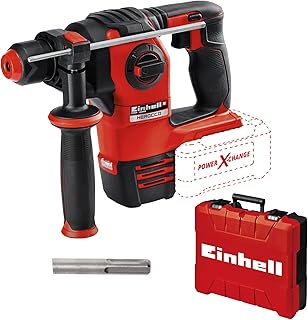


A rotary hammer is the specialist choice when ordinary drilling becomes inefficient, particularly for concrete, reinforced masonry, brickwork and repeated anchor-hole drilling. The best model is not necessarily the one with the highest quoted impact energy. A useful comparison needs to consider impact energy, drilling capacity, vibration, weight, chuck system, operating modes, battery platform, dust extraction, ergonomics and the type of work you actually expect to carry out. For occasional domestic drilling, a compact SDS Plus machine can provide a much better balance of capability and controllability than a large professional hammer. For frequent fixing work, an 18V or 20V-class cordless model can offer considerably greater convenience. For large holes, extensive chiselling or heavy concrete work, stepping up to a higher-energy SDS Plus or SDS Max machine may be justified. One of the most important buying decisions is choosing the correct type of tool in the first place. These machines are related, but they are not interchangeable. A rotary hammer combines rotation with a dedicated percussion mechanism. SDS tooling allows the bit to move axially while the mechanism repeatedly strikes the bit, making the machine particularly effective in concrete and masonry. Many models also provide a hammer-only setting for chiselling and a rotary-only setting for drilling other materials. This is generally the right category when drilling concrete is a regular requirement rather than an occasional exception. A conventional hammer drill uses a different percussion principle. The hammering action is normally less substantial than that of an SDS rotary hammer, making the tool more compact and suitable for lighter masonry drilling. It can be useful for general household work, but it is not normally the first choice for repeated large holes in concrete. A standard drill is primarily designed for rotary drilling and screwdriving. A combi drill adds a relatively light hammer action for masonry. These tools remain extremely useful, particularly for wood, metal, fixings and general assembly work, but they should not be selected simply because they appear cheaper if the intended task involves substantial concrete drilling. The chuck standard is one of the most important specifications because it determines which accessories you can use and gives a strong indication of the tool's intended workload. SDS Plus is the common all-round format for compact and mid-sized rotary hammers. It is particularly suitable for wall plugs, fixings, anchors, electrical and plumbing holes, masonry drilling and moderate chiselling. Many machines in this category have concrete drilling capacities around 20–30 mm, although the manufacturer's recommended range can be substantially narrower than the absolute maximum. For example, the Bosch Professional GBH 18V-26 is specified for 4–26 mm hammer drilling in concrete, with an optimum range of 8–16 mm. SDS Max is intended for substantially heavier-duty work. The larger tooling system is better suited to bigger holes, heavier chisels and more demanding concrete applications. However, SDS Max machines are normally heavier and less convenient for routine small fixing holes. Do not automatically choose SDS Max because it sounds more powerful. If most of your work consists of 6–16 mm anchor holes, an SDS Plus machine can be considerably easier to handle and may be the more productive option overall. Impact energy is one of the most frequently advertised rotary-hammer specifications, but it is also one of the easiest to misunderstand. Measured in joules, impact energy describes the energy associated with each hammer blow. In broad terms, higher impact energy can help a machine break and remove harder material more effectively. It does not, however, mean that a machine with twice the joules will necessarily drill every hole twice as quickly. Real-world drilling performance also depends on the bit, concrete hardness, hole diameter, motor speed, percussion rate, dust removal, operator technique and the tool's ability to maintain performance under load. As a useful illustration of the range available in modern professional tools, the Bosch GBH 18V-26 is rated at 2.6 J, the Makita DHR243Z at 2.0 J, the DEWALT DCH273 at 2.1 J and the Hilti TE 6-22 at 2.6 J. These figures should be treated as specifications for comparison rather than as a direct prediction of drilling speed. A manufacturer's maximum concrete drilling diameter is useful, but it should not be the only number considered. A tool rated for a maximum of 26 or 28 mm does not necessarily mean that drilling holes at that diameter all day is its ideal application. Manufacturers often publish an optimum drilling range separately from the maximum range. The optimum range is usually much more informative when comparing productivity and intended use. The Hilti TE 6-22, for example, has a stated hammer-drilling diameter range of 4–28 mm and an optimum hammer-drilling range of 4–16 mm. When comparing models, ask three questions: If your normal work is concentrated around 8–14 mm holes, buying a much larger machine solely for an occasional 30 mm hole may add unnecessary weight and cost. Conversely, if large holes are routine, selecting a compact machine because it is easier to carry can become frustrating surprisingly quickly. This combines rotation and percussion and is the primary setting for drilling concrete and masonry with SDS hammer-drill bits. Hammer-only operation is used with compatible chisels for tasks such as light breaking, tile removal, chasing, surface correction and removing stubborn masonry material. Rotary-only operation disables the percussion mechanism. It can be useful for drilling wood and metal when the correct chuck or accessory arrangement is available. Not every rotary hammer is equally convenient for these materials, so check the manufacturer's specifications before treating this as a substitute for a conventional drill. Variable speed allows the operator to adapt the machine to different materials and accessories. Electronic speed control can also help maintain more consistent operation under changing loads. The Bosch GBH 18V-26, for example, includes variable speed, constant speed, electronic motor protection, a rotation-control clutch and Vario-Lock alongside its core hammer functions. Cordless machines have become increasingly attractive because they eliminate the trailing cable and make drilling easier in unfinished buildings, gardens, lofts, remote areas and locations where power access is inconvenient. The major consideration is not simply voltage. Battery capacity, motor efficiency, accessory compatibility and the manufacturer's battery ecosystem all influence practical performance. An 18V machine can be an excellent general-purpose option. Bosch's GBH 18V-26, for example, is an 18V SDS Plus machine rated at 2.6 J and 2.9 kg excluding the battery. A corded machine remains attractive when you expect long periods of continuous drilling and do not want to manage battery charging. It can also make sense where a suitable mains supply is readily available and mobility is less important. The trade-off is obvious: a cable can restrict movement, create a trip hazard and become inconvenient when working away from a building or in areas without convenient power. If you already own several professional cordless tools, battery compatibility can be one of the strongest reasons to select a particular rotary hammer. Someone already invested in Bosch Professional 18V equipment may find a Bosch rotary hammer more economical because batteries and chargers can be shared. The same principle applies to platforms such as DEWALT XR, Makita LXT, Milwaukee M18 and Hilti Nuron, subject to the specific tool and battery compatibility requirements. Milwaukee's current M18 range includes SDS Plus models with features such as brushless motors, REDLITHIUM batteries and electronic protection, while its M18 platform is designed around broad battery compatibility. Brushless motors are now common in professional cordless rotary hammers. They eliminate conventional motor brushes and can provide advantages in efficiency, durability and maintenance requirements. Makita describes the DHR243Z as using a brushless maintenance-free motor, while DEWALT specifies a brushless motor for the DCH273. For occasional household use, brushless technology should not automatically outweigh every other consideration. For frequent professional work, however, the combination of motor efficiency, battery management and reduced routine brush maintenance can make a brushless platform particularly attractive. Rotary hammers generate substantial mechanical vibration. If you use the tool frequently, vibration control should be considered alongside impact energy rather than treated as a secondary comfort feature. Manufacturers use different systems to reduce transmitted vibration. Bosch offers Vibration Control on relevant models, DEWALT's Perform & Protect range includes vibration-focused features, Milwaukee uses its AVS system on selected machines, and Hilti uses Active Vibration Reduction on models such as the TE 6-22. Published vibration figures should also be read carefully. Values can differ according to whether the machine is hammer drilling or chiselling, the test method and the accessory or material involved. A lower vibration figure can be particularly valuable for people who spend a significant part of the working day using the machine. Dust management should be a core buying consideration rather than an accessory considered after the purchase. Drilling concrete, brick and other masonry can generate respirable crystalline silica. The UK Health and Safety Executive identifies drilling as one of the activities that can create silica-containing dust and recommends appropriate controls for exposure. HSE specifically provides guidance for drilling and coring with hand-held rotary power tools. For regular concrete drilling, look for a rotary hammer with a compatible on-tool extraction system or a manufacturer's dust-collection attachment. Some professional systems are designed to attach directly to the machine so that dust is captured close to the drilling point. The Bosch GBH 18V-26, for example, can be paired with the GDE 18V-16 Professional dust extraction unit, while Hilti offers compatible TE DRS extraction systems for the TE 6-22. Dust extraction does not mean that other controls can automatically be ignored. The appropriate control method depends on the task, material, environment and exposure. HSE guidance emphasises source control such as suitable extraction or other effective methods, with respiratory protective equipment required for certain higher-risk activities and circumstances. A rotary hammer can react strongly if a bit catches, particularly in hard aggregate or when reinforcement is encountered. Systems marketed as anti-kickback, anti-torque or rotation-control protection are designed to reduce the risk associated with sudden tool movement. Hilti's TE 6-22 includes Active Torque Control, while Bosch lists KickBack Control and a rotation-control clutch on the GBH 18V-26. A removable or interchangeable chuck can make a rotary hammer more versatile. Some models allow the user to swap an SDS Plus chuck for a conventional chuck so that standard drill bits can be used for rotary drilling. This is useful if you want one machine to handle a broader selection of drilling tasks. If all your work involves SDS Plus concrete bits, however, a quick-change system may be less important. A depth stop is particularly useful when installing anchors, wall plugs or repeated fixings. It helps produce consistent hole depth and reduces the need to measure every hole individually. An LED may sound like a minor feature, but it can improve visibility when drilling inside cupboards, under floors, in service voids and other poorly lit areas. A properly positioned auxiliary handle improves control and helps the operator maintain pressure in the intended drilling direction. This becomes increasingly important as impact energy and tool weight rise. Weight is a classic buying trade-off. A lightweight SDS Plus machine is easier to position, particularly overhead. It is also more convenient when moving around a site or carrying tools between locations. A heavier machine can feel more planted during difficult drilling and may offer greater power or capacity. The correct balance depends on the job rather than a simple preference for the lowest number on the specification sheet. Compare quoted weight consistently. Some manufacturers publish weight without the battery, while retail listings may show the complete kit weight. Battery size can make a noticeable difference to the final tool weight, so cordless buyers should consider the complete working configuration. Bosch Professional has a broad SDS Plus cordless range and provides detailed specifications covering impact energy, drilling ranges, vibration and battery compatibility. The GBH 18V-26 is a useful example of the mainstream professional SDS Plus category, with 2.6 J impact energy, a 4–26 mm stated concrete drilling range and compatibility with Bosch Professional's 18V battery system. Bosch can be particularly interesting for buyers who already use the Professional 18V system or who value integrated electronic protection and compatible dust extraction. DEWALT's DCH273 is a compact 18V XR SDS Plus model with 2.1 J impact energy and a stated maximum concrete drilling diameter of 24 mm. DEWALT also highlights its brushless motor and Perform & Protect features, with later kit variants specifying lower vibration figures. DEWALT is therefore worth considering when a buyer already owns XR batteries or prioritises a relatively compact professional cordless machine. The Makita DHR243Z is an 18V LXT SDS Plus rotary hammer with three operating modes, a brushless motor, quick-change chuck, 2.0 J impact energy and a stated 24 mm maximum concrete drilling diameter. Its combination of three-mode operation and chuck flexibility makes the DHR243Z representative of the versatile mid-range SDS Plus format. Buyers already invested in Makita LXT should pay particular attention to the bare-tool versus complete-kit configuration. Milwaukee's M18 SDS Plus range includes both compact and higher-performance models. The M18 Brushless 26 mm D-handle hammer, for example, is specified at 2.6 J and includes four operating modes, AVS anti-vibration technology and compatibility with M18 batteries. Milwaukee's professional ecosystem can be compelling for buyers who already use M18 tools and want to consolidate batteries, chargers and accessories around one platform. Hilti occupies a particularly strong professional and trade-oriented position, with its Nuron cordless platform covering a broad range of construction tools. The TE 6-22 is an SDS Plus rotary hammer rated at 2.6 J, with a 4–28 mm hammer-drilling range and a stated optimum range of 4–16 mm. It also includes Active Torque Control and Active Vibration Reduction, with compatible dust-removal systems available. Hilti should be considered especially carefully where tool management, professional service arrangements, system compatibility and demanding site use are more important than simply finding the lowest initial purchase price. When comparing two machines, avoid judging them by a single headline specification. A better comparison uses the following sequence. DIY buyers often benefit from resisting the temptation to purchase the largest machine available. If your likely jobs include fixing shelves to masonry, drilling for wall plugs, installing brackets and occasionally removing tiles, a compact SDS Plus machine is usually a more sensible starting point than a large demolition-oriented hammer. Look for: Trade users should place greater emphasis on productivity, vibration, reliability, battery management and accessory compatibility. For an electrician, plumber, installer or general contractor, a machine that spends much of the day drilling anchor holes may be better judged by its balance of drilling speed, handling, dust extraction and fatigue characteristics than by maximum impact energy alone. For frequent work, consider: If your workload involves large anchor holes, repeated drilling in hard concrete, substantial chiselling or demolition, look beyond compact 18V SDS Plus models. Consider a higher-energy SDS Plus machine when hole sizes are regularly near the upper end of the category. Move to SDS Max when the accessories, hole diameters and chiselling workload justify the larger format. Hilti's range illustrates this progression: its TE 6-22 is a 2.6 J SDS Plus machine, while the TE 30-22 is a substantially heavier SDS Plus model rated at 3.8 J with an optimum hammer-drilling range of 10–28 mm. More impact energy can be beneficial, but it does not account for ergonomics, vibration, drilling speed, battery efficiency, dust control or accessory quality. A machine's maximum rating is not necessarily its ideal continuous working range. Match the tool to the diameter you drill most often. A cordless tool's published bare weight does not represent the weight you will actually hold. Larger batteries can add useful runtime while making overhead drilling more tiring. A lower-priced bare machine can become less attractive if you then need to purchase batteries and a charger. Always compare complete ownership cost. Concrete drilling can generate respirable dust. Dust extraction should be considered during tool selection, not after the first dusty job. Even a high-quality rotary hammer cannot compensate for an unsuitable, worn or poor-quality bit. Match the accessory to the chuck system, material and hole diameter. An SDS machine is excellent at masonry and concrete but may be unnecessarily bulky for routine wood, metal and screwdriving work. Many users get better results from keeping a conventional drill or combi drill alongside the rotary hammer. The bit is part of the drilling system and should be considered when comparing rotary hammers. For concrete and reinforced concrete, carbide-tipped SDS Plus bits are common. The geometry and carbide design influence cutting performance, dust removal and resistance to reinforcement. For general masonry, a suitable masonry SDS Plus bit may be sufficient. For larger holes, core-style accessories can be appropriate where the particular rotary hammer and accessory are rated for that application. Do not assume that every accessory is suitable for hammering. Always follow the accessory manufacturer's instructions and the rotary hammer manufacturer's limitations. Concrete dust is abrasive and can accumulate around ventilation openings, controls and moving components. Clean the machine in accordance with the manufacturer's instructions rather than allowing dust to build up. Check bits regularly for excessive wear, damaged cutting edges, cracks or other defects. Worn tooling can reduce drilling performance and increase the effort required from both tool and operator. Many SDS systems require suitable lubrication of the tool shank. Use the lubricant and maintenance procedure specified for the particular machine rather than substituting an unsuitable grease. Clean the SDS interface and inspect the chuck for abnormal wear. A bit that does not lock correctly should not be used. Dust-control accessories are only useful when they remain effective. Empty collection systems, inspect seals and hoses, and maintain filters according to the extraction manufacturer's instructions. For cordless models, use the manufacturer's recommended charging, storage and operating procedures. Protect batteries from physical damage, excessive heat, moisture and unsuitable storage conditions. Good technique can make a surprisingly large difference to drilling performance. Encountering reinforcement is one of the situations where tool control becomes particularly important. Do not simply increase pressure when a bit stops progressing. Use accessories and drilling procedures appropriate to reinforced concrete and follow the manufacturer's guidance. If the planned hole is critical, check the location for reinforcement and concealed services before drilling. Rotary hammers with anti-kickback or torque-control systems can provide additional protection when a bit binds, but these systems are not a substitute for correct operating technique. Rotary hammers can be loud, especially during hammer drilling and chiselling. Consider the working environment as well as the machine's published sound data. Hilti, for example, publishes sound pressure and sound power figures for the TE 6-22, including a stated sound power level of 102 dB(A) and sound pressure level of 91 dB(A). Appropriate hearing protection may therefore be important depending on the task, exposure and working environment. Also consider other people nearby, particularly when drilling indoors or in occupied buildings. HSE guidance is particularly clear that drilling and other work on silica-containing materials can generate respirable crystalline silica, and that effective exposure control is required. There is no single correct budget because the value of a rotary hammer depends heavily on how often it will be used. For occasional DIY work, prioritise adequate capacity, manageable weight and compatibility with reasonably priced accessories. Spending significantly more for professional features may not provide meaningful value if the tool is used only a few times each year. For frequent trade use, the calculation changes. Lower vibration, better ergonomics, brushless motors, robust battery systems, dust extraction and electronic protection can all contribute to productivity and reduced fatigue. Instead of comparing retail prices alone, consider total ownership cost: Professional cordless tools are commonly sold in several configurations. A bare tool may include the machine and basic accessories but no battery or charger. A kit can include one or more batteries, a charger and a carrying case. Do not compare these configurations as though they were identical products. For an existing battery-platform user, a bare tool can make sense because compatible batteries and chargers are already available. For a first-time buyer, a complete kit may be the more useful comparison. Choose a compact SDS Plus model with straightforward controls, manageable weight and sufficient concrete capacity for the holes you normally drill. Prioritise compact dimensions, low vibration, dust extraction and fast drilling of common fixing-hole diameters. A cordless 18V-class machine can be especially convenient for moving around partially finished buildings. Consider a versatile SDS Plus model with hammer-only operation, variable speed and a good selection of compatible accessories. Dust management can be particularly important when working indoors. A mid-range professional SDS Plus machine can provide a useful compromise between drilling performance, chiselling ability, portability and battery runtime. Look towards higher-energy SDS Plus or SDS Max equipment when large holes, extended chiselling or demanding concrete work dominate the workload. Retail listings can sometimes make different variants of the same model appear to be separate products. Before comparing prices, identify the exact model number and determine whether the listing is a bare tool, tool-only package, battery kit or special bundle. Check whether the stated weight includes the battery, whether a case is included, which batteries are supplied and whether the charger is part of the package. Also check the exact chuck configuration because a model name can cover versions with different accessory arrangements. For example, Bosch lists multiple GBH 18V-26 variants, including versions with different packaging and accessory configurations. Customer reviews can be useful, but they should support specification research rather than replace it. Look for repeated comments about: A review from someone drilling a few holes into soft brick is not directly comparable with feedback from a professional drilling dozens of anchor holes in reinforced concrete. More power can be useful, but larger rotary hammers generally bring compromises in weight, size, cost and handling. If your normal work involves small fixing holes, a high-energy demolition-oriented machine may make the job less comfortable rather than more productive. The best buying decision is usually the smallest tool that comfortably handles your normal workload with appropriate headroom for occasional harder tasks. The opposite mistake is choosing a lightweight machine that is constantly operated near its maximum capacity. If you routinely drill large holes, work in hard concrete or spend significant time chiselling, a higher-capacity model can save effort and time. Frequent operation at the edge of a tool's intended application is a strong reason to consider moving up a category. For a modern UK buying decision, the strongest priorities are no longer simply maximum power and low price. A well-rounded comparison should examine the complete system. The best rotary hammer for concrete depends on the hole diameter, drilling frequency, required mobility and whether chiselling is also required. For general work, an SDS Plus machine is often the most versatile starting point. Larger or more demanding concrete work may justify a higher-energy SDS Plus or SDS Max model. For repeated concrete and masonry drilling, SDS Plus is generally the more appropriate system because the dedicated percussion mechanism and SDS tooling are designed for this type of work. A conventional drill or combi drill remains more suitable for many wood, metal and screwdriving applications. No. Higher impact energy can improve performance in demanding materials, but the best tool also needs suitable drilling capacity, manageable weight, effective vibration control, appropriate speed and compatible accessories. There is no universal number because DIY applications vary. A compact SDS Plus machine in the roughly 2 J class can already be a capable concrete-drilling tool, while larger machines offer greater capacity for demanding work. Select based on the hole sizes and materials rather than buying according to joules alone. Yes. Modern cordless professional SDS Plus rotary hammers can deliver substantial impact energy and are widely designed for concrete and masonry drilling. The suitability of a particular cordless model depends on its impact energy, drilling range, battery system and intended workload. Voltage should not be considered in isolation. An 18V professional system can provide ample performance for general SDS Plus work, while larger platforms can be appropriate for higher-energy applications. Compare the complete specifications and your existing battery ecosystem. Some models can, particularly when equipped with the appropriate chuck and operating mode. However, a rotary hammer is primarily optimised for masonry and concrete. A conventional drill is often more convenient for routine wood and metal work. Only if the model provides a hammer-only or chiselling mode and is rated for the intended accessory. Many SDS Plus rotary hammers include this capability, but the amount of chiselling they can handle varies considerably. SDS Plus is a smaller tooling system commonly used for general concrete drilling and light-to-moderate chiselling. SDS Max uses larger accessories and is intended for heavier drilling and demolition applications. Dust control should be considered whenever drilling materials that can generate hazardous construction dust. HSE identifies drilling concrete and other silica-containing materials as activities that can generate respirable crystalline silica, so suitable exposure-control measures are important. There is no single winner for every buyer. Bosch, DEWALT, Makita, Milwaukee and Hilti all offer professional rotary-hammer systems with different combinations of performance, ergonomics, battery platforms, dust-control options and protection technologies. Existing battery ownership, intended workload and required support can be more important than the badge on the tool. For regular cordless use, brushless technology can be attractive because manufacturers use it to support efficiency, durability and reduced maintenance. For occasional use, however, the overall specification and price may matter more than the motor type alone. There is no reliable universal lifespan. Service life depends on workload, operating conditions, maintenance, dust exposure, accessories, storage and how heavily the tool is used. Professional-grade equipment is designed for demanding use, but even a high-quality machine requires appropriate maintenance and correct operation. If you already own compatible batteries and a charger, a bare tool can be the logical choice. If you are entering a new battery platform, compare the complete kit price and included battery capacity rather than the tool-only price. Inspect the chuck, housing, side handle, switches, battery contacts and visible signs of impact or overheating. Check that the SDS mechanism locks accessories securely, listen for abnormal mechanical noise and, where practical, test hammering and rotary functions. For a cordless model, the condition and age of the battery can materially affect the value. The best rotary hammer is the one whose capabilities closely match the work you actually do. For many buyers, a compact SDS Plus cordless machine offers the strongest balance of portability, concrete-drilling performance and versatility. A higher-energy machine becomes more attractive as hole diameters, drilling frequency and chiselling requirements increase, while SDS Max becomes the logical step for genuinely heavy-duty applications. When comparing models from Bosch Professional, DEWALT, Makita, Milwaukee, Hilti and other established manufacturers, look beyond headline power. Compare the optimum drilling range, impact energy, vibration, weight, battery platform, chuck system, dust-control options, safety technology and total kit contents. The result is a more useful comparison than simply choosing the model with the biggest number on the specification sheet. Most importantly, treat dust control and safe operating practice as part of the buying decision. HSE guidance confirms that drilling construction materials such as concrete and masonry can generate respirable crystalline silica, making effective control of exposure an essential consideration for relevant work. Editorial note: Specifications, model variants, battery bundles and retailer pricing can change. Always verify the exact manufacturer's specification and the contents of the particular package before purchasing.How to Choose the Best Rotary Hammer in the UK in 2026
Quick Comparison: What Matters Most
Rotary Hammer vs Hammer Drill vs Standard Drill
Rotary Hammer
Hammer Drill
Standard Drill or Combi Drill
SDS Plus or SDS Max: Which Should You Buy?
SDS Plus
SDS Max
Understanding Impact Energy
Why Maximum Drilling Diameter Can Be Misleading
Rotary Hammer Modes Explained
Rotary Hammer Mode
Hammer-Only Mode
Rotary-Only Mode
Variable Speed and Electronic Control
Corded or Cordless Rotary Hammer?
Cordless Rotary Hammers
Corded Rotary Hammers
Battery Platform Matters More Than the Voltage Number
Brushless Motors: Are They Worth Paying More For?
Vibration Control Is More Important Than Many Buyers Realise
Dust Extraction and Concrete Drilling
Best Rotary Hammer Features to Look For
Anti-Kickback or Anti-Torque Protection
Quick-Change Chucks
Depth Stop
LED Work Light
Ergonomic Side Handle
Rotary Hammer Weight: Light Is Not Always Better
Detailed Brand Comparison
Bosch Professional
DEWALT
Makita
Milwaukee
Hilti
How to Compare Rotary Hammers Fairly
Rotary Hammer Buying Guide for DIY Users
Rotary Hammer Buying Guide for Tradespeople
Rotary Hammer Buying Guide for Heavy-Duty Concrete Work
Common Rotary Hammer Buying Mistakes
Buying Based Only on Joules
Choosing the Maximum Hole Size Instead of the Typical Hole Size
Ignoring Battery Weight
Buying a Bare Tool Without Checking Battery Costs
Ignoring Dust Control
Using the Wrong Bit
Using a Rotary Hammer for Every Drilling Job
Choosing the Right SDS Plus Drill Bits
Rotary Hammer Maintenance
Keep the Tool Clean
Inspect SDS Tooling
Lubricate SDS Shanks as Specified
Check the Chuck
Maintain Dust Extraction
Look After Batteries
Concrete Drilling Technique
Reinforced Concrete and Rebar
Noise and Work Environment
Rotary Hammer Safety Checklist
How Much Should You Spend on a Rotary Hammer?
Bare Tool vs Complete Kit
Questions to Ask Before Buying
Which Type of Rotary Hammer Is Best for Different Jobs?
Best for Occasional Home Fixings
Best for Electricians and Installers
Best for Plumbers
Best for General Builders
Best for Heavy Concrete Work
What the Specifications Really Tell You
Independent Buying Advice: How to Compare Retail Listings
How to Judge Customer Reviews Properly
How to Avoid Overbuying
How to Avoid Underbuying
2026 Rotary Hammer Buying Priorities
Frequently Asked Questions
What is the best rotary hammer for concrete?
Is SDS Plus better than a normal drill?
Is higher joule impact energy always better?
What impact energy is enough for DIY?
Is a cordless rotary hammer powerful enough for concrete?
Should I choose 18V or a higher-voltage rotary hammer?
Can a rotary hammer drill wood and metal?
Can a rotary hammer be used as a chisel?
What is the difference between SDS Plus and SDS Max?
Does a rotary hammer need dust extraction?
Which is better, Bosch, DEWALT, Makita, Milwaukee or Hilti?
Is a brushless rotary hammer worth it?
How long should a rotary hammer last?
Should I buy a bare rotary hammer or a kit?
What should I check before buying a used rotary hammer?
Final Rotary Hammer Buying Checklist
Bottom Line: Finding the Right Rotary Hammer