

Our experts reviewed the latest {category_name } to help you compare quality, performance, durability and overall value before making your purchase.
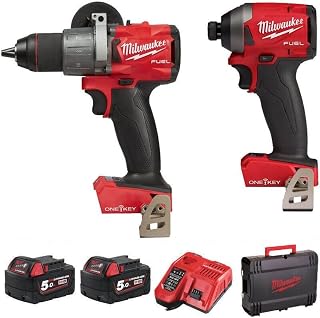


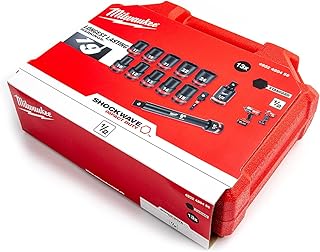


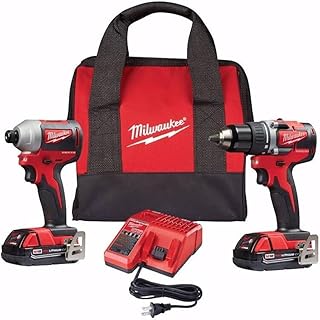


Choosing a Milwaukee power tool set is less about selecting the kit with the largest number of tools and more about building a cordless system that suits the work you actually do. A useful comparison should therefore look beyond the number of pieces in the box and consider the battery platform, tool type, motor technology, battery capacity, charger arrangement, ergonomics, storage and the likelihood that you will add more tools later. Milwaukee's UK range is centred around the M12 and M18 cordless platforms. The manufacturer describes M12 as its compact cordless system, while M18 is aimed at applications requiring the additional capability of an 18V platform. Milwaukee's current UK combo-kit range includes both M12 and M18 options, with different combinations of brushed, brushless and FUEL tools. The first decision should normally be the battery platform rather than the individual tool. M12 is particularly relevant when compact dimensions, low weight and access in restricted spaces matter. M18 is the more appropriate starting point when your work involves larger drills, saws, grinders, impact wrenches or other demanding applications where the additional capability of the platform is useful. Milwaukee states that its M12 and M18 systems can be supported by a dual-platform charger, allowing users invested in both systems to manage batteries without maintaining completely separate charging arrangements. The manufacturer currently describes the combined platforms as offering more than 300 compatible solutions, although the exact range naturally changes as new products are introduced. A seven-tool kit is not automatically better value than a four-tool kit. If three of the seven tools are rarely used, the additional pieces add cost, storage requirements and battery demand without necessarily improving productivity. A better comparison asks whether the kit gives you the tools you use every week and whether the supplied batteries are suitable for those applications. A compact drill, impact driver, reciprocating saw and grinder can be considerably more useful to a tradesperson than a larger bundle containing several specialist tools that spend most of their time in storage. It is also worth considering your next two or three likely purchases. A first Milwaukee kit effectively establishes the foundation of a larger cordless ecosystem. Once you own compatible batteries and a charger, future bare-tool purchases can become more attractive because you may not need to duplicate batteries and charging equipment. FUEL is not simply a different colour or cosmetic specification. Milwaukee's FUEL ranges incorporate brushless POWERSTATE motors and electronic systems designed to manage performance and protection. On the M18 FUEL platform, Milwaukee identifies POWERSTATE brushless motors, REDLITHIUM batteries and REDLINK intelligence as key elements of the system. A FUEL kit is most compelling when the tools will be used frequently or under demanding conditions. Professional users may place greater value on sustained performance, durability, electronic control, compactness and the ability to select advanced settings than an occasional DIY user who only needs a drill for intermittent household jobs. That does not mean every buyer should automatically choose FUEL. A higher specification tool can be unnecessary if the application is light and infrequent. The correct comparison is always between the tool's capabilities and the demands placed upon it. Motor type is another important specification to check when comparing Milwaukee kits. Milwaukee's current UK combo-kit listings include brushed, brushless and FUEL options, so the phrase “Milwaukee power tool set” covers several different levels of specification. Brushless motors generally remove the traditional mechanical brushes used in brushed motor designs. In practical buying terms, the important question is not simply whether a motor is brushless but whether the tool's overall performance, control, size and expected workload justify the additional specification. Battery capacity is usually expressed in ampere-hours, or Ah. It is tempting to assume that the highest Ah battery is automatically the best choice, but capacity affects more than operating time. Larger batteries can also affect tool balance, weight and handling. Milwaukee's current UK battery range includes several M18 capacities, including 2.0 Ah, 4.0 Ah, 5.0 Ah and HIGH OUTPUT options, as well as several M12 capacities. Milwaukee also offers HIGH OUTPUT battery technology for compatible tools. Its UK information explains that the system combines cell design, pack construction and electronics to increase output in demanding applications. Compatibility should be checked for the specific tool and battery combination rather than assumed from the name alone. Battery quantity can be just as important as battery capacity. A kit with several cordless tools but only one battery can become inconvenient when those tools are used continuously. Conversely, a kit with multiple batteries may be unnecessary if the tools are used intermittently. For professional use, two batteries can provide a practical starting point because one can be charging while another is being used. More demanding workloads may justify additional batteries, particularly when several high-draw tools are used throughout the day. When comparing two apparently similar kits, check: The ideal combination depends heavily on the trade. There is no universally correct tool count. However, certain combinations are particularly logical starting points for common types of work. The purpose of these examples is to illustrate how a kit should be evaluated, not to suggest that every buyer needs every tool listed. Retail listings can make comparison difficult because different kits may use different combinations of tools, batteries and accessories. Build your comparison around specifications that have a direct effect on your intended work. ONE-KEY is Milwaukee's connected tool-management technology. The manufacturer's UK system information describes functions including creating a digital tool catalogue, keeping track of transfers and sharing information with field personnel. For an individual DIY user with a small collection, connected management may be unnecessary. For a contractor, facilities team or business managing numerous tools, the ability to organise equipment digitally can become much more relevant. When comparing a kit, therefore, treat ONE-KEY compatibility as a management feature rather than assuming it directly improves the mechanical performance of every tool. Storage is easy to overlook when comparing power tool sets, yet it affects everyday usability. A kit that contains several tools but offers poor organisation can become frustrating on a busy site. Milwaukee's PACKOUT system is a modular storage platform designed around configurable tool transportation and organisation. Its UK range includes boxes, organisers, drawers, bases, bags, racks and other components. Specific PACKOUT boxes also use impact-resistant polymers and include features such as weather sealing and reinforced locking points. Storage should be considered part of the total system rather than a free accessory. If you work across several locations, carry tools in a van or need rapid access during a job, organised storage can have practical value beyond simply protecting the tools. A large tool count looks impressive but does not necessarily represent better value. Identify your essential tools first and then assess whether the additional pieces have a genuine use. Buying a single M12 tool when your future requirements are predominantly M18 can create an inconvenient split system. Decide which platform is likely to become your main ecosystem before committing to a large initial purchase. Two small batteries and two higher-capacity batteries are not equivalent. Compare Ah ratings, battery technology and the applications for which they are intended. FUEL is a premium specification, but a premium specification is not automatically the most economical choice for every task. Consider frequency of use and workload. Some offers are built around bare tools, while others include batteries and chargers. Check exactly what is supplied before comparing headline prices. High performance is of limited benefit if a tool is uncomfortable for the way you work. Weight becomes particularly important for overhead drilling, repetitive fastening, extended cutting and work in awkward positions. A large battery may extend working time, but it can change the balance of a compact tool. Conversely, a small battery may be inconvenient for high-demand applications. Match battery size to the tool and task. M12 and M18 are separate battery platforms. Within each platform, buyers should still check the manufacturer's compatibility information for the exact tool and battery combination, particularly when considering specialist or HIGH OUTPUT products. Price-per-tool can be misleading. A better method is to calculate the value of the useful equipment supplied. Combo kits can be particularly attractive when you are starting a cordless collection because the package may combine several tools with batteries and charging equipment. However, once you already own multiple batteries and a charger, buying bare tools can sometimes be a more logical route. Before buying another complete kit, make a list of the batteries and chargers you already own. Then compare the cost of the exact bare tools you need with the cost of another bundle. Avoid paying for duplicate batteries simply because the overall kit appears to offer more pieces. DIY buyers should resist the temptation to select professional-grade equipment solely because it has the highest specification. The right choice depends on how frequently the tools will be used and what materials and applications they will encounter. A compact M12 kit can make sense for household maintenance, furniture assembly, installation work and other situations where manoeuvrability is more important than maximum output. Milwaukee positions the M12 system around compact cordless performance and currently offers more than 125 solutions within that family. M18 becomes more compelling when DIY work includes substantial woodworking, larger drilling jobs, extensive renovation, cutting or other tasks where the additional capability of an 18V platform is useful. Tradespeople should evaluate a kit according to the applications encountered during a normal working week. Electricians, plumbers, carpenters, mechanics, installers and general builders can have very different requirements even when they all use cordless tools. For professional buyers, system compatibility can be particularly valuable. Milwaukee states that its M18 system currently contains more than 325 compatible solutions, while the M12 system provides more than 125 solutions. These figures are manufacturer claims and may change as the range develops. This breadth can make the platform more important than the initial kit. A good starter set should leave room to add specialist tools without forcing you into another battery ecosystem. Construction applications generally place greater emphasis on durability, battery performance, tool ergonomics and sustained output. M18 and M18 FUEL options are particularly relevant where larger cordless tools are required. Milwaukee describes M18 FUEL as its performance-focused range, with POWERSTATE brushless motors, REDLITHIUM battery technology and REDLINK intelligence forming part of the platform. For heavy-use applications, compare the exact model rather than relying on the FUEL name alone. Two FUEL tools can have completely different purposes, sizes, torque characteristics and operating requirements. Specifications do not tell the entire story. A tool can have excellent headline performance while being poorly matched to prolonged use. Look at: For repetitive professional work, small differences in balance can matter more than an additional headline specification that is rarely used. Battery runtime cannot be reduced to a single universal number because actual operating time depends on the tool, material, workload, battery, temperature and working method. A drill performing light screwdriving will place very different demands on its battery from a grinder cutting metal. Milwaukee's own battery information also notes that results depend on the specific tool and application. For that reason, be cautious with generic runtime claims. The most useful comparison is normally between batteries of the same platform and comparable technology, combined with the tool's intended workload. Milwaukee model numbers are useful because apparently similar tools can belong to different generations or specifications. When comparing retailers, record the complete model number rather than relying solely on a product title. Check whether the listing refers to: This prevents one of the most common comparison errors: treating two similarly named products as identical when their included equipment or specifications differ. Before ordering, verify the exact contents of the package rather than relying on photographs or broad marketing descriptions. Independent buyers should also distinguish between a manufacturer specification and a retailer's promotional description. When the two appear inconsistent, the exact model documentation should take priority. There is rarely a need to buy every tool at once. A staged approach can reduce duplication and make it easier to identify what you actually need. This approach also makes it easier to take advantage of bare-tool purchases once you have already established the battery and charging infrastructure. There is no single best kit for every buyer. The strongest choice is the set containing the tools you use most, with the correct battery platform, battery capacity and specification for your work. A compact M12 kit may be more appropriate for restricted-space work, while an M18 or M18 FUEL combination can be more suitable for demanding applications. M12 is designed as a compact cordless platform rather than simply a smaller version of M18. Milwaukee's current M12 range includes professional tools for numerous applications, including FUEL products and HIGH OUTPUT battery options. Whether it is powerful enough depends on the specific tool and task. Not universally. M18 is generally the platform to consider when your work demands larger or more powerful tools, whereas M12 offers advantages where compact dimensions and access are important. Many users can reasonably benefit from having both platforms. They can be, particularly for frequent or demanding use. FUEL tools incorporate Milwaukee's brushless POWERSTATE motors and advanced electronic systems, but buyers should compare the exact application and workload rather than assuming the most expensive specification is automatically the best value. Two batteries can be useful because one can be available while the other is charging. However, the most important consideration is the capacity and type of the batteries, not simply the number supplied. No. M12 and M18 are separate battery platforms. Milwaukee does offer dual-platform charging solutions, but that should not be confused with physical battery interchangeability between M12 and M18 tools. A bare tool is generally supplied without the battery and charger required to operate it. A complete kit may include one or more tools together with batteries, a charger and sometimes storage or accessories. Always check the exact package contents before comparing prices. Some packages include cases, bags or other storage, while others do not. Storage should therefore be treated as a specification to verify rather than an assumed feature. Milwaukee also has the separate PACKOUT modular storage ecosystem for users who want a broader organised transport and storage system. Yes, but the appropriate specification depends on the work. DIY users should consider frequency of use, application difficulty, ergonomics and total system cost rather than choosing solely on professional branding. Power tool ranges, model numbers, kit configurations and retailer pricing can change. This page should therefore be treated as a buying reference that benefits from regular review, particularly when new Milwaukee tools, batteries or combo kits enter the UK market. The smartest way to compare Milwaukee power tool sets is to start with the job rather than the product box. Decide which tools you genuinely need, select the battery platform that fits your future requirements, then compare motor technology, battery capacity, ergonomics, storage and included equipment. For compact professional tools and restricted-access applications, M12 deserves serious consideration. For heavier cordless work, M18 provides a broader high-power platform. For demanding users who place a premium on performance and advanced electronics, M18 FUEL or M12 FUEL can be worth investigating. Milwaukee's current UK range provides substantial scope for building either platform over time. Before committing to a purchase, compare the exact model numbers, battery specifications and package contents, read verified customer reviews, and check current UK retailer pricing. The best value is not necessarily the kit with the most tools; it is the combination that gives you the right equipment, battery ecosystem and performance for the work you actually carry out.How to Choose the Right Milwaukee Power Tool Set in the UK
M12 vs M18: Which Milwaukee Battery Platform Is Better?
Why the Battery Platform Matters More Than the Number of Tools
Milwaukee FUEL vs Standard Milwaukee Tools
When Is a Milwaukee FUEL Kit Worth Considering?
Brushless vs Brushed Milwaukee Power Tools
Battery Capacity: Is a Higher Ah Battery Always Better?
How to Match Battery Size to the Tool
How Many Batteries Should a Milwaukee Combo Kit Include?
What Should a Good Milwaukee Power Tool Set Include?
General Trade and Maintenance Kit
Woodworking-Focused Kit
Mechanical and Automotive Applications
Milwaukee Power Tool Set Specifications Worth Comparing
ONE-KEY: Does Connected Tool Management Matter?
Tool Storage: Why the Case Can Matter
Common Mistakes When Buying Milwaukee Power Tool Sets
Buying the Biggest Kit
Ignoring the Battery Platform
Comparing Only the Number of Batteries
Assuming FUEL Is Always Necessary
Forgetting the Charger
Ignoring Weight and Balance
Choosing Batteries Without Considering the Tool
Assuming Every Milwaukee Battery Works Everywhere
How to Compare Milwaukee Kits on Value Rather Than Price
Kit Price vs Buying Bare Tools Separately
Milwaukee Power Tool Sets for DIY Users
Milwaukee Power Tool Sets for Tradespeople
Choosing a Milwaukee Kit for Construction and Heavy-Duty Work
Ergonomics and User Fatigue
Battery Runtime: What Buyers Should Actually Compare
How to Read Milwaukee Model Numbers
What to Check Before Buying From a UK Retailer
How to Build a Milwaukee Cordless Tool Collection Over Time
Milwaukee Power Tool Set Comparison Checklist
Frequently Asked Questions About Milwaukee Power Tool Sets
What is the best Milwaukee power tool set?
Is Milwaukee M12 powerful enough?
Is Milwaukee M18 better than M12?
Are Milwaukee FUEL tools worth the extra money?
Should I buy a Milwaukee kit with two batteries?
Are Milwaukee M12 and M18 batteries interchangeable?
What is the difference between a bare tool and a power tool kit?
Do Milwaukee power tool sets include storage?
Is Milwaukee suitable for DIY users?
How often should this buying guide be checked?
Final Buying Advice