

Our experts reviewed the latest {category_name } to help you compare quality, performance, durability and overall value before making your purchase.




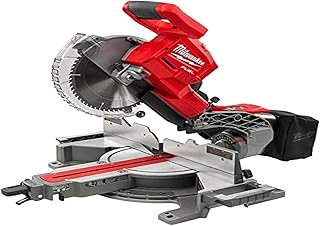

Choosing a Milwaukee cordless mitre saw is less about finding a single “best” machine and more about matching blade size, cutting capacity, portability, battery requirements and jobsite features to the work you actually do. Milwaukee’s current UK cordless mitre saw range includes the M18 FUEL 190 mm, M18 FUEL 254 mm and M18 FUEL ONE-KEY 305 mm models, giving buyers three distinctly different approaches to capacity and portability. All three are part of the M18 battery platform, but their dimensions and intended workloads differ considerably. The 190 mm model favours portability and smaller workpieces, the 254 mm model provides a useful middle ground for general site and workshop work, while the 305 mm model is designed for larger sections and demanding cutting applications. Model specifications should always be checked against the exact UK version and part number before purchase, particularly when comparing bare-tool products with battery-and-charger kits. Milwaukee lists the M18 FMS190-0, M18 FMS254-0 and M18 FMS305-0 as separate configurations, while its UK catalogue also lists kit variants for some models. The M18 FMS190 uses a 190 mm blade and is the lightest of the three principal Milwaukee cordless mitre saws discussed here. Milwaukee gives the tool a weight of 12.7 kg, including the battery pack, and highlights its integrated carry handle, sliding fences, steel detent plate and LED work light. Its published maximum cutting capacities are 152.7 x 39.3 mm at 45° mitre and 45° bevel, 152.7 x 55.4 mm at 45° mitre and 90° bevel, 215.5 x 39.3 mm at 90° mitre and 45° bevel, and 215.5 x 55.4 mm at 90° mitre and 90° bevel. The saw has 48° mitre adjustment to both the left and right and 48° bevel adjustment in both directions. This makes the FMS190 particularly interesting for tradespeople who regularly carry their saw between locations. It is not simply a smaller version of the 305 mm machine: choosing it means accepting lower maximum capacity in exchange for a more manageable format. The M18 FMS254 moves to a 254 mm blade and is therefore a more substantial option for buyers who frequently cut wider or deeper stock. Milwaukee specifies a 4000 rpm no-load speed, a 30 mm bore, 48° bevel capacity to both sides and mitre adjustment of 50° left and 60° right. Its published cutting capacities include 205.23 x 51.3 mm at 45° mitre and 45° bevel, 205.23 x 91.2 mm at 45° mitre and 90° bevel, 289.3 x 51.3 mm at 90° mitre and 45° bevel, and 289.3 x 91.2 mm at 90° mitre and 90° bevel. The FMS254 can therefore be a sensible choice for buyers who find a 190 mm saw restrictive but do not need the maximum capacity of a 305 mm machine. Its larger blade also makes it more appropriate when the material routinely approaches the limits of smaller sliding mitre saws. The M18 FMS305 is the largest of these three Milwaukee cordless mitre saws, using a 305 mm blade. Milwaukee describes it as an M18 FUEL ONE-KEY model and states that it is designed to deliver the cutting rate of an equivalent AC 305 mm saw. Published specifications give a 3600 rpm no-load speed, 48° bevel adjustment in both directions, 55° mitre capacity to the left and 60° to the right, and a 30 mm bore. Maximum cutting capacity is listed as 235 x 65 mm at 45° mitre and 45° bevel, 235 x 97 mm at 45° mitre and 90° bevel, 343 x 65 mm at 90° mitre and 45° bevel, and 343 x 97 mm at 90° mitre and 90° bevel. The larger capacity is the principal reason to choose the FMS305. It is particularly relevant where large skirting, architrave, timber sections, baseboard or other wide stock would regularly challenge a smaller saw. However, greater capacity also means a larger machine to transport, position and store, so buying the biggest model simply because it has the largest specification is not automatically the best decision. There is no universal winner because the appropriate blade size depends on the material dimensions, frequency of transport and type of cuts required. A smaller saw can be the more practical professional tool when it is carried frequently, while a larger saw can save time when material repeatedly approaches the smaller machine’s cutting limits. Blade diameter is one of the easiest specifications to understand but one of the most important to interpret correctly. A larger blade does not automatically mean better accuracy, better finish or better value. Its principal advantage is increased potential cutting capacity. Before buying, measure the largest material you expect to cut rather than relying on blade diameter alone. Check the manufacturer's capacity figures for the exact combination of mitre and bevel angle you intend to use. Cutting capacity can reduce significantly when the saw is tilted and rotated simultaneously. A common buying mistake is to compare only 190 mm, 254 mm and 305 mm blade sizes. The more useful comparison is the maximum supported workpiece at the angles you actually use. For example, a saw may have an impressive straight cross-cut capacity but considerably less capacity when cutting a compound angle. If your work involves roof construction, complex timber framing, decorative mouldings or repeated compound cuts, compare the 45° mitre/45° bevel specification rather than looking only at the 90° cross-cut figure. Also pay attention to the manufacturer’s distinction between maximum cutting capacity and capacity at the fence. A workpiece may fit within the theoretical cutting envelope but still require careful positioning because of its profile or the shape of the fence. Dual-bevel adjustment is valuable when repeated angled cuts are required from both orientations. Instead of repeatedly turning the workpiece around, the saw head can be tilted in the required direction. The M18 FMS190, M18 FMS254 and M18 FMS305 all provide bevel adjustment to the left and right, although their exact mitre-angle ranges differ. For users producing roof components, furniture parts, trim or other compound-angle work, the ability to set both mitre and bevel angles accurately is more significant than a basic specification such as no-load rpm. Large sliding fences are an important practical feature because the fence supports the material as the saw head moves through the workpiece. Milwaukee specifies large sliding fences across these models, with the stated purpose of supporting material for stability and accuracy. When comparing saws, consider more than the maximum fence height. Look at how easily the fences adjust, whether they can be positioned without obstructing the blade path, and how well the overall table supports long material. Long boards can be awkward even when the saw itself is highly capable. For repetitive professional work, compatible saw stands, extension supports or a properly designed workbench can make a greater practical difference to productivity than a small increase in motor speed. Milwaukee's M18 mitre saws are commonly offered as bare tools, meaning the buyer needs to provide a compatible battery and charger separately. The UK distributor catalogue explicitly identifies the M18 FMS190-0, M18 FMS254-0 and M18 FMS305-0 as configurations without batteries and chargers. This is important when comparing prices between retailers. A lower headline price for a bare unit is not directly comparable with a bundle that includes a battery and charger. Milwaukee states that the FMS190 and FMS254 work with all M18 batteries, while the FMS305 is designed to maximise performance with HIGH OUTPUT and FORGE battery technology. Battery runtime depends on material, section size, blade condition, feed technique, battery capacity, temperature and the number of stops and starts involved. Manufacturer cut figures should therefore be treated as specified examples rather than a guaranteed number of cuts for every job. Milwaukee states that the FMS190 can make up to 299 cuts in 38 x 89 mm softwood with a 5.0 Ah battery under its stated test conditions. For the FMS254, Milwaukee states up to 430 cuts in 26 x 142 mm decking with a 12.0 Ah battery. The FMS305 is specified for up to 500 pieces of 78 mm pine baseboard using a 12.0 Ah battery. These figures should not be compared as though they represent identical tests: the material dimensions and battery capacities differ. The useful lesson is that battery selection and workload matter as much as the nominal M18 platform. The M18 FUEL designation combines Milwaukee's POWERSTATE brushless motor, REDLINK PLUS electronic intelligence and REDLITHIUM battery technology. Milwaukee presents these technologies as a system intended to deliver power, runtime and durability rather than treating the motor as an isolated component. For a mitre saw, electronic management matters because the tool repeatedly accelerates the blade, cuts under load and returns to idle. In professional use, consistency and overload protection can be more meaningful than simply choosing the model with the highest quoted rpm. The M18 FMS305 adds Milwaukee ONE-KEY functionality, including tool tracking, inventory management and remote locking features. This feature is most relevant to professional users managing several tools across jobsites, vans or workshops. For a private user who owns a small number of tools and keeps them in a secure workshop, ONE-KEY may be less important than cutting capacity, battery cost or portability. ONE-KEY should therefore be treated as a workflow and asset-management feature rather than a cutting-performance feature. It does not replace the need to choose the correct blade, maintain the saw or secure the workpiece properly. Mitre sawing can produce substantial quantities of dust and chips, particularly when cutting timber or composite sheet materials. Dust management should therefore be part of the buying decision rather than an afterthought. When comparing models, check the supplied dust bag or extraction arrangement and establish whether your intended dust extractor is compatible. A dust bag may be convenient for occasional outdoor work, while workshop users may prefer connection to an appropriate extraction system. Keeping the cutting area clear also helps visibility. Dust accumulation around the work surface, fences and moving components can interfere with accurate setup and make routine cleaning more difficult. Milwaukee specifies LED illumination on these M18 mitre saws to illuminate the workpiece and cut line, which can be useful in workshops, covered sites and other areas where ambient light is inconsistent. A work light should not be treated as a substitute for accurate marking and safe positioning. It is an assistance feature. The quality of the final cut still depends on correct setup, a suitable blade, stable material and accurate angle selection. Both the M18 FMS254 and M18 FMS305 include a trenching stop with depth adjustment, allowing controlled trenching and rebate cuts. This expands the usefulness of a mitre saw beyond simple cross-cutting. However, trenching is a different application from making a complete through-cut, so users should understand the saw's depth-control mechanism and follow the manufacturer's operating and safety instructions. The saw body is only part of the cutting system. Blade diameter, bore size, tooth configuration, tooth count and intended material all influence the result. Milwaukee lists 30 mm bore specifications for the M18 FMS190, FMS254 and FMS305 families. Always confirm the blade specification for the exact model before purchasing replacement blades. A mitre saw's advertised angle range is only one part of accuracy. Repeatable results depend on the relationship between the blade, fence, table, detent mechanism, workpiece and operator setup. Steel detent plates with preset angles are specified on Milwaukee's M18 models and are intended to provide repeatable angle positioning. Portability is often underestimated when comparing cordless mitre saws online. A tool that stays permanently on a bench can be judged primarily by capacity and performance. A tool carried upstairs, loaded into a van or moved repeatedly between rooms should be judged differently. The M18 FMS190's published 12.7 kg weight makes it the obvious portability-focused model within this three-model comparison. Larger saws can justify their additional bulk when their greater cutting envelope saves time, but that benefit disappears if their size makes them inconvenient for the actual job. Start with the material rather than the brand or model number. Write down the maximum width and thickness of the stock you routinely cut, then identify the most demanding mitre and bevel combination you actually use. Next, consider transport. If the saw moves frequently, portability should carry significant weight in the decision. If it remains in a workshop and routinely handles large timber, capacity is likely to matter more. Finally, consider the battery ecosystem. Existing M18 owners may have an advantage because compatible batteries and chargers can reduce the additional equipment required. New users should include the cost and weight of suitable batteries in the overall comparison. In practical terms, the FMS190 is the mobility-oriented choice, the FMS254 is the middle-capacity option, and the FMS305 is the large-capacity choice. Milwaukee's UK range confirms these three models as its cordless mitre saw offering in this category. For professional users, the best comparison is usually based on total workflow rather than individual specifications. A carpenter cutting large quantities of wide timber may value the FMS305's capacity. A maintenance worker moving between locations may favour the FMS190. A general building professional may find the FMS254 offers a more balanced combination of capacity and practicality. Consider the number of cuts per day, the dimensions of the most common workpieces, how far the saw travels between jobs and whether the tool forms part of an existing M18 inventory. For a permanent workshop installation, portability may become less important. In that situation, cutting capacity, fence support, angle adjustment, extraction, blade availability and compatibility with a suitable workbench or stand deserve more attention. A larger machine is not necessarily better for every workshop. If most projects involve relatively narrow mouldings or small timber sections, the additional physical size of a 305 mm saw may offer little practical benefit. Regular care helps preserve cutting performance and makes problems easier to identify before they affect a project. Always follow Milwaukee's model-specific instructions, particularly for inspection, cleaning, blade changes, battery handling and adjustment. A cordless mitre saw should be selected with the working environment in mind. Buyers should consider whether the machine will be used indoors, outdoors, on a building site, in a workshop or in locations where dust extraction is particularly important. Always use suitable personal protective equipment and follow the manufacturer's operating instructions. Secure the workpiece appropriately, keep hands away from the blade path, wait for the blade to stop before moving the workpiece and make sure the saw is positioned on a stable support. For professional use, the appropriate site risk assessment and workplace procedures should take precedence over generic buying advice. Package contents differ by model and configuration, so buyers should check the exact part number before ordering. Milwaukee's UK listings show the M18 FMS190-0 supplied with a blade, clamp and dust bag; the M18 FMS254-0 with a saw blade, blade key, side handles and clamp; and the M18 FMS305-0 with blade, clamp, wrench, side handles and dust bag. Batteries and chargers are not included with these bare-tool configurations. A bare tool can make sense when you already own compatible M18 batteries and chargers. It can be less attractive for someone entering the M18 ecosystem for the first time, because the saw is only one part of the complete cordless setup. When comparing retailer listings, identify the exact model suffix and package contents. A product title that looks similar can represent a substantially different bundle. Independent buyers should compare like for like rather than selecting the first apparently cheap listing. Verify the exact model number, battery inclusion, charger inclusion, supplied accessories and stated warranty terms before making a purchase. The best model depends on the application. The M18 FMS190 prioritises portability, the M18 FMS254 offers a larger middle-ground capacity, and the M18 FMS305 provides the greatest cutting capacity among these three models. Yes. Milwaukee's published specifications identify the FMS190 as a dual-bevel sliding mitre saw, with 48° bevel capacity to both the left and right. The M18 FMS254 uses a 254 mm blade and has a 30 mm bore according to Milwaukee's published UK specifications. The M18 FMS305 uses a 305 mm blade with a 30 mm bore. Yes. The M18 FMS305 is an M18 FUEL ONE-KEY mitre saw, with ONE-KEY tracking, inventory management and remote locking functionality. The listed -0 bare-tool configurations do not include batteries or chargers. Always check the exact package designation because Milwaukee also lists battery-and-charger kit variants. Milwaukee states that the M18 FMS190 and M18 FMS254 work with all M18 batteries. The FMS305 is also part of the M18 system, with Milwaukee specifically highlighting HIGH OUTPUT and FORGE battery technologies for maximising performance and runtime. Not universally. The 305 mm model has greater cutting capacity, but the 190 mm model is lighter and more portable. The better option is the one whose capacity and physical size match the work you actually perform. Check cutting capacity, blade size, bevel and mitre ranges, weight, battery requirements, supplied accessories, dust management, fence design and the availability of suitable blades and stands. Also confirm the exact model number and package contents. Battery capacity can materially affect runtime, while larger batteries can also add weight. Manufacturer runtime examples should be treated as test-condition figures rather than universal guarantees because cutting material, dimensions and battery capacity vary between published examples. The Milwaukee M18 cordless mitre saw range gives UK buyers a straightforward capacity choice. The M18 FMS190 is the portability-led option, the M18 FMS254 provides a larger and more versatile cutting envelope, and the M18 FMS305 is the high-capacity choice with the additional benefits of ONE-KEY. The most reliable way to choose is to work backwards from the job: identify your largest workpiece, check the compound cutting capacity, consider how often the saw must be moved, then factor in batteries, accessories, extraction and storage. That approach is more useful than choosing solely on blade diameter, headline power or the cheapest advertised price. Specifications, package contents and retailer terms can change, so verify the exact Milwaukee model and current UK configuration before purchasing. Independent buyers should also compare current retailer prices, read recent verified customer feedback and check the manufacturer's current documentation for the particular model being considered.Milwaukee Cordless Mitre Saw Buying Guide: What to Compare Before You Buy
Milwaukee M18 Cordless Mitre Saw Range Compared
Milwaukee M18 FMS190: The Portable Option
Milwaukee M18 FMS254: The Middle Ground
Milwaukee M18 FMS305: Maximum Capacity in the Range
Which Milwaukee Cordless Mitre Saw Is Best for Different Jobs?
Blade Size: 190 mm vs 254 mm vs 305 mm
Cutting Capacity Matters More Than Headline Blade Diameter
Dual-Bevel Capability and Compound Cuts
Fence Design and Workpiece Support
Battery Choice: Bare Tool or Complete Kit?
Runtime: Do Not Treat One Published Cut Figure as a Universal Result
Brushless Motor and Electronic Management
ONE-KEY: When Is It Worth Paying More?
Dust Extraction and Workshop Cleanliness
LED Work Lights and Cut-Line Visibility
Trenching and Rebate Work
Blade Selection: One of the Most Overlooked Buying Factors
Accuracy: What Actually Determines a Clean Mitre Cut?
Portability Versus Cutting Capacity
Common Buying Mistakes to Avoid
How to Choose the Right Milwaukee M18 Mitre Saw
Milwaukee FMS190 vs FMS254 vs FMS305
Professional Users: What to Prioritise
Workshop Users: What to Prioritise
Maintenance and Care
Safety Considerations Before Buying
Specifications Worth Comparing Before Purchase
What Is Included With the Bare Tools?
Should You Buy a Milwaukee Cordless Mitre Saw Without a Battery?
How to Compare Retailer Listings
Questions to Ask Before Choosing
Frequently Asked Questions
Which Milwaukee cordless mitre saw is best?
Is the Milwaukee M18 FMS190 dual bevel?
What size blade does the Milwaukee FMS254 use?
What size blade does the Milwaukee FMS305 use?
Does the Milwaukee FMS305 have ONE-KEY?
Are Milwaukee M18 mitre saws supplied with batteries?
Can Milwaukee M18 batteries be used across the mitre saw range?
Is a 305 mm mitre saw better than a 190 mm model?
What should I check before buying a cordless mitre saw?
How important is battery capacity?
Final Buying Checklist
Bottom Line