

Our experts reviewed the latest {category_name } to help you compare quality, performance, durability and overall value before making your purchase.


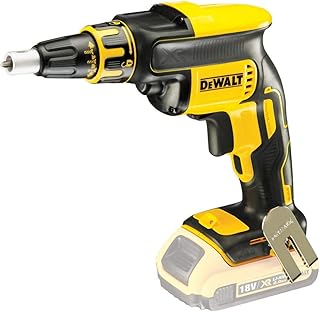




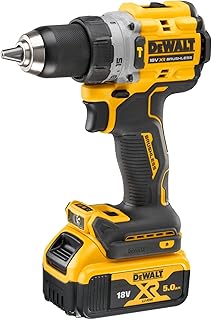

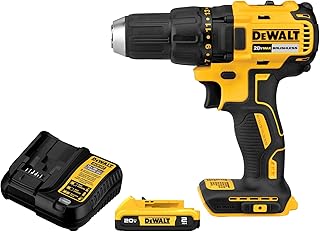


Choosing the right DEWALT cordless screwdriver is less straightforward than simply selecting the highest voltage or the tool with the biggest torque figure. The current UK range covers compact 12V screwdrivers, dedicated 18V screwguns, specialised drywall models and impact drivers, each designed around a different type of fastening work. DEWALT's UK screwdriver and screwgun range currently includes cordless screwdrivers, screwguns and impact drivers, so identifying the correct tool category is the first step towards making a sensible purchase. This expanded buying guide is intended to complement the existing product comparisons rather than replace them. It focuses on the details that can make a meaningful difference in everyday use: voltage, torque, speed, clutch control, dimensions, weight, battery compatibility, bit retention, ergonomics, intended application and the difference between a conventional screwdriver, screwgun and impact driver. For general screwdriving where compact dimensions and controlled fastening matter, the DEWALT DCF601 12V XR Brushless Screwdriver is one of the most relevant models to investigate. It combines a compact 121mm tool length with a brushless motor, 0–1,100rpm no-load speed, up to 8Nm of torque and a 1/4-inch hex holder. The UK kit version, DCF601D2-GB, includes two 2Ah batteries, a charger and a TSTAK kit box. For heavier-duty fastening, particularly applications involving metal, the DEWALT DCF622 18V XR Brushless Screwdriver is a fundamentally different proposition. It provides up to 2,000rpm and 34Nm of torque, incorporates a Versa-Clutch system and is designed specifically for heavier fastening applications. For repeated drywall work, a dedicated drywall screwgun such as the DCF620 is more appropriate than buying a general-purpose screwdriver simply because it has a higher torque figure. DEWALT describes the DCF620 as a specialised drywall screwdriver, while the wider range also includes collated versions and dedicated accessories. For demanding fastening where speed and high torque take priority over the controlled feel of a conventional screwdriver, an impact driver such as the DCF887 belongs in the comparison. It offers up to 205Nm, three speed and torque settings, up to 3,250rpm and up to 3,800 impacts per minute. It is therefore considerably more aggressive than a compact clutch-equipped screwdriver. The distinction between these categories is important. A product comparison that places every DEWALT driver in a single ranking can be misleading because the best tool for fitting cabinet hardware is not necessarily the best tool for structural timber, metal fastening or plasterboard installation. The DCF601 is particularly interesting for buyers who value access and control over maximum power. DEWALT lists a 121mm overall length, 0.68kg tool weight, 12V battery system, 0–1,100rpm no-load speed and up to 8Nm maximum torque. The tool uses a 6.35mm hex holder and a brushless motor. Its compact format is useful when the screw is positioned inside a cabinet, close to an obstruction, between framing members or in another area where a larger drill-driver becomes awkward. The three-LED arrangement around the nose also helps illuminate the immediate work area. One of the most important reasons to consider a conventional clutch-equipped screwdriver is repeatability. A clutch allows the user to select a torque setting rather than relying solely on trigger control. That can be particularly valuable when working with smaller screws, softer materials, hinges, fittings or finished surfaces where excessive torque could strip a screw head or damage the workpiece. DEWALT lists multiple clutch positions for the DCF601 and describes the tool as being intended for fasteners that benefit from controlled clutch operation. The exact terminology used on product pages can vary between listings, so buyers should check the specification for the precise model code they are considering. The bare DCF601N-XJ is supplied without batteries, whereas the DCF601D2-GB kit includes two 2Ah batteries and a charger. This distinction is important when comparing advertised prices because a bare unit and a complete kit are not equivalent purchases. DEWALT also states that its newer 12V tools and batteries are compatible with existing 10.8V products. This can be useful for buyers who already own compatible DEWALT compact batteries, although exact compatibility should always be confirmed against the model and battery documentation before purchase. The DCF622 occupies a different part of the market. DEWALT lists it as an 18V XR brushless screwdriver with a no-load speed of up to 2,000rpm, maximum torque of 34Nm and an 850W power output. Its published tool weight is 1.5kg and its length is 210mm. The increased size, weight and power should not automatically be interpreted as making it a better screwdriver for every buyer. A larger 18V tool can make sense when the application requires sustained fastening power, but a compact 12V tool can be easier to manoeuvre for installation work and repeated overhead or confined-space tasks. The DCF622 uses DEWALT's Versa-Clutch system. The purpose of this type of mechanical control is to provide more consistent screw setting and help reduce the likelihood of driving a fastener excessively deep or damaging the material. DEWALT specifically positions the DCF622 for metal fastening and repeatable screw setting. For commercial users, repeatability can be more valuable than simply having the largest possible torque figure. When dozens or hundreds of fasteners need to be installed to a consistent depth, predictable behaviour can improve workflow and reduce corrective work. Drywall installation is a good example of why product categories should not be compared solely by voltage. The DCF620 is designed specifically for drywall fastening, and DEWALT's UK range includes both the DCF620 bare tool and kit configurations. A collated screw magazine is also listed separately for the DCF620 platform. A dedicated drywall screwgun can be advantageous when the work involves repeated fastening into plasterboard because the tool is designed around the workflow rather than simply being a powerful cordless screwdriver. If speed of installation is important, a collated configuration deserves consideration. Instead of manually loading an individual screw for every fastening operation, a compatible magazine system can feed screws sequentially. The DEWALT DCF620 range includes a dedicated collated screw magazine accessory, illustrating the difference between a conventional screwdriver and a production-oriented drywall setup. Buyers should check whether a listed kit actually contains the magazine, batteries and charger. A bare DCF620, a complete kit and a configuration with a collated attachment can represent significantly different purchasing propositions. The DCF887 is frequently included in comparisons of DEWALT cordless screwdrivers because it performs screwdriving tasks, but technically it is an impact driver. That distinction matters when deciding what to buy. DEWALT lists the DCF887 at up to 205Nm of torque, with three speed settings reaching 1,000, 2,800 and 3,250rpm and an impact rate of up to 3,800 impacts per minute. The tool itself is listed at 0.9kg without a battery and approximately 134mm in length. An impact driver uses a hammer-and-anvil mechanism to deliver rotational impacts. This allows substantial fastening force while keeping the tool relatively compact. It is particularly useful for long construction screws, timber framing and other applications where a conventional drill-driver may struggle with sustained high-torque fastening. However, high torque is not automatically desirable. The same force that makes an impact driver effective on heavy fasteners can be excessive for delicate fittings, small screws, soft materials and applications where depth must be controlled precisely. The DCF887's three speed and torque settings and PrecisionDrive function are intended to provide greater control, but buyers should still select the tool according to the application rather than treating an impact driver as a universal replacement for every screwdriver. There is no universally correct answer. Voltage should be treated as one part of the selection process rather than a simple measure of quality. The sensible question is therefore not “Which voltage is best?” but “Which voltage provides enough performance without adding unnecessary size and weight for the work I actually do?” Brushless motors are now common across DEWALT's cordless ranges. The practical benefit is not that a brushless tool automatically performs better in every situation, but that the motor design can provide efficiency, compactness and reduced mechanical wear compared with traditional brushed motor designs. DEWALT describes the DCF601 and DCF622 as brushless tools and positions brushless technology around performance, efficiency and tool longevity. For buyers comparing two otherwise similar tools, brushless construction can therefore be a worthwhile specification to consider, particularly for frequent professional use. It should nevertheless be assessed alongside ergonomics, battery cost, clutch behaviour, tool dimensions and application suitability. Torque figures are attractive because they offer a simple numerical comparison, but maximum torque is only one part of real-world fastening performance. A tool with 205Nm of maximum torque is dramatically different from one with 8Nm or 34Nm, but that does not mean the 205Nm model is the best choice for every screw. The DCF601's 8Nm rating is paired with a compact body and clutch control, whereas the DCF622's 34Nm rating supports heavier fastening and the DCF887's 205Nm rating is associated with impact-driver applications. Consider torque alongside: For precision installation, controllability can be more important than peak torque. For structural fastening, peak torque and impact performance can become much more significant. No-load RPM describes how quickly the tool can rotate without a load. It is useful when comparing tools, but it should not be interpreted as the actual speed the tool will maintain under every fastening condition. The DCF601 reaches up to 1,100rpm, the DCF622 reaches up to 2,000rpm, and the DCF887 reaches up to 3,250rpm depending on its selected mode. Higher speed can improve productivity when large numbers of compatible fasteners are being installed, but controlled lower-speed operation can be preferable when working with small screws, finished materials or applications requiring careful positioning. A clutch is one of the most important features to consider when the risk of over-driving a screw matters. Instead of applying the full mechanical output continuously, the clutch can disengage once a selected resistance level is reached. This is particularly valuable for: The DCF601 provides clutch adjustment, while the DCF622 uses Versa-Clutch for repeatable screw setting. The DCF680 also incorporates a 16-position clutch system. Impact drivers operate differently. Although modern impact drivers can incorporate speed and control modes, they should not be treated as identical to a conventional adjustable clutch screwdriver. Battery amp-hour capacity is another specification that can easily be misunderstood. In broad terms, a higher Ah battery stores more energy, but it can also add size and weight to the tool. A compact screwdriver used for short installation tasks may benefit from a smaller battery because keeping the overall package light can improve handling. A high-demand professional application may justify a larger battery because reducing battery changes can be more important than minimising weight. Do not compare a bare tool against a kit solely on headline price. DEWALT's product pages show that the same basic tool can be sold in different configurations, including bare-unit versions and kits containing batteries, chargers and storage cases. Battery compatibility is one of the easiest areas in which to make an expensive mistake. DEWALT has several cordless platforms and battery capacities, and model codes can indicate whether a product is supplied as a bare unit or with batteries. DEWALT's own model-number guidance explains that full model numbers can differ according to included batteries and provides examples such as DCF887D2-GB, DCF887P2-GB and DCF887N-XJ. Before purchasing a bare unit, establish exactly which batteries and charger you already own. If you are starting from scratch, compare the cost of the complete tool-and-battery package rather than comparing the bare-tool price with a competitor's fully equipped kit. A bare tool can be excellent value for someone who already owns compatible batteries and a charger. It can be poor value for a first-time buyer who then has to purchase those components separately. Kit contents vary by model code, so check the exact UK part number rather than assuming that every version of a DCF601, DCF622 or DCF887 contains the same accessories. Tool weight is particularly important if the screwdriver will be used for long periods, overhead work or repeated installation tasks. For example, DEWALT lists the DCF601 at 0.68kg without a battery, whereas the DCF622 is listed at 1.5kg and the DCF887 at 0.9kg without a battery. These figures illustrate why voltage and power cannot be considered independently from ergonomics. Remember that the final working weight includes the battery. A larger battery can increase runtime but also changes balance and adds mass. The best combination depends on whether the priority is portability, endurance or maximum output. A short tool can be significantly more useful than a more powerful tool when access is restricted. Tool length should therefore be considered alongside overall weight. The DCF601 is listed at approximately 121mm long, making compactness one of its defining characteristics. DEWALT specifically describes the 12V XR range around compact dimensions, access to small spaces and lightweight portability. The DCF887 is also relatively short for an 18V impact driver, with DEWALT listing a length of approximately 134mm. Its compact body is paired with substantially greater impact-driver output. For installation work inside cupboards, furniture, service panels or narrow construction spaces, a shorter head-to-handle dimension can be more useful than a higher headline power rating. Most of the cordless screwdriver models discussed here use a 1/4-inch hex interface, but the exact holder design and bit-retention mechanism should still be checked. The DCF601 uses a 6.35mm hex holder and DEWALT highlights its quick-release Drop and Load arrangement. The DCF887 similarly uses a 1/4-inch drop-in bit holder designed for quick one-handed bit fitting. This matters when working rapidly between different screw types. A good bit-retention system can reduce interruptions and make one-handed bit changes easier when the other hand is supporting the workpiece. Integrated LED lights are now common on cordless drivers and can be surprisingly useful when fastening inside cabinets, underneath worktops or in poorly illuminated corners. The DCF601 has three LEDs around the nose, while the DCF887 uses a three-LED light ring. The DCF622 incorporates a built-in LED. Lighting should nevertheless be regarded as a supporting feature. It cannot compensate for an incorrectly positioned fastener, unsuitable bit or poor workshop lighting. Maximum torque is an important specification, but it does not tell you how comfortable, controllable or suitable a tool will be for small fastening jobs. A 205Nm impact driver and an 8Nm compact screwdriver serve very different purposes. A low bare-tool price can become much less attractive after adding batteries and a charger. Always compare like-for-like packages. Both can drive screws, but their mechanisms and ideal applications differ. A conventional clutch screwdriver is generally easier to select when controlled screw setting is the priority, while an impact driver is aimed at higher-torque fastening. More power can mean additional weight and bulk. For installation work, a compact 12V tool may be the more practical choice. DEWALT uses model-number variations to distinguish different kit configurations. Check the complete code rather than relying on the basic model name. Product ranges change, and DEWALT's UK site currently shows some older motion-activated screwdriver variants as discontinued while other configurations remain listed. Buyers should verify the exact model's current status and the retailer's stock before relying on an older comparison. For general household repairs, furniture assembly, shelving, fittings and occasional maintenance, prioritise low weight, compact dimensions, clutch control and straightforward battery ownership. A compact 12V model such as the DCF601 is more aligned with these priorities than a high-torque impact driver. Professional users should start with their existing battery ecosystem and typical workload. If most work involves conventional controlled fastening, compare the DCF601 and DCF622 categories. If heavy timber fastening dominates, an impact driver such as the DCF887 may be more appropriate. Look at dedicated drywall screwguns rather than choosing a general screwdriver based purely on torque. The DCF620 is specifically positioned for drywall applications, with collated accessories available for suitable configurations. The DCF622 deserves attention because DEWALT explicitly positions it for metal fastening and combines an 18V brushless motor with up to 2,000rpm and Versa-Clutch control. Start with the fastener rather than the battery voltage. If most jobs involve relatively small screws, fittings and installation work, compactness and control are likely to matter more than maximum output. If the work involves larger fasteners, repeated heavy-duty use or specialist professional applications, an 18V platform can provide a more suitable performance envelope. Next, consider how long the tool will be held. A difference in bare-tool weight that looks insignificant on paper can become much more noticeable during prolonged repetitive work. Finally, consider the battery ecosystem. A buyer who already owns several 18V XR batteries may have a strong practical reason to choose an 18V tool even if a smaller 12V model would be sufficient on paper. Remove accumulated dust, swarf and debris from the exterior and ventilation areas. Follow the manufacturer's instructions for cleaning and servicing rather than introducing liquids or unsuitable cleaning products. Check that the bit holder operates correctly and that bits are retained securely. Excessive wear, contamination or damaged components can compromise fastening performance. A poor-quality or worn bit can cause cam-out, damaged screw heads and unnecessary stress on the tool. Match the bit profile to the fastener and replace damaged bits rather than compensating with additional trigger pressure. Store and charge batteries according to the manufacturer's instructions. Avoid using visibly damaged battery packs and inspect contacts and housings regularly. Unusual noise, excessive heat, intermittent operation or abnormal mechanical behaviour should be investigated rather than ignored. For repairs and technical servicing, follow DEWALT's official support guidance or use an appropriately qualified service provider. When two products appear similar, use a consistent comparison framework instead of focusing on a single specification. Product pages can contain several measurements, and not every number is equally useful. Pay particular attention to the following: DEWALT model numbers are not merely cosmetic identifiers. A suffix can indicate whether a tool is supplied bare, with batteries, with a particular battery capacity or as part of a kit. For example, DEWALT's support documentation distinguishes DCF887D2-GB, DCF887P2-GB and DCF887N-XJ according to their included battery configurations. This is why a product comparison should identify the complete model number whenever possible. The same principle applies when comparing retailers. Two listings may use the same base tool name while supplying different batteries, cases or accessories. Value is not the same as the lowest purchase price. A better-value screwdriver is one that provides the required performance, fits the user's existing battery system where possible, remains comfortable to operate and does not require unnecessary accessories to perform the intended job. For an existing DEWALT user, a bare unit may provide excellent value because the battery and charger infrastructure is already available. For a new user, a complete kit may be financially easier to evaluate because the true cost of ownership is visible from the outset. It is also worth comparing the cost of batteries separately. A tool that looks inexpensive may become less competitive when a suitable battery and charger are added. Always read the manufacturer's instructions before operating a cordless screwdriver or impact driver. Use suitable personal protective equipment for the application, secure the workpiece where appropriate and select a bit and fastener suitable for the material. Keep hands away from moving components, remove the battery when performing maintenance or changing accessories where the manufacturer's instructions require it, and inspect the tool and battery before use. Do not use a screwdriver as a substitute for a tool specifically designed for an application when the manufacturer does not recommend that use. Specialist work such as drywall installation can benefit from a dedicated screwgun rather than adapting a general-purpose driver. There is no single best model for every user. The DCF601 is a strong candidate for buyers prioritising compact size and controlled general-purpose screwdriving; the DCF622 is aimed at heavier fastening and metal applications; the DCF620 is designed for drywall; and the DCF887 is an impact driver for high-torque fastening. For many general screwdriving and installation tasks, a 12V model can provide ample performance. The DCF601, for example, offers up to 8Nm of torque and 0–1,100rpm while maintaining a compact 121mm body. Not necessarily. An 18V tool is more appropriate when the workload requires greater output, while a 12V screwdriver can be preferable when low weight, compact dimensions and access are more important. The DCF887 performs screwdriving tasks but is technically an 18V XR brushless impact driver. Its 205Nm maximum torque and impact mechanism place it in a different category from conventional clutch-equipped screwdrivers. Yes. DEWALT specifically describes the DCF622 as suitable for metal fastening and lists up to 2,000rpm, 34Nm of maximum torque and a Versa-Clutch system. A dedicated drywall model such as the DCF620 is the more relevant choice because it is designed specifically for drywall fastening. DEWALT also lists a compatible collated screw magazine for the DCF620 platform. DEWALT's UK website currently contains listings for DCF680 variants, but some configurations are marked as discontinued while another UK configuration remains listed. Check the exact model suffix and current retailer availability rather than assuming that every DCF680 listing represents a current configuration. Brushless motors can offer efficiency, compactness and reduced mechanical wear compared with traditional brushed designs. DEWALT uses brushless motors in models including the DCF601 and DCF622. Buy a bare tool if you already own compatible batteries and a charger. A complete kit can make more sense when starting a cordless system because it includes the supporting battery and charging equipment. Always compare the exact contents of each model code. DEWALT states that its new 12V tools and batteries are compatible with existing 10.8V products. Confirm compatibility for the exact tool and battery before purchasing, particularly when combining older and newer equipment. That depends on the fastener and material. A compact screwdriver with controlled torque can be preferable for small screws, while heavier construction fastening may justify substantially higher output. Avoid choosing purely by the largest published torque number. The most sensible DEWALT cordless screwdriver depends on the job rather than on a universal ranking. The DCF601 makes the strongest case when compact dimensions, low weight and clutch-controlled fastening are the priorities. Its 12V XR platform is deliberately focused on compact performance. The DCF622 moves into a heavier-duty category, offering substantially more torque and speed together with Versa-Clutch control. It is particularly relevant to users carrying out repeated fastening and metal applications. The DCF620 should be considered when drywall is the main application because specialist tooling can improve workflow in ways that a general-purpose screwdriver cannot necessarily replicate. The DCF887 is the choice to investigate when the requirement is high-torque impact driving rather than conventional controlled screwdriving. Its 205Nm rating, three operating modes and high impact rate make it a fundamentally different tool from the compact DCF601. Ultimately, the best purchase is the DEWALT tool whose size, battery platform, torque, speed, control system and accessories match the work you actually perform. Comparing complete specifications and exact kit contents is considerably more useful than selecting a model based on voltage, torque or price alone. Because DEWALT product ranges, model codes, kit configurations and retailer stock can change, treat specifications as model-specific rather than assuming that every version of a product shares identical contents. DEWALT's own UK catalogue currently demonstrates that the cordless screwdriver category contains several distinct tool types and configurations, including bare units, battery kits, specialist drywall screwguns and impact drivers. Before purchasing, compare the exact UK model code, confirm what is included in the package, check battery compatibility, read current manufacturer specifications and compare current retailer pricing on an equivalent basis. Independent customer feedback can then be used as a secondary source of information about ownership considerations, while manufacturer documentation should remain the reference point for technical specifications, compatibility and operating requirements.DEWALT Cordless Screwdrivers: Buying Guide, Comparison and Expert Advice for 2026
Quick Answer: Which DEWALT Cordless Screwdriver Should You Choose?
DEWALT Cordless Screwdriver Comparison: What the Main Models Are Designed For
DEWALT DCF601 12V XR Brushless Screwdriver: Why Size Matters
DCF601 clutch control
DCF601 battery options
DEWALT DCF622 18V XR Brushless Screwdriver: When More Power Makes Sense
Why Versa-Clutch matters
DEWALT DCF620 Drywall Screwdriver: Choose a Specialist Tool for Specialist Work
Collated drywall screwdrivers
DEWALT DCF887 Impact Driver: Powerful, Fast and Not the Same as a Screwdriver
Impact driver versus conventional cordless screwdriver
When an impact driver is the better choice
When an impact driver may be the wrong choice
Voltage: Is 12V or 18V Better?
Advantages of a 12V DEWALT screwdriver
Advantages of an 18V DEWALT screwdriver or driver
Brushless Motors: What They Actually Mean for Buyers
Torque: Do Not Choose Solely by the Biggest Number
Speed and RPM: Higher Is Not Always Better
Clutch Settings and Fastening Control
Battery Capacity: 2Ah, 4Ah and 5Ah Considerations
DEWALT Battery Compatibility: Check the Exact Model
Bare Tool or Complete Kit?
Choose a bare unit when
Choose a complete kit when
Tool Weight and Balance: An Often-Ignored Buying Factor
Ergonomics and Access in Confined Spaces
Bit Holder and Bit Compatibility
LED Lighting: Useful, But Not a Substitute for Good Visibility
What to Look for in a DEWALT Cordless Screwdriver in 2026
Common Buying Mistakes to Avoid
Buying the highest-torque model automatically
Ignoring battery costs
Confusing a screwdriver with an impact driver
Buying an 18V tool for every job
Ignoring the exact model suffix
Assuming every current listing means the same availability
DEWALT Cordless Screwdriver Buying Guide by User Type
Best approach for DIY users
Best approach for tradespeople
Best approach for drywall installers
Best approach for metal fastening
DEWALT 12V XR Versus 18V XR: Detailed Decision Framework
Maintenance and Care for Cordless Screwdrivers
Keep the tool clean
Inspect the bit holder
Use the correct bit
Look after batteries
Do not ignore unusual behaviour
How to Compare DEWALT Cordless Screwdrivers Properly
Specifications Worth Checking Before You Buy
Why Model Numbers Matter So Much with DEWALT
How to Get Better Value Without Buying the Cheapest Tool
DEWALT Cordless Screwdriver Safety Considerations
DEWALT Cordless Screwdriver Features That Matter Most
For precision work
For heavy fastening
For repetitive production work
For confined spaces
Frequently Asked Questions About DEWALT Cordless Screwdrivers
What is the best DEWALT cordless screwdriver?
Is a DEWALT 12V screwdriver powerful enough?
Is 18V better than 12V?
Is the DEWALT DCF887 a screwdriver?
Is the DCF622 suitable for metal fastening?
Which DEWALT screwdriver is best for drywall?
Does DEWALT still sell the DCF680?
What is the advantage of a brushless DEWALT screwdriver?
Should I buy a DEWALT bare tool or kit?
Are DEWALT 10.8V and 12V batteries compatible?
How much torque do I need in a cordless screwdriver?
Final Buying Checklist
Our Practical Verdict on Choosing Between the Main DEWALT Options
Editorial Buying Advice for 2026