

Our experts reviewed the latest {category_name } to help you compare quality, performance, durability and overall value before making your purchase.


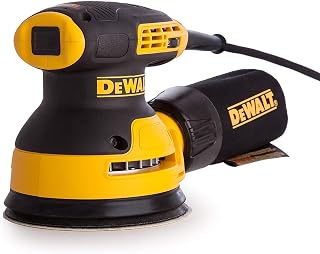


Choosing a DEWALT cordless sander is less straightforward than simply looking for the highest specification or the newest model. The range now includes 125mm random orbital sanders, 150mm random orbital sanders, quarter-sheet palm sanders, belt sanders and specialist drywall equipment. Each type is designed around a different sanding job, so the right choice depends on the material, surface area, finish required, dust-control arrangements and whether you already own compatible DEWALT batteries. For general woodworking, furniture preparation, paint removal and finishing, the 125mm random orbital format is one of the most versatile choices. The DEWALT DCW210 family uses an 18V XR brushless motor, a 125mm hook-and-loop platen and a 2.6mm orbit. The newer DCW211N-XJ and DCW230N-XJ models expand the cordless random-orbit range, with the latter moving to a larger 150mm pad and 5.0mm orbit for users who prioritise faster material removal over the compact handling of a 125mm machine. DEWALT's UK range also includes the DCW200 1/4-sheet palm sander for users who prefer conventional rectangular abrasive sheets, while the DCW220 is a substantially different proposition: an 18V XR cordless belt sander intended for heavier material removal. These model numbers deserve particular attention because they can appear similar in a search result while representing different generations and specifications. The established DCW210 is a 125mm 18V XR brushless random orbital sander with a 2.6mm orbit and variable-speed control. DEWALT lists the DCW210 at 0.93kg for the bare tool and specifies compatibility with its AirLock dust-extraction system. The newer DCW211N-XJ is also a 125mm 18V XR brushless random orbit sander. Its appearance and intended application make it a natural model to compare with the DCW210, but buyers should check the exact specification and package contents of the individual model rather than assuming that a newer model number automatically makes the older one unsuitable. The DCW230N-XJ is the more substantial step up. DEWALT describes it as a 150mm random orbital sander with a 5.0mm random-orbital action. That combination is aimed at efficient material removal across larger surfaces, making it particularly relevant to demanding workshop and site applications where sanding speed is more important than the compact footprint of a 125mm machine. A 125mm sander is easier to position on relatively small components and is a sensible format for general-purpose woodworking. Abrasive discs in this size are widely used, and the smaller pad can be easier to control around furniture components, cabinet parts, doors and narrower workpieces. The DCW210's 2.6mm orbit also illustrates an important point about sanding specifications: a larger numerical specification is not automatically better. Orbit diameter affects the character of the sanding action, and a smaller orbit can be advantageous when controlled finishing is more important than maximum stock removal. The 150mm DCW230 is worth considering when the work involves broad timber panels, large furniture components or other sizeable surfaces. Its 5.0mm random-orbit action is designed to remove material rapidly while still producing a smooth, swirl-free finish when the appropriate abrasive and technique are used. DEWALT positions the model for both workshop and onsite use. The trade-off is straightforward: a larger sanding pad and more aggressive orbit can be excellent for productivity, but they do not necessarily make the tool the better choice for intricate or confined work. A random orbital sander combines a rotating sanding pad with an orbital movement. The irregular sanding path helps reduce the obvious directional scratch pattern associated with conventional orbital sanding when the machine is used correctly. This makes a random orbital sander particularly useful for progressing through abrasive grades before a final finish. The result depends on considerably more than the tool itself. Abrasive quality, grit selection, pressure, sanding speed, extraction, pad condition and the material being worked all influence the finished surface. Orbit diameter describes how far the sanding action moves from its central position. A larger orbit generally favours faster material removal, whereas a smaller orbit can provide greater control for finishing. DEWALT specifies a 2.6mm orbit for the DCW210. Its newer 150mm DCW230 uses a 5.0mm random-orbit action. These figures should therefore be treated as meaningful differences in intended use rather than minor variations in specification. Brushless motors are particularly useful in cordless tools because there are no conventional motor brushes making physical contact with the rotating assembly. In practical terms, manufacturers can design brushless systems for efficiency, durability and controlled electronic operation. DEWALT describes its cordless sanders as using brushless motor technology, with the DCW210 and DCW230 ranges specifically marketed around efficiency and extended runtime. That does not mean every brushless sander will deliver identical battery life: abrasive load, grit, material, pressure, battery capacity and working technique all affect actual runtime. One of the most important buying decisions is whether to purchase a bare tool or a kit containing batteries and a charger. A tool-only model is normally the logical choice for someone who already owns compatible DEWALT 18V XR batteries and a charger. It avoids paying for duplicate batteries and can make it easier to build a collection of cordless tools around one battery platform. A complete kit can make more sense for someone entering the DEWALT 18V system. For example, DEWALT lists the DCW210P2-GB as a package containing the sander, two 18V 5.0Ah XR battery packs, a charger, a dust bag and TSTAK storage. Exact contents vary by product suffix and market, so the contents shown for the specific UK model should always be checked before purchase. This is a common mistake when researching cordless power tools. Two apparently similar listings can represent completely different purchases. One may contain only the machine, while another may include one or two batteries, a charger, a dust bag and storage. For a meaningful comparison, calculate the complete system cost. If compatible batteries and a charger are already in your workshop, the tool-only option may provide better overall value. If not, the initial kit price needs to be assessed alongside the cost of obtaining the required battery and charging equipment separately. Pad diameter affects both productivity and handling. A 150mm pad covers more surface area per pass, which can be useful on large panels. A 125mm pad is more compact and remains a highly versatile size for general woodworking. Do not assume that abrasives are interchangeable between sizes. A 150mm sander requires appropriately sized discs, while a 125mm machine requires 125mm-compatible abrasives. Sanding produces fine dust, and effective extraction should be considered part of the tool rather than an optional convenience. DEWALT's cordless sanders provide dust-management options, including dust bags and AirLock-compatible connections on relevant models. The DCW210, for example, can be used with its fabric dust bag or connected to a compatible extractor through the AirLock system. DEWALT also specifies direct AirLock compatibility on the DCW200 and other cordless sanding equipment. For regular workshop use, a suitable extractor can be considerably more practical than relying solely on a small collection bag. Extraction can also help keep the abrasive and work surface clearer during sanding. AirLock is DEWALT's connection system for attaching compatible extraction equipment to tools. Buyers should distinguish between the tool having an AirLock-compatible outlet and an extractor being supplied with the sander. They are separate considerations. If dust extraction is a priority, check the complete connection arrangement before buying. This includes the sander outlet, extractor, hose, adaptor requirements and whether the required accessories are included with the particular product package. The DCW200 deserves consideration because a quarter-sheet palm sander behaves differently from a random orbital sander. Instead of buying hook-and-loop circular discs, the user works with rectangular quarter-sheet abrasive material. DEWALT specifies a seven-speed variable dial on the DCW200, with a range of 8,000 to 13,500 orbits per minute. It also uses an AirLock-compatible dust port and can connect with compatible DEWALT dust extraction equipment. This format can appeal to users who already keep sheets of abrasive paper in their workshop or who prefer the handling characteristics of a palm sander. It should not, however, be judged solely by the maximum OPM figure. The sanding action, pad design and abrasive format are equally important. The DEWALT DCW220 is in a different category from the DCW210 and DCW230. It uses a 75 x 533mm sanding belt and is designed for applications such as carpentry, renovation and general contracting. DEWALT lists a brushless 18V XR motor, variable-speed control, a five-position speed selection dial and a quick-release belt-change system. DEWALT gives the DCW220 a tool weight of 3kg and lists an 802W maximum output figure. It also provides a dust port with a swivel adapter for connection to an AirLock system or a standard 35mm dust extractor. A belt sander is particularly useful when substantial quantities of material need to be removed. It is therefore better thought of as a specialist high-removal machine rather than an alternative to a small finishing sander. The aggressive sanding action that makes a belt sander productive can also remove material quickly enough to create unwanted hollows, uneven edges or damaged corners if it is used carelessly. For final preparation and fine finishing, a random orbital sander is usually easier to control. For many woodworking projects, the most useful combination is not choosing between the two but understanding where each tool fits into the sanding sequence. Variable speed is valuable because different materials and sanding stages respond differently to sanding speed. Higher speeds can be useful for productive material removal, while reducing speed can provide greater control when working on delicate surfaces or heat-sensitive finishes. The DCW210 has variable-speed control, while the DCW200 uses a seven-position speed dial covering 8,000 to 13,500 OPM. The DCW220 belt sander adds variable-speed control through its trigger and a five-speed selection dial. When comparing products, look for the ability to control speed rather than simply selecting the model with the highest advertised maximum. The useful speed range is more relevant to real-world versatility. Sanding can involve long periods of repetitive movement, making ergonomics an important consideration. A theoretically powerful sander can become tiring if it is difficult to control or transmits excessive vibration through the hands and arms. DEWALT lists a 0.93kg bare-tool weight for the DCW210, while the DCW220 belt sander is listed at 3kg. These figures illustrate why comparing tools solely by voltage or motor technology can be misleading: different sanding formats have very different physical requirements. Also remember that the working weight of a cordless sander increases once a battery is attached. Battery size can therefore influence balance and fatigue as well as runtime. The DCW210 incorporates a dual-plane counter-balance and DEWALT specifies a vibration-emission value of 4.37m/s². These figures provide useful technical information for comparison, but they should not be treated as a guarantee of how comfortable every individual will find the tool. Grip, pressure, work position and duration all influence perceived fatigue. The sander is only one part of the sanding system. Abrasive grit has a major effect on both speed and finish. There is no single grit progression that works for every material. The best sequence depends on the starting condition, timber species, coating, desired finish and whether the surface will subsequently be painted or otherwise treated. Even a good random orbital sander can leave visible marks if the sanding process is poorly controlled. Common causes include using an unsuitable abrasive, skipping too many grit stages, applying excessive pressure, allowing a worn disc to remain on the tool or moving too quickly between passes. Random orbital sanders are highly versatile for timber, but the correct grit progression depends on the condition of the surface. When removing substantial defects, a more aggressive sanding stage may be required before progressively finer abrasives are used. Paint removal requires careful control because the abrasive can clog rapidly. Dust extraction, appropriate abrasive selection and avoiding unnecessary pressure become especially important. Veneered panels require more caution because the decorative layer can be relatively thin. Aggressive sanding or prolonged work in one location can remove more material than intended. A controllable random orbital sander can be useful, but technique matters at least as much as the machine. Not every sanding disc or sanding machine is appropriate for metalwork. Abrasive compatibility, heat generation, contamination and the desired surface condition should all be considered before using a woodworking-oriented sanding setup on metal. Large drywall surfaces are better served by a dedicated drywall sander. DEWALT's DCE800 is an 18V XR brushless 225mm drywall sander with variable-speed control, a telescopic shaft and articulating head. DEWALT lists a 700–1,200 RPM no-load speed and a 3.9kg product weight. DEWALT model numbers often include suffixes that identify the configuration rather than a completely different tool. For example, an N or NT designation can indicate a bare-tool or storage configuration, while a P2 designation can identify a package containing batteries and a charger. Do not assume that two listings with nearly identical model names contain the same accessories. The safest approach is to compare the exact model code, included items, battery capacity, charger and storage case before making a buying decision. A bare tool can look attractive when compared with complete kits, but the apparent saving may disappear if batteries and a charger also need to be purchased. A larger pad or more aggressive orbit is not automatically an advantage for delicate work. Matching the sanding action to the application is more important than choosing the biggest specification. A small dust bag may be sufficient for occasional work, but regular sanding can justify a compatible extractor. Buyers should consider the entire dust-management arrangement before selecting a machine. OPM should not be viewed in isolation. A 1/4-sheet palm sander, 125mm random orbital sander and belt sander produce fundamentally different sanding actions, so their speed figures are not directly equivalent measures of performance. Newer DEWALT models can introduce useful improvements, but the best purchase remains the machine that matches the work. An established 125mm model can still be more appropriate than a larger, newer sander for someone primarily working on furniture or smaller components. Cordless sanding offers obvious freedom of movement. There is no mains cable to trail across a workbench or worksite, which can be especially convenient for installation work and locations where mains power is inconvenient. The trade-off is that cordless operation introduces battery management. A corded machine does not require the same charging routine, and a mains-powered model can be attractive for prolonged workshop sanding where uninterrupted operation is more important than portability. DEWALT still lists the corded DWE6423 125mm random orbital sander alongside its cordless models. It uses a 280W motor, a 2.6mm orbit and a speed range of 8,000–12,000 OPM, providing a useful benchmark when comparing cordless convenience against mains operation. A cordless random orbital sander is not a universal replacement for every sanding machine. Detail sanders can reach awkward corners more effectively, belt sanders remove material faster, sheet sanders suit users who prefer rectangular abrasive paper, and dedicated drywall sanders are designed for large wall and ceiling surfaces. For occasional workshop sanding where portability is irrelevant, a corded machine may also offer a simpler solution. The right buying decision should therefore start with the sanding task rather than the brand or battery voltage. Regular cleaning can help maintain consistent sanding performance. Fine dust can accumulate around switches, vents, pad interfaces and extraction connections, so the machine should be kept clean in accordance with the manufacturer's instructions. Fine sanding dust should not be treated as harmless simply because the job is relatively quiet or low impact. Suitable respiratory protection, eye protection and effective dust extraction should be considered according to the material being sanded and the working environment. Always follow the manufacturer's operating instructions and the safety guidance applicable to the material. Particular care is needed when sanding old coatings, treated materials or surfaces where the composition is uncertain. Keep both the workpiece and the sander under control, avoid excessive pressure, and make sure the abrasive is correctly fitted before starting work. The cheapest listing is not necessarily the best-value purchase. A useful comparison considers the complete ownership package. A 125mm random orbital model is the most broadly useful format for many general woodworking applications. The DCW210 family is built around a 125mm pad and 2.6mm orbit, while the newer DCW211N-XJ is another 125mm cordless random-orbit option in the current UK range. The best choice depends on the exact specification, package contents and price available when you buy. Yes, provided its specification and current price make sense for the intended work. It remains a 125mm 18V XR brushless random orbital design with a 2.6mm orbit, variable speed and dust-extraction compatibility. Buyers should compare it with the newer 125mm DCW211N-XJ before deciding. Not universally. A 150mm machine can be advantageous on larger surfaces and can offer more aggressive sanding action, while a 125mm machine is generally easier to position on smaller workpieces. The DCW230 uses a 150mm pad and 5.0mm random-orbit action, whereas the DCW210 uses a 125mm pad and 2.6mm orbit. A random orbital sander uses a circular abrasive disc and combines rotational and orbital movement. A 1/4-sheet palm sander uses rectangular abrasive sheets and a different sanding action. DEWALT's DCW200 is the 18V XR brushless 1/4-sheet option, with a seven-speed dial rated from 8,000 to 13,500 OPM. Not necessarily for every occasional task, but effective extraction is highly desirable for regular sanding. DEWALT provides dust bags and AirLock-compatible extraction arrangements on several cordless sanding models, allowing users to choose between onboard collection and compatible extraction equipment. DEWALT describes its 18V XR platform as supporting a broad range of compatible solutions. However, buyers should still check the manufacturer's compatibility information for the exact tool and battery combination rather than assuming that every battery configuration is suitable for every product. There is no single correct grit. Start with a grit appropriate to the condition of the surface and progress through finer grades as required. Using excessively coarse abrasive on a delicate surface can create unnecessary scratches, while using an excessively fine grit too early can make material removal unnecessarily slow. It can be used for suitable paint-removal and surface-preparation tasks, but the appropriate abrasive, speed, extraction and technique depend on the coating and substrate. Extra care is required with old or unknown coatings because sanding can generate hazardous dust. A belt sander is specifically designed for aggressive material removal and is therefore better suited to jobs where substantial stock needs to be removed. DEWALT's DCW220 uses a 75 x 533mm belt and provides variable-speed control. It should not, however, be regarded as a direct replacement for a random orbital finishing sander. Compare sanding format, pad size, orbit diameter, speed control, weight, vibration, battery requirements, dust extraction, abrasive availability and included accessories. The exact model suffix is also important because kit contents can vary considerably. DEWALT positions its XR cordless sanding tools for professional and demanding applications, but suitability still depends on the particular task. A professional user should consider expected duty cycle, extraction, battery availability, ergonomics, abrasive consumption and the type of sanding being performed rather than relying on the brand name alone. The best DEWALT cordless sander is the one whose sanding action, pad size, battery arrangement and dust-management system fit the work you actually do. For a versatile general-purpose machine, the 125mm random orbital category remains particularly important. The DCW210 provides a well-established 2.6mm-orbit format, while newer options such as the DCW211N-XJ and larger DCW230N-XJ broaden the current cordless range. For users who prefer sheet abrasives, the DCW200 provides a different approach. For aggressive stock removal, the DCW220 belt sander is the specialist choice, while the DCE800 is intended for large drywall surfaces rather than ordinary woodworking. Before buying, compare the exact UK model code, included batteries, charger, storage, abrasive format, dust-extraction compatibility and current specifications. Then compare today's prices and verified customer feedback from reputable retailers. This approach is more useful than selecting a sander purely because it has the highest advertised speed, largest battery or newest model number. Editorial note: Product specifications, model availability and package contents can change. The manufacturer information for the exact UK model should be checked before purchase, particularly where similarly named DEWALT variants are being compared.DEWALT Cordless Sanders: What You Need to Know Before Buying
Best DEWALT Cordless Sander Type for Different Jobs
DEWALT DCW210 vs DCW211 vs DCW230
When the DCW210 format makes more sense
When the DCW230 makes more sense
Understanding Random Orbital Sanding
What the orbit diameter means
Why Brushless Motors Matter in a Cordless Sander
Battery Choice: Tool-Only or Full Kit?
Do not compare bare-tool prices with kit prices
125mm vs 150mm Sanding Pads
Dust Extraction Is a Major Buying Consideration
AirLock and extractor compatibility
DEWALT DCW200 1/4-Sheet Sander vs Random Orbital Models
DEWALT Cordless Belt Sander: When You Need More Material Removal
Why you should not use a belt sander for every job
Speed Control: Why Maximum OPM Is Not Everything
Weight, Balance and Vibration
Counter-balancing
Choosing the Right Abrasive Grit
How to Avoid Sanding Swirl Marks
Sanding Different Materials
Solid timber
Painted wood
Veneer
Metal
Plasterboard and joint compound
Important Differences Between Tool Suffixes
DEWALT Cordless Sander Specifications Worth Comparing
Common Buying Mistakes
Buying a cordless sander without owning a battery
Choosing the most powerful-looking model for light finishing
Ignoring extraction
Comparing OPM figures between different sanding technologies
Assuming newer means better for every job
DEWALT Cordless Sanders vs Corded Sanders
Who Should Buy a DEWALT Cordless Sander?
Who May Be Better Served by Another Type of Sander?
Maintenance and Care
Safety Considerations When Using a Cordless Sander
How to Compare DEWALT Cordless Sanders by Value
What to Check Before Ordering
DEWALT Cordless Sander Buying Checklist
Frequently Asked Questions About DEWALT Cordless Sanders
Which DEWALT cordless sander is best for general woodworking?
Is the DEWALT DCW210 still worth considering?
Is a 150mm random orbital sander better than a 125mm model?
What is the difference between a random orbital sander and a 1/4-sheet sander?
Does a cordless sander need a dust extractor?
Are DEWALT 18V XR batteries interchangeable between tools?
What grit should I use with a DEWALT random orbital sander?
Can a random orbital sander remove paint?
Is a cordless belt sander better for removing material quickly?
What should I compare besides price?
Are DEWALT cordless sanders suitable for professional use?
Final Buying Advice for 2026