

Our experts reviewed the latest {category_name } to help you compare quality, performance, durability and overall value before making your purchase.


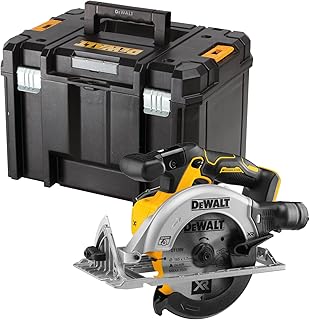


Choosing a DEWALT cordless plunge saw is less straightforward than simply selecting the highest-powered model. The important questions are whether you need a genuine plunge-cutting saw, which battery platform suits your existing tools, whether guide rails are included, how much cutting depth you require, and how frequently you expect to make long, accurate sheet-material cuts. For the UK market, the key distinction is particularly important because DEWALT's current range includes both a dedicated cordless plunge saw and cordless circular saws that are compatible with guide rails. These tools can overlap in some applications, but they are not interchangeable in every respect. The current DEWALT UK catalogue lists the 54V XR FLEXVOLT DCS520 as its cordless 165mm plunge-saw platform. The DCS520NT-XJ is supplied as a bare unit, while the DCS520T2-GB package includes two 6Ah FLEXVOLT batteries, a charger and a TSTAK case. DEWALT also lists several corded DWS520 plunge-saw configurations, but those are outside a cordless-only comparison. This means that a sensible buying decision should focus less on creating an artificial ranking of numerous DEWALT cordless plunge saws and more on comparing the available DCS520 configurations, understanding the alternative DCS572 rail-compatible circular saw, and deciding which setup best matches the work you actually do. The DCS520 is specified with a 165mm blade, variable no-load speed of 2,500–4,200rpm, a 20mm blade bore and a stated maximum depth of cut of 59mm at 90 degrees without the rail. DEWALT specifies 55mm at 90 degrees with the rail and 40mm at 45 degrees with the rail. The DCS520 is DEWALT's 54V XR FLEXVOLT cordless plunge-saw solution for trimming, plunge cutting and sheet-material work. It uses a brushless motor and a 165mm 42-tooth blade, and DEWALT states that it incorporates anti-kickback functionality, guide-rail compatibility, variable speed, rail adjustment and dust-extraction features. Its defining advantage is not simply battery power. It is the combination of cordless operation and a proper plunge-saw mechanism. That matters when the first cut must begin in the middle of a board or panel rather than at an exposed edge. A conventional circular saw is normally most comfortable when its blade enters from an edge. A plunge saw allows the operator to position the machine over the material, set the intended cutting depth and lower the blade into the workpiece. This makes the format particularly useful for worktops, doors, panels, flooring materials and large sheet goods where an edge-starting cut is impractical. Specifications can vary between individual kit versions and between measurements taken with and without a guide rail, so the exact configuration should always be checked before purchase. For most UK buyers, the most useful comparison is not between different cordless plunge-saw designs but between the available DCS520 package configurations. The DCS520NT-XJ is the tool-only version. DEWALT lists it with the 165mm plunge saw, 42-tooth blade, dust-extraction spout, hex key and TSTAK VI heavy-duty kitbox. Batteries and charger are sold separately. This is normally the more logical format for an established DEWALT user who already owns suitable FLEXVOLT batteries and charging equipment. It avoids paying for duplicate power-system components and allows the saw to be added to an existing cordless tool collection. The important caveat is that a bare tool is only genuinely economical if the batteries you already own are appropriate for the DCS520. If you need to buy batteries and a charger separately, the apparent saving compared with a complete kit may become much smaller. The DCS520T2-GB includes the 54V XR FLEXVOLT plunge saw, two 6Ah FLEXVOLT batteries, a 6A multi-voltage charger and a TSTAK VI kitbox, alongside the blade and other standard accessories. DEWALT specifies the same 165mm blade format and lists the saw with a 1450W power output. This configuration makes more sense for a buyer entering the FLEXVOLT plunge-saw system rather than someone who already has an adequate battery collection. When comparing prices, do not compare the bare tool against a full kit as though they were equivalent products. The kit contains substantial additional equipment. A proper comparison should separate the cost of the saw itself from the replacement value of batteries, charger and storage. Yes. This distinction is worth making because DEWALT also sells cordless rail-compatible circular saws that may appear in searches for track saws or plunge saws. The DCS520 is explicitly described by DEWALT as a plunge saw and has a plunge mechanism designed for controlled entry into the workpiece. By contrast, the 18V XR DCS572 is described as a rail-compatible circular saw. It can run on DEWALT guide rails and is capable of accurate guided cuts, but it should not automatically be treated as a direct substitute for a dedicated plunge saw. That difference becomes important if your work routinely involves starting cuts in the middle of a panel, cutting apertures or trimming installed materials where an edge-starting circular saw would be inconvenient. The DCS572 deserves consideration because it is a lighter 18V cordless alternative for users whose priority is guided circular-saw work rather than dedicated plunge cutting. DEWALT's published figures show that the maximum cutting depths are surprisingly close despite the different tool designs. The major buying distinction is therefore the mechanism, battery platform and intended cutting style rather than simply the headline depth figure. The DCS572 is specified by DEWALT for general-purpose ripping, cross-cutting and bevelling, with bevel adjustment up to 57 degrees, a brushless motor, AirLock compatibility and a dust blower. Battery voltage should not be treated as a simple quality ranking. The useful question is whether the power system is appropriate for the workload. DEWALT's FLEXVOLT system is designed to provide 54V operation for higher-demand tools while retaining compatibility with DEWALT's 18V XR ecosystem. DEWALT describes FLEXVOLT batteries as switching their output according to the tool in which they are used and states that they are backwards compatible with DEWALT 18V XR products. For a plunge saw, the attraction is sustained cutting performance when working through substantial sheet materials or repeated cuts. The benefit becomes more relevant when the saw is being used professionally or for long cutting sessions rather than occasional DIY work. However, buying into a higher-voltage system solely because the number is larger is not necessarily sensible. Batteries, chargers and tool weight all form part of the ownership equation. If your other cordless tools are predominantly 18V XR, the DCS572 may provide greater ecosystem convenience for conventional guided circular-saw work. A plunge saw is only as useful as the guide system supporting it. Accurate long cuts depend on the rail being correctly positioned, securely supported and maintained in good condition. DEWALT currently lists 1m, 1.5m and 2.6m guide rails for compatible plunge and rail-compatible saws. The manufacturer describes the rails as having low-friction strips for smooth movement, high-friction strips to help secure the rail to the material, and edge strips intended to reduce splintering and tear-out. A 1m rail is practical for shorter boards, compact workpieces, doors and jobs where portability is more important than maximum cutting length. It is also easier to transport and store than a long rail. A 1.5m rail is a useful general-purpose compromise. It gives more cutting length than a 1m rail without becoming as awkward to handle as a very long rail. A 2.6m rail is aimed at long, straight cuts across large sheets and similar workpieces. It can be especially useful where the objective is to complete a long cut without repositioning the guide system midway through the operation. DEWALT specifies its 2.6m rail for use with the DCS520 and several other compatible plunge or rail-compatible saws. The saw itself is only one part of cutting performance. Blade geometry has a major effect on finish quality, cutting speed, material suitability and the amount of tear-out. The DCS520's supplied 42-tooth blade is oriented towards a relatively fine cut. This is particularly relevant when the visible surface of a panel matters and when clean edges are more important than maximum rough-cut speed. DEWALT specifically describes the supplied 42-tooth blade as providing a fine and accurate finish with reduced breakout in laminates. A higher tooth-count blade is not automatically better for every material. More teeth can produce a smoother finish, but the correct choice depends on the material, feed rate, blade geometry and the type of cut being made. Do not assume that every 165mm blade is suitable simply because the diameter matches. Bore size, tooth geometry, kerf, application rating and compatibility with the saw must also be checked. Cutting-depth specifications require careful interpretation because a saw's maximum depth is not necessarily its ideal operating depth. The DCS520 is specified at 59mm at 90 degrees without the rail. With the guide rail fitted, the published figure becomes 55mm at 90 degrees. At 45 degrees with the rail, DEWALT specifies 40mm. The reduction with the rail is normal for this type of system because the rail occupies part of the available cutting-depth geometry. When comparing plunge saws, always compare like-for-like figures: with rail against with rail, and at the same cutting angle. For typical sheet materials, the DCS520 offers ample capacity. If you routinely need to cut significantly thicker stock, however, a 165mm plunge saw may not be the correct tool category regardless of its battery power. Dust extraction is not merely a convenience feature. It can improve visibility around the cut, reduce airborne dust and make workshop clean-up substantially easier. DEWALT specifies an enclosed guard on the DCS520 and states a 90% dust-extraction capability. The saw also has direct compatibility with the DEWALT AirLock system. Actual extraction performance depends on more than the saw. The extractor, hose, filter condition, connections, material and cutting technique all influence the amount of dust captured. For professional indoor work, the extractor should therefore be considered part of the cutting system rather than an optional afterthought. A powerful saw paired with inadequate extraction can still produce an unnecessarily dusty working environment. The current DCS520NT-XJ specification includes Wireless Tool Control, allowing compatible DEWALT equipment to interact without a conventional wired connection. DEWALT specifically describes this functionality as enabling cordless activation of a compatible DEWALT dust extractor. This is most useful to users who already have compatible extraction equipment and want the extractor to operate as part of a coordinated cordless setup. If you do not own compatible equipment, it should not be a deciding factor on its own. When comparing features, prioritise functions that affect your actual workflow. A plunge mechanism, accurate rail adjustment, appropriate battery capacity and effective extraction are likely to have a much greater practical effect than a connectivity feature that you never use. DEWALT states that the DCS520's anti-kickback function is designed to stop the saw moving backwards along the rail and to help prevent the saw from climbing out of the workpiece during plunge cuts. This is an important feature because plunge cutting introduces different handling considerations from ordinary edge-starting circular-saw work. Nevertheless, an anti-kickback system should never be treated as a substitute for correct technique. Battery capacity should be considered alongside the type of work rather than viewed as a simple indicator of saw quality. A larger-capacity battery can offer longer operating time between charges, but it can also add weight. On a plunge saw, that extra weight may be less important during long straight cuts than during repeated positioning and handling, but it remains part of the overall ergonomics. The DCS520T2-GB package discussed here is supplied with two 6Ah FLEXVOLT batteries. Two batteries are particularly useful for continuous work because one can be in use while the other is being charged, subject to charging conditions and workload. For occasional DIY use, however, buying a large battery bundle may be unnecessary if a suitable battery is already available. DEWALT lists the DCS520 at 4.7kg. That figure should be interpreted in context. A plunge saw is normally used with a guide rail, so the operator is not carrying the entire tool unsupported for the duration of every cut. Even so, weight becomes noticeable during setup, overhead work, repeated repositioning and transportation. Balance is often more important than headline weight. A tool that sits naturally on the rail and allows a stable hand position can feel easier to control than a lighter machine with an awkward centre of gravity. For buyers who regularly work on large panels, the interaction between saw, battery, rail and material should be considered as one system. A guide rail does not automatically guarantee a perfect cut. The saw must be adjusted correctly so that it runs smoothly without excessive play. DEWALT specifically highlights rail adjustment on the DCS520 as a feature for accurate fitting to the guide rail. Before making an important cut, check that: Small setup errors can be magnified over long cuts. A few millimetres of movement at the rail can become obvious when cutting the full length of a large panel. The DCS572 is a capable rail-compatible circular saw, but if your work involves regular mid-panel plunge cuts, the dedicated DCS520 is the more appropriate design. A bare DCS520NT-XJ and a DCS520T2-GB are not equivalent packages. The latter includes batteries, charger and storage. Compare like-for-like equipment before deciding which offers better value. A plunge saw without an appropriate guide rail may not deliver the workflow you expected. Check whether the package includes rails and, if it does not, budget for the rail length you actually need. Higher capacity can increase runtime, but it can also increase weight and cost. Match the battery to the workload and your existing DEWALT ecosystem. A maximum depth figure does not tell you how well the machine suits fine panel work, long guided cuts, plunge entry, extraction or repeated professional use. Check the blade diameter, bore, application and replacement options before buying. The cost and suitability of consumables can have a meaningful effect on long-term ownership. DEWALT's catalogue includes both dedicated plunge saws and rail-compatible circular saws. Identify the actual mechanism and intended application rather than relying on the term “track saw” alone. The DCS520 is particularly well suited to tradespeople, serious DIY users, joiners, kitchen installers, furniture makers and other users who regularly need accurate guided cuts in sheet materials. It makes the strongest case where cordless operation is genuinely useful: renovation sites, mobile workshops, installations and environments where a mains lead would restrict movement or create an additional trip hazard. It is less compelling if your cutting requirements are limited to occasional rough timber cuts. In that situation, a conventional circular saw may provide all the functionality you need without the additional cost and complexity of a plunge-saw and rail system. The DCS572 can be a sensible alternative for DEWALT users whose priority is an 18V cordless circular saw that can also work with guide rails. DEWALT describes the DCS572 as a general-purpose saw for ripping, cross-cutting and bevelling, with rail compatibility and a 184mm blade. Its published specifications include a maximum 90-degree depth of 58mm without the rail and 54mm with the rail. The key question is therefore simple: do you need a plunge saw, or do you need a rail-compatible circular saw? If the answer is the former, compare DCS520 configurations. If the answer is the latter, the DCS572 becomes a more relevant product to investigate. For professional users, the purchase decision should extend beyond the initial tool price. A professional who already owns FLEXVOLT equipment may find the DCS520NT-XJ particularly logical, whereas someone starting a cordless platform may need to compare the total system cost of the DCS520T2-GB package. For DIY users, the answer depends heavily on the type of project. If you are building cabinets, installing a kitchen, cutting worktops or repeatedly sizing large panels, a plunge saw can transform the accuracy and convenience of the work. The ability to place the saw directly on a marked line and run it along a guide rail is considerably more controlled than attempting long freehand cuts with a conventional circular saw. If you only expect to cut a few timber boards or occasional sheet material, however, the complete plunge-saw ecosystem may be excessive. In that situation, compare the cost of the saw, batteries, charger, rail and replacement blades against how often those features will actually be used. Price comparisons can be misleading when sellers package the same underlying tool differently. Before deciding that one listing is cheaper, check: DEWALT's UK site currently identifies DCS520T2R-QW as discontinued while listing DCS520T2-GB and DCS520NT-XJ in its current product information. This is a useful reminder to check the exact model suffix rather than assuming that similarly named DCS520 listings contain the same equipment. Dust, resin and debris can interfere with smooth movement and affect positioning. Inspect the rail before important cuts and keep its working surfaces clean. A blunt or damaged blade increases resistance and can compromise finish quality. Replace or professionally sharpen blades according to their condition and application. Excessive play can affect accuracy, while excessive tightening can make the saw difficult to move smoothly. Use the manufacturer's adjustment procedure. Empty collection systems, clean filters as specified by the extractor manufacturer and inspect hoses and connectors for restrictions or damage. Store and charge FLEXVOLT batteries according to DEWALT's instructions. Avoid treating batteries as permanent consumables that can simply be left in unsuitable storage conditions. Regular cleaning is preferable to allowing dust and debris to build up around moving mechanisms, ventilation areas and adjustment points. Large panels can be awkward because even a highly accurate saw cannot compensate for a moving workpiece or poorly positioned rail. Support the sheet adequately so that the offcut does not pinch the blade during the cut. The support arrangement should also prevent excessive sagging. Before starting, consider where the saw and rail will travel and where the cut section will move once separated. Long rails can improve consistency, but they also require careful handling. A 2.6m rail is useful for long straight cuts, while shorter rails are easier to transport and store. DEWALT specifically lists its 1m, 1.5m and 2.6m rails as compatible with the DCS520. The DEWALT DCS520 is the principal dedicated cordless plunge-saw option in the current UK range. The most appropriate version depends on whether you need a bare tool or a complete kit with batteries and charger. Yes. The DCS520 is a 54V XR FLEXVOLT cordless plunge saw. DEWALT lists both bare-tool and battery-kit configurations in its UK product information. It depends on the model. The DCS520NT-XJ is a bare unit with batteries and charger sold separately, while the DCS520T2-GB includes two 6Ah FLEXVOLT batteries and a charger. The bare DCS520NT-XJ listing specifies the saw, blade, dust-extraction spout, hex key and TSTAK VI kitbox, but not a guide rail. DEWALT lists compatible guide rails separately in 1m, 1.5m and 2.6m lengths. Always check the contents of the exact kit or retailer listing before purchase. The DCS520 uses a 165mm blade with a 20mm bore. The referenced UK configuration is supplied with a 42-tooth blade. DEWALT specifies a maximum depth of 59mm at 90 degrees without the rail, 55mm at 90 degrees with the rail and 40mm at 45 degrees with the rail. The DCS572 is described by DEWALT as an 18V XR brushless rail-compatible circular saw, not as the dedicated DCS520 plunge-saw design. It can be used with DEWALT guide rails, making it relevant for guided straight cuts, but buyers who specifically require plunge cutting should compare it with the DCS520 rather than treating the two as identical tools. Neither is universally better. The DCS520 is the more appropriate choice when dedicated plunge cutting and the 54V FLEXVOLT platform are priorities. The DCS572 can be more suitable for an 18V XR user who primarily needs a conventional circular saw with guide-rail compatibility. Yes. DEWALT lists the DCS520 as compatible with its guide-rail system and identifies 1m, 1.5m and 2.6m rails for compatible applications. Yes. DEWALT describes the DCS520 as using a brushless motor designed for power, runtime, reliability and durability. Yes. DEWALT specifies an enclosed guard with a stated 90% dust-extraction capability and direct AirLock compatibility. Yes. DEWALT specifies a variable no-load speed range of 2,500–4,200rpm. A plunge saw is designed so the blade can be lowered into the material from above, allowing controlled mid-panel cuts. A track-compatible circular saw uses the rail primarily as a guide for straight cutting and may not provide the same dedicated plunge-cutting mechanism. This is why the DCS520 and DCS572 should be evaluated according to their actual design and intended use. It can be, particularly for users who regularly make accurate cuts in large sheet materials and value cordless mobility. For occasional rough cutting, a conventional circular saw may be sufficient. The right choice depends on the frequency of guided cuts, need for plunge entry, existing battery platform and total system cost. The DEWALT DCS520 remains the key model to consider if your requirement is specifically a cordless DEWALT plunge saw. Its 54V XR FLEXVOLT platform, 165mm blade, dedicated plunge mechanism, guide-rail compatibility, variable speed, anti-kickback functionality and extraction features make it a purpose-built solution for accurate guided cutting. The choice between the DCS520NT-XJ and DCS520T2-GB is primarily a question of system ownership. The bare DCS520NT-XJ is the logical configuration for users who already have suitable FLEXVOLT batteries and charging equipment. The DCS520T2-GB is the more complete option for buyers who need the saw, two 6Ah batteries, charger and storage together. The DCS572 should be considered separately rather than presented as an identical alternative. It is an 18V rail-compatible circular saw with a 184mm blade and is particularly relevant to users who want guided circular-saw cutting within the 18V XR ecosystem. Ultimately, the best DEWALT cordless cutting setup is the one that matches the job: DCS520 for dedicated plunge cutting, DCS572 for 18V rail-compatible circular-saw work, and the appropriate guide rail and battery configuration for the scale of the project. Product configurations, model suffixes, accessories and retailer availability can change. DEWALT's UK catalogue currently shows multiple DCS520 configurations and also identifies some older configurations as discontinued, so buyers should verify the exact model number, included accessories and current specification immediately before purchase. This guide is intended as independent buying information. Product specifications are based on manufacturer-published information and should be checked against the exact UK configuration being considered. It does not imply that the publisher manufactures, sells, supplies, warranties, repairs or provides customer support for any product discussed.DEWALT Cordless Plunge Saws: Buying Guide, Comparison and Expert Advice for 2026
Quick Answer: Which DEWALT Cordless Plunge Saw Should You Choose?
DEWALT DCS520 Cordless Plunge Saw: What You Are Actually Buying
Key DCS520 specifications
DCS520NT-XJ vs DCS520T2-GB
DEWALT DCS520NT-XJ Bare Unit
DEWALT DCS520T2-GB Complete Kit
Is the DCS520 Really a Cordless Plunge Saw?
DCS520 vs DCS572: Dedicated Plunge Saw or Rail-Compatible Circular Saw?
Choose the DCS520 when:
Choose the DCS572 when:
Why 54V FLEXVOLT Matters for a Plunge Saw
Guide Rails: The Part of the System Buyers Often Underestimate
When a 1m rail makes sense
When a 1.5m rail makes sense
When a 2.6m rail makes sense
Blade Choice: The Most Overlooked Performance Variable
Consider blade selection based on the job
Cutting Depth: What the Numbers Mean in Real Use
Dust Extraction and Workshop Cleanliness
Wireless Tool Control: Useful or Unnecessary?
Anti-Kickback Protection and Plunge-Saw Safety
Battery Capacity: 5Ah, 6Ah, 9Ah and Beyond
Weight and Ergonomics
Rail Adjustment and Cutting Accuracy
Common Buying Mistakes
1. Buying a circular saw when you actually need plunge cutting
2. Comparing bare tools with complete kits
3. Forgetting the guide rail
4. Choosing a battery purely on amp-hour rating
5. Looking only at maximum cutting depth
6. Ignoring blade availability
7. Assuming every DEWALT track saw is a plunge saw
What to Look for in a DEWALT Cordless Plunge Saw
Who Should Buy the DEWALT DCS520?
Who Should Consider the DCS572 Instead?
Professional Users: What Matters Most?
DIY Users: Is a Cordless Plunge Saw Worth It?
How to Compare DEWALT Cordless Plunge Saw Prices Properly
Maintenance Tips for a Cordless Plunge Saw
Keep the guide rail clean
Inspect the blade regularly
Check rail adjustment
Maintain extraction equipment
Look after batteries
Keep the saw free from accumulated dust
How to Get Cleaner Plunge-Saw Cuts
Using a Guide Rail on Large Sheets
DEWALT Cordless Plunge Saw Buying Checklist
Frequently Asked Questions
What is the best DEWALT cordless plunge saw in the UK?
Is the DEWALT DCS520 cordless?
Does the DEWALT DCS520 come with batteries?
Does the DCS520 include a guide rail?
What size blade does the DCS520 use?
How deep can the DCS520 cut?
Is the DCS572 a plunge saw?
Is the DCS520 better than the DCS572?
Can the DCS520 be used with DEWALT guide rails?
Is the DEWALT DCS520 brushless?
Does the DCS520 have dust extraction?
Does the DCS520 have variable speed?
What is the difference between a plunge saw and a track-compatible circular saw?
Is a cordless plunge saw worth buying?
Final Buying Verdict
Editorial Note on Specifications and 2026 Availability