

Our experts reviewed the latest {category_name } to help you compare quality, performance, durability and overall value before making your purchase.


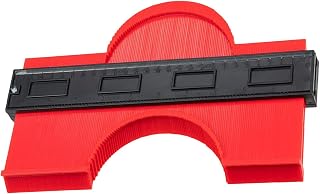

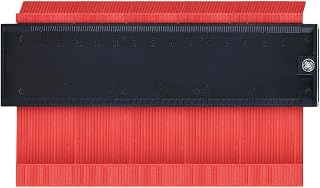


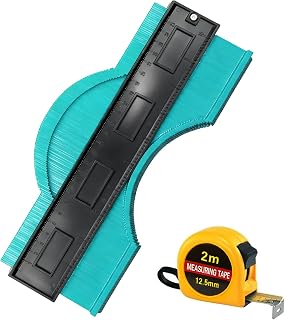


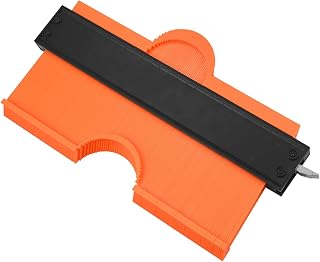


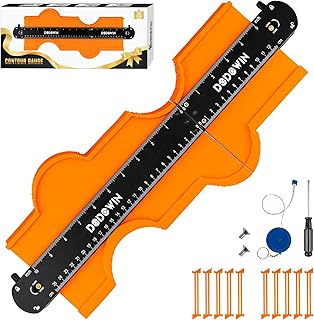

A contour gauge, also called a profile gauge or shape duplicator, is a specialised measuring and marking tool designed to reproduce irregular shapes. Instead of trying to measure a complicated curve, corner, pipe penetration or uneven edge with several separate measurements, you press the gauge against the profile and allow its individual pins to reproduce the shape. The resulting outline can then be transferred to another material for marking and cutting. For many DIY and trade applications, that simple principle can save considerable time. It is particularly useful when fitting laminate, vinyl flooring, tiles, worktops, skirting, trim, sheet material or other components around obstacles that are difficult to measure accurately with a conventional ruler or tape measure. The best contour gauge for your project is not necessarily the largest or most expensive model. Working width, profile depth, pin construction, locking mechanism, adjustment, rigidity and the type of material being copied all matter. A compact gauge may be preferable for narrow spaces, whereas a wider model can be much more useful when copying door frames, larger floorboard cut-outs or broad architectural profiles. Two specifications deserve particular attention when comparing profile gauges: maximum working width and maximum profile depth. They determine the physical size of the shape that the tool can reproduce. Working width describes how wide a profile the gauge can capture in one operation. A 130 mm gauge, for example, is suited to relatively compact shapes, while a 250 mm model provides substantially more coverage for wider obstacles. Do not confuse the overall dimensions of a contour gauge with its usable profile width. Manufacturers may publish overall product dimensions separately from the actual working width, so compare the stated working specification rather than relying on the size of the packaging or body of the tool. Profile depth describes how far the tracer pins can reproduce an indentation or projection. This becomes important when copying deep recesses, thick mouldings, irregular masonry or substantial obstacles. A gauge with insufficient pin depth can reproduce the general outline but fail to capture the full geometry of a deep profile. For flooring around pipes and relatively shallow obstacles, a standard model may be sufficient. More demanding applications can justify a deeper profile gauge. The pins are the working part of a contour gauge. Their movement creates the profile that you subsequently transfer to the workpiece, so the quality of the pin assembly has a direct bearing on ease of use and the clarity of the copied shape. Look for pins that move consistently without excessive looseness. The assembly should retain the shape once positioned, while still allowing the pins to respond smoothly when the gauge is pressed against an object. Pin material is another consideration. Plastic tracer pins are common and can be useful where a non-scratch contact surface is desirable. Sealey, for example, specifies non-scratch PS plastic pins on its SPG01 contour gauge. The number of pins can also provide useful context, but a larger pin count does not automatically make one gauge better than another. What matters is how closely the pin assembly follows the profile, how securely it can be locked and whether its resolution is appropriate for the shape you need to copy. A contour gauge is considerably more useful when the copied profile can be secured before the tool is moved to the workpiece. Without a reliable locking mechanism, individual pins can shift while the shape is being transferred, potentially changing the outline. Many current contour gauges therefore incorporate a lever or similar locking system. The wolfcraft Contour Gauge, for instance, uses a clamping lever to secure the tracer pins after the profile has been captured. Its published specification gives a working width of 130 mm and a working length, or profile depth, of 30 mm, with 91 tracer pins. When comparing models, consider whether the lock is easy to operate while holding the gauge in position. A mechanism that requires excessive force or is awkward to reach can be frustrating when working around flooring, walls or other restricted areas. There is no universal ideal size. The right choice depends on the dimensions of the profile you regularly expect to copy. Standard contour gauges are a practical choice for common DIY jobs such as copying small wall irregularities, fitting flooring around pipes and transferring profiles to trim or sheet material. Their smaller size can make them easier to position in confined spaces. A 130 mm working width is one example of a standard format. wolfcraft's 6949000 model is specified for profiles up to 130 mm wide and 30 mm deep. Larger gauges become useful when the obstacle is wider than a conventional profile gauge can capture. The wolfcraft Contour Gauge PRO is specified for profiles up to 250 mm wide and 58 mm deep. It also incorporates a telescopic rail that can extend to 700 mm for transferring the position of the captured contour onto the workpiece. That additional capacity can be particularly relevant to larger flooring cut-outs and door-frame work. However, buying a larger gauge simply because it has bigger specifications can be unnecessary if most of your projects involve small profiles. A larger tool may take up more storage space and can be less convenient where access is restricted. Laminate flooring: Copy irregular sections around pipes, door frames, walls and other obstacles before transferring the outline to the board. Vinyl flooring: Use a profile gauge to help reproduce awkward edges where a straight measurement does not describe the required cut. Tiling: Capture irregular shapes around pipes, corners and other obstructions before marking the tile. Woodworking: Transfer unusual profiles to timber, sheet material, trim and templates. Carpentry and joinery: Reproduce uneven surfaces where conventional square measurements are difficult to apply. Worktop fitting: Help establish an irregular outline before making a cut, while still checking the transferred line against the actual installation area. Metalwork and bodywork: Some profile gauges are specifically marketed for comparing or duplicating panel shapes and profiles. Although contour gauges are straightforward tools, technique has a noticeable effect on the quality of the transferred outline. Make sure the pins move freely and that the locking mechanism is released. If pins are already tight or unevenly positioned, reset the gauge before starting. Place the gauge against the object so that the full section you need is covered. Keep the body of the gauge aligned consistently with the intended cutting direction. A skewed starting position can make the transferred profile harder to interpret. Press the pins against the profile gradually rather than forcing the tool aggressively into the surface. The aim is to reproduce the shape rather than deform or disturb the object being copied. Once the contour has been captured, secure the pins using the supplied locking mechanism. This is particularly important if the gauge has to be moved any distance before the outline is transferred. Place the locked gauge against the workpiece and mark along the reproduced profile. Keep the gauge stable while marking. For larger boards, check the gauge's orientation and reference points before drawing the line. A contour gauge improves shape transfer, but it does not remove the need for judgement. Before cutting expensive flooring, timber, tile or sheet material, compare the marked outline with the actual installation area. Check clearances, orientation and the required finished fit. It is tempting to treat a contour gauge as an automatic precision-cutting solution, but that overstates what the tool does. The gauge captures and transfers a physical profile; the final accuracy also depends on positioning, pin movement, locking, marking technique and the accuracy of the cut itself. For this reason, published specifications should be interpreted alongside the practical design of the tool. A secure locking mechanism, consistent pin movement and adequate profile depth may be more valuable for a particular project than a headline claim about precision. Where a finished component must fit closely, use the contour gauge as part of a measuring and checking process rather than assuming that the copied outline can be cut without verification. Pin material is one of the more useful distinctions when comparing contour gauges. Plastic pins are widely used in consumer and DIY-oriented profile gauges. They can provide a lightweight design and may be preferable when the gauge needs to contact finished surfaces without unnecessarily hard contact. Sealey's SPG01, for example, specifies PS plastic pins described as non-scratch. For ordinary flooring, tiling, woodworking and home-improvement tasks, a plastic-pin design can be a sensible choice if the locking system is effective and the gauge has sufficient width and depth. Metal tracer pins can appeal to users looking for a more rigid or robust construction, but material alone should not determine the purchase. Consider the entire pin assembly, adjustment mechanism, locking system and intended application. For finished or easily marked surfaces, the contact material should always be considered before use. The objective is to copy the shape without causing unnecessary damage to the surface being measured. Flooring is one of the clearest use cases for a profile gauge because floorboards frequently have to be cut around objects that do not conform to a simple rectangle. Heating pipes are a particularly common example. The basic process is to capture the shape of the obstacle, lock the gauge, transfer the profile to the flooring material and then make the appropriate cut. wolfcraft specifically describes its contour gauge as suitable for transferring profiles around heating pipes and other obstacles when fitting laminate. For larger flooring applications, a wider gauge can be advantageous. wolfcraft's Contour Gauge PRO combines a 250 mm working width with a telescopic rail designed to assist with transferring the position of the contour, with the rail extending to a maximum of 700 mm. Tiles present a similar challenge because cutting around pipes, corners and irregular projections requires the shape to be transferred accurately before the tile is cut. A profile gauge can be useful for establishing the outline, but the type of tile and cutting method still matter. Hard porcelain, ceramic, natural stone and other materials can have different cutting requirements. The contour gauge only solves the measuring and marking stage; it does not replace a suitable tile-cutting method or appropriate safety precautions. Woodworkers can use contour gauges to copy existing profiles, create templates and reproduce irregular shapes. They are especially useful where the surface is not easily described using straight-line dimensions. For fine joinery, however, the gauge should be considered a profile-transfer aid rather than a substitute for a proper marking knife, straightedge, square, bevel gauge or template-making process. The more demanding the finished joint, the more important it becomes to verify the transferred profile before machining the final component. A tape measure is excellent for dimensions such as length, width and distance, but it cannot directly reproduce a complex curved or irregular outline. A ruler has the same limitation. A contour gauge addresses a different problem: it records the physical shape of an object. The tools therefore complement rather than replace one another. A good workflow may involve a tape measure for locating the obstacle, a contour gauge for copying its shape and a straightedge or square for establishing reference lines on the workpiece. A cardboard, paper or plywood template can also reproduce an irregular shape. The advantage of a contour gauge is speed and convenience when the profile needs to be captured directly from the object. A separate template can still be preferable when repeated identical cuts are required. Once a reliable template has been created and checked, it can potentially be used as a repeatable reference for multiple workpieces. The best method depends on whether the priority is quick one-off measurement or repeatability across a larger project. Choosing by width alone: A wide gauge is not automatically better if you mainly work in confined areas or copy small profiles. Ignoring profile depth: A gauge that is wide enough may still be unsuitable if its pins cannot reach the full depth of the shape. Overlooking the locking mechanism: If the pins cannot be held securely, transferring a complicated profile becomes more difficult. Assuming all pins behave identically: Construction quality and adjustment can affect how smoothly the gauge captures a profile. Buying the cheapest model without checking specifications: A lower purchase cost can be poor value if the gauge is too narrow, too shallow or difficult to lock. Buying an oversized gauge unnecessarily: Extra capacity has little value if your projects rarely require it. Cutting immediately after marking: Always check the transferred line against the actual obstacle before making an irreversible cut. Ignoring material thickness: When transferring a profile to flooring, sheet goods or another workpiece, consider where the gauge sits relative to the finished surface. Forgetting orientation: A copied shape can be transferred incorrectly if the gauge is flipped or rotated without considering the direction of the profile. Working width: Determines the maximum profile width that can be captured in one pass. Working depth: Indicates how deeply the pins can reproduce a profile. Pin count: Provides an indication of the density of the tracer assembly, although it should not be considered in isolation. Pin material: Consider plastic or metal construction according to the surfaces and applications involved. Locking system: Essential when the gauge must be moved after capturing the shape. Gauge rigidity: The body should remain stable while the profile is being captured and transferred. Adjustment: Some designs provide a means of controlling how firmly the pins hold their position. Transfer features: Larger or specialist models may include additional positioning rails or stops. Storage: Consider whether the gauge can be stored without the pins being damaged or unnecessarily disturbed. wolfcraft provides a useful example of why contour gauges should be compared according to application rather than brand name alone. Its standard Contour Gauge is specified at 130 mm working width and 30 mm working depth, while the Contour Gauge PRO is designed for larger profiles up to 250 mm wide and 58 mm deep. The PRO version also adds a telescopic positioning rail and adjustable holding load for the tracer pins. Those features are aimed at larger or more demanding profile-transfer jobs rather than simply making the basic concept different. This illustrates an important buying principle: compare the feature set with the job. Someone fitting a few small pieces of trim may have little reason to pay for features intended for wide flooring or large architectural profiles. Sealey is another established UK tool brand with a contour gauge in its range. The SPG01 is specified with a maximum profile length of 250 mm and maximum profile depth of 30 mm. It includes a locking mechanism for securing the pins and is described for flooring, tiling and metalwork applications as well as profile duplication. Its specifications demonstrate why width and depth should always be considered separately. A gauge can provide a relatively broad working length without offering the deeper profile capacity of a specialist large-depth model. Customer reviews can be useful when choosing a contour gauge, but individual ratings do not provide the complete picture. Look for recurring comments about the same practical characteristics rather than focusing solely on the overall score. Do reviewers consistently mention whether the pins move smoothly? Is the locking mechanism described as secure and easy to operate? Do users mention difficulty maintaining the copied profile? Are complaints related to a specific application rather than the product generally? Do buyers appear to be using the gauge within its stated width and depth limits? Are negative comments about durability supported by multiple independent reviewers? Does the product appear suitable for the material and profile you actually need to copy? It is also worth separating reviews of the tool itself from comments about delivery, packaging or retailer service. Those issues may matter when purchasing, but they do not necessarily tell you how effectively the contour gauge reproduces a profile. There is no single sensible budget for every buyer because contour gauges range from simple DIY tools to more specialised designs with larger working dimensions and additional transfer features. Instead of setting a price target first, identify the minimum specification required for the project. If a standard 130 mm gauge covers the profile and offers a suitable locking mechanism, paying for a much larger model may provide little practical benefit. Conversely, choosing a narrow gauge for a large flooring project simply to reduce the initial cost can create additional work and may require repeated measurements. When comparing today's prices, check the complete specification, included accessories and retailer information rather than selecting solely on headline price. Availability and pricing can change, so current retailer listings should be checked immediately before purchase. For occasional shape copying where the gauge can be held directly against the workpiece while marking, a lock may not always be essential. In practical terms, however, a locking mechanism is one of the most useful features available because it allows the captured shape to remain fixed while the tool is repositioned. This becomes particularly valuable when transferring a profile from a wall, pipe or floor obstacle to a separate board or tile. A clamping lever is used for this purpose on both the standard wolfcraft Contour Gauge and its PRO model. Contour gauges do not normally require complicated maintenance, but keeping the tracer assembly clean and free from debris helps preserve smooth movement. Dust from woodworking, tile cutting and flooring installation can accumulate around moving pins. Remove dust and loose debris after use. Do not force pins that appear obstructed. Store the gauge where the pins will not be crushed or bent. Release or position the locking mechanism according to the manufacturer's instructions when storing the tool. Inspect the pin assembly before an important project. Replace or repair damaged components only where the manufacturer provides an appropriate procedure or replacement part. Measure the widest profile you expect to copy. Estimate the deepest recess or projection that needs to be captured. Choose a gauge with enough working width and depth to cover the entire profile. Prioritise a dependable locking mechanism for profiles that must be transferred away from the original surface. Consider whether plastic or metal tracer pins are more appropriate for the surfaces involved. Check whether the body is rigid enough for the intended application. For large flooring or door-frame work, consider whether an extended positioning system would be useful. Compare manufacturer specifications rather than relying solely on marketplace titles. Read recent customer feedback for recurring comments about the mechanism, not just the overall star rating. Check current UK retailer pricing and availability immediately before ordering. A compact or standard contour gauge is generally the sensible starting point for occasional DIY work. Look for a practical working width, adequate depth and a locking mechanism rather than paying for specialist features you may never use. For flooring, prioritise a gauge that can comfortably capture the obstacles you encounter and hold the profile securely during transfer. Larger projects may benefit from a wider model or a design with additional positioning features. Choose according to the size and depth of the profiles you need to reproduce. A compact gauge can be convenient around individual pipes and corners, while larger installations may require greater width. Woodworkers should pay particular attention to profile definition, pin movement and the ability to hold a shape accurately. If the tool will be used to make repeatable components, consider creating and checking a separate template rather than relying on repeated direct transfers. A wide, deep contour gauge is the better choice when the standard format cannot capture the entire profile. The wolfcraft Contour Gauge PRO is an example of a model specifically designed around larger profiles, with a stated 250 mm working width and 58 mm working depth. A contour gauge is used to copy an irregular shape so that the outline can be transferred to another surface. Common applications include flooring, tiling, woodworking, joinery and fitting around pipes, corners and other obstacles. In everyday tool terminology, the terms are commonly used interchangeably. Both describe a tool that reproduces an irregular profile using a series of movable pins. They can reproduce irregular shapes effectively when used correctly, but the final result depends on the quality of the gauge, positioning, pin movement, locking, marking and cutting technique. A contour gauge should therefore be treated as a shape-transfer tool rather than an automatic guarantee of a perfect finished cut. Choose a working width that is greater than the widest profile you need to copy and a profile depth that exceeds the deepest section. If you regularly work with larger flooring or architectural profiles, a wider model may be worthwhile. Yes. Plastic construction is common in contour gauges and can be entirely appropriate for DIY, flooring, tiling and woodworking. The important factors are the quality of the pin assembly, locking mechanism, working dimensions and overall rigidity. Yes. Contour gauges are useful for transferring irregular outlines to tiles before cutting. The gauge itself does not cut the tile, so the appropriate cutting method must still be selected for the tile material. Yes. This is one of the most common applications. wolfcraft specifically describes its contour gauge for transferring profiles around obstacles such as heating pipes when fitting laminate. For most profile-transfer work, a locking mechanism is a useful advantage because it holds the pins in position while the gauge is moved from the object to the workpiece. The principal difference is working width. A 130 mm gauge is suited to narrower profiles, whereas a 250 mm model can capture a considerably wider shape in one operation. Depth can differ as well, so both specifications should be checked rather than assuming that width alone determines capacity. Only within its specified profile depth. For example, wolfcraft specifies 30 mm working length on its standard 6949000 model and 58 mm on the Contour Gauge PRO. Not necessarily. The best model is the one that provides enough capacity for your work without adding unnecessary bulk or cost. Oversizing the tool can be counterproductive for small or confined profiles. Confirm that the gauge was positioned correctly, the pins remained locked, the profile has been transferred in the correct orientation and the marked line matches the actual obstacle. This final check is particularly important when cutting expensive or difficult-to-replace materials. The most useful contour gauge is the one that matches the dimensions and complexity of the profiles you actually encounter. For general DIY, a standard-width locking gauge can cover many common applications. For larger flooring, door-frame and architectural profiles, a wider and deeper model can offer a meaningful practical advantage. When comparing the best contour gauges in the UK, concentrate on working width, profile depth, pin construction, locking security, body rigidity and any positioning features rather than relying on price or star ratings alone. Current manufacturer specifications are especially valuable because marketplace listings can use inconsistent descriptions. For a straightforward 130 mm-class option, the wolfcraft Contour Gauge provides a clearly defined 130 mm working width, 30 mm working depth and 91 tracer pins. For substantially larger profiles, the wolfcraft Contour Gauge PRO increases capacity to 250 mm width and 58 mm depth and adds a telescopic positioning rail. Sealey's SPG01 provides another comparison point, with a 250 mm maximum profile length and 30 mm maximum profile depth. Ultimately, compare the specifications against your actual project, read verified customer feedback with care, and check today's UK prices and availability from trusted retailers before making a purchase.How to Choose the Best Contour Gauge in the UK
Contour Gauge Size: Width and Depth Explained
Working Width
Profile Depth
Pin Design and Why It Matters
Locking Mechanisms: A Feature Worth Prioritising
Standard Contour Gauges Versus Large Models
Compact and Standard Models
Extra-Wide Contour Gauges
When a Contour Gauge Is Most Useful
Using a Contour Gauge Correctly
1. Check the Gauge Before Capturing the Profile
2. Position the Gauge Squarely
3. Apply Even Pressure
4. Lock the Pins
5. Transfer the Shape Carefully
6. Check Before Cutting
Contour Gauge Accuracy: What Buyers Should Understand
Plastic Pins or Metal Pins?
Plastic Pin Gauges
Metal-Pin Designs
Contour Gauges for Flooring
Contour Gauges for Tiling
Contour Gauges for Woodworking and Joinery
Contour Gauge Versus Measuring Tape and Ruler
Contour Gauge Versus a Template
Important Buying Mistakes to Avoid
Key Specifications to Compare Before Buying
What the wolfcraft Range Illustrates
Sealey Contour Gauge Considerations
How to Assess Customer Reviews Without Being Misled
How Much Should You Spend on a Contour Gauge?
Do You Need a Contour Gauge With a Lock?
Maintenance and Storage
Expert Buying Checklist
Best Contour Gauge for Different Types of Buyer
Best for Occasional DIY
Best for Laminate Flooring
Best for Tiling
Best for Woodworking
Best for Larger Profiles
Frequently Asked Questions About Contour Gauges
What is a contour gauge used for?
Is a contour gauge the same as a profile gauge?
Are contour gauges accurate?
What size contour gauge should I buy?
Are plastic contour gauges any good?
Can a contour gauge be used on tiles?
Can you use a contour gauge for laminate flooring?
Is a locking contour gauge better?
What is the difference between a 130 mm and 250 mm contour gauge?
Can a contour gauge copy a deep shape?
Should I buy the largest contour gauge available?
What should I check before cutting the workpiece?
Final Buying Advice