

Our experts reviewed the latest {category_name } to help you compare quality, performance, durability and overall value before making your purchase.


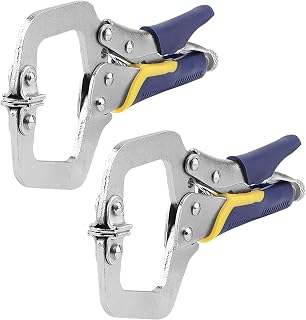


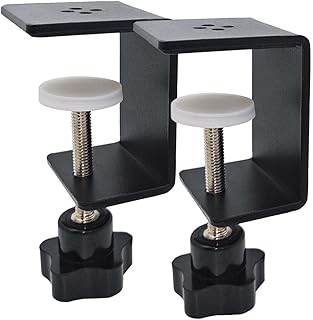


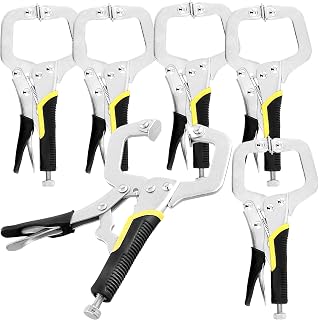


A C-clamp is a deceptively simple workshop tool, but the right choice depends on far more than the maximum opening size. Clamping force, throat depth, frame rigidity, screw design, jaw faces, handle style and construction quality all affect how securely and accurately a workpiece can be held. A clamp that is perfectly adequate for occasional woodworking may be unsuitable for heavy fabrication, metalworking or repeated professional use. When comparing C-clamps in the UK, consider the material being worked on, the amount of pressure required, available working space and how frequently the clamp will be used. It is also worth checking whether the stated dimensions refer to the maximum jaw opening, throat depth or overall size, as these measurements describe different aspects of a clamp's capability. The maximum jaw opening indicates the widest distance between the fixed jaw and the moving pressure pad. This is one of the first specifications to compare, but it should not be considered in isolation. A clamp with a large nominal capacity may be impractical if the frame cannot reach far enough into the workpiece. Conversely, a compact C-clamp can be extremely useful for smaller assemblies where a long frame would obstruct access. Throat depth is the distance from the inner edge of the frame to the centreline of the clamping screw. It determines how far into a workpiece the clamp can reach. This specification is particularly important when holding material away from its edge. Two clamps with identical jaw openings can have noticeably different practical reach if their throat depths differ. For woodworking, deeper throats can be useful for reaching across boards and assemblies. For metalworking and fabrication, throat depth should be assessed alongside frame clearance and the geometry of the workpiece. Manufacturers may publish a maximum clamping force, although figures are not always directly comparable between brands because testing methods and specifications can differ. Treat advertised force as a useful indication rather than assuming that two clamps with similar-looking figures will perform identically. For routine work, excessive force can sometimes be counterproductive. Over-tightening can mark timber, deform softer materials, damage finished surfaces or distort an assembly. A good clamp should allow controlled pressure rather than simply encouraging the user to apply as much force as possible. The frame is responsible for resisting the load created when the screw is tightened. A rigid frame helps maintain the position of the jaws and reduces unwanted flex under pressure. Cast iron is commonly associated with traditional heavy-duty C-clamps because of its rigidity and compressive strength. Forged steel can provide excellent durability and resistance to demanding workshop use. The best material depends on the intended application rather than a simple assumption that one construction method is always superior. The threaded spindle converts the turning action of the handle into linear clamping pressure. Look for a substantial, smoothly operating thread and a spindle that feels appropriately robust for the clamp's intended workload. Thread pitch also influences the character of the clamp. A finer thread can provide more incremental adjustment, while a coarser thread can allow quicker movement between open and closed positions. The ideal balance depends on whether precision or speed is the greater priority. A swivelling pressure pad can make a C-clamp considerably more forgiving when the workpiece is not perfectly parallel to the frame. Instead of the end of the screw pressing against the material at an awkward angle, the pad can adjust its contact position. This can be particularly helpful when clamping irregular components or assemblies where the pressure surface is not completely flat. The handle affects both comfort and leverage. Sliding-bar handles are common because they provide useful leverage while allowing the user to reposition the bar as the clamp is tightened. T-handles and similar designs can also offer controlled tightening, depending on the particular clamp. A comfortable handle matters when several clamps need to be tightened repeatedly. However, greater leverage should not be interpreted as an invitation to over-tighten the clamp. Cast iron C-clamps are traditionally associated with substantial workshop clamping. Their rigid frames can be well suited to applications where maintaining pressure and resisting deformation are important. The principal consideration is not simply whether a clamp is made from cast iron, but whether its overall construction is appropriate for the intended load. Examine the frame thickness, spindle, screw engagement and jaw design together. Forged steel construction can provide a strong frame with good resistance to demanding use. Steel clamps are often considered when durability and structural strength are priorities, particularly in fabrication and mechanical workshops. As with any specification, construction claims should be assessed alongside the manufacturer's stated application and load information rather than treated as a guarantee of performance in every situation. A plated or otherwise protected spindle can offer useful resistance to surface corrosion and workshop wear. The finish is only one part of durability, however. Threads, moving interfaces and exposed surfaces still benefit from sensible maintenance and storage in a dry environment. Woodworkers generally need clamps that provide controlled pressure without unnecessarily damaging the timber. A swivel pad can be advantageous, while protective jaw covers or sacrificial pieces of wood can help prevent dents and marks. Capacity should be selected according to the largest assemblies normally encountered. For edge joining, laminating and general assembly, it is often more useful to have several appropriately sized clamps than a single oversized model. Metalworking can place greater demands on a clamp, particularly where components need to remain firmly positioned during fabrication or fitting. A rigid frame, substantial spindle and suitable pressure capacity become more important. Heat, sparks and abrasive debris can also affect tool life. A clamp intended for metalworking should be selected according to the manufacturer's stated application, and users should consider whether its finish and moving components are appropriate for the environment. C-clamps can be useful for holding components in position during fabrication, but they should not be treated as substitutes for purpose-designed welding clamps where specialised positioning or heat-resistant features are required. Before using any clamp near welding operations, check the manufacturer's guidance. Keep threads and moving parts protected from excessive contamination, and avoid exposing components to heat beyond their intended operating conditions. Automotive tasks can require substantial clamping pressure and good access around awkward components. A deeper throat may help with some jobs, while a compact frame can be preferable where access is restricted. Consider the exact repair or assembly task rather than choosing solely by nominal clamp size. Clearance around surrounding components can be just as important as jaw capacity. For occasional household repairs and DIY projects, a versatile medium-capacity clamp can cover a wide range of tasks. There is usually little advantage in selecting an exceptionally heavy industrial clamp if it will only be used for light assembly. A useful general-purpose set may combine different capacities so that smaller jobs do not require manoeuvring an unnecessarily large clamp. When comparing models from brands such as IRWIN, Bessey, Stanley and Faithfull, look beyond headline ratings. The most useful comparison is based on the complete specification and the intended application. Small C-clamps are easier to position and can be particularly useful for delicate assemblies, compact repairs and model-making. Their smaller frames can also provide better access where space is limited. Large C-clamps provide greater reach and can accommodate thicker assemblies, but size alone does not automatically mean better performance. A large clamp can become cumbersome if the task only requires modest capacity. For a workshop that handles varied projects, having several sizes is often more practical than attempting to make one clamp serve every purpose. A heavy-duty C-clamp makes sense when the application regularly demands a rigid frame, substantial pressure and repeated use. Typical examples include fabrication, engineering, structural assembly and demanding workshop applications. For occasional light-duty work, however, an industrial-style clamp may add unnecessary weight and cost without providing a meaningful advantage. Match the tool to the work rather than automatically choosing the largest or strongest-looking option. Maximum opening is easy to compare, but it does not describe throat depth, frame rigidity or clamping pressure. Always assess the full specification. A clamp may open wide enough to accommodate a workpiece but still fail to reach the area that needs securing. Measure the required reach before buying. High clamping force is useful only when the workpiece and application can safely tolerate it. Excessive pressure can damage softer materials and make controlled assembly more difficult. Large clamps can be heavy and awkward. A selection of smaller and medium-sized clamps may offer more flexibility for routine workshop jobs. Unprotected metal jaws can leave marks on finished timber, painted surfaces and other delicate materials. Check whether protective covers are supplied or whether suitable protection can be added safely. Dust, moisture, metal filings, welding debris and chemicals can affect tools over time. Select a clamp appropriate to the environment and maintain it accordingly. There is no universal number. The answer depends on the size and type of projects being undertaken. When buying a set, check whether the included sizes genuinely cover your work. A multi-pack containing several nearly identical clamps may be less useful than a smaller collection with complementary capacities. Dust, sawdust, metal filings and other debris can interfere with smooth spindle operation. Clean the exposed thread periodically and remove contamination before it becomes embedded. A suitable lubricant can help maintain smooth screw operation, but use only a product compatible with the manufacturer's recommendations and the working environment. Avoid contaminating surfaces where the clamp is being used on finished materials if residue could cause problems. Check the frame for cracks, deformation or other visible damage. A clamp that has been subjected to excessive loads should be inspected before being returned to service. Store clamps somewhere dry and avoid leaving them exposed to prolonged moisture. Surface corrosion on a spindle or frame should not simply be ignored, particularly if it affects thread movement or structural integrity. Do not weld, heat, grind or otherwise modify a C-clamp unless the manufacturer specifically permits the modification. Altering a load-bearing tool can change its mechanical properties and create unexpected hazards. Use a C-clamp only for applications appropriate to its design and published specifications. Position the frame squarely and make sure the workpiece is supported securely before tightening. A C-clamp is not necessarily the best tool for every clamping task. Comparing alternatives can prevent buying a clamp that is fundamentally mismatched to the job. F-clamps generally offer a longer reach and can be faster to reposition for many woodworking applications. Their sliding design makes them useful when different workpiece widths need to be accommodated frequently. Quick-action clamps can be convenient for temporary positioning and tasks where speed matters more than maximum clamping force. They are often easier to operate with one hand, depending on the design. The terms C-clamp and G-clamp are sometimes used interchangeably in everyday tool descriptions, although naming conventions vary between manufacturers and markets. Always use the actual specifications and design rather than relying solely on the product name. Bar clamps can provide substantially greater reach than conventional C-clamps and are useful for larger assemblies. They are worth considering when the workpiece extends significantly beyond the edge of the frame. For fabrication, specialist welding clamps can offer positioning features that a conventional C-clamp does not. Where the task involves heat, awkward angles or repeated fabrication work, purpose-designed equipment may be more suitable. Product specifications can be confusing because manufacturers do not always present measurements in identical formats. Before comparing two models, establish exactly what each measurement represents. If a retailer listing and the manufacturer's documentation appear to disagree, verify the original manufacturer's specification before making a decision. Retail listings can contain transcription errors or incomplete measurements. For a purchase in 2026, the most sensible approach is to compare current specifications rather than relying on an old recommendation or a familiar product name. Models can change, product ranges can be revised and retailer listings can become outdated. Start by identifying the largest workpiece you are likely to clamp. Then determine the required throat depth, estimate the appropriate pressure level and decide whether portability or maximum rigidity is more important. Once those requirements are established, compare reputable brands and current specifications. Customer feedback can provide useful information about recurring usability issues, but reviews should be interpreted alongside technical documentation. A product receiving praise for light DIY use is not necessarily appropriate for heavy fabrication. The cheapest clamp is not necessarily the best-value option, and the most expensive model is not automatically the best choice. Value comes from matching construction, capacity and usability to the work actually being performed. For occasional DIY, prioritise versatility, sensible capacity and comfortable operation. For regular woodworking, consider a selection of sizes and pay close attention to throat depth and surface protection. For engineering or fabrication, place greater emphasis on frame rigidity, spindle construction and suitability for demanding applications. When comparing prices, compare like for like. A higher-priced clamp may have a different capacity, construction method or supplied accessories. Conversely, a lower-priced product may have fewer features or a lighter-duty design. The headline price alone does not reveal the complete value proposition. A C-clamp is used to hold, secure, position or press workpieces together. Common applications include woodworking, metalworking, assembly, repairs, fabrication and general workshop tasks. Choose a clamp based on the maximum opening and throat depth required for your work, while allowing sensible spare capacity. If your projects vary considerably in size, a selection of different capacities is usually more versatile than one oversized clamp. Yes. C-clamps can be useful for woodworking, particularly for assemblies where strong, controlled pressure is required. Protective material should be used where the jaws could mark finished timber. They can be, provided the clamp is designed for the required application and load. Heavy-duty construction, an appropriate frame and a robust spindle become increasingly important for demanding metalworking tasks. No. A deeper throat provides greater reach, but it can also increase the physical size and weight of the clamp. Select the throat depth needed for the work rather than automatically choosing the deepest available design. Neither material is universally better. Cast iron can offer a rigid frame, while forged steel can provide a strong and durable construction. Compare the complete design, manufacturer specifications and intended application. Yes. Excessive pressure or direct contact from metal jaws can leave dents or marks. Use suitable protective pieces and apply only the pressure required to hold the work securely. A set can be worthwhile when you regularly work on projects with different dimensions. Before buying, check that the included capacities provide useful variation rather than simply several clamps of almost identical size. Established tool brands including IRWIN, Bessey, Stanley and Faithfull offer clamping products. The appropriate choice depends on the particular model and its specifications rather than brand recognition alone. Store them in a clean, dry environment where possible. Keep threads reasonably clean, prevent prolonged exposure to moisture and inspect the clamp periodically for corrosion or damage. Look for comments that relate specifically to the intended application, capacity, thread operation, frame rigidity and long-term usability. Give greater weight to recurring themes than to isolated comments, and verify important technical claims against manufacturer specifications. The best C-clamp is ultimately the one whose capacity, reach, construction and operating characteristics match the work you actually do. A compact clamp can be the better choice for precision and access, while a substantial forged-steel or cast-iron model may be preferable for demanding workshop applications. Before making a final decision, compare the complete specifications of the shortlisted models, check current product information and read verified customer reviews with your intended use in mind. Avoid selecting a clamp solely because it has the highest advertised pressure, largest opening or lowest price. A balanced combination of capacity, rigidity, control, durability and usability is usually the more useful measure of a good purchase.How to Choose the Best C-Clamp for Your Workshop
C-Clamp Features That Matter Most
Maximum Jaw Opening
Throat Depth
Clamping Force
Frame Rigidity
Screw and Spindle Design
Swivel Pressure Pad
Handle Style
Materials and Construction: What Should You Look For?
Cast Iron C-Clamps
Forged Steel C-Clamps
Chrome-Plated or Finished Components
C-Clamps for Different Applications
Best C-Clamps for Woodworking
C-Clamps for Metalworking
C-Clamps for Welding and Fabrication
C-Clamps for Automotive Work
C-Clamps for General DIY
How to Compare C-Clamps Before Buying
Small C-Clamps vs Large C-Clamps
Heavy-Duty C-Clamps: When Are They Worth It?
Common C-Clamp Buying Mistakes
Choosing Only by Jaw Opening
Ignoring Throat Depth
Assuming Maximum Pressure Is Always Better
Buying One Oversized Clamp Instead of Several Appropriate Sizes
Overlooking Jaw Protection
Ignoring the Working Environment
How Many C-Clamps Do You Need?
C-Clamp Maintenance and Care
Keep the Thread Clean
Lubricate Where Appropriate
Inspect the Frame
Protect Against Corrosion
Do Not Modify the Clamp
Safe Use of C-Clamps
C-Clamp Alternatives
F-Clamps
Quick-Grip Clamps
G-Clamps
Bar Clamps
Specialist Welding Clamps
Understanding C-Clamp Specifications
Best C-Clamp Buying Strategy for 2026
Questions to Ask Before Buying
How to Get Better Value From a C-Clamp Purchase
Frequently Asked Questions About C-Clamps
What is a C-clamp used for?
What size C-clamp should I buy?
Are C-clamps good for woodworking?
Are C-clamps suitable for metalworking?
Is a deeper throat always better?
Are cast iron C-clamps better than steel C-clamps?
Can a C-clamp damage wood?
Should I buy a C-clamp set?
Which brands make C-clamps?
How should C-clamps be stored?
How do I compare C-clamp reviews?
Final C-Clamp Buying Checklist
Editorial Buying Advice