
Our experts reviewed the latest {category_name } to help you compare quality, performance, durability and overall value before making your purchase.




Choosing a cabinet safe is less about finding the heaviest or most expensive model and more about matching the safe's tested security level, locking system, dimensions, fixing method and fire protection to what you actually need to protect. A small cabinet for passports and everyday valuables has very different requirements from a security cabinet intended for cash, jewellery, business records or higher-value possessions.
When comparing cabinet safes in the UK, look beyond marketing phrases such as “high security”, “anti-theft” or “heavy duty”. A meaningful comparison should establish whether the particular model and configuration has been independently tested to a recognised standard, what that standard actually covers, how the cabinet is intended to be installed, and whether the resulting level of protection is acceptable to your insurer.
The most important buying decision is the level of risk you are trying to manage. Start by identifying the contents, their replacement value, the likelihood of theft, the possibility of fire, where the cabinet will be installed and how frequently you need access.
One of the most important distinctions when comparing UK cabinet safes is whether the product is tested and classified under BS EN 14450. BSI lists BS EN 14450 as the standard covering secure storage units, including secure cabinets, and its current published standard is BS EN 14450:2017+A1:2023.
Within EN 14450, S1 and S2 are security levels intended for secure storage units with different levels of resistance to burglary. They should not simply be treated as interchangeable labels or as synonyms for a generic “safe”.
Certification is more meaningful than a manufacturer's statement that a cabinet is merely “built to” or “designed around” a particular standard. When comparing models, check the documentation and product identification carefully so that the certification applies to the exact model and configuration being considered.
EN 14450 and EN 1143-1 should not be viewed as two marketing versions of the same thing. They represent different security classifications and are used for different levels of risk.
BSI lists BS EN 1143-1:2019 as the standard covering requirements, classification and test methods for resistance to burglary for safes, ATM safes, strongroom doors and strongrooms. Eurograde classifications under EN 1143-1 are generally the more relevant route when substantially higher burglary resistance is required.
Do not assume that an extremely heavy cabinet is automatically more secure than a lighter certified product. Construction, tested resistance, locking arrangements, anchoring and certification are more useful comparison points than weight in isolation.
An insurance rating is not simply a universal promise that any contents up to a particular value will be covered. Insurers can impose their own conditions concerning the type and grade of safe, installation, location, alarm protection, contents and maximum values.
For higher-value possessions, contact the insurer before buying rather than assuming that a particular cabinet will satisfy the policy. Ask whether the exact model, security classification and proposed installation are acceptable for the value you intend to store.
This is particularly important for jewellery, watches, large amounts of cash, business takings and other contents where individual-item limits or additional security conditions may apply.
Safe specifications in the UK market may quote separate figures for cash and valuables. A valuables figure can be higher than the corresponding cash figure, but the relationship should never be treated as an automatic entitlement under every insurance policy.
For example, some established safe manufacturers and specialist retailers describe insurance ratings using a relationship between cash and valuables values. Chubb Safes publishes examples of cash ratings associated with EN 14450 and EN 1143-1 classifications, while other UK safe specialists use similar industry conventions. Your insurer's written requirements should take precedence over a generic figure shown in a product description.
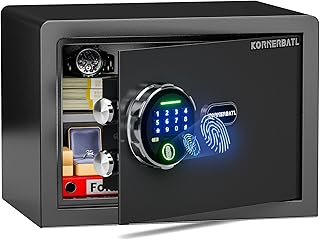
Electronic locks are popular because they allow users to enter a PIN rather than carry a physical key. They can be particularly convenient for frequent access and may include features such as multiple user codes, lockout functions, audit features or emergency override arrangements depending on the model.
However, electronic convenience should not be confused with security certification. The quality of the lock, its certification, resistance to attack, construction and integration with the safe are more important than the presence of a keypad.
Battery arrangements should also be considered. Check where batteries are installed, whether they can be replaced without compromising security, what happens when the batteries are depleted and what emergency access method is specified by the manufacturer.
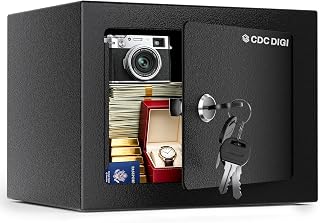
A key-operated cabinet avoids batteries and electronic controls, making it straightforward for occasional users. The main practical weakness is key management. A spare key must be stored securely, while a frequently used key can itself become a security risk if lost, copied or left somewhere accessible.
Do not assume that every key lock provides the same level of protection. Look at the lock specification and, where relevant, the security classification associated with the complete safe.
Mechanical combination locks avoid batteries and do not require a key to be carried. They can be attractive for users who prefer a purely mechanical mechanism, although dialling a combination can be slower than entering an electronic PIN.
Ease of use matters because a lock that is awkward to operate may encourage poor habits, such as leaving the safe open or writing the combination somewhere insecure.
Higher-security safes may offer more sophisticated arrangements, including dual-control systems or additional locking mechanisms. These can be useful where access needs to be shared or where organisational security procedures require more than one person to authorise opening.
For commercial applications, assess the access-control requirements before choosing a lock. A business may need a different arrangement from a household where one or two people require access.
The door is one of the most important parts of a safe because it incorporates the lock, bolts and surrounding security structure. Look for a product with clearly documented construction rather than choosing solely on the advertised thickness of the door.
Pay attention to the relationship between the door, hinges, locking bolts and frame. A strong door is of limited value if the surrounding structure is disproportionately weak.
Steel thickness can be useful specification information, but it is not an adequate method of ranking safes. Different construction techniques, reinforcing materials and internal barriers can substantially affect resistance to attack.
This is one reason recognised independent testing is so useful: it provides a more meaningful basis for comparing overall resistance than isolated measurements.
Check the number, size and arrangement of locking bolts where the manufacturer provides this information. Some doors use fixed bolts on one side and active bolts on the other, while higher-security designs can incorporate more complex locking arrangements.
Do not select a cabinet solely because it has “multiple bolts”. The overall tested classification is more informative than bolt count by itself.
External hinges can be visually obvious, but their presence does not automatically indicate poor security. The complete construction, hinge protection and locking arrangement should be considered together.
Where a safe uses concealed or protected hinges, check the manufacturer's installation instructions and door-clearance requirements before deciding where it can be fitted.
Weight affects portability, installation and the difficulty of physically moving a cabinet, but it is not a substitute for a security certification.
A lightweight cabinet that can be securely anchored may be more practical for a particular location than a very heavy model that cannot be safely installed there. Conversely, a heavier certified safe may be preferable for a higher-risk application.
Before buying, check whether the floor or wall can safely accept the fixing loads and whether the manufacturer specifies particular anchor types, bolt sizes or substrate requirements.
Anchoring is one of the most overlooked parts of safe selection. A cabinet that can simply be picked up and carried away creates an entirely different risk from one that is correctly secured to an appropriate structural surface.
Some certification and insurance arrangements can depend on correct installation. If the safe is being purchased for an insurance-sensitive application, obtain confirmation from the insurer and retain relevant installation documentation.
The best location is not necessarily the most obvious one. A cabinet should be accessible to authorised users while avoiding unnecessary exposure to visitors or casual observers.
Think about structural strength, access, visibility, environmental conditions and the practical route for bringing the safe into the building. A model that looks ideal on a specification sheet may become unsuitable if it cannot be manoeuvred through doorways, stairs or corridors.
Fire protection and burglary protection are separate considerations. A cabinet can be highly resistant to physical attack without providing the level of fire protection required for documents or digital media.
If fire protection is important, identify exactly what you are protecting. Paper documents have different temperature and environmental requirements from data media, memory devices and other sensitive materials.
BSI lists standards including BS EN 1047-1 for fire-resistant data cabinets and data inserts. This illustrates why the phrase “fireproof” should not be treated as a sufficient specification on its own.
For passports, certificates, contracts, deeds and paper records, look for a clearly stated and tested fire-resistance rating appropriate to paper. Check the duration of protection and the test standard rather than relying on generic claims such as “fire resistant”.
Electronic media can require more specialised protection than ordinary paper. A cabinet designed principally for documents should not automatically be assumed to protect hard drives, backup media or other sensitive data.
Combined protection can be convenient, but it may involve compromises in weight, internal capacity, price and construction. Compare the individual burglary and fire specifications separately rather than treating “security and fire protection” as one undifferentiated feature.
One of the most common buying mistakes is selecting a cabinet based only on its external dimensions. The usable interior can be considerably smaller once the door, locking mechanism, internal walls and shelves are taken into account.
Make a list of the largest objects you need to store before comparing models. A passport may fit easily in a compact safe, whereas A4 folders, binders, laptops, cameras or jewellery boxes can require considerably more internal space.
Compact models can be suitable where the contents are limited to documents, keys, small valuables or modest amounts of cash. Their main advantages are easier placement and relatively simple installation.
Their disadvantages include limited internal capacity and, depending on the model, greater vulnerability to removal if they are not correctly anchored.
Medium-sized cabinets can provide a useful compromise for households and small offices that need to store several categories of valuables. They offer more room without necessarily requiring the installation arrangements associated with very large commercial safes.
Larger certified safes become more relevant as the value and volume of contents increase. Their weight, delivery route, floor loading, installation and professional handling requirements should be considered before purchase.
The same cabinet can be used in different environments, but the security requirements can be very different.
A home user might prioritise discreet installation, simple access and protection for passports, jewellery or personal documents. An office may need controlled access, protection for cash or sensitive paperwork, greater internal capacity and compatibility with established security procedures.
For business use, consider who requires access, whether access needs to be logged or restricted, how keys or codes will be managed, and whether the insurer has specified a particular grade or installation method.
Cash storage requires particularly careful consideration because the value can change from day to day. A safe that appears adequate for normal cash holdings may not satisfy requirements during busy periods, weekends or seasonal peaks.
For business cash, establish the maximum amount that may actually remain on the premises rather than basing the decision on an average day. Then check the insurance conditions for that peak amount.
If cash is deposited frequently, a deposit safe may be more appropriate than a conventional cabinet because it can allow deposits without opening the main compartment. The suitability depends on the business process and the required security level.
Jewellery and watches can have a high replacement value relative to their physical size, so a small cabinet is not necessarily a low-risk application.
When storing valuable jewellery, check the insurer's requirements for both the safe and the contents. Pay particular attention to single-item limits, total valuables limits, alarm requirements and any conditions concerning unattended premises.
Internal lining can also be useful because it reduces the risk of scratches and contact damage, although protective lining should be regarded as a convenience feature rather than a security classification.
For everyday documents, a compact cabinet may provide useful protection against opportunistic theft. If the documents are irreplaceable, however, fire protection may be more important than simply choosing a stronger burglary-resistant cabinet.
Check internal dimensions carefully for A4 folders and document wallets. A cabinet that technically accommodates A4 paper may not comfortably accommodate a filled ring binder or several folders.
Key cabinets are a specialised form of secure storage. They are useful where an organisation needs to control access to multiple physical keys, but the required level of security depends on what those keys operate.
A cabinet containing keys to vehicles, restricted areas or valuable equipment may warrant stronger controls than a simple household key box. Consider the consequences if the cabinet itself is compromised.
Established manufacturers can be useful starting points when researching cabinet safes, but brand reputation should not replace model-specific verification. A manufacturer can offer products across several security categories, so compare the exact model and certification rather than choosing a brand name alone.
These names should be treated as brands to investigate, not as automatic recommendations. Compare certification, dimensions, lock specification, installation requirements and intended application for the exact product.
“High security” is frequently used as a marketing description, so it should not be accepted as a technical specification without supporting evidence.
A stronger comparison looks for independently tested resistance, a recognised classification, appropriate lock specification, robust construction, secure anchoring provisions and documentation that identifies the precise model.
For higher-value applications, EN 1143-1 grading provides a much more useful basis for comparison than vague terms such as “maximum security” or “professional grade”.
The cheapest cabinet can look attractive until the buyer discovers that it lacks the required certification, has inadequate fixing options or does not meet the insurer's requirements. Compare total suitability rather than purchase price alone.
Steel thickness is only one element of construction. A recognised test classification provides substantially more useful information about resistance than a single thickness measurement.
A portable cabinet is potentially vulnerable to removal. Always consider how the product will be secured before buying.
A fire-resistant document cabinet may not provide the burglary protection required for valuable jewellery or cash. Conversely, a strong burglary safe may not offer adequate protection for sensitive media.
Users often underestimate how quickly a safe fills up. Allow room for future documents and valuables rather than buying a cabinet that is already close to capacity.
Different sizes, locks and configurations can have different specifications. Verify the precise model number and documentation rather than assuming that every variant within a product family has identical certification.
Always confirm the insurer's requirements for the exact application. A generic online statement about an insurance rating does not override the terms of an individual policy.
For a meaningful side-by-side comparison, create a specification checklist and evaluate every candidate against the same criteria.
There is no universally correct budget because the appropriate specification depends on the value and risk of the contents. A basic cabinet can be perfectly reasonable for low-risk storage, while a higher-value application can justify a substantially more advanced certified safe.
Rather than starting with a price ceiling, establish the minimum security and capacity requirements first. Then compare products that meet those requirements and assess the additional cost of features that genuinely matter.
Paying extra for a larger touchscreen, decorative finish or unnecessary electronic features may provide less practical benefit than paying for recognised security certification, better installation options or appropriate fire protection.
Electronic locks are useful when speed and convenience matter. They are particularly attractive for users who open a cabinet regularly and do not want to manage a physical key.
A key or mechanical lock can be preferable for users who value simplicity and want to avoid batteries. Neither approach should automatically be considered superior: the quality and security classification of the complete locking system matter more than the general category of lock.
Even a well-built cabinet requires sensible maintenance. Follow the manufacturer's instructions rather than applying generic lubricants or attempting to dismantle the lock.
The correct procedure depends on the lock and manufacturer. Do not repeatedly guess combinations or attempt to bypass the mechanism, as this can trigger lockout functions or damage the safe.
Use the manufacturer's documented recovery procedure. If an authorised service route is required, keep proof of ownership and the exact model information available. Avoid relying on unofficial bypass instructions that could damage the lock or compromise future security.
A used safe can sometimes offer good value, but the buyer needs to verify considerably more than the external condition.
Particularly with older safes, do not assume that a familiar-looking classification or outdated terminology represents a current independent certification.
Professional installation is worth considering when the cabinet is heavy, difficult to manoeuvre, being installed into a specialist substrate or being purchased to meet an insurance condition.
Professional assistance can also be sensible when the safe needs to be positioned discreetly without damaging structural elements, plumbing, electrical services or other building infrastructure.
For a high-value installation, retain documentation showing the model, fixing method and relevant certification. This can help establish a clear record if an insurer later asks how the safe was installed.
The strongest specification is not always the most convenient one. A very high-security safe can be heavy, difficult to install and slower to access. A compact electronic cabinet may be much easier to use but may be unsuitable for higher-risk contents.
The objective is to find the lowest-complexity solution that genuinely meets the required level of protection. If a cabinet is inconvenient enough that users routinely leave it open, share codes carelessly or avoid using it, its theoretical security advantage is undermined by poor real-world practice.
For a typical home, begin by deciding whether the priority is everyday theft protection, higher-value valuables, documents, fire protection or a combination of these.
Small businesses should consider both the contents and the way staff interact with the safe. If several people require access, a controlled electronic lock can be more practical than a single shared key, while a simple key lock can be suitable for a restricted-access environment.
Cash handling, confidential records, customer information, keys and valuable equipment can all create different requirements. Where insurance is involved, identify the required security grade before comparing individual products.
Office users should consider capacity, access control and integration with existing security procedures. A cabinet hidden inside a private room may have different requirements from a safe located in a public-facing reception or retail environment.
Where multiple employees use the safe, establish who can access it and what happens when an employee leaves the organisation. A key or code that remains uncontrolled after staff changes can undermine otherwise good security practice.
Start with the exact model number. Then separate security information from convenience features.
The security section should tell you whether the product has been independently tested and to which standard and classification. The lock section should identify the locking arrangement. The installation section should explain fixing provisions. The dimensions section should distinguish external from internal measurements.
Finally, check whether the claimed fire protection applies to paper, digital media or another specific category of contents. Avoid treating an unspecified “fire resistant” claim as equivalent to a certified fire rating.
There is no single best cabinet safe for every buyer. The appropriate choice depends on the contents, value, required burglary resistance, fire protection, installation location, access requirements and insurer's conditions. For a low-risk household application, a compact certified cabinet may be sufficient, whereas higher-value contents can require a substantially stronger EN 1143-1 safe.
Within the EN 14450 classification system, S2 represents a higher security level than S1. Whether S2 is the right purchase depends on the value and risk involved and whether it meets the requirements of the relevant insurer.
No. They are different European security standards covering different categories and levels of secure storage. EN 14450 includes S1 and S2 secure storage classifications, while EN 1143-1 provides graded burglary resistance for higher-security safes and related secure storage units.
No. Weight can make unauthorised removal more difficult, but it is not a substitute for tested burglary resistance. When comparing products, prioritise recognised certification, construction, lock specification and proper anchoring.
Choose according to how the cabinet will be used. Digital locks offer convenient PIN-based access, while key locks avoid batteries and can be straightforward for occasional use. The quality and security classification of the complete locking system matter more than the lock type alone.
Not necessarily. Fire resistance and burglary resistance are separate properties. A fire-tested document cabinet should not automatically be assumed to provide the burglary protection required for valuable possessions.
Not automatically. Check the manufacturer's specific fire-resistance certification and the type of material it is designed to protect.
Where the design permits it, appropriate anchoring can substantially reduce the risk of the cabinet being removed. Always follow the manufacturer's fixing instructions and check the insurer's requirements if insurance acceptance is important.
Some compact cabinets are designed for straightforward installation, but the correct method depends on the cabinet, fixing system and building structure. Heavy or higher-security models may warrant professional installation, particularly where insurance conditions apply.
Choose according to the largest items you need to store, not just today's contents. Compare internal dimensions and clear door-opening dimensions and allow additional capacity for future requirements.
No. A recognised manufacturer can provide a useful starting point, but the exact model specification is what matters. Compare independent certification, lock type, installation requirements, fire protection, dimensions and intended use.
A buying guide should be reviewed regularly because product specifications, certifications, model ranges and retailer availability can change. Product-level claims should be checked against current manufacturer documentation before publication or purchase.
The best cabinet safe is the one whose tested protection, capacity and installation method genuinely match the risk. Start with the value and type of contents, then work backwards to the required security classification. After that, compare lock systems, dimensions, fire protection, anchoring and day-to-day usability.
For lower-value storage, an appropriately certified EN 14450 cabinet may provide a sensible balance of security and practicality. For substantially higher-risk applications, EN 1143-1 graded safes provide a stronger basis for comparison. Where fire is a concern, evaluate the fire standard separately rather than assuming burglary protection includes meaningful document or data protection.
Most importantly, do not let price, weight, appearance or a long list of features distract from the fundamentals: recognised certification, appropriate security level, correct installation, suitable capacity and confirmed insurance requirements. Those factors provide a much stronger basis for choosing between cabinet safes in the UK than generic “best safe” claims alone.