

Our experts reviewed the latest {category_name } to help you compare quality, performance, durability and overall value before making your purchase.


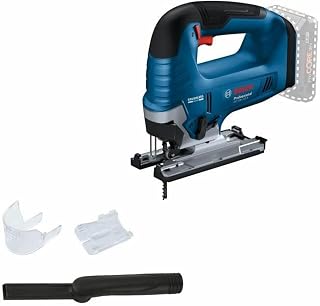





Choosing the best Bosch cordless planer is less about finding the highest specification and more about matching the planer to the type of woodworking you actually do. Bosch offers cordless planers across its Professional 12V and 18V systems, as well as the DIY-focused 18V POWER FOR ALL range, so battery compatibility, planing width, cutting depth, handling and the intended workload all deserve attention before buying. These three Professional models should not be viewed simply as smaller, medium and larger versions of the same tool. Their battery platforms and design priorities are different. The GHO 12V-20 is built around compactness and manoeuvrability, while the GHO 18V-LI provides the wider 82 mm planing format associated with many general-purpose woodworking applications. The GHO 18V-26 adds brushless motor technology and several refinements aimed at controlled, consistent planing. The figures above illustrate why headline rpm figures should not be used on their own to judge planing performance. The GHO 12V-20 has the highest quoted no-load speed of these three, yet its 56 mm cutting width makes it a fundamentally different proposition from the 82 mm GHO 18V models. Battery compatibility is one of the most important buying considerations because a cordless planer can become substantially more expensive if the required battery and charger are not already in your workshop. The GHO 18V-LI is compatible with Bosch Professional 18V batteries and chargers, while Bosch states that the GHO 18V-26 uses the Professional 18V system. The PHO 18V-20, meanwhile, is part of Bosch's 18V POWER FOR ALL system. There is no universal winner. A 12V planer can be the better option when compact handling is more important than maximum coverage per pass. An 18V planer is generally more appropriate when the wider 82 mm planing format is central to the work. The Bosch GHO 12V-20 has a 56 mm maximum planing width and weighs 1.5 kg excluding the battery according to Bosch's listed technical data. Its compact 12V architecture and optimised balance point are specifically intended to make the tool easier to handle in different working positions. By comparison, the GHO 18V-LI has an 82 mm maximum planing width and weighs 1.5 kg excluding the battery. The GHO 18V-26 also uses an 82 mm planing width and is equipped with a brushless motor and constant electronic control. An 82 mm planer is not automatically better simply because it covers more material. The appropriate width depends on the dimensions of the timber and the type of work being carried out. For larger boards, a wider planer can reduce the number of passes required. However, the operator still needs to control the tool carefully to avoid creating ridges or uneven transitions between passes. Cutting depth determines how much material is removed in one pass. A shallow setting is normally preferable when fine adjustment or surface refinement is required, while a deeper setting can remove material more quickly when substantial correction is needed. The Bosch GHO 18V-LI provides continuously adjustable depth of cut up to 1.6 mm, while the Bosch GHO 12V-20 is specified with a 0–2 mm planing-depth range. Bosch's PHO 18V-20 also provides a 0–2 mm cutting-depth range and uses 0.25 mm adjustment increments. Maximum cutting depth should not be interpreted as the ideal setting for routine planing. Removing less material per pass can provide greater control, particularly when correcting a surface progressively rather than aggressively reducing its thickness. These specifications describe different capabilities. Planing depth concerns material removed from the main surface, whereas rebating depth describes how deeply the tool can work when creating a rebate. The distinction is important when comparing Bosch models because the numbers can look similar while describing different functions. For example, Bosch lists an 8 mm rebating depth for the GHO 18V-LI, 9 mm for the GHO 18V-26 and up to 17 mm for the GHO 12V-20. Blade quality has a direct effect on the consistency of a planed surface. Bosch specifies durable carbide reversible blades for the GHO 18V-LI, while the GHO 12V-20 uses a Wood Razor blade system. The GHO 18V-26 is designed around a dual-blade TC changing system intended to permit blade changes without the same level of adjustment associated with some conventional arrangements. When comparing replacement blades, always match the blade type and dimensions specified for the exact planer rather than assuming that a blade from another Bosch model will fit. There is no single number of hours or metres of timber that can reliably determine blade life for every user. Hardwood, abrasive materials, knots, dirty reclaimed timber and accidental contact with foreign objects can all affect blade condition. Motor technology is another useful comparison point. The Bosch GHO 18V-26 uses a Bosch brushless motor and includes constant electronic control intended to maintain cutting speed when the tool encounters load. That does not mean every brushless planer will automatically produce a better finished surface. Planing results depend on several interacting factors, including blade sharpness, feed speed, cutting depth, timber condition, base alignment and operator technique. Brushless technology can nevertheless be attractive for buyers who want a modern cordless professional tool and are already invested in a compatible Bosch battery platform. Planers remove material quickly, producing a significant volume of wood chips. Efficient chip management helps keep the work area more manageable and can reduce the amount of debris accumulating around the workpiece. The Bosch GHO 18V-LI includes dual chip extraction and is compatible with Bosch Click & Clean dust extraction. The GHO 18V-26 also incorporates improved dust management and dual chipping, while the PHO 18V-20 uses double-sided chip ejection so the operator can select the more convenient side when working close to obstacles. A dust bag can be convenient for short jobs, particularly where portability is more important than maximum collection capacity. Workshop extraction is generally more practical for prolonged work, provided the planer and extraction equipment are compatible. Buyers should therefore check not just whether a planer includes a bag, but also whether the chosen extraction arrangement suits the type and duration of work planned. Weight figures are useful but incomplete. A tool that weighs slightly more on paper may still feel easier to control if its centre of gravity, handles and base are well positioned. Bosch specifically highlights the optimised balance point of the GHO 12V-20 and its compact 12V design. The published weight excluding battery is 1.5 kg. With cordless planers, remember that the advertised tool weight may exclude the battery. A battery-equipped configuration can therefore feel materially different from the bare-tool specification. This is particularly relevant for prolonged overhead, vertical or awkward-position work. The Bosch GHO 18V-LI remains an important option for buyers seeking an 18V Professional cordless planer with an 82 mm maximum planing width. Bosch specifies a 14,000 rpm no-load speed, up to 1.6 mm continuously adjustable cutting depth and a 0–8 mm rebating depth. It is particularly worth considering when the existing workshop already uses Bosch Professional 18V batteries and chargers. Bosch also states that the tool is compatible with the Bosch Click & Clean dust-extraction system and AMPShare. The Bosch GHO 18V-26 introduces several design changes that make it an important comparison with the older GHO 18V-LI. Bosch lists a brushless motor, constant electronic control, a 9 mm rebating depth, an 82 mm planing width and a 13,600 rpm no-load speed. It also has a motor brake designed to stop the blade drum in less than a second, three chamfer grooves and a one-blade head system. Bosch says the design is intended to improve battery run time and simplify blade changes. For buyers deciding between the GHO 18V-LI and GHO 18V-26, the most meaningful question is therefore not simply which model has the higher rpm figure. Consider the motor design, blade-changing arrangement, rebating capacity, electronic control, accessories and the overall role the planer will play in your workshop. The GHO 12V-20 occupies a different niche. Its 56 mm maximum planing width is narrower than the 82 mm capacity of Bosch's 18V models, but Bosch designed it around a compact 12V platform and optimised balance point. Its listed planing depth is 0–2 mm and its maximum rebating depth is 17 mm. This can make the model especially interesting for professionals who already own Bosch Professional 12V equipment or for users who value a smaller cordless planer for specific applications. The PHO 18V-20 should be considered separately from Bosch Professional models because it belongs to Bosch's DIY range and the 18V POWER FOR ALL battery system. Bosch lists an 82 mm planing width, 0–2 mm cutting depth, 8 mm rebating depth and 12,000 rpm no-load speed. Its depth gauge uses 0.25 mm increments, and Bosch highlights double-sided chip ejection, a precision-machined base plate and a battery indicator. For a DIY user who already owns compatible POWER FOR ALL batteries, this can be a more logical route than buying into the Bosch Professional ecosystem solely for a planer. Conversely, a professional user already committed to Bosch Professional 18V tools should compare the Professional models first. Bosch uses different product families for different users and battery systems. The green Bosch DIY range and blue Bosch Professional range should not be treated as interchangeable simply because both contain cordless woodworking tools. If you already have several batteries, choosing the correct ecosystem can be more important than comparing small differences in planer specifications. Door adjustment is a common reason for buying a planer, but the best specification depends on how much material needs to be removed and how the work will be performed. An 82 mm Bosch planer can cover a broad section of a conventional timber edge in one pass, while a compact 12V planer may be attractive where portability and handling are the priority. The GHO 18V-LI and GHO 18V-26 both offer an 82 mm maximum planing width, whereas the GHO 12V-20 is limited to 56 mm. When trimming a door, do not rely solely on the maximum cutting depth. Taking several controlled passes can provide better control than attempting to remove the entire amount in one aggressive pass. For furniture work, control is often more important than maximum material removal. A planer should be judged on depth adjustment, handling, blade quality, surface consistency and the operator's ability to maintain an even feed. The GHO 12V-20's compact design and 56 mm width may appeal for smaller components, while the 82 mm Bosch models provide greater coverage when working on wider stock. The correct choice depends on the dimensions of the workpieces and the level of control required. Site work can place greater emphasis on portability, battery availability and resistance to awkward working conditions. Cordless operation removes the need to manage a mains cable, which can be useful when working away from a fixed workshop supply. An 18V Bosch Professional model may be particularly attractive to tradespeople already carrying compatible 18V batteries for drills, impact drivers, saws and other tools. The GHO 18V-LI and GHO 18V-26 both belong to the Bosch Professional 18V ecosystem. A bare tool can appear attractive until the cost of a compatible battery and charger is added. Always compare the complete system cost rather than the tool-only price. Voltage alone does not tell you how well a planer will suit your work. Planing width, cutting depth, blade system, motor technology, weight and balance all contribute to the buying decision. The GHO 12V-20, GHO 18V-LI, GHO 18V-26 and PHO 18V-20 have different quoted no-load speeds, but their planing widths and designs differ too. If you expect to cut rebates rather than simply flatten surfaces, check the maximum rebating depth before buying. This specification can vary considerably between models. Always verify the battery family. Bosch Professional 12V, Bosch Professional 18V and Bosch 18V POWER FOR ALL are separate ecosystems. Consider whether the included case, batteries, charger, guide, dust bag or other accessories are genuinely useful for your work. A more comprehensive kit is not automatically the best choice if it duplicates equipment already in your workshop. A useful comparison should assess the following criteria in roughly this order: The planer base needs to remain clean and free from accumulated resin, dust and debris. Contamination can affect how smoothly the tool travels over timber and may interfere with consistent results. Check blades whenever the finish deteriorates or the planer begins behaving differently. Follow Bosch's instructions for safe blade removal, installation and adjustment. Dust accumulation around ventilation openings can restrict airflow. Cleaning should be carried out in accordance with the manufacturer's maintenance guidance and with the tool made safe before inspection. Battery care matters with every cordless power tool. Use the correct Bosch charger and battery combination for the relevant platform, follow the manufacturer's storage recommendations and avoid exposing batteries to unsuitable temperatures, moisture or physical damage. A planer relies on a stable base to produce a consistent cut. Before demanding work, check that the base is clean and that there is no obvious damage that could affect the tool's movement. A cordless planer is still a high-speed cutting tool and should be treated accordingly. Read the manufacturer's instructions before use and use appropriate personal protective equipment for the task and environment. There is no single sensible budget because the total cost depends heavily on whether batteries, charger and accessories are already owned. When comparing current options, separate the price of the bare tool from the price of a complete kit. A tool-only purchase can be economical for someone already invested in the correct battery system, while a kit may make more sense for a new user who needs batteries and charging equipment. Prices and retailer availability can change, so buyers should check the current specification and today's price for the exact part number before purchasing. It can be, particularly when cordless mobility and battery-platform compatibility are useful. The strongest case is often for buyers who already own compatible Bosch batteries, because the cordless planer can then integrate into an existing tool collection without requiring a completely new battery ecosystem. The Bosch GHO 18V-LI, GHO 18V-26 and PHO 18V-20 are all specified with an 82 mm maximum planing width. The GHO 12V-20 has a narrower 56 mm maximum planing width. It remains a relevant option for buyers wanting an 18V Professional planer with an 82 mm planing width, 14,000 rpm no-load speed and continuously adjustable cutting depth up to 1.6 mm. Buyers should nevertheless compare it directly with the GHO 18V-26 if newer motor and control features are important. Both are Bosch Professional 18V cordless planers with an 82 mm maximum planing width, but the GHO 18V-26 uses a brushless motor and includes constant electronic control, a motor brake, three chamfer grooves and a 9 mm rebating depth. The GHO 18V-LI has a 14,000 rpm no-load speed and a maximum cutting-depth specification of up to 1.6 mm. Its suitability depends on the application rather than voltage alone. Bosch specifies a 0–2 mm planing depth, 56 mm maximum width and 14,500 rpm no-load speed, while its compact 12V design is intended to improve handling. For wider boards or users who need an 82 mm planing width, one of Bosch's 18V options may be a better match. Do not assume compatibility merely because both products are labelled 18V. The PHO 18V-20 belongs to Bosch's 18V POWER FOR ALL system, while the GHO 18V-LI and GHO 18V-26 belong to Bosch Professional's 18V system. Check the exact battery platform before buying. Bosch specifies a maximum rebating depth of 17 mm for the GHO 12V-20. Bosch specifies a 9 mm rebating depth for the GHO 18V-26. Planers can be used on suitable hardwoods, but the correct technique, blade condition and cutting depth become particularly important. Bosch states that the GHO 18V-26 is suitable for natural and processed wood materials. Always check the manufacturer's instructions and the characteristics of the timber before working. No. No-load speed is only one specification. Planing width, cutting depth, motor characteristics, blade design, electronics, balance and the actual load placed on the tool all matter. For example, the GHO 12V-20 is listed at 14,500 rpm, the GHO 18V-LI at 14,000 rpm and the GHO 18V-26 at 13,600 rpm, yet these tools have different designs and capabilities. The best Bosch cordless planer in the UK is ultimately the one that fits the work rather than the one with the most impressive specification sheet. For compact professional work, the GHO 12V-20 is a distinct proposition. For general-purpose 82 mm cordless planing within Bosch Professional's ecosystem, the GHO 18V-LI remains an important model to compare. For buyers prioritising a brushless motor and newer control and blade-management features, the GHO 18V-26 deserves close consideration. DIY users already invested in Bosch's 18V POWER FOR ALL platform should assess the PHO 18V-20 separately. Before making a purchase, compare the exact model number, battery configuration, included accessories, current specifications and today's price. Most importantly, choose the battery platform and planing width first; those two decisions can narrow the field far more effectively than chasing individual headline specifications.Bosch Cordless Planer Comparison: What to Look For in 2026
Quick Comparison of Bosch Cordless Planer Options
Bosch GHO 12V-20 vs GHO 18V-LI vs GHO 18V-26
Model Battery system Maximum planing width Planing depth Maximum rebating depth No-load speed Bosch GHO 12V-20 Professional 12V Professional 56 mm 0–2 mm 17 mm 14,500 rpm Bosch GHO 18V-LI Professional 18V Professional 82 mm Up to 1.6 mm 8 mm 14,000 rpm Bosch GHO 18V-26 Professional 18V Professional 82 mm Check the individual specification for the exact cutting-depth range 9 mm 13,600 rpm How to Choose the Right Bosch Cordless Planer
Start With the Battery Platform
12V or 18V: Which Is Better?
Planing Width Matters More Than Many Buyers Expect
Cutting Depth and Material Removal
Why Adjustable Cutting Depth Is Important
Do Not Confuse Planing Depth With Rebating Depth
Blade Design and Replacement Considerations
Carbide Reversible Blades
When Should Planer Blades Be Replaced?
Brushless vs Conventional Cordless Planer Motors
Dust Extraction and Chip Management
Why Chip Ejection Matters
Dust Bag or Extraction System?
Ergonomics, Weight and Balance
Features Worth Paying For
Features That Can Make a Genuine Difference
Features That Should Not Be Overvalued
Bosch GHO 18V-LI: Who Should Consider It?
Bosch GHO 18V-26: What Makes It Different?
Bosch GHO 12V-20: When Compactness Wins
Bosch PHO 18V-20: Professional or DIY?
Professional Bosch vs Bosch DIY: An Important Buying Distinction
Best Bosch Cordless Planer for Door Trimming
Best Bosch Cordless Planer for Furniture and Fine Woodworking
Best Bosch Cordless Planer for Site Work
Common Buying Mistakes
Buying the Bare Tool Without Checking Battery Costs
Choosing 18V Simply Because It Sounds More Powerful
Comparing RPM Without Looking at the Rest of the Specification
Ignoring Rebate Depth
Assuming Every Bosch Battery Fits
Choosing a Kit Based Only on the Number of Accessories
How to Compare Bosch Cordless Planers Properly
Maintenance Advice for a Bosch Cordless Planer
Keep the Base Clean
Inspect the Blades Regularly
Keep Ventilation Areas Clear
Look After the Battery
Check the Sole Before Precision Work
How to Get a More Consistent Planed Finish
Safety Considerations When Using a Cordless Planer
What Should You Check Before Buying?
How Much Should You Spend on a Bosch Cordless Planer?
Which Bosch Cordless Planer Is Best for You?
Frequently Asked Questions
Is a Bosch cordless planer worth buying?
Which Bosch cordless planer has an 82 mm width?
Is the Bosch GHO 18V-LI still a good option?
What is the difference between the Bosch GHO 18V-LI and GHO 18V-26?
Is the Bosch GHO 12V-20 powerful enough?
Can Bosch Professional 18V batteries be used with the PHO 18V-20?
What is the maximum rebating depth of the Bosch GHO 12V-20?
What is the maximum rebating depth of the Bosch GHO 18V-26?
Can a Bosch cordless planer be used for hardwood?
Does a higher rpm make one cordless planer better?
Final Buying Checklist
Editorial Buying Advice