

Our experts reviewed the latest {category_name } to help you compare quality, performance, durability and overall value before making your purchase.


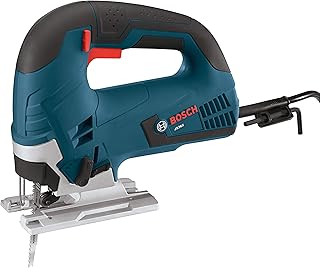


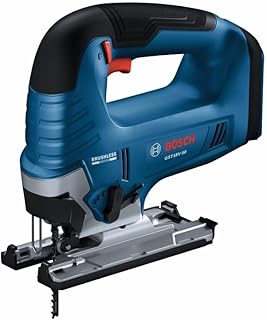


Bosch cordless jigsaws cover a wide range of cutting requirements, from light DIY work and occasional repairs to demanding workshop, joinery and professional site applications. The right model is not simply the one with the highest specification. Battery platform, cutting control, blade guidance, ergonomics, stroke characteristics, visibility, dust management and the materials you intend to cut can all have a greater effect on the finished result. For UK buyers, it is also worth separating Bosch Professional tools from Bosch DIY tools before comparing individual machines. They are aimed at different users and use different cordless ecosystems, so a lower-priced tool is not necessarily a like-for-like alternative to a professional model. This expanded buying guide explains what to look for when comparing Bosch cordless jigsaws, how the main Bosch ranges differ, which specifications genuinely matter, and which common buying mistakes are worth avoiding. Bosch cordless jigsaws broadly fall into two ecosystems: Bosch Professional and Bosch DIY. Understanding this distinction should be one of the first steps in any comparison. Bosch Professional jigsaws are designed around the needs of tradespeople, workshops and more demanding users. Models in this range include machines such as the Bosch GST 12V-70 Professional, Bosch GST 18V-LI S, Bosch GST 18V-125 S and higher-specification machines such as the Bosch GST 18V-155 BC. The 18V Professional range is particularly relevant if you already own compatible Bosch Professional batteries. Buying a bare tool can make considerably more sense for an existing battery user because the cost and duplication associated with buying another battery and charger may be avoided. Professional models also tend to offer more sophisticated control, stronger construction and features aimed at repeated cutting rather than occasional household use. However, a professional specification is not automatically better value for somebody who only needs to cut occasional shelves, laminate panels or timber. Bosch DIY models are intended primarily for home improvement, hobbies and general household projects. The Bosch PST 18 LI is an example of the cordless DIY jigsaw concept. The important consideration is the battery system. Bosch DIY cordless tools can be associated with the Bosch POWER FOR ALL 18V ecosystem, while Bosch Professional 18V batteries belong to a separate professional platform. Buyers should therefore check battery compatibility rather than assuming that every Bosch 18V battery will fit every Bosch 18V tool. There is no single Bosch cordless jigsaw that is best for every UK buyer. The most suitable choice depends on the balance between portability, cutting performance, control, battery investment and intended workload. Instead of choosing solely by headline power or price, compare the complete specification against the type of work you actually perform. When comparing Bosch cordless jigsaws, several specifications deserve substantially more attention than others. Some figures are useful for establishing the capability of a tool, but they do not tell the whole story about cutting quality or ease of use. Voltage is an important starting point, but it should not be treated as a direct measure of cutting quality. Bosch Professional cordless jigsaws are available in different battery classes, including compact 12V tools and more powerful 18V machines. A 12V jigsaw can be easier to handle for detailed work, overhead cutting and jobs where low weight is valuable. An 18V machine is generally the more versatile choice for heavier or more frequent cutting. The battery platform also affects the long-term cost of ownership. If you already own compatible batteries, a bare tool may be particularly attractive. If you are starting from scratch, compare the complete kit rather than comparing the bare-tool price with another manufacturer's battery-and-charger package. Stroke rate describes how rapidly the blade moves through its cutting cycle. A higher maximum stroke rate can be useful for fast cutting, but speed alone does not determine the quality of the finished cut. Variable-speed control is often more useful than simply having a high maximum speed. Slower settings can improve control when starting a cut, following a marked line or working with materials that require a more controlled cutting action. For a buying comparison, look for a tool that allows the speed to be matched to the material and blade rather than assuming the fastest setting is always preferable. Orbital action changes the movement of the blade so that it does not simply travel vertically. This can increase cutting aggressiveness and improve productivity when removing material quickly. However, maximum orbital action is not necessarily the right setting for every cut. More aggressive movement can make precision work harder and can produce a less refined edge depending on the material, blade and direction of cut. A jigsaw with adjustable orbital settings therefore gives the user greater flexibility. Lower settings are generally more appropriate when control and cut quality take priority, while more aggressive settings can be useful for faster rough cutting. Maximum cutting depth is one of the most visible specifications on a jigsaw, but it should be interpreted carefully. Manufacturers commonly specify cutting capacities for different materials, such as wood and steel. These figures are not interchangeable. A stated wood-cutting capacity does not mean the same tool will cut steel to the same depth. When comparing models, check the individual material capacities and consider the thicknesses you actually encounter. If your normal work involves relatively thin sheet material or boards, buying a substantially larger machine solely for an impressive maximum depth may add unnecessary weight. Blade control is crucial when following curves or producing a clean straight cut. A jigsaw can have substantial power but still be frustrating if the blade wanders or the user has difficulty keeping the shoe aligned with the cutting line. Look for a well-designed blade guidance system, a stable base plate and good visibility around the cutting area. These characteristics can be more valuable during real-world work than a small difference in maximum cutting speed. Tool-free blade changes are particularly useful when working with several materials or moving between rough and finish cuts. Bosch jigsaws commonly use systems designed to make blade replacement straightforward, but buyers should still check exactly which blade type a particular model accepts and whether the blades they already own are compatible. Do not overlook the blade itself. A premium jigsaw fitted with an unsuitable or blunt blade can produce worse results than a more modest machine using the correct high-quality blade. Jigsaw performance is closely connected to blade selection. Comparing machines without considering the blade is an incomplete assessment. Wood blades vary in tooth size, tooth spacing, material and intended application. Coarse blades can remove material quickly, whereas finer blades are more appropriate when a cleaner finish is important. Longer blades may be required for thicker stock, but blade length should be appropriate for the application rather than selected simply because it is available. When cutting visible furniture panels, laminate-covered boards or other decorative materials, a blade designed for a cleaner finish can reduce splintering and improve the appearance of the cut. Cut direction and the position of the blade teeth also matter. If the visible surface is particularly important, select the blade configuration according to the manufacturer's guidance for that material. Metal requires a different blade design from timber. Fine teeth and appropriate cutting technique are important, and the recommended cutting capacity should always be checked before starting work. Thin sheet metal can behave very differently from thicker steel sections, so a jigsaw should not be treated as a universal replacement for dedicated metal-cutting equipment. Specialised blades are available for materials including plastics, laminate and other sheet products. The correct blade can reduce heat build-up, chipping and unnecessary stress on the workpiece. If your priority is accurate joinery rather than simply removing material, several features deserve particular attention. These features work together. A jigsaw that is comfortable to hold can be easier to guide accurately, particularly when making curved or long cuts. Weight is an important consideration that is sometimes overlooked in specification-led comparisons. A heavier 18V machine may provide greater capability, but additional weight can become noticeable during extended cutting, overhead work or when making repeated intricate cuts. A compact 12V jigsaw may be more comfortable where portability and manoeuvrability are the priorities. Handle design is equally important. A well-balanced tool can feel easier to control than a heavier or poorly balanced alternative even when their headline specifications appear similar. If possible, compare the tool's weight with the battery fitted rather than considering the bare-tool figure alone. The battery contributes to both overall weight and balance. Dust management matters particularly when cutting MDF, plywood, chipboard and other materials that generate significant fine dust. A jigsaw that can be connected to a suitable dust-extraction system may help keep the cutting area clearer. Better visibility can make it easier to follow a marked line and can reduce the amount of airborne debris around the workstation. For occasional outdoor cutting, dust extraction may be less important. For repeated indoor workshop use, it becomes a much more significant buying criterion. Battery capacity is usually expressed in ampere-hours, but a larger battery is not automatically the best choice. A higher-capacity battery can extend working time between charges, while a compact battery may reduce overall weight. The best option depends on the application. Actual runtime varies according to material, blade selection, cutting speed, orbital setting, pressure, battery condition and workload. For that reason, advertised battery capacity should not be converted into an assumed number of cuts without controlled testing. This is one of the most important purchasing decisions when comparing cordless jigsaws. A bare tool can be a sensible option if you already own compatible batteries and a charger from the same Bosch cordless platform. It avoids buying equipment that you already have and can make expanding an existing cordless toolkit more efficient. If you are entering a cordless platform for the first time, compare the total cost of the tool, battery and charger. A seemingly inexpensive bare tool may not represent the lowest overall cost once the required battery and charger are added. Always confirm platform compatibility before purchasing. Bosch Professional and Bosch DIY cordless ecosystems should not be assumed to be interchangeable simply because both may use an 18V designation. The Bosch GST 12V-70 Professional is a compact cordless jigsaw aimed at users who value portability and control. Its smaller battery platform can be particularly relevant for tradespeople who already use Bosch Professional 12V equipment or for applications where a compact tool is preferable to a larger 18V machine. It is worth considering for detailed cutting, installation work and situations where keeping tool weight under control matters. Buyers whose work routinely involves heavier sections or prolonged high-load cutting should instead compare it carefully against Bosch Professional 18V alternatives. The Bosch GST 18V-LI S is a professional 18V cordless jigsaw with a design that places emphasis on compact handling. This type of jigsaw can appeal to users who want the flexibility of the Bosch Professional 18V battery platform without choosing a particularly bulky machine. When comparing it with newer Bosch Professional models, buyers should examine the complete feature set rather than assuming that a newer model is automatically the better choice. Cutting capacity, control features, ergonomics, battery compatibility and the price of the tool should all be considered together. The Bosch GST 18V-125 S sits within Bosch's professional 18V jigsaw range and is worth considering for buyers seeking a versatile machine for regular cutting work. The key question is whether its combination of handling, cutting capability and control features matches your workload. For general trade use, an 18V platform can offer a useful balance between portability and capability, particularly when the user already owns compatible batteries. As with any jigsaw comparison, the tool should be assessed together with the blades, batteries and materials involved rather than in isolation. The Bosch GST 18V-155 BC is positioned towards users who require a more advanced professional cordless jigsaw. It is particularly relevant when precision, cutting control and professional ergonomics are higher priorities than simply finding the lowest purchase price. For commercial users, the additional features of a higher-specification machine may be easier to justify when the tool is used regularly. For occasional DIY projects, however, the extra specification may provide less practical benefit than investing in good blades and choosing a machine that is comfortable to handle. DIY homeowner: prioritise ease of use, reasonable weight, battery availability and straightforward blade changes. Hobby woodworker: prioritise cutting accuracy, speed control, blade availability, dust extraction and compatibility with workshop equipment. Joiner or installer: prioritise control, ergonomics, visibility, repeatability and a battery system already used on site. General tradesperson: prioritise versatility, durability, battery runtime and the ability to share batteries with other professional tools. Heavy-use professional: prioritise cutting performance, vibration control, ergonomics, robust construction, battery options and long-term suitability over the lowest initial cost. 18V does not automatically mean better cutting results than 12V. The complete tool design, blade, material and application matter. Buying a cordless jigsaw without considering your existing batteries can create unnecessary expense. Conversely, choosing a tool simply because it is compatible with a battery you already own may not be wise if its specification does not meet your workload. Maximum capability is not always useful capability. A large jigsaw can be unnecessarily tiring for small or intricate jobs. A jigsaw blade is a cutting tool, not merely an accessory. The wrong blade can cause splintering, wandering, overheating and poor finish even when the jigsaw itself is capable of excellent performance. Always compare equivalent packages. A bare machine and a battery-and-charger kit are not directly comparable purchases. Think about the materials you cut most often. Timber, plywood, MDF, laminate, plastic and metal each place different demands on the blade and cutting technique. A practical buying process can be reduced to a few questions. Answering these questions before comparing prices makes it much easier to identify the right category of tool. Even the best cordless jigsaw requires appropriate technique. Use a sharp blade designed for the material, mark the cutting line clearly and allow the machine to do the cutting rather than forcing it through the workpiece. For visible cuts, select a blade intended for finish work and test the combination of blade, speed and orbital setting on an offcut where practical. Support the workpiece securely. Movement underneath the material can contribute to vibration, poor accuracy and damaged edges. For long straight cuts, maintain a consistent feed rate and avoid excessive sideways pressure. For curves, use a blade suited to the radius and allow the jigsaw to follow the intended path without forcing it into a tighter curve than the blade can comfortably accommodate. Routine care can help keep a cordless jigsaw performing consistently. For detailed servicing or repairs, follow Bosch's official instructions and use an appropriate authorised service route where required. A cordless jigsaw is easier to move around than a mains-powered equivalent, but cordless operation does not remove the normal risks associated with powered cutting tools. A useful comparison should record more than just the advertised headline specification. Checking these specifications side by side helps prevent a purchase decision based on one headline number. Bosch Professional cordless jigsaws are designed for professional applications, but suitability still depends on the workload. A tradesperson making occasional cut-outs has different requirements from a workshop user making repeated production cuts throughout the day. Professional buyers should therefore consider ergonomics, battery management, blade availability, cutting control and service arrangements alongside raw performance. The strongest reason to choose a Bosch Professional cordless jigsaw can also be ecosystem compatibility. If a user's existing toolkit already includes compatible Bosch Professional batteries and chargers, adding a jigsaw to that platform can simplify battery management across multiple tools. For general home improvement, furniture assembly, shelving, basic woodworking and occasional cutting tasks, a Bosch DIY cordless jigsaw can be a practical option. The important distinction is workload. Someone completing a handful of DIY projects each year may gain little from paying for professional-grade features intended for intensive use. Conversely, a hobbyist who cuts sheet material frequently may benefit from the improved control and wider feature set of a professional model. A cordless jigsaw is versatile, but it is not the best tool for every cutting task. For long, perfectly straight cuts through large boards, a circular saw with suitable guidance can be more appropriate. For intricate internal shapes, a jigsaw can be advantageous. For very thick timber, specialist cutting equipment may be more suitable. For repeated production work, a dedicated workshop machine can offer better repeatability. The best buying decision therefore starts with the cutting task rather than the tool category. There is no universal ideal budget because the value of a jigsaw depends heavily on usage. For occasional DIY, spending more on a professional model may provide features that are rarely used. For daily trade work, paying more for better ergonomics, control and compatibility can make more sense because the tool is used repeatedly. When checking today's prices, compare equivalent configurations and remember to account for batteries, chargers and suitable blades. Also compare the cost of ownership rather than focusing exclusively on the initial purchase figure. For occasional DIY, the best choice is usually a Bosch DIY cordless model that provides sufficient cutting capacity and control without paying for professional features that will rarely be used. If you already own compatible Bosch Professional batteries, however, a Professional model may make more sense. Professional users should generally compare Bosch Professional models, with the choice depending on workload, preferred battery platform, required cutting capacity, ergonomics and control features. Higher-specification 18V models are worth considering when precision and frequent use are important. A Bosch Professional 12V jigsaw can be entirely suitable for many cutting applications, particularly where compact size and low weight are valuable. For heavier or more demanding work, an 18V model may be a more appropriate choice. Do not assume that they can. Bosch Professional and Bosch DIY cordless systems are separate platforms, even where both use an 18V designation. Always check the exact compatibility information for the tool and battery. Not necessarily. An 18V jigsaw can provide a useful combination of capability and runtime for demanding applications, while a 12V machine can be easier to handle for lighter and more detailed work. The better option is the one that matches the workload. Modern cordless jigsaws can provide substantial cutting performance, but results depend on the specific tool, battery, blade, material and application. For many portable woodworking and trade tasks, cordless operation can provide a useful combination of performance and convenience. Use a blade specifically designed for the material and finish required. Bosch offers blades for different applications, while other reputable manufacturers also produce compatible jigsaw blades. Check the blade specification and compatibility with the particular jigsaw before use. Brushless motor technology can offer advantages in efficiency, durability and motor design, but the value depends on how frequently the tool is used. For intensive professional work, the benefits may be more relevant than for occasional DIY. If you already own compatible batteries and a charger, a bare tool can be the logical choice. If you are new to the battery platform, compare the total price of the complete kit against the cost of purchasing the components separately. Compare the GST models according to battery platform, size, cutting capacity, control features, ergonomics, intended workload and price. Do not choose solely from the model number or maximum cutting figure. For most precision work, accuracy and control are more valuable than maximum speed. Faster cutting can be useful when removing material quickly, but variable speed, appropriate orbital action, blade selection and good handling can have a greater effect on the final result. The best Bosch cordless jigsaw is the one whose battery system, size, cutting capability and control features correspond to the work you actually do. A homeowner completing occasional projects does not necessarily need the most advanced professional model, while a tradesperson using a jigsaw repeatedly may benefit from investing in a more capable Bosch Professional machine. For the most useful comparison, start with the Bosch battery ecosystem, then consider materials and cutting thickness, followed by accuracy, ergonomics, speed control, orbital action, blade compatibility and dust management. Finally, compare the complete purchase configuration, including batteries, charger and accessories. Before buying, check the latest manufacturer specifications, compare equivalent models from trusted UK retailers, read verified customer reviews and check today's prices and availability. Product specifications, packages and retailer pricing can change, so the exact model and configuration should always be confirmed at the point of purchase.Best Bosch Cordless Jigsaws: Buying Guide, Comparison Criteria and Expert Advice for the UK
Bosch Cordless Jigsaw Ranges Explained
Bosch Professional cordless jigsaws
Bosch DIY cordless jigsaws
Which Bosch Cordless Jigsaw Is Best?
Bosch Cordless Jigsaw Comparison: What Matters Most?
Battery voltage and platform
Stroke rate
Orbital or pendulum action
Maximum cutting depth
Blade guidance and cutting accuracy
Blade changing system
Blade Selection for Bosch Cordless Jigsaws
Wood-cutting blades
Fine-finish blades
Metal-cutting blades
Special-purpose blades
Cutting Accuracy: Features Worth Paying For
Ergonomics and Weight
Dust Extraction and Workshop Cleanliness
Battery Runtime: What Buyers Should Really Compare
Bare Tool or Full Kit?
When a bare tool makes sense
When a complete kit may be better
Bosch GST 12V-70 Professional: Who Should Consider It?
Bosch GST 18V-LI S: A Compact Professional 18V Option
Bosch GST 18V-125 S: A Versatile Professional Choice
Bosch GST 18V-155 BC: Higher-Specification Professional Cutting
Bosch Cordless Jigsaw Comparison by Type of User
Common Buying Mistakes to Avoid
Choosing by voltage alone
Ignoring the battery ecosystem
Buying the largest model available
Underestimating blade quality
Comparing bare-tool prices with complete kits
Ignoring the workpiece
How to Choose the Right Bosch Cordless Jigsaw
How to Get Cleaner Jigsaw Cuts
Maintenance and Care for a Bosch Cordless Jigsaw
Safety Considerations When Using a Cordless Jigsaw
Bosch Cordless Jigsaws: Specifications Buyers Should Compare
Are Bosch Cordless Jigsaws Good for Professional Use?
Are Bosch DIY Cordless Jigsaws Suitable for Home Projects?
When a Cordless Jigsaw Is the Wrong Tool
How Much Should You Spend on a Bosch Cordless Jigsaw?
What to Check Before Buying
Frequently Asked Questions About Bosch Cordless Jigsaws
Which Bosch cordless jigsaw is best for DIY?
Which Bosch cordless jigsaw is best for professionals?
Is a Bosch 12V jigsaw powerful enough?
Can Bosch Professional and Bosch DIY batteries be used interchangeably?
Is an 18V cordless jigsaw better than a 12V model?
Do cordless jigsaws cut as well as corded jigsaws?
What blades should I use with a Bosch cordless jigsaw?
Is a brushless Bosch cordless jigsaw worth considering?
Should I buy a Bosch jigsaw with a battery or as a bare tool?
How do I choose between Bosch GST models?
What is more important: cutting speed or accuracy?
Final Bosch Cordless Jigsaw Buying Advice