

♥ Wishlist


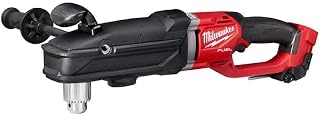


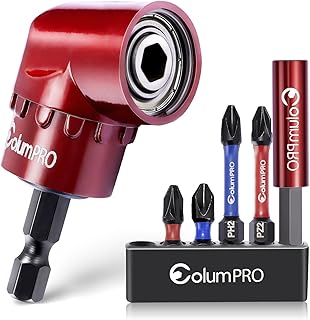


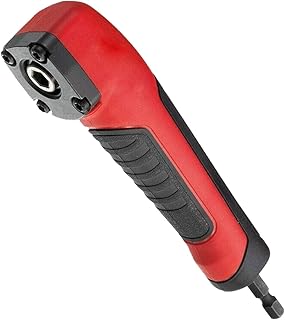


Milwaukee angle drills are specialist power tools built for jobs where a standard drill cannot easily reach. Their right-angle configuration places the drilling or driving head at 90 degrees to the main body, helping you work in narrow, enclosed or awkward positions. This makes them particularly useful for electricians, plumbers, kitchen fitters, joiners, maintenance teams, installers and experienced DIY users working across the UK.
When choosing an angle drill, think beyond headline power. The most useful model is the one that combines suitable torque and speed with a compact footprint, comfortable handling and enough access for the job. A smaller head can make a major difference when working between studs, inside cupboards or close to existing pipework and cables. For repetitive installation tasks, balance and control can be just as important as maximum performance.
A conventional drill is versatile, but its straight body can become difficult to position when space is limited. A Milwaukee right angle drill provides a different approach, allowing the operator to align the bit with the work surface while keeping the main body away from surrounding obstacles. This can make drilling and fastening more practical in confined areas.
These tools can be especially valuable for construction and installation work where access changes from one task to another. A right-angle drill can help when creating pilot holes, installing fixings, drilling through timber or carrying out maintenance in spaces where a standard drill would be cumbersome. Cordless designs also remove the need to manage a mains cable around the work area.
Start by considering the physical dimensions of the drill. If your work regularly involves tight spaces, compact head dimensions and an appropriately shaped body should be high on your list. Weight also matters because an awkward tool can become tiring during extended overhead or repetitive work.
Next, consider speed and torque. Different materials and applications can require different combinations of drilling speed and controlled power. A model with variable speed control can provide more flexibility for starting holes accurately and adapting to different accessories. Look at the chuck or bit interface as well, ensuring that it accepts the accessories you already use or intend to buy.
Battery compatibility is another important consideration for cordless users. If you already own compatible Milwaukee batteries and chargers, staying within the same battery system may simplify your setup and reduce the need for additional charging equipment. Always check the exact specification of the drill and battery system before purchasing.
For electricians and installers, an angle drill can be useful when working around framing, service areas and fitted components. Plumbers and maintenance professionals may value the improved access when working around pipework or equipment. Joiners and carpenters can use right-angle drills for drilling and fastening in timber assemblies where surrounding structures limit tool movement.
DIY users can also benefit from an angle drill when tackling renovation, furniture installation or repair projects with restricted access. However, the right specification depends on the material, hole size, accessory and workload. A compact model suited to light installation work may not be the best choice for demanding professional applications, so match the tool to the tasks you expect to perform.
Cordless Milwaukee angle drills can provide useful freedom of movement on building sites, workshops and domestic projects. Without a mains lead trailing from the tool, users can move between work areas more easily and position the drill without planning around a nearby socket. Battery-powered operation can be particularly convenient for installation and maintenance work where access to mains power is limited.
Before buying, check whether the product is supplied as a bare tool or as a kit. A bare tool can make sense if you already have compatible batteries and a charger, while a complete kit may be more convenient for someone entering the relevant battery platform. Pay attention to the listed contents rather than assuming batteries or chargers are included.
Begin with the environment in which you will use the drill. Measure particularly restricted areas if necessary and consider whether the tool head will have enough clearance. Then identify the materials you normally drill and the accessories required for those jobs. This will help narrow the choice based on speed, torque, chuck or bit capacity and overall design.
Next, consider how frequently the drill will be used. Professional users carrying out daily installation work may prioritise durability, ergonomics, battery efficiency and consistent performance. Occasional DIY users may place greater emphasis on versatility, ease of use and overall value. Comparing these factors together is more useful than choosing solely by power rating.
When comparing Milwaukee angle drills, look at the complete specification and intended application. Consider tool dimensions, weight, speed settings, torque characteristics, chuck or bit capacity, battery compatibility and included accessories. Also consider the availability of suitable drill bits and drivers for the materials you work with.
For UK shoppers, it is sensible to check the product description carefully for the exact model configuration, especially where a listing may be available in several kit formats. Check what is included, confirm compatibility with your existing equipment and select a model that suits your typical workload. The best Milwaukee angle drill is ultimately the one that gives you the required access, control and performance without adding unnecessary bulk to your tool kit.
Milwaukee angle drills are designed for drilling and fastening where a conventional drill can be difficult to position. With a compact right-angle format, these specialist power tools are particularly useful for work inside cabinets, between joists, beneath fittings and in other restricted areas. For UK tradespeople, installers, maintenance professionals and serious DIY users, choosing the right Milwaukee angle drill means balancing access, power, control, battery platform and overall tool size.
Primary: Commercial investigation and transactional
Secondary: Product comparison, restricted-space drilling and cordless power tool research