

Our experts reviewed the latest {category_name } to help you compare quality, performance, durability and overall value before making your purchase.


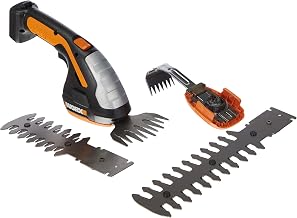


Choosing a WORX cordless hedge trimmer is less about finding the model with the biggest battery or longest blade and more about matching the machine to the hedge you actually need to maintain. A compact 20V model can be an excellent choice for routine shaping and smaller gardens, while a higher-powered 40V PowerShare machine makes more sense when you regularly tackle mature, dense or thicker-stemmed hedges.
The current WORX range includes several distinct approaches, from lightweight 20V hedge trimmers such as the WG261E through more powerful brushless models such as the WG263E and the larger 40V WG286E and WG284E family. Specifications vary considerably between versions and markets, so check the exact model suffix, battery configuration and supplied accessories before comparing prices.
The nominal voltage is useful, but it should not be treated as a simple ranking system in which a higher number automatically means a better hedge trimmer. The motor design, blade length, cutting capacity, battery capacity, machine weight and ergonomics all affect how a tool behaves in real garden work.
20V WORX hedge trimmers are particularly attractive when portability and ease of handling matter more than maximum cutting capacity. The WG261E, for example, is specified with a 20V PowerShare battery system, a 50 cm cutting length and a maximum cutting capacity of 16 mm in the European specification. It uses dual-action blades and is positioned as a lightweight, well-balanced option.
For routine trimming of established but reasonably manageable hedges, this configuration can make more sense than carrying a larger 40V machine. A lighter tool is also worth considering if you spend a significant amount of time trimming at shoulder or head height.
WORX's 40V approach uses two 20V PowerShare batteries together rather than requiring an entirely separate battery family. This can be useful for existing PowerShare users because the battery ecosystem is an important part of the overall ownership proposition.
The larger WG284 family, for example, has been specified around two 20V batteries, a 40V maximum system voltage, a 24-inch cutting length and a 3/4-inch maximum cutting diameter in its published specification. Some regional versions and newer models differ, so the precise specification should always be checked against the exact model being considered.
The current UK range also includes the WG286E, which is listed as a 40V hedge trimmer with a 61 cm cutting length, 27 mm maximum cutting capacity, brushless motor and two 2.0Ah batteries in the listed kit. :contentReference[oaicite:0]{index=0}
Blade length is one of the easiest specifications to compare, but it is frequently misunderstood. A longer blade can cover more hedge surface with each pass, which is particularly useful when maintaining long, straight hedge faces and broad tops. However, a longer blade also increases the physical size of the tool and can make close control more demanding.
A shorter cutting bar can be easier to manoeuvre around corners, smaller shrubs and irregular growth. It may also be preferable when precision matters more than covering a large area quickly.
A cutting length around 50–60 cm provides a useful compromise for many domestic gardens. It offers reasonable coverage without turning the machine into an unnecessarily large tool.
Longer blades are particularly useful for large, formal hedges where maintaining a consistent line is important. The trade-off is increased reach and machine size, so balance becomes just as important as cutting length.
When comparing two models, therefore, do not ask only which has the longest blade. Ask whether that blade length is appropriate for the height, width and shape of your hedge and whether you can comfortably control the machine for the entire job.
Maximum cutting capacity indicates the approximate thickness of material the manufacturer designs the blade system to handle. It should not be interpreted as a recommendation to cut every branch at that maximum diameter repeatedly.
A model rated around 16 mm is aimed at substantially different work from one rated at 27 mm. If your hedge is regularly producing thick woody stems, choosing a trimmer with a larger stated cutting capacity gives you more headroom.
WORX lists the WG261E at up to 16 mm in its European specification, while the WG263E and larger current models are listed with capacities reaching 27 mm. :contentReference[oaicite:1]{index=1}
A stated maximum is a specification, not a promise that the machine will effortlessly slice through every branch of that diameter. Wood hardness, branch shape, moisture, blade condition, battery charge and the way the branch sits between the teeth can all affect cutting behaviour.
If a hedge contains substantial woody branches, a dedicated pruning saw or loppers may be more appropriate for occasional larger cuts. A hedge trimmer is primarily intended to maintain hedge growth efficiently rather than replace every other pruning tool.
Dual-action blades use two rows of cutting teeth moving against one another. This arrangement is common in modern cordless hedge trimmers because it is intended to provide efficient cutting while helping to manage vibration.
Blade movement should be considered alongside tooth spacing. A specification such as maximum cutting diameter tells you how large a stem the manufacturer intends the machine to handle, while the tooth spacing helps explain how readily smaller stems can enter the cutting area.
For everyday hedge shaping, dual-action blades are generally a desirable feature because they are designed for controlled, repeated cutting across a hedge face rather than the single cutting action associated with traditional hand shears.
Motor type is another useful differentiator when comparing models that appear similar on paper.
A brushed motor uses physical brushes as part of its electrical switching system. This is an established design and can provide an effective solution for occasional domestic garden work.
For a homeowner who trims a modest hedge a few times a year, paying a premium solely for a particular motor type may not be the most important purchasing decision. Weight, battery configuration and cutting capacity can have a greater effect on day-to-day usability.
Brushless motors eliminate conventional motor brushes and are commonly associated with greater efficiency, reduced mechanical wear and strong performance in demanding cordless tools. The current WORX UK range positions the WG263E and WG286E as brushless hedge trimmers. :contentReference[oaicite:2]{index=2}
For frequent trimming, larger gardens or heavier hedge maintenance, a brushless model can therefore be worth considering. Nevertheless, the motor should be evaluated as part of the complete machine rather than treated as an automatic indication that it is the best option for every user.
Battery capacity is normally expressed in ampere-hours, or Ah. In simple terms, a higher Ah battery stores more energy than a lower Ah battery within the same battery system, although actual runtime varies with workload and operating conditions.
Battery capacity should therefore be considered alongside the machine's energy demand. A larger hedge trimmer doing heavier work can consume energy differently from a lightweight trimmer used for occasional finishing cuts.
This is one of the most important comparisons when shopping for a WORX cordless hedge trimmer. Some model variants are supplied with a battery and charger, while versions carrying a suffix such as ".9" can be sold without them. WORX's published listings show both battery-included and tool-only configurations across its hedge-trimmer range. :contentReference[oaicite:3]{index=3}
If you already own compatible PowerShare batteries and a suitable charger, a tool-only model may avoid unnecessary duplication. If you are starting from scratch, however, a seemingly cheaper tool-only price may not represent the true cost of getting a working kit.
One of the strongest reasons to consider WORX is the PowerShare battery ecosystem. WORX describes PowerShare as a platform in which compatible batteries can be used across its cordless garden and power tools, with higher-voltage products achieved by combining compatible 20V batteries. :contentReference[oaicite:4]{index=4}
This can change the value calculation considerably. A hedge trimmer may initially appear more expensive than a standalone alternative, but an existing battery collection can make the overall ownership proposition more attractive.
Before buying, check the exact battery compatibility rather than assuming every WORX battery will work with every product. Model generations, battery formats and regional product specifications can differ.
Hedge trimming is a repetitive activity, so ergonomics deserve as much attention as headline motor specifications.
A rotating rear handle can be particularly useful when switching between vertical and horizontal cutting. The WORX WG284 specification includes a 180-degree rotating rear handle, while the current WG284E.9 is also described with a 180-degree rotating rear handle. :contentReference[oaicite:5]{index=5}
The front handle determines how naturally you can guide the cutting bar. A well-positioned handle should allow both hands to maintain control without forcing an awkward wrist angle.
Balance becomes increasingly important as blade length and battery size increase. A technically powerful hedge trimmer can still be the wrong choice if it becomes uncomfortable during prolonged overhead or side trimming.
Compare quoted weight carefully. Some manufacturers list the tool without a battery, while other figures may include the battery. The difference can be meaningful when choosing between models.
A cordless hedge trimmer contains rapidly moving cutting teeth and should be treated as a serious cutting tool rather than a lightweight garden accessory.
WORX specifications for its hedge trimmers include safety guards and blade sheaths on relevant models, while manufacturer manuals also emphasise removing the battery before adjustment or servicing. :contentReference[oaicite:6]{index=6}
A lightweight 20V hedge trimmer is often the most sensible category. There is little benefit in carrying a large dual-battery machine if the hedge is short, thin and easy to maintain.
A mid-range 20V model with a longer blade and greater cutting capacity can provide a useful balance. This is where factors such as battery capacity and brushless motor technology become more relevant.
A longer cutting bar can reduce the number of passes required across broad hedge surfaces. A larger battery platform can also be appropriate when trimming sessions are longer and the growth is heavier.
Prioritise cutting capacity, motor performance and battery availability. The 40V PowerShare category is worth investigating where substantial growth is a regular part of the job.
Consider a pole hedge trimmer rather than relying on a standard hedge trimmer while standing on an unstable surface. WORX's range includes pole hedge-trimmer options designed around extended reach, including the WG252E family. :contentReference[oaicite:7]{index=7}
The WG261E occupies the lightweight end of the WORX cordless hedge-trimmer range. Its European specification lists a 20V PowerShare system, 50 cm cutting length, 16 mm maximum cutting capacity, 2200 strokes per minute and a 2.0Ah battery in the standard kit described by WORX. :contentReference[oaicite:8]{index=8}
Its strongest argument is not maximum power. It is the combination of manageable size, PowerShare compatibility and straightforward hedge maintenance. This makes the model category particularly relevant to users who prioritise handling and routine trimming over cutting very thick woody stems.
Note that the similarly named WG261 specification in other markets can differ. For example, WORX's US documentation lists a 22-inch blade and a 3/4-inch cutting diameter for the WG261. This is a good illustration of why shoppers in the UK should verify the exact regional model and specification rather than relying on a model number alone. :contentReference[oaicite:9]{index=9}
The WG263E is positioned in the UK range as a more powerful 20V hedge trimmer. WORX lists a 57 cm cutting length, 27 mm maximum cutting capacity, 3400 strokes per minute, brushless motor and a 4.0Ah battery in the relevant kit. :contentReference[oaicite:10]{index=10}
That combination makes it a fundamentally different proposition from a lightweight 20V trimmer. The higher cutting capacity is particularly significant for gardeners whose hedges regularly develop thicker stems.
The tool-only WG263E.9 is also listed separately, making it particularly relevant to existing PowerShare owners who already have suitable batteries and charging equipment. :contentReference[oaicite:11]{index=11}
The WG264E sits between the lighter and heavier options in the UK range. WORX lists it as a 20V hedge trimmer with a 56 cm cutting length, 20 mm maximum cutting capacity and 2200 strokes per minute, with a 2.0Ah battery included in the listed kit. :contentReference[oaicite:12]{index=12}
This makes it worth considering when a 16 mm cutting capacity feels restrictive but a 27 mm-capacity brushless model would be more machine than you need.
It is a useful reminder that the best buying decision is often found in the middle of a manufacturer's range. Rather than automatically selecting the most powerful model, compare the actual hedge diameter, cutting frequency and desired tool weight.
The WG286E is listed by WORX UK as a 40V hedge trimmer with a 61 cm cutting length, 27 mm maximum cutting capacity, 3400 strokes per minute, brushless motor and two 2.0Ah batteries. :contentReference[oaicite:13]{index=13}
Its larger cutting platform is aimed at users who want substantially more capability than a basic domestic 20V machine. The longer blade can also be advantageous when maintaining broad hedge surfaces where covering more area per pass matters.
The trade-off is that a more substantial hedge trimmer can be less convenient for small jobs. Buyers should consider whether they genuinely need the additional capability rather than assuming the largest model is automatically the best value.
The WG284 name appears across different WORX regional materials, so buyers should take particular care when comparing listings. Published specifications have included a 40V maximum system using two 20V batteries, 2200 strokes per minute, a 24-inch cutting length and 3/4-inch cutting diameter. :contentReference[oaicite:14]{index=14}
WORX's US product page currently identifies the original WG284 as discontinued, while other WORX regional documentation and newer variants continue to use closely related model naming. This means a UK shopper should verify whether a listing refers to an active UK model, an older version or a different regional specification before making a purchase. :contentReference[oaicite:15]{index=15}
Brushless technology is most valuable when the tool is used frequently or under heavier loads. It can reduce some sources of mechanical wear and is commonly used in higher-performance cordless equipment.
However, the presence of a brushless motor should not override more practical considerations. A lightweight brushed hedge trimmer may be a better purchase for occasional maintenance if its cutting capacity, battery life and ergonomics suit the job.
When comparing brushless and brushed models, consider the entire specification rather than paying a premium simply for the motor label.
If two models appear similar, use the following comparison sequence rather than looking at price first.
There is no single runtime figure that applies to every garden because the load placed on the motor varies continuously. Thin, soft growth requires less effort than dense woody growth, and repeatedly forcing the blade through oversized material can increase energy consumption.
A hedge trimmer works most effectively when its cutting system is maintained correctly. Follow the specific maintenance and lubrication instructions supplied for the model rather than applying products or sharpening methods indiscriminately.
Cordless hedge trimmers remove the inconvenience of a mains cable, but they are not silent tools. Motor noise, blade movement and the material being cut all contribute to the overall sound level.
Vibration is also relevant. Dual-action blade systems are designed to move the cutting elements against one another, and manufacturers commonly position this configuration as a way of reducing vibration. Even so, prolonged hedge trimming can be physically demanding, particularly when the tool is held overhead.
For longer sessions, take regular breaks and avoid holding an unnecessarily heavy tool in an awkward position simply because it has a higher specification.
Cordless hedge trimmers offer freedom of movement without the fuel, exhaust and starting procedure associated with petrol equipment. Their main practical limitation is battery availability and runtime, although a second battery can make longer jobs more manageable.
A mains-powered hedge trimmer can provide continuous operation without waiting for a battery to recharge. The disadvantage is managing the cable safely throughout the garden, particularly around fences, gates, shrubs and other obstacles.
Petrol hedge trimmers remain relevant for some demanding professional applications, especially where extended operation and independence from electrical charging are priorities. For many domestic gardeners, however, the additional weight, noise, maintenance and fuel requirements can make cordless equipment more convenient.
A buying guide should also identify situations where another tool category may make more sense.
Think of battery selection as a balance between runtime and handling.
A smaller battery can make a hedge trimmer easier to manoeuvre and may be perfectly adequate for short trimming sessions. A larger-capacity battery can reduce the need to stop for charging, but the extra weight is carried throughout the job.
For users already committed to the WORX PowerShare ecosystem, battery ownership should be viewed across the entire tool collection. A battery used for a hedge trimmer can potentially have value beyond that single machine when compatible with other PowerShare products.
Model-number differences can be easy to overlook. A base model and a tool-only version may look almost identical but have very different package contents. Regional naming can also create confusion, particularly when older and newer versions share similar model numbers.
For example, WORX lists WG261E and WG261E.9 variants in its European range, with the latter described as a tool-only configuration. Similar patterns appear elsewhere in the range. :contentReference[oaicite:16]{index=16}
The safest approach is to compare the complete specification sheet and “what's in the box” information rather than using the model number as the only source of information.
If hedge trimming is a regular part of your gardening routine, prioritise the features that reduce effort over the course of an entire job.
For occasional trimming, simplicity and low weight may be more valuable than maximum performance. For frequent maintenance, the calculation shifts towards durability, battery logistics, motor efficiency and user comfort.
These categories should be treated as buying guidance rather than absolute rankings. The right model depends on hedge size, branch thickness, cutting frequency, physical comfort, existing batteries and total kit cost.
Some are. The important specification is maximum cutting capacity rather than the WORX name or battery voltage alone. Models listed with a 27 mm maximum cutting capacity are intended for substantially thicker material than models specified at 16 mm or 20 mm. Very large woody branches should still be handled with an appropriate pruning tool.
For many domestic gardens, yes. A 20V model can be entirely appropriate for routine hedge maintenance. The answer depends on the hedge rather than the voltage alone. Thin, regularly maintained growth requires considerably less cutting capacity than a mature hedge containing thick woody stems.
Not necessarily. A 40V machine can provide a more substantial platform for demanding work, but a 20V model may be easier to handle and more economical for smaller gardens. Choose according to workload, not voltage alone.
Compatible WORX PowerShare batteries are designed to work across supported products within the PowerShare ecosystem. However, check the exact compatibility requirements for the specific hedge trimmer and battery before buying.
Not in the simple sense. Ah primarily describes battery capacity. A higher-capacity battery can provide more stored energy, but the trimmer's voltage platform, motor, electronics and workload all influence performance.
Choose a blade long enough to cover the hedge efficiently without becoming awkward to control. Around 50–60 cm is a versatile range for many domestic applications, while longer blades can be useful on broad, formal hedges.
It can be, particularly for frequent or demanding use. Brushless motors are commonly selected for higher-performance cordless tools, but occasional gardeners should also compare weight, cutting capacity, battery cost and ergonomics.
If you already have compatible WORX batteries and a charger, tool-only can be a logical option. If you do not own the battery platform, compare the complete cost of the machine, battery and charger before deciding which package offers better value.
It is better not to deliberately exceed the manufacturer's stated cutting capacity. Oversized or awkward branches can increase the load on the cutting system and may result in poor cutting performance or damage.
Longer blades are better for some jobs, particularly large, straight hedge surfaces. They are not automatically better for detailed shaping, small shrubs or users who prioritise minimum weight and maximum manoeuvrability.
A conventional hedge trimmer is designed to be held directly, while a pole hedge trimmer places the cutting head at the end of an extended shaft. The latter can be more suitable for taller hedges where additional reach is needed from a stable position on the ground.
Basic inspection and cleaning should be carried out after use, with more detailed maintenance performed according to the manufacturer's instructions. Blade condition, guards, battery condition and fasteners should be checked regularly.
Before choosing a WORX cordless hedge trimmer, make sure you can answer these questions:
A useful comparison should go beyond star ratings or a single “best” label. The most meaningful differences are found by examining cutting capacity, blade length, motor technology, battery platform, runtime considerations, weight, balance, handle design, safety equipment and package contents together.
Because WORX updates its range and offers different configurations in different markets, specifications and availability can change. Always verify the current UK specification for the exact model you are considering, particularly when an older model number appears alongside a newer replacement.
For commercial decisions, compare verified customer feedback with the manufacturer's technical information, check the complete battery-and-charger requirements, and consider the hedge you actually maintain rather than choosing solely on headline voltage or price.