

Our experts reviewed the latest {category_name } to help you compare quality, performance, durability and overall value before making your purchase.


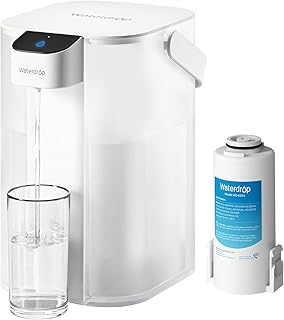


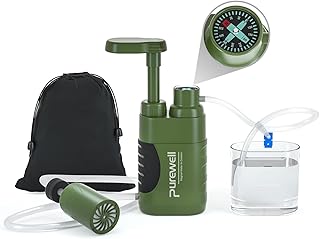


Choosing a water purifier is less about finding one product that is universally “best” and more about matching the filtration method, capacity, installation style and running costs to the water you actually use. A compact jug may be sufficient for someone who wants better-tasting drinking water, while a plumbed-in filtration system can make more sense for a household that wants filtered water directly from a dedicated tap. For UK buyers, it is particularly important to distinguish between improving taste and odour and addressing a specific water-quality concern. Mains water supplied by regulated utilities is treated before it reaches homes, but the condition of plumbing, the age of a property's internal pipework and the characteristics of the local supply can all affect the water coming from an individual tap. A purifier should therefore be selected according to a clearly defined purpose rather than simply by the number of filtration stages advertised. Before comparing models, identify what you want the purifier to achieve. Common reasons for buying a water filtration product include reducing chlorine taste or odour, improving the taste of tea and coffee, reducing certain dissolved substances, filtering particles, or simply having chilled or conveniently filtered drinking water available at home. The most useful comparison is between filtration technologies and installation formats. A purifier can be excellent in one category and unsuitable in another, so comparing products purely by brand or price can lead to a poor purchase. Filter jugs are among the simplest options for households that want filtered drinking water without modifying the kitchen plumbing. Water is poured into the upper reservoir and passes through a replaceable cartridge into the jug. Their main strengths are straightforward installation, portability and relatively low initial commitment. They are particularly convenient for rented accommodation or occasional drinking-water filtration. The trade-off is that users have to refill the jug and remember to replace cartridges according to the manufacturer's instructions. Brands such as Brita are well known in this category, but buyers should compare individual cartridge systems rather than assuming that every filter from the same brand provides identical filtration performance. Countertop systems sit on or near the kitchen worktop and can provide a higher-volume alternative to a jug. Depending on the design, they may use gravity filtration, pressure-assisted filtration or a connection to the existing tap. These products can be useful when a household drinks a significant amount of filtered water but does not want a permanent under-sink installation. Check the physical footprint carefully because filtration equipment, reservoirs and dispensing mechanisms can occupy valuable worktop space. Under-sink systems are designed to keep most filtration equipment inside the cupboard beneath the kitchen sink. Filtered water may be delivered through a dedicated drinking-water tap or, depending on the system, through an existing tap configuration. This format is attractive for households that want filtered water readily available without repeatedly filling a jug. It can also offer greater filter capacity than small portable systems. However, installation requirements, cupboard space, replacement-filter access and compatibility with the existing plumbing should all be checked before purchase. Reverse osmosis, commonly abbreviated to RO, uses a semi-permeable membrane to separate water from many dissolved substances. It is a considerably different proposition from a basic carbon filter and is often chosen when a buyer has a specific reason for wanting substantial reduction of dissolved constituents. RO systems normally require more components than simple filters and may produce a reject-water stream as part of the filtration process. Depending on the design, they can also require pre-filters, post-filters, a storage tank or pump, and more involved maintenance. Do not select reverse osmosis solely because it sounds more advanced. If your principal objective is better taste, a simpler system may be more convenient and economical. RO becomes more relevant when its specific filtration capability matches an identified requirement. Tap-mounted systems attach directly to a compatible kitchen tap and can provide filtered water without requiring a separate countertop reservoir. They can be convenient where space is limited, although compatibility with the tap design is essential. Some mixer taps and specialist tap designs may not accommodate a particular attachment. Check the manufacturer's compatibility information before buying rather than relying on the appearance of the connector alone. Whole-house filtration treats water at a point where it enters the property, potentially supplying treated water throughout the plumbing system. This is a substantially larger installation than a drinking-water filter and should be considered only when there is a clear reason to treat water at multiple outlets. Whole-house systems can involve significant installation, maintenance and replacement-filter considerations. They should not be confused with compact drinking-water purifiers designed primarily for a kitchen tap. Activated carbon is widely used in domestic water filters because it can adsorb a range of compounds and is particularly associated with improving taste and odour. Many familiar consumer filter cartridges use carbon as one of their principal filtration media. Carbon filtration is not a universal contaminant-removal technology. Performance depends on the specific media, contact time, water conditions, cartridge construction and contaminants being considered. Always examine the manufacturer's stated performance rather than treating “carbon filter” as a guarantee of broad-spectrum purification. Sediment filters physically capture suspended particles. They can be useful as a pre-filtration stage in systems containing multiple filtration technologies, particularly where particulate matter could otherwise reduce the effectiveness or lifespan of subsequent components. Ion-exchange media can be used to alter the concentration of particular ions in water. This technology is commonly associated with water-softening applications and can also appear in specialist filter cartridges. Because ion exchange is selective, the exact media and intended application matter. Buyers should read the technical specification rather than assuming that any cartridge described as using ion exchange will address every hard-water issue. Ultrafiltration uses a membrane with very small pores to separate certain particles and microorganisms from water. Its suitability depends on the membrane characteristics and the manufacturer's verified claims. UV treatment uses ultraviolet light as a disinfection technology. It is different from physical filtration because the principal mechanism is inactivation rather than simply trapping contaminants in a filter medium. UV systems require an appropriate power supply and maintenance regime, and the water must meet the system's operating requirements. A UV stage should therefore be evaluated as part of the complete treatment system rather than viewed as a standalone guarantee of water safety. RO membranes provide much finer separation than conventional sediment or carbon filtration. A typical domestic RO installation may combine several stages so that sediment and carbon pre-filters protect the membrane and a subsequent stage conditions the treated water. Because RO removes a broad range of dissolved substances, the resulting water can have a different mineral profile and taste from untreated mains water. Some systems include a remineralisation stage, but the value of such a feature depends on the intended use and the overall system design. Look at the manufacturer's stated cartridge capacity and compare it with your household's likely consumption. A cartridge that lasts a long time under light use may require more frequent replacement in a busy household. Do not compare advertised capacity figures without considering whether manufacturers have used comparable testing conditions. The actual service life can depend on incoming-water quality, volume and the substances being filtered. Flow rate describes how quickly filtered water can be delivered. A system with excellent filtration characteristics may still be frustrating if it dispenses water too slowly for your daily routine. This is particularly important for under-sink systems connected to a dedicated tap. Consider whether you need a glass of water at a time or regularly fill large bottles, pans and jugs. Filter life is one of the most important ownership considerations. Replacement intervals may be expressed by time, volume or both. Follow the manufacturer's instructions and do not assume that a filter remains effective indefinitely simply because water continues to pass through it. The purchase price of the purifier is only the beginning of the ownership calculation. Compare the cost of genuine replacement cartridges and how frequently they are expected to be changed. A lower-priced purifier can become less economical if its proprietary filters are expensive or require frequent replacement. Conversely, a higher initial purchase price may be easier to justify when replacement components are reasonably priced and readily available. Check whether replacement cartridges are commonly stocked by established retailers and whether the manufacturer specifies a particular cartridge model. A technically impressive purifier is less useful if obtaining the correct replacement filter becomes difficult. For filter jugs and countertop machines, tank or reservoir capacity affects convenience. A small reservoir can be perfectly adequate for one person but inconvenient for a larger family. Measure the space before buying. For a jug, consider refrigerator-door clearance if chilled storage is important. For an under-sink system, measure cupboard height, width and usable depth while allowing enough room to access filters during servicing. Basic filter jugs generally need no electrical connection, whereas powered dispensers, pumps, UV systems and some advanced filtration appliances do. Check whether the installation location provides a suitable electrical socket and whether the manufacturer's installation requirements can be met. Pumps and powered purification systems can generate noise. This may be irrelevant in a utility area but more noticeable in an open-plan kitchen. Where acoustic performance matters, check the manufacturer's specifications and independent customer feedback rather than assuming that a compact appliance will be silent. A compact jug or countertop filter can be practical when water consumption is modest and there is no desire to modify kitchen plumbing. The priority should normally be convenience, cartridge availability, capacity and the specific filtration claim that matches the buyer's objective. Families should pay closer attention to filter capacity, flow rate and replacement frequency. Constantly refilling a small jug can become inconvenient, making a higher-capacity countertop or under-sink system worth considering. Portable filtration is often the simplest approach where permanent plumbing alterations are undesirable. Filter jugs and certain countertop products can provide filtration without committing to an installation. If convenience is the priority, an under-sink system with a dedicated filtered-water tap can reduce the need to fill and store a jug. Installation complexity should be weighed against the everyday convenience gained. Buyers with a specific concern about dissolved constituents should investigate the exact reduction claims and test methodology rather than selecting a purifier based on general marketing language. Reverse osmosis may be relevant in some circumstances, but the correct solution depends on the substance in question and the characteristics of the incoming water. Hard water is a common reason people investigate filtration and water-treatment products, but “filtering water” and “softening water” are not interchangeable terms. Hardness is primarily associated with dissolved calcium and magnesium. A conventional carbon drinking-water filter may improve taste and reduce certain compounds without substantially softening the water. If limescale is the main problem, look specifically for a system designed and specified for hardness reduction. For households dealing with scale on kettles, taps, shower fittings and appliances, it is useful to distinguish between a drinking-water purifier and a domestic water softener. They address different objectives and may serve different parts of the plumbing system. Marketing terminology can make filtration products difficult to compare. Claims such as “multi-stage”, “advanced purification”, “premium filtration” or “99% reduction” are not meaningful without knowing exactly what substance was tested, under what conditions and according to which testing standard. Where a product makes a specific performance claim, look for supporting technical documentation and recognised testing or certification information. The relevant certification depends on the technology and the claim being made. Do not interpret a certification for one filtration function as certification for every possible contaminant. A filter can be appropriately tested for one substance while having no equivalent claim for another. Before purchasing an under-sink or plumbed-in purifier, check the inlet connection, available pressure, waste connection requirements and tap configuration. Some systems may require a dedicated filtered-water tap, while others may integrate differently with existing plumbing. Installation requirements can also affect the true cost of ownership. If professional installation is required, factor that into the overall budget rather than comparing only the appliance prices. Tenants should also consider whether the installation involves drilling, changing taps or altering plumbing. A portable filtration option may be more appropriate where permission for modifications is unavailable. Even a well-designed filtration system needs routine maintenance. Filters collect or adsorb substances over their service life, and components that remain wet can require appropriate cleaning according to the manufacturer's instructions. A cartridge is not simply a permanent barrier. Its performance can change as the filtration media becomes loaded. Delaying replacement beyond the manufacturer's stated service period can undermine the intended performance of the system. Filter replacement should therefore be treated as part of the product's running cost rather than an optional accessory. Higher price does not automatically mean better suitability. A sophisticated RO appliance can be unnecessary for someone whose only objective is improving the taste of drinking water. More stages do not inherently mean better filtration. The important question is what each stage does, how the stages work together and whether the overall system addresses the buyer's actual requirement. Always investigate the replacement cartridge before buying the main unit. A purifier with an attractive initial price can have a considerably different long-term cost once routine consumables are included. Filtration technologies have different capabilities. Avoid general claims that a product “removes impurities” unless the specific impurities and performance claims are clearly identified. Under-sink systems need physical clearance not only for installation but also for future filter replacement. A system that technically fits may still be impractical if there is no room to remove a cartridge or access a valve. A filter's capacity and flow rate should correspond with how much water the household actually uses. Capacity matters just as much as headline filtration technology. If limescale is the main concern, investigate products specifically designed for hardness rather than assuming that an ordinary drinking-water filter will solve the problem. Brand recognition can be useful when researching replacement filters, product support information and different filtration platforms, but brand reputation should not replace model-level comparison. When comparing these or other brands, focus on the exact model, cartridge specification, stated filtration performance, replacement schedule and installation requirements. A brand name alone cannot establish that a particular purifier is the right choice for a particular household. The appropriate budget depends on the type of system rather than simply the desired filtration quality. Basic portable filtration products generally involve fewer components, while under-sink, RO and powered systems can involve additional equipment and installation requirements. Instead of comparing purchase prices alone, consider the total cost of ownership. This includes replacement filters, electricity where applicable, installation, servicing and any additional accessories required for operation. A useful way to compare two products is to estimate their expected running requirements over several years. This gives a more realistic picture than focusing exclusively on the initial purchase price. There is often a trade-off between filtration capability and simplicity. A multi-stage system may provide more extensive treatment but require more components, more maintenance and more frequent attention. A basic jug may provide fewer filtration functions but be easier to use and maintain. The best choice is therefore the one that provides the necessary filtration without creating unnecessary complexity. If a household will not maintain a sophisticated system correctly, a simpler product that can be maintained consistently may be the more practical option. Product specifications should be read as a collection of connected details rather than isolated selling points. For example, a large filter-capacity figure has little practical value if the household's required flow rate is not met. Likewise, a high number of filtration stages does not explain what those stages actually remove. Look for precise information about filter type, rated capacity, operating pressure, flow rate, cartridge life, dimensions and installation requirements. Where a manufacturer makes contaminant-reduction claims, identify the exact contaminant and the conditions attached to the claim. Think about where filtered water will be used. A person who mainly wants a glass of drinking water may have very different requirements from a household that uses filtered water for tea, coffee, cooking and filling multiple bottles each day. High daily consumption makes capacity and flow rate increasingly important. It can also make replacement-filter costs more significant over time. Conversely, occasional use can favour a compact and inexpensive system. Many domestic filtration products are purchased because users prefer the taste or smell of filtered water. Activated carbon is commonly used for this purpose because it can reduce compounds associated with chlorine taste and odour. Taste remains subjective, however, and the result depends on the incoming water, the filtration technology and the condition of the cartridge. A purifier should not be selected solely on the assumption that more filtration automatically produces a better-tasting drink. A purifier is not necessarily the correct response to every water-related problem. If there is an unusual colour, persistent metallic taste, unexplained odour, visible contamination or a sudden change in water quality, investigate the underlying cause rather than relying solely on a domestic filter. Likewise, if the concern relates specifically to the property's plumbing, a filter may mask a symptom without addressing the source. For significant or persistent concerns, obtain appropriate information about the local supply and consider professional assessment where necessary. Customer reviews can provide useful information about everyday usability, but they should be treated as one part of the buying process rather than proof of technical performance. Before committing to a purifier, answer these questions: For a sensible 2026 purchase, start with the water-quality objective, then narrow the options by filtration technology, installation type and household capacity. Only after these factors have been established should price, design and additional features become deciding factors. Compare the exact specifications of shortlisted models, verify replacement-filter requirements, review installation constraints and check current retailer pricing before purchasing. Product ranges, cartridges and specifications can change, so current model information should always take precedence over older buying advice. There is no single best type for every UK home. A filter jug can be suitable for straightforward drinking-water filtration, while an under-sink system may be preferable for higher daily consumption. Reverse osmosis is more appropriate where its broader dissolved-substance reduction capability matches a specific requirement. It can be enough when the main objective is convenient drinking-water filtration and improved taste. The answer depends on what you want to remove and the performance of the particular cartridge. A jug should not be assumed to provide the same treatment as an RO or specialist filtration system. They can be worthwhile when the characteristics of RO filtration match the buyer's requirements. However, they are generally more complex than basic filtration products and can involve additional maintenance, components and reject water. Buyers should compare the benefits against those practical considerations. Not necessarily. Limescale is associated with hardness minerals, and many drinking-water filters are designed primarily for taste and other filtration functions. If hardness reduction is the objective, choose a system specifically designed and specified for that purpose. The correct interval varies by product, cartridge and water consumption. Follow the manufacturer's stated replacement period or capacity limit. Some systems use a filter-life indicator, but this should be used in accordance with the manufacturer's instructions. Not automatically. Price can reflect additional filtration stages, larger capacity, powered dispensing, installation hardware or more sophisticated technology, but those features may not be necessary for every household. The best value comes from matching the product's capabilities with your actual requirements. No. The number of stages is less important than what each stage does and whether the complete system has appropriate performance evidence. Compare filtration media, target substances, capacity and maintenance requirements instead. That depends on the characteristics of the bottled and tap water, personal preferences and the purpose of filtration. A domestic purifier can provide convenient access to treated drinking water without relying on individually purchased bottles, but the filtration system must still be maintained correctly. Yes, filtered water is commonly used for hot drinks. Some people prefer the resulting taste, particularly where filtration reduces compounds that affect the flavour or smell of tap water. The ideal mineral composition can vary according to the drink and personal preference. It depends on the system and the existing plumbing. Some products are designed for relatively straightforward installation, while others require additional connections or electrical components. Always follow the manufacturer's installation requirements and use qualified assistance where appropriate. There is no single specification that matters most for every buyer. Start with the filtration performance relevant to your objective, then compare capacity, flow rate, replacement-filter life, running cost, installation requirements and maintenance. The strongest buying decision comes from matching the purifier to the actual job it needs to perform. For simple taste and odour improvement, a well-specified carbon-based filter may be sufficient. For a larger household, capacity and flow rate may outweigh compactness. For specific concerns about dissolved substances, a more advanced system such as reverse osmosis may deserve consideration. Whatever type you choose, compare the exact model specifications rather than relying on brand reputation or headline marketing claims. Check filter replacement costs, installation requirements and ongoing maintenance, and consider independent customer feedback alongside technical documentation. Before purchasing, compare current specifications and today's prices from trusted retailers, check verified customer reviews and make sure the selected system is suitable for your intended use. Product availability, specifications and cartridge ranges can change, so current manufacturer information should always be checked before making a final decision.How to Choose the Best Water Purifier for Your Home in the UK
Start With the Water You Want to Improve
Water Purifier Types Compared
Water Filter Jugs
Countertop Water Filters
Under-Sink Water Filters
Reverse Osmosis Water Purifiers
Tap-Mounted Filters
Whole-House Filtration
Water Filtration Technologies Explained
Activated Carbon
Sediment Filtration
Ion Exchange
Ultrafiltration
Ultraviolet Treatment
Reverse Osmosis Membranes
Key Specifications to Compare Before Buying
Filtration Capacity
Flow Rate
Filter Replacement Interval
Replacement Filter Cost
Filter Availability
Water Tank Capacity
Physical Dimensions
Power Requirements
Noise
How to Compare Water Purifiers for Different Households
Best for a Single Person or Couple
Best for a Family
Best for a Rented Property
Best for a Busy Kitchen
Best for Buyers Concerned About Dissolved Substances
Water Hardness and Filtration: What UK Buyers Need to Know
Water Purifier Certifications and Performance Claims
Installation Considerations
Maintenance: How to Keep a Water Purifier Working Properly
Why Filter Replacement Matters
Common Water Purifier Buying Mistakes
Choosing the Most Expensive Model Automatically
Counting Filtration Stages
Ignoring Replacement Filters
Assuming Every Filter Removes Every Contaminant
Buying Without Measuring the Installation Area
Forgetting Household Consumption
Confusing Water Filtration With Water Softening
Water Purifier Comparison Checklist
Popular Water Purifier Brands to Compare
How Much Should You Spend on a Water Purifier?
Performance Versus Convenience
How to Read Water Purifier Specifications
Drinking Water, Cooking and Appliance Use
Does Filtered Water Taste Better?
When a Water Purifier May Not Be the Answer
How to Assess Customer Reviews Properly
Questions to Ask Before Buying
Best Water Purifier Buying Strategy for 2026
Frequently Asked Questions
Which type of water purifier is best for a UK home?
Is a water filter jug enough?
Are reverse osmosis water purifiers worth it?
Does a water purifier remove limescale?
How often should a water purifier filter be changed?
Are expensive water purifiers better?
Should I buy a water purifier based on the number of filtration stages?
Is bottled water better than filtered tap water?
Can I use filtered water for tea and coffee?
Do I need a professional to install an under-sink water purifier?
What is the most important specification when comparing water purifiers?
Final Water Purifier Buying Advice