

Our experts reviewed the latest {category_name } to help you compare quality, performance, durability and overall value before making your purchase.


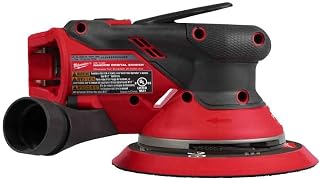
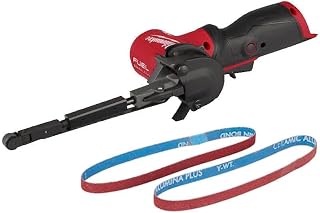


Choosing a Milwaukee cordless sander is less about finding a single “best” machine and more about matching the sanding mechanism, pad size, speed control, dust-management setup and battery platform to the work you actually do. Milwaukee’s current UK sanding range includes the M18 BOS125 125 mm random orbital sander, the M18 FUEL FROS125 125 mm random orbit sander and the M18 BQSS quarter-sheet sander, alongside more compact M12 sanding options for specialist applications. For general woodworking, furniture preparation, paint removal and finishing work, the two 125 mm random orbital models are the most directly comparable choices. The M18 BQSS takes a different approach, using quarter-sheet abrasive paper rather than the circular discs used by the random orbital machines. That distinction matters because abrasive availability, sanding pattern, edge access and the type of finish you want can be more important than headline motor performance. These are not simply three versions of the same tool. The BOS125 and FROS125 are best compared as random orbital sanders, whereas the BQSS is a sheet sander with a different abrasive format and sanding action. Milwaukee's UK product listings identify all three as M18 products, so an existing M18 battery collection can be a significant part of the buying decision. The M18 BOS125 is the more established of Milwaukee's two M18 125 mm random orbital options. Its specification lists a high-performance motor delivering 14,000 to 24,000 sanding strokes per minute, together with a six-position variable-speed control. That combination is useful when one machine needs to cover more than one material or sanding stage. A higher sanding rate can be useful for material removal, but maximum speed is not automatically the correct setting for every job. Delicate finishes, soft timber, paint preparation and final smoothing can require a more controlled approach. The ability to adjust the speed therefore deserves attention alongside the headline maximum. Milwaukee also specifies REDLINK overload-protection electronics and a REDLITHIUM battery system. The UK listing identifies model M18 BOS125-502B with product code 4933464230, while the exact kit contents should always be checked before purchase because bare-tool and battery-kit configurations are different purchasing propositions. The BOS125 makes particular sense for a buyer who already owns M18 batteries and wants a straightforward 125 mm random orbital sander without moving into the newer FUEL specification. It is also worth considering where six speed settings and the combination of on-tool dust collection and vacuum compatibility are more important than having the newest platform features. It should not, however, be selected solely because its stated maximum sanding rate is higher than the FROS125's. Sanding performance is affected by orbit size, abrasive type, pressure applied by the operator, material, extraction, battery condition and the sanding stage. A higher number on the specification sheet does not provide a universal measure of finish quality or productivity. The M18 FUEL FROS125 approaches the same broad application category with a different specification. Milwaukee lists a 2.5 mm orbit, five speed settings and a sanding-stroke range of 6,000 to 12,000 per minute. The company also states that the machine can remove 220 g of material per charge when used with one M18 5.0 Ah battery, although this is a manufacturer-stated performance figure rather than an independently verified comparison figure. One of its most significant differences is the integration of VacLink technology. Milwaukee says the tool can communicate with compatible Milwaukee dust extractors over Bluetooth, allowing the sander to switch the compatible extractor on and off. The supplied DEK26 adaptor is designed for direct connection to Milwaukee dust extractors, and Milwaukee states a dust-extraction efficiency of 95% for the specified setup. Milwaukee announced the FROS125 in 2025 and described it as a professional-focused addition to its sanding range. Its published specifications state a 2.2 kg weight when fitted with an M18 B5 battery, a 2.5 mm oscillation diameter and a 6,000–12,000 OPM range. “FUEL” should not be interpreted as a guarantee that the tool will outperform every other Milwaukee sander in every application. It identifies Milwaukee's higher-performance cordless architecture, combining a POWERSTATE brushless motor, REDLITHIUM battery technology and REDLINK PLUS electronic intelligence. For a buyer, the more practical question is whether those features solve a real problem. If you sand for long periods, the FROS125's stated low-vibration characteristics and lighter tool-only weight may be relevant. If dust extraction is a major concern, VacLink can be more meaningful than a small difference in sanding speed. If you already have an M18 ecosystem, compatibility can also reduce the need to buy another battery platform. The M18 BQSS is fundamentally different from the random orbital models. Rather than using circular 125 mm sanding discs, it accepts quarter-sheet abrasive paper. Milwaukee specifies six speed settings and an 11,000–13,000 sanding-stroke range. It also provides both hook-and-loop sanding attachment and paper-retention clips, giving the user flexibility over abrasive format. This can be particularly attractive to users who already keep sheets of abrasive paper in different grades. Milwaukee's own accessory information identifies 115 x 107 mm standard sanding sheets as suitable for the M18 BQSS, and its sanding-paper range includes several grit options. The BQSS can therefore be a better fit where abrasive-sheet convenience and a flatter rectangular sanding format are priorities. It should not be judged as a cheaper or inferior substitute for a random orbital sander: it is designed around a different sanding method. The choice between these two formats is one of the most important decisions in a Milwaukee cordless sander comparison. One of the easiest buying mistakes is comparing sanders solely by RPM or OPM. These figures describe movement but do not, by themselves, describe how aggressively a tool removes material or what finish it leaves. The FROS125 has a stated 2.5 mm orbit. Orbit diameter describes the movement of the sanding pad around its operating position. A larger movement can be associated with more aggressive sanding, while a smaller movement is generally more appropriate when controlled finishing is the priority. However, abrasive selection and technique remain decisive. The sanding rate is also not the same thing as a machine's motor RPM. Random orbital tools combine rotational and orbital movement, so buyers should compare like-for-like specifications rather than taking a single speed figure from two different sanding technologies and assuming it represents equivalent performance. Variable speed is useful because different materials and sanding stages respond differently to abrasive movement. A setting appropriate for rapid stock removal may not be the ideal choice for delicate veneer, painted surfaces or final preparation before finishing. The sander itself is only one half of the sanding system. Abrasive grade has a major effect on removal rate, scratch pattern and preparation quality. Milwaukee's listed sanding sheets cover multiple grit grades, including coarse and fine options. The correct grade depends on the material, existing coating, desired finish and the condition of the surface rather than the tool brand alone. Sanding generates fine airborne dust, so dust management should be treated as a core purchasing criterion rather than an optional accessory. A dust bag can be convenient for smaller jobs, while connection to a suitable extractor can be preferable for prolonged sanding or work where dust control is particularly important. The BOS125 includes a dust-extraction box and vacuum adaptor. The FROS125 goes further with VacLink technology for compatible Milwaukee extractors. Milwaukee states that the FROS125's DEK26 adaptor can connect directly to its dust extractors and publishes a 95% dust-extraction efficiency figure for the specified system. These manufacturer claims should be understood as configuration-dependent rather than universal performance guarantees for every extractor, hose, abrasive and workpiece. Good extraction does not eliminate the need for sensible workshop ventilation and appropriate personal protective equipment. Users should follow the safety instructions supplied with the tool, abrasive and extractor, particularly when sanding coatings or materials that can generate hazardous dust. One of the main advantages of a cordless Milwaukee sander is the ability to share batteries with other M18 tools. The M18 BOS125 and M18 FROS125 are listed as compatible with the M18 battery system, while the BQSS also belongs to that platform. Battery capacity should be considered alongside tool balance and expected working time. A larger battery can provide more available energy, but it can also alter the overall weight and handling of a compact sanding tool. For extended sanding, having multiple charged batteries may be more useful than selecting a single very large pack. Kit contents also matter. A bare tool can make financial sense for an existing M18 owner with suitable batteries and a charger. A complete kit can be more practical for someone entering the M18 platform, but its value depends on the batteries, charger, case or bag supplied and the current retailer price. The M18 FUEL FROS125 uses Milwaukee's POWERSTATE brushless motor architecture. The M18 BQSS uses a premium 4-pole brushed motor, while the BOS125 uses a high-performance motor with REDLINK protection. Brushless technology can be valuable in a cordless tool because motor efficiency, electronic control and durability are important when operating from a finite battery supply. However, buyers should avoid treating “brushless” as a standalone quality rating. The whole system—including electronics, battery, abrasive, extraction, ergonomics and application—determines whether a sander is suitable. Sanding is repetitive work, so ergonomics deserve as much attention as motor specifications. A sander that is technically powerful but uncomfortable to hold may be less suitable for long sessions than a model with a more balanced design. Milwaukee lists the BOS125 at 1.6 kg and the FROS125 at 1.45 kg for the tool itself. Milwaukee also reports vibration levels down to 6.63 m/s² for the FROS125 and 5.23 m/s² for the BQSS. These are published manufacturer figures and should not be interpreted as a direct real-world ranking across different tool types or test conditions. For general woodworking, a 125 mm random orbital sander is usually the most versatile choice among the M18 options discussed here. The circular abrasive format is widely suited to surface preparation and finishing, while variable speed allows the user to adjust the machine to different stages of the job. The FROS125 is particularly interesting for professional users who value its FUEL platform, 2.5 mm orbit, lower-speed range and VacLink capability. The BOS125 remains a credible choice where its six-speed control, established design and published 14,000–24,000 sanding-stroke range fit the workflow. The BQSS becomes more compelling when rectangular quarter-sheet abrasives are already part of the user's workshop routine. Furniture restoration often involves several different sanding stages. Removing old coatings may require a different abrasive strategy from preparing bare timber for a final finish. Delicate edges, veneers and shaped components also require greater control than a broad flat worktop. For occasional DIY work, the most sensible Milwaukee sander may be the one that integrates with tools and batteries you already own. Buying into a new battery platform solely for one sanding task can change the economics considerably. An existing M18 owner should compare bare-tool and kit configurations carefully. A new Milwaukee user should consider the cost of the complete cordless ecosystem rather than looking only at the price of the sander body. For occasional small jobs, also consider whether a cordless machine is genuinely more convenient than a mains-powered alternative. Cordless sanding is particularly attractive where cables are inconvenient, but battery ownership and charging are part of the overall system cost. A useful comparison should prioritise specifications according to the job rather than presenting a long list of numbers without context. Milwaukee's current sanding catalogue demonstrates that there is no single cordless sanding format intended to cover every application. Its range includes the M18 FROS125 and M18 BOS125 random orbital sanders, the M18 BQSS quarter-sheet sander and smaller M12 sanding solutions including 75 mm and 150 mm random orbital designs. That breadth is useful because the best choice can depend on the size and geometry of the workpiece. A 125 mm machine is a sensible general-purpose format, while smaller sanding platforms can make more sense for tighter areas or specialist finishing tasks. Buyers should therefore consider the whole application before deciding that one model is universally superior. Good maintenance starts with keeping abrasive and dust-management components in suitable condition. Dust can accumulate around moving parts, vents, extraction pathways and battery interfaces, so cleaning should follow the manufacturer's instructions rather than relying on aggressive compressed-air practices that could move debris into sensitive areas. Sanding safety is not limited to avoiding contact with the moving pad. Fine dust can present respiratory and cleanliness concerns, while old coatings may contain hazardous substances. The correct precautions depend on the material being sanded and the environment in which the work is performed. The most direct Milwaukee cordless sander comparison is between these two 125 mm random orbital models. The deciding factor should therefore be the workflow rather than a simplistic “newer is better” conclusion. The FROS125's lower-speed range, FUEL architecture, stated vibration performance and VacLink capability may appeal strongly to professional users. The BOS125's six-speed control and established 125 mm random orbital format can still make it a sensible choice where those particular FUEL features are not essential. This is primarily a choice between sanding formats. The FROS125 uses a 125 mm-class random orbital system with a 2.5 mm orbit, while the BQSS uses quarter-sheet abrasive paper and a different sanding motion. The FROS125 is the more obvious option for someone wanting a general-purpose random orbital sander and the newer FUEL technology. The BQSS is attractive when standard rectangular sheets and paper clips are more convenient. Milwaukee's own accessory listings confirm the availability of quarter-sheet abrasive dimensions suitable for the BQSS. For someone already invested in M18 tools, Milwaukee's cordless sanding range can be particularly logical because the battery platform can be shared across compatible tools. The question becomes less about whether cordless sanding is inherently better and more about whether the convenience, portability and existing battery investment justify the particular model. For a new buyer, the decision should include the cost of batteries and charging equipment, the amount of sanding expected, abrasive costs and the value of dust-extraction compatibility. A high-specification sander is unlikely to be the best-value purchase if its advanced features are rarely used. Retail prices can change, and kit configurations are not always directly comparable. A lower headline price may represent a bare tool, whereas a more expensive listing may include batteries, charger and storage. There is no single best Milwaukee cordless sander for every user. The M18 FUEL FROS125 is the newer 125 mm random orbital option and adds features including VacLink, a 2.5 mm orbit and five speed settings. The M18 BOS125 offers a different speed range with six settings, while the M18 BQSS is a quarter-sheet design. The right choice depends on application, abrasive preference, battery ownership, dust extraction and budget. It is more accurate to describe the FROS125 as the newer FUEL design rather than universally “better”. It introduces a 2.5 mm orbit, a 6,000–12,000 OPM range, VacLink and the FUEL brushless motor/electronics architecture. The BOS125 has six speed settings and a published 14,000–24,000 sanding-stroke range. Which specification is preferable depends on the sanding work. Yes. Milwaukee states that the FROS125 works with M18 batteries. The specified UK kit includes two M18 5.0 Ah batteries and an M12-18 FC charger, although buyers should verify the exact contents of the configuration they are considering. Yes. Milwaukee specifies a variable speed wheel with six speed settings for the M18 BOS125. Its published sanding-stroke range is 14,000–24,000 per minute. The BOS125 is a 125 mm random orbital sander and uses a universal hook-and-loop sanding pad. Always check the exact abrasive specification before buying consumables. The BQSS is a quarter-sheet sander. Milwaukee lists standard 115 x 107 mm sanding sheets as suitable for the M18 BQSS, and the machine also has paper-retention clips as well as a hook-and-loop sanding pad. No. Milwaukee's published specification describes the BQSS as using a premium 4-pole brushed motor together with REDLITHIUM battery technology and REDLINK electronics. Yes. Milwaukee lists a dust bag and vacuum adaptor and states that the FROS125 uses VacLink technology for compatible Milwaukee dust extractors. Milwaukee also publishes a 95% dust-extraction efficiency figure for the specified DEK26-connected configuration. The BOS125, FROS125 and BQSS are all listed as part of the M18 battery system. Always verify compatibility for the exact tool and battery configuration before use. Neither format is universally better. Random orbital sanders are highly versatile for general surface preparation and finishing, while quarter-sheet sanders can be convenient for users who prefer rectangular abrasive paper. Your workpiece, abrasive supplies and desired finish should determine the choice. If you already own compatible M18 batteries and a charger, a bare tool may avoid unnecessary duplication. If you do not own the platform, a complete kit can provide a more straightforward starting point. Compare the exact contents and current retailer prices rather than comparing headline prices alone. There is no universal time interval. Replace abrasive when it becomes clogged, worn, damaged or noticeably less effective. Continuing to use a blunt abrasive can increase the temptation to apply excessive pressure and can compromise the sanding process. The strongest Milwaukee cordless sander choice is the one that fits the entire sanding workflow, not simply the machine with the most impressive specification. For a versatile M18 random orbital setup, compare the BOS125 and FROS125 carefully. The FROS125 is the newer FUEL design and brings a 2.5 mm orbit, five speed settings, VacLink connectivity and Milwaukee's POWERSTATE brushless motor architecture. The BOS125 offers six speed settings, a 14,000–24,000 sanding-stroke specification and a proven 125 mm random orbital format. If your priority is rectangular abrasive paper, the M18 BQSS deserves separate consideration rather than being treated as a lesser random orbital alternative. Its quarter-sheet format, six speed settings, paper clips and hook-and-loop attachment make it a distinct proposition. Before buying, compare the exact UK model number, kit contents, battery requirements, abrasive costs, dust-extraction compatibility and current retailer pricing. For a long-term purchase, ergonomics and compatibility with the tools you already own can be just as important as motor specifications.Milwaukee Cordless Sanders: Which M18 Model Is Right for You?
Milwaukee M18 Sander Comparison at a Glance
Milwaukee M18 BOS125: What Makes It a Strong General-Purpose Choice?
Who Should Consider the M18 BOS125?
Milwaukee M18 FUEL FROS125: The Newer 125 mm Random Orbit Option
Why the FUEL Design Matters
Milwaukee M18 BQSS: When a Quarter-Sheet Sander Makes More Sense
Random Orbital Sander vs Quarter-Sheet Sander
Understanding Orbit Size, Sanding Speed and Finish Quality
Why Variable Speed Is Important
Choosing the Right Sandpaper Grit
Dust Extraction: A Major Buying Consideration
Battery Choice: What M18 Users Should Consider
Brushless vs Brushed: Does It Matter for Sanding?
Ergonomics and Vibration: Often More Important Than Raw Power
How to Choose a Milwaukee Cordless Sander for Woodworking
How to Choose a Milwaukee Sander for Furniture Restoration
How to Choose for DIY and Home Workshop Projects
Common Buying Mistakes to Avoid
Milwaukee Cordless Sander Buying Checklist
Specifications That Matter Most When Comparing Milwaukee Sanders
What the Current Milwaukee Range Tells Buyers
Maintenance and Care for a Cordless Sander
Safety Considerations When Using a Cordless Sander
M18 BOS125 vs M18 FROS125
M18 FROS125 vs M18 BQSS
Are Milwaukee Cordless Sanders Worth Considering?
How to Compare Prices Properly
Who Should Buy Which Milwaukee Sander?
Frequently Asked Questions
Which Milwaukee cordless sander is best?
Is the Milwaukee M18 FROS125 better than the BOS125?
Does the Milwaukee FROS125 use the M18 battery system?
Does the M18 BOS125 have variable speed?
What size sanding discs does the Milwaukee BOS125 use?
What abrasive does the Milwaukee M18 BQSS use?
Is the M18 BQSS brushless?
Does the FROS125 have dust extraction?
Can Milwaukee M18 batteries be shared between the sanders?
Is a random orbital sander better than a quarter-sheet sander?
Should I buy a bare Milwaukee sander or a kit?
How often should sanding discs or sheets be changed?
Final Buying Advice for 2026