

Our experts reviewed the latest {category_name } to help you compare quality, performance, durability and overall value before making your purchase.






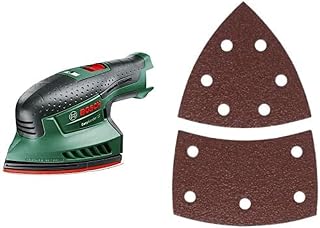


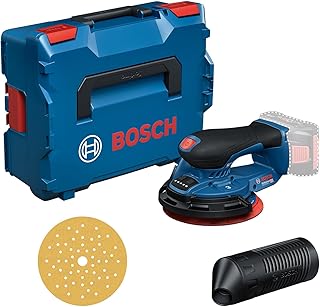


Choosing the right Bosch cordless sander is less about finding the most powerful-looking model and more about matching the sanding mechanism, pad shape, orbit size, battery platform and dust-management system to the work you actually intend to do. A compact multi-sander can be the better choice for furniture edges and awkward corners, while a 125 mm random orbit sander is generally more versatile for larger flat surfaces. Professional users may also benefit from the greater capacity and 150 mm sanding area of a Bosch Professional model. This guide expands the buying information for anyone comparing Bosch cordless sanders in the UK. It focuses on the differences that matter in real purchasing decisions: sanding movement, pad dimensions, speed control, battery compatibility, weight, ergonomics, dust extraction, abrasive attachment, surface area and the type of finish required. Bosch divides its cordless power tools between the Bosch DIY range and Bosch Professional range, and the battery ecosystems should not be treated as interchangeable simply because both use an 18 V nominal voltage. Bosch DIY 18 V POWER FOR ALL tools are part of the POWER FOR ALL ALLIANCE ecosystem, whereas Bosch Professional cordless tools use the Professional 18 V system and, on relevant models, AMPShare compatibility. Always check the exact battery platform before buying a bare tool. Not all cordless sanders perform the same movement. The shape of the sanding pad is only part of the equation. The sanding pattern, orbit diameter and operating speed influence how quickly material is removed and how easily a smooth, consistent finish can be achieved. Random orbit sanders combine an orbital movement with rotation of the sanding pad. This movement makes them particularly useful for general woodworking, paint preparation, intermediate sanding and finishing because the sanding pattern is less likely to leave the obvious directional marks associated with a conventional orbital sander when the tool is used correctly. The 125 mm format is a particularly useful compromise for domestic workshops and general woodworking. It offers a broad sanding area without making the machine unnecessarily large. Bosch examples include the AdvancedOrbit 18 in the DIY range and the Bosch Professional GEX 18V-125. A random orbit sander is often the strongest all-round choice if your work includes shelves, doors, tabletops, timber panels, furniture components and painted surfaces. It is less specialised than a detail or multi-sander and can therefore cover a wider range of ordinary sanding jobs. Multi-sanders are designed around versatility and access rather than maximum productivity on very large surfaces. Their pointed or iron-shaped sanding plates can reach into corners and along edges that are awkward for a circular sanding pad. The Bosch EasySander 18V-8 is an example of this approach. Bosch specifies an iron-shaped 149 x 101 mm sanding plate, a 1.6 mm orbit diameter and an orbital stroke rate of 22,000 opm. Its compact form makes the format particularly relevant to furniture restoration, frames, doors, edges and medium-sized areas where a conventional circular sander may be inconvenient. A detail-oriented machine should not automatically be considered a replacement for a random orbit sander. The two tools solve different problems. If most of your work involves broad panels, a random orbit model is usually the more natural format. If corners and intricate furniture components dominate the workload, a multi-sander can be much easier to live with. Bosch Professional orbital sanders are aimed at users who need a more work-focused tool for repeated sanding applications. The GSS 18V-13, for example, uses interchangeable sanding plate configurations and is designed around flexibility for different sanding shapes. Bosch specifies a 1.6 mm orbit diameter and a no-load orbital stroke rate of 12,000–20,000 opm for this model. This category is worth considering when sanding is a regular part of your work rather than an occasional DIY task. A professional tool can make sense because handling, accessory compatibility, dust extraction arrangements, battery availability and long-term workflow may matter more than the headline purchase price. The Bosch name covers two distinct cordless-tool audiences, so comparing a Bosch DIY sander directly with a Bosch Professional sander purely by voltage or advertised speed can be misleading. Bosch DIY tools are designed for home improvement, furniture projects, renovation tasks and general household use. They can be a sensible choice for users who need a capable cordless sander without necessarily requiring a tool intended for continuous professional workloads. The AdvancedOrbit 18 is a useful example. Bosch specifies a 125 mm sanding pad, variable orbital stroke rate from 6,000 to 24,000 opm, a 3.2 mm orbit diameter and a tool weight of 1.40 kg excluding the battery. It also has electronic speed preselection and a dust box. Bosch Professional tools are developed for tradespeople and demanding workshop applications. The GEX 18V-125, for example, has a 125 mm sanding pad, a 2.5 mm orbit diameter, a no-load speed range of 6,000–10,000 rpm and a specified weight of 1.1 kg excluding the battery. The distinction is important when comparing specifications. A higher stated orbital stroke rate does not necessarily mean that one sander will remove material faster in every situation. Orbit diameter, pad movement, motor characteristics, abrasive choice, pressure and the material being sanded all influence practical performance. Pad diameter is one of the easiest specifications to understand and one of the most useful when comparing sanders. Bosch Professional's GEX 18V-150-3 uses a 150 mm sanding pad, a 3 mm orbit diameter and a no-load speed range of 5,000–10,000 rpm. Bosch describes it as suitable for removing wood, paint and lacquer as well as intermediate and fine sanding. Orbit diameter is one of the most useful technical specifications when comparing sanders because it gives an indication of the scale of the sanding movement. A smaller orbit can be advantageous when controlled finishing is more important than aggressive material removal. A larger orbit generally moves the abrasive through a greater path and can be beneficial when removing material more quickly, although the exact result depends on the machine, abrasive and operating speed. For example, the Bosch Professional GEX 18V-125 specifies a 2.5 mm orbit, while the Bosch Professional GEX 18V-150-3 specifies a 3 mm orbit. The Bosch DIY AdvancedOrbit 18 has a 3.2 mm orbit. These numbers should be considered alongside the rest of the machine's design rather than used as a standalone ranking system. When comparing models, ask what you actually need the sander to do. A machine intended for fast stock removal is not necessarily the machine you will enjoy using for delicate finishing work, and a highly controllable finishing sander may not be the quickest option for stripping a heavily coated panel. Orbital stroke rate is normally expressed as oscillations or orbits per minute. It indicates how rapidly the sanding mechanism moves, but it should never be interpreted as a direct measurement of sanding performance. Variable speed can be particularly useful because different materials and finishing stages call for different approaches. High speeds can be useful for certain sanding applications, while lower settings can provide greater control when working on sensitive coatings, edges or heat-sensitive materials. The Bosch AdvancedOrbit 18 provides electronic speed preselection across a 6,000–24,000 opm range. By comparison, the Bosch Professional GEX 18V-125 specifies a 12,000–20,000 opm orbital stroke rate. Do not select a sander solely because its maximum number looks impressive. A useful variable-speed range can be more valuable than an unusually high maximum speed if you regularly switch between aggressive preparation and controlled finishing. Cordless sanding is particularly attractive when freedom from a mains cable makes it easier to move around a workbench, garden workshop, renovation site or large piece of furniture. However, the convenience depends heavily on the battery system. Before ordering a bare tool, identify the batteries you already own and confirm that the exact sander belongs to the same battery platform. Bosch DIY 18 V POWER FOR ALL tools and Bosch Professional 18 V tools should not be assumed to share batteries merely because the voltage rating is 18 V. The Bosch EasySander 18V-8 is specified for the 18V POWER FOR ALL ALLIANCE and Bosch recommends a battery of at least 2.5 Ah. The Bosch AdvancedOrbit 18 is also part of the 18V POWER FOR ALL ALLIANCE and Bosch specifies a recommended battery of at least 2.0 Ah. For a professional user, the relevant consideration is the Bosch Professional battery ecosystem rather than simply the 18 V label. This is especially important if you already own several Bosch Professional cordless tools and want to share batteries between them. Battery capacity is usually expressed in ampere-hours, or Ah. A higher-capacity battery can provide more stored energy, but it can also increase the weight of the complete tool. That trade-off matters more with sanders than it might initially appear. Sanding often involves holding the tool continuously over a workpiece, sometimes for extended periods. A heavier battery may increase endurance while making the machine more tiring to control. There is no universally correct battery size. For furniture touch-ups, small components and short preparation tasks, minimising weight may be more useful. For repeated sanding across large panels, additional capacity can reduce interruptions for battery changes. Manufacturers often quote tool weight without the battery. This is useful for comparing the bare machines but does not tell you what the sander will weigh during actual use. The complete working weight includes the battery, sanding disc or sheet and any dust-collection accessory attached to the machine. The balance of the tool can be just as important as the absolute number. A well-balanced sander keeps the centre of mass close to the work surface and can feel easier to guide. Bosch highlights balance and ergonomic control on models such as the GEX 18V-125 and GEX 18V-150-3. When comparing a cordless sander, therefore, consider both stated weight and how you will hold it. A machine that is slightly heavier on paper may still feel more stable if its weight is distributed effectively, while a theoretically light tool can become tiring if the battery creates an awkward balance. Sanding creates fine dust, making dust management an important part of choosing a machine rather than a secondary convenience. Built-in dust boxes can be useful for mobile DIY work where a vacuum is not immediately available. The Bosch EasySander 18V-8 uses a removable Microfilter dust box, while the AdvancedOrbit 18 also includes a Microfilter dust box. For workshop use, compatibility with a suitable dust extractor can be more important than the capacity of a small onboard container. A connected extraction system can make prolonged sanding more practical and reduce the amount of airborne dust around the work area. When assessing dust management, check the complete extraction arrangement rather than simply looking for the words “dust box”. Consider whether the machine accepts an extractor connection, what adapters may be needed, whether the abrasive holes align correctly with the pad and how easily the dust system can be emptied or cleaned. Hook-and-loop attachment is convenient because sanding discs or sheets can be changed quickly and positioned securely. It is particularly common on modern random orbit sanders. Clamping systems can still be useful, especially on rectangular orbital sanders where conventional abrasive sheets are cut or folded to size. Some professional Bosch sanding systems offer different plate configurations, making it possible to select the arrangement that best matches the workpiece and abrasive format. Before buying, check the abrasive format rather than assuming that every Bosch sander accepts the same consumables. A cheap machine can become less economical if its required abrasives are inconvenient to source or if you already have a large supply of a different format. Furniture projects often involve a mixture of broad surfaces, edges, corners and detailed components. A random orbit sander is usually useful for tabletops, doors and broad panels, while a multi-sander can be advantageous around corners and narrow sections. If the project involves removing old paint or lacquer, prioritise appropriate abrasive grades and controlled sanding technique rather than expecting the machine alone to perform the entire preparation process. A 125 mm random orbit sander is a practical general-purpose format for many doors and timber panels. A 150 mm model can become attractive when larger surfaces are repeatedly processed. For large surfaces, maintaining a consistent movement pattern is important. Holding the sander stationary for too long can create uneven removal or unwanted marks, regardless of the quality of the tool. Paint preparation requires a controlled approach because the objective may be to smooth an existing coating rather than remove all of it. Variable speed and suitable abrasive selection can help provide more control. Do not assume that the most aggressive orbit or highest operating speed is automatically best. The correct approach depends on whether you are keying an intact coating, feathering damaged paint, removing a failed finish or preparing bare timber for a new coating. Fine finishing is primarily about consistency. The quality of the abrasive, progressive grit selection, even pressure and correct sanding technique can have a greater effect on the final appearance than a small difference between competing machine specifications. A random orbit sander can produce an excellent finish when used correctly, but it is still important to finish with an appropriate abrasive and avoid allowing worn or clogged abrasive material to remain in use for too long. Circular random orbit sanding pads are not ideal for every corner. A pointed multi-sander can access areas that would otherwise require hand sanding. If a project contains many internal corners, stair components, window frames or detailed furniture profiles, the ability to reach these areas may justify choosing a multi-sander even if a random orbit machine would be faster on the main surfaces. These two Bosch DIY cordless sanders illustrate why “best” depends on the application. These specifications demonstrate that the two machines are designed around different priorities rather than competing directly on every criterion. The AdvancedOrbit 18 is the more natural format for broad surfaces, while the EasySander 18V-8 prioritises compactness and access. The GEX 18V-125 and GEX 18V-150-3 are more closely related in purpose because both are professional cordless random orbit sanders, but the pad size and sanding characteristics create meaningful differences. The 125 mm model is attractive as a versatile professional format, while the 150 mm GEX 18V-150-3 is particularly relevant to users who regularly work on larger surfaces and want the larger sanding area. Bosch also highlights its brushless motor, 3 mm orbit and dust-management features. A brushless motor eliminates the conventional mechanical brushes used in brushed motor designs. In cordless tools, brushless technology is commonly associated with efficiency, durability and compact motor design, although the real-world benefit depends on the complete tool and workload. If a professional sander will be used frequently, brushless motor technology can be a useful consideration. It should nevertheless be evaluated alongside ergonomics, battery system, extraction, sanding performance and accessory availability rather than treated as a guarantee of superior results. The Bosch Professional GEX 18V-150-3 is specified with a brushless motor and a 3 mm orbit. The sander is only half of the sanding system. Abrasive selection has a major influence on speed, surface quality and the useful life of the consumable. There is no single grit sequence that suits every material. Hardwood, softwood, old coatings, fillers and painted surfaces can respond differently. The safest approach is to progress through appropriate grades rather than attempting to remove every defect with an extremely coarse abrasive. Keep the abrasive clean and replace it when it becomes clogged, glazed or ineffective. A worn abrasive can tempt the user to press harder, which can reduce control and potentially compromise the surface. Two tools labelled 18 V can have very different sanding mechanisms, pad sizes, battery ecosystems and intended users. Voltage should therefore be treated as one specification rather than a performance ranking. Maximum orbital speed is not the same as maximum sanding performance. A controllable machine that can be adjusted to the material may be more useful than a machine selected because its maximum figure is higher. Pad shape determines where the tool can work effectively. A circular 125 mm machine and an iron-shaped multi-sander are not substitutes for one another in every application. Bare-tool pricing can look attractive until the cost of a compatible battery and charger is considered. If you are starting a new battery platform, compare the complete system cost rather than the price of the tool alone. Dust collection is especially important for repeated indoor sanding. A machine with a basic dust box may be perfectly adequate for occasional work but less convenient for sustained workshop use. A 150 mm sander can be excellent for large surfaces, but the larger format may be less convenient on smaller components. A 125 mm machine can be easier to control and more versatile for mixed workloads. Not every premium feature has equal value for every buyer. The features most worth prioritising are those that directly improve the work you perform regularly. Cordless sanding is particularly convenient when the work takes place away from fixed power sockets or when a cable would restrict movement around a large workpiece. For renovation work, garden workshops, mobile trades and furniture projects, removing the mains cable can make positioning the tool easier. Cordless models can also be convenient when several tools are already operating from the same battery platform. A mains-powered sander can still make sense for users who work continuously at a fixed bench and prioritise uninterrupted operation. The better choice depends on the working environment, not simply the fact that cordless tools are newer or more convenient. Fine sanding dust can accumulate around the dust box, filter, pad and ventilation areas. Empty collection systems regularly and follow the manufacturer's instructions for cleaning filters and other components. A damaged or excessively worn backing pad can affect abrasive attachment and sanding consistency. Inspect the pad periodically and replace components when required according to the manufacturer's guidance. Using an abrasive designed for the particular sanding system helps maintain secure attachment and consistent performance. Make sure the abrasive holes align with the dust-extraction pattern where applicable. Use and charge batteries according to the manufacturer's instructions. Store batteries appropriately and avoid treating them as disposable accessories simply because they are removable. After sanding, remove accumulated dust from accessible areas using a method permitted by the manufacturer's instructions. Avoid practices that could force debris further into the tool. Sanding produces dust and can generate significant noise and vibration. Appropriate eye protection, hearing protection and respiratory protection should be selected according to the material, environment and manufacturer's safety guidance. Always secure the workpiece before sanding. Keep both hands and loose clothing away from moving components, and allow the tool to reach its intended operating condition before placing it on the work surface. Particular care is required when sanding old paint or coatings because the composition of older materials may not be known. Dust-control measures and appropriate protective equipment are important whenever the material being removed could present a hazard. A useful comparison should begin with the job rather than the specification sheet. Work through the following criteria in order. A Bosch DIY cordless sander can be a strong fit for homeowners, hobbyists and occasional users who want cordless convenience for furniture, renovation and general woodworking projects. The Bosch DIY range is particularly appealing when the user already has compatible POWER FOR ALL batteries. The ability to share batteries between compatible tools can make the cordless ecosystem more useful than evaluating the sander as an isolated purchase. A Bosch Professional cordless sander is more appropriate when sanding forms a regular part of trade or workshop work and the wider Professional 18 V battery system is already part of the user's tool collection. Professional users should pay particular attention to ergonomics, dust extraction, accessory availability, replacement parts, battery capacity and the amount of sanding expected during a normal working day. The most expensive model is not necessarily the best choice; the correct model is the one whose format matches the workload. For many UK DIY users and professionals, the main advantage of a Bosch cordless sander is the combination of mobility and compatibility with an established cordless battery platform. The strongest reason to buy one is usually not that it is cordless in isolation, but that cordless operation fits the way you work. If you already own compatible Bosch batteries, the decision can be particularly straightforward. If you do not own the required battery system, compare the complete cost of the tool, battery and charger with alternative options before deciding. Budget should be determined by frequency of use, application and the value of your time rather than by a fixed price threshold. Prices and package contents can change, so compare the current bare-tool and kit configurations separately. A package containing a battery and charger should not be compared directly with a bare tool without accounting for the missing accessories. A 125 mm Bosch random orbit sander is a logical starting point for many DIY users because it balances surface coverage, manoeuvrability and versatility. The Bosch AdvancedOrbit 18 is designed for sanding and polishing applications across wood, painted, varnished and polished surfaces and provides variable speed control. A multi-sander such as the Bosch EasySander 18V-8 is more appropriate where corners, edges and medium-sized surfaces are common. Its iron-shaped sanding plate is a major part of its appeal. The Bosch Professional GEX 18V-125 is a strong format to investigate when you want a professional 125 mm cordless random orbit sander. Its compact sanding pad, 2.5 mm orbit and 12,000–20,000 opm orbital stroke rate make it a relevant option for users who need a versatile professional sanding tool. A 150 mm professional random orbit model such as the Bosch Professional GEX 18V-150-3 deserves consideration when larger surfaces and higher material-removal demands are central to the workload. Its 150 mm pad and 3 mm orbit distinguish it from the smaller GEX 18V-125. There is no single best Bosch cordless sander for every user. A Bosch random orbit model is generally the more versatile choice for broad surfaces, while a multi-sander is better suited to corners and detail work. Professional users should also consider Bosch Professional models where the additional professional features and battery ecosystem match their workload. The AdvancedOrbit 18 is designed for DIY users and provides a 125 mm sanding pad, variable speed control and a Microfilter dust box. Its specifications make it a versatile option for users who need one cordless random orbit sander for a range of household and woodworking jobs. Yes, its design is particularly relevant to furniture, doors, frames, edges and corners. Bosch describes it as suitable for medium-sized flat surfaces as well as corners and edges, making the format useful for furniture projects where access matters. A random orbit sander normally uses a circular sanding pad and is better suited to broad surfaces. A multi-sander uses a shaped plate that can reach corners and edges more effectively. The right choice depends on the shape of the workpiece as much as the material. Neither is universally better. A 125 mm sander is usually easier to manoeuvre and highly versatile, whereas a 150 mm model can be advantageous when repeatedly sanding larger surfaces. Choose according to workpiece size and workload. No. A larger orbit can favour faster material removal, but the best orbit depends on the job. Finishing, paint preparation and stock removal can each benefit from different sanding characteristics. No. The 18 V label alone does not establish compatibility. Bosch DIY POWER FOR ALL tools and Bosch Professional 18 V tools belong to different systems, so the exact battery platform should always be checked before purchasing a bare tool. A bare tool can make sense if you already own compatible batteries and a charger. A kit can be more convenient when entering a battery platform for the first time. Compare the complete package rather than the advertised tool price alone. Modern professional cordless sanders are designed specifically for professional applications, but suitability depends on the workload, battery strategy and extraction setup. For users who already operate within a professional cordless ecosystem, cordless sanding can be a practical alternative to a mains-powered machine. Battery capacity primarily affects available runtime and can affect the balance and weight of the complete tool. It should not be confused with the sander's sanding specification. Choose a battery that provides an appropriate compromise between runtime and handling. Very important for frequent sanding. Built-in dust collection can be convenient for mobile DIY jobs, while an appropriate extractor connection can be preferable for sustained workshop use. Dust management should be considered alongside the sander rather than after the purchase. The best Bosch cordless sander is the one that fits the work rather than the one with the longest specification list. Start with the surface, workpiece size and required finish. Then choose the sanding mechanism, pad size and orbit characteristics. Only after that should you compare battery capacity, weight, dust collection and additional features. For general-purpose DIY, a Bosch 18 V random orbit sander offers a strong combination of versatility and cordless convenience. For corners and detailed furniture work, a Bosch multi-sander can be the more practical solution. For demanding professional workloads, Bosch Professional models such as the GEX 18V-125 and GEX 18V-150-3 provide different pad sizes and sanding characteristics that are worth comparing against the actual workload. Before making a final purchase, verify the current manufacturer specifications, exact model number, battery compatibility and package contents. Then compare current prices from trusted retailers and read verified customer feedback with the specific use case in mind. That approach is more reliable than choosing a sander simply because it has the highest advertised speed, largest battery or most expensive specification.Bosch Cordless Sanders: Buying Guide, Comparison and Expert Advice for UK Buyers
Quick Guide to Choosing a Bosch Cordless Sander
Bosch Cordless Sander Types Explained
Bosch Random Orbit Sanders
Bosch Multi-Sanders and Detail Sanders
Bosch Professional Orbital Sanders
Bosch DIY vs Bosch Professional: Which Range Should You Choose?
Bosch DIY
Bosch Professional
125 mm vs 150 mm Bosch Cordless Sanders
Why choose 125 mm?
Why choose 150 mm?
Understanding Orbit Diameter
Orbital Stroke Rate and Speed Control
Battery Compatibility: One of the Most Important Buying Checks
Battery Capacity and Runtime
Weight: Tool Weight Is Not the Whole Story
Dust Collection and Workshop Cleanliness
Hook-and-Loop vs Clamped Sanding Sheets
Choosing the Right Bosch Sander for Different Jobs
Furniture Restoration
Doors and Large Timber Panels
Paint Preparation
Fine Finishing
Edges and Corners
Bosch AdvancedOrbit 18 vs Bosch EasySander 18V-8
Bosch Professional GEX 18V-125 vs GEX 18V-150-3
What Does Brushless Mean in a Cordless Sander?
How to Choose Sandpaper for a Bosch Cordless Sander
Common Bosch Cordless Sander Buying Mistakes
Buying by Voltage Alone
Choosing the Highest Speed
Ignoring the Sanding Pad
Forgetting the Battery
Ignoring Dust Extraction
Assuming a Larger Pad Is Always Better
Features Worth Paying More For
When a Cordless Sander Is Better Than a Mains-Powered Sander
Maintenance and Care for a Bosch Cordless Sander
Clean the Dust System Regularly
Inspect the Sanding Pad
Use the Correct Abrasive
Look After the Battery
Keep the Tool Free of Excess Dust
Safety Considerations When Using a Cordless Sander
How to Compare Bosch Cordless Sanders Properly
Who Should Buy a Bosch DIY Cordless Sander?
Who Should Buy a Bosch Professional Cordless Sander?
Is a Bosch Cordless Sander Worth Buying?
How Much Should You Spend on a Bosch Cordless Sander?
What to Check Before Ordering
Best Bosch Cordless Sander by Use Case
Best for General DIY Sanding
Best for Corners and Detail Work
Best for Professional General-Purpose Sanding
Best for Larger Professional Surfaces
Frequently Asked Questions
What is the best Bosch cordless sander?
Is Bosch AdvancedOrbit 18 a good choice for DIY?
Is the Bosch EasySander 18V-8 suitable for furniture?
What is the difference between a Bosch random orbit sander and a multi-sander?
Is a 125 mm or 150 mm sander better?
Does a higher orbit diameter mean a better sander?
Are Bosch 18 V batteries interchangeable between all Bosch cordless sanders?
Should I buy a bare Bosch sander or a kit?
Is cordless sanding powerful enough for professional work?
Does battery capacity affect sanding performance?
How important is dust extraction?
Final Buying Advice
Key Takeaways