

♥ Wishlist
Our experts reviewed the latest {category_name } to help you compare quality, performance, durability and overall value before making your purchase.




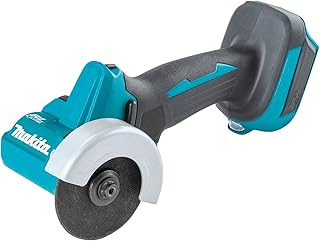
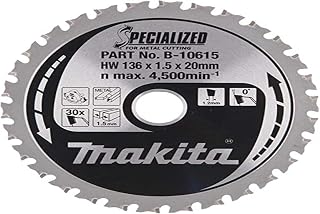


Choosing a Makita metal cutting saw is less about finding the machine with the highest wattage and more about matching the saw's cutting system, capacity, speed, portability and intended material to the work you actually carry out. A saw that is ideal for repeated workshop cut-offs may be unnecessarily large for occasional site work, while a compact cordless solution may not be the most practical choice for continuous high-volume cutting. For UK buyers, it is particularly important to distinguish between abrasive cut-off saws, metal-cutting saws designed around dedicated blades, and compact cordless cutters. These categories can look similar in photographs but behave quite differently in use. Cutting speed, heat generation, sparks, kerf, consumable costs, noise, workholding and the finish left on the cut can all vary substantially. Makita's UK range has included several distinctly positioned metal-cutting machines. For example, the LC1230 and LC1230N/1 are 305 mm machines designed for quick, almost spark-free metal cutting, whereas the LW1401 is a larger 355 mm abrasive cut-off saw intended for heavier metal-cutting applications. Makita also lists cordless portable cut-off models such as the DLW140 and DLW141 in its technical safety documentation. Specifications and regional availability can change, so the exact model number and current UK specification should always be checked before purchase. Product specification tables can make metal-cutting saws appear easy to compare, but individual figures should not be considered in isolation. A higher power rating does not automatically mean a faster or better cut, and a larger disc does not necessarily make a machine more suitable for every workshop. A common buying mistake is to compare two machines primarily by wattage. For metal cutting, the useful question is not simply how much electrical power the motor consumes, but whether the machine can accommodate the shapes and dimensions of stock that need to be cut. Makita specifies the LC1230 at 1,750 W with a 305 mm cutting disc and a maximum steel-pipe cutting capacity of 115 mm. The LC1230N/1 retains the 1,750 W input rating and 305 mm disc but has a listed no-load speed of 1,700 min-1, compared with 1,300 min-1 for the LC1230. Both are specified with a 90-degree capacity of 75 × 150 mm and a 45-degree capacity of 85 × 85 mm. The larger LW1401 uses a 2,200 W motor and 355 mm disc. Makita lists a 90-degree capacity of 119 × 119 mm, a 45-degree capacity of 106 × 106 mm and a maximum steel-pipe capacity of 127 mm. Its listed weight without the cable is 18.3 kg. These figures illustrate why capacity should be checked against your actual stock. A buyer cutting smaller rectangular box section may have little reason to choose a larger 355 mm machine simply because it has a higher wattage rating. The LC1230 family is particularly relevant when the priority is controlled metal cutting with comparatively little spark generation. Makita describes the LC1230N/1 as a 1,750 W, 305 mm cut-off saw for quick, almost spark-free metal cutting. The manufacturer also lists a quick-release vice, tool-less tensioning and quick-release adjustment of the cutting angle among its features. The original LC1230 is specified with a 305 mm disc, 1,750 W continuous input power and 1,300 min-1 no-load speed. Its published 90-degree capacity is 75 × 150 mm, with 85 × 85 mm at 45 degrees. For a buyer comparing these two model designations, the lesson is simple: do not assume that a similar model number means identical specifications. Check the precise model suffix, voltage specification, included accessories and current manufacturer documentation. A metal cutting saw is only as useful as its workholding system. A secure vice helps prevent the material from moving as the blade enters and exits the workpiece, which is important for repeatability and safe operation. Look closely at how easily the vice can be adjusted for different stock sizes and angles. A fast-release mechanism can be particularly useful when making many repeated cuts, because repeated setup time can become a significant part of the job. The LW1401 occupies a different position in the comparison. Makita specifies it as a 2,200 W, 355 mm cut-off saw with a 3,800 min-1 no-load speed. The manufacturer lists a 127 mm maximum steel-pipe cutting capacity, together with adjustable cutting depth and a material clamp. Its larger 355 mm disc and greater published cutting envelope can make this type of machine attractive for users who routinely work with larger sections. The trade-off is that abrasive cut-off saws generate sparks and heat, so the working environment and surrounding materials become especially important considerations. The LW1401 specification also lists a 102 dB(A) sound-pressure level and 110 dB(A) sound-power level, with a stated vibration level of no more than 2.5 m/s2 under the manufacturer's stated measurement conditions. Abrasive cut-off wheels remove metal through abrasion. This makes them versatile, but the process can produce significant sparks, heat and abrasive debris. Dedicated cold-cutting or lower-spark systems can be preferable where controlling heat and sparks is important. That distinction should influence where the machine will be used. A fabrication area specifically arranged for abrasive cutting is very different from a finished interior environment containing combustible materials, sensitive surfaces or equipment that could be contaminated by cutting debris. Cordless metal-cutting equipment can be attractive where portability, access and the absence of a mains cable matter more than uninterrupted cutting duration. Makita's published safety and vibration documentation identifies the DLW140 and DLW141 as cordless portable cut-off saws. The main advantage of cordless equipment is not necessarily that it is intrinsically more powerful. Instead, it can simplify movement around a site and remove dependence on a mains outlet. The practical buying calculation therefore includes battery availability, the number of batteries required for the intended workload, charging arrangements and the cost of compatible accessories. Before choosing a cordless model, check the manufacturer's current battery requirements and recommended operating conditions rather than assuming that every Makita battery is interchangeable across every tool. The machine is only one half of the cutting system. The cutting disc or blade has a major effect on the result, and the accessory must be appropriate for the particular saw and material. Never select a cutting accessory solely because its diameter appears correct. Check the arbor size, maximum permitted rotational speed, material suitability and the machine manufacturer's requirements. The accessory must be installed and used exactly as specified by the relevant manufacturer. Abrasive discs are commonly associated with conventional metal cut-off saws. Their advantages include broad familiarity and suitability for many ferrous-metal cutting tasks. Their disadvantages can include sparks, heat generation, abrasive dust and a cut that may require additional finishing depending on the application. Dedicated metal-cutting blade systems can offer a different cutting behaviour from abrasive wheels. Depending on the machine and blade design, users may benefit from controlled cutting, reduced heat generation and a different finish. However, compatibility and material suitability are critical, and not every blade can be used on every machine. Mild-steel box section, angle iron, flat bar, tube and pipe are typical applications for metal cut-off equipment. The correct choice depends primarily on cross-section, wall thickness, quantity of cuts and the desired finish. Stainless steel deserves additional attention because heat management and contamination can be important. A suitable cutting accessory and machine configuration should be selected specifically for stainless applications. Avoid assuming that an accessory marketed generally for metal will provide the desired result on stainless steel. Rectangular material makes cutting capacity particularly important. A machine may accommodate one orientation of a section more comfortably than another, so compare the published dimensions rather than relying on a single maximum-diameter figure. Pipe is often quoted using maximum diameter, but wall thickness and material type still matter. A larger nominal diameter does not tell the whole story. Check the manufacturer's published capacity and consider the actual dimensions of the stock being cut. Published cutting capacity should always be read alongside the cutting angle. The maximum capacity at 90 degrees can be different from the capacity at 45 degrees because tilting the work changes the geometry presented to the blade. For example, Makita's published LC1230N/1 figures are 75 × 150 mm at 90 degrees and 85 × 85 mm at 45 degrees. The LW1401 is listed at 119 × 119 mm at 90 degrees and 106 × 106 mm at 45 degrees. If angled cuts are a routine part of the job, compare the 45-degree specification rather than selecting a saw based only on its headline maximum capacity. No-load speed is the rotational speed of the cutting system when it is running without cutting material. It is useful for comparing machines, but it should not be treated as a direct measurement of productivity. When a disc enters steel, resistance increases and operating conditions change. The actual cutting rate depends on the material, section geometry, accessory, feed pressure, machine characteristics and operator technique. This is why a lower nominal speed does not automatically make one saw inferior to another. The complete cutting system has to be considered. Power is important when comparing corded machines, particularly for demanding work, but it is only one part of the specification. The LC1230 and LC1230N/1 are both listed at 1,750 W, while the LW1401 is rated at 2,200 W. The larger LW1401 also uses a 355 mm disc and has a greater published maximum cutting capacity, so its higher power rating should be considered alongside its larger cutting system rather than in isolation. Weight becomes particularly important when a machine is repeatedly carried between storage and the work area. The LW1401 is listed at 18.3 kg without the cable, while the LC1230 and LC1230N/1 are each listed at 19 kg without the cable. Interestingly, this demonstrates why weight should not be used as a simple proxy for machine size. The LW1401's larger disc does not automatically make it heavier than every smaller-disc alternative. Consider the complete workstation as well. A metal-cutting saw requires enough space for the material to be supported before and after the cut. Long lengths of box section or tube can be difficult to handle safely if the surrounding bench or support arrangement is inadequate. Noise and vibration are often overlooked during product comparisons because shoppers naturally focus on cutting capacity and price. For frequent users, however, these characteristics can influence comfort and the suitability of the work environment. Makita's published LC1230 and LC1230N/1 specifications list 98 dB(A) sound pressure and 108 dB(A) sound power, with a stated vibration level of 3.0 m/s2. The LW1401 is listed at 102 dB(A) sound pressure and 110 dB(A) sound power, with vibration of no more than 2.5 m/s2. These values are manufacturer-declared measurements under specified test conditions. They should not be interpreted as a promise that every cutting operation will produce exactly the same sound or vibration level. Appropriate hearing and eye protection, suitable work clothing and a properly controlled cutting area remain important considerations when operating metal-cutting equipment. Safety features should not be treated as decorative additions to a specification sheet. The most useful features are those that make correct operation easier and reduce opportunities for accidental misuse. Makita lists a lock-off button, carry handle, adjustable cutting depth, material clamp and spark guide among the LW1401's stated features. Makita is a well-established power-tool manufacturer, but a respected brand name does not remove the need to compare individual models. Two Makita metal-cutting saws can use different disc sizes, speeds, cutting systems and capacities. Maximum capacity is useful only if you actually need it. A larger machine can occupy more workspace and may provide capabilities that never contribute to your typical jobs. Do not compare only maximum pipe diameter if most of your work involves rectangular box section or angle iron. Use the published dimensional capacities that correspond most closely to your stock. If you regularly make mitre cuts, verify the 45-degree capacity before purchase. The headline 90-degree capacity may give an incomplete picture. Disc diameter is not enough. Bore size, accessory type, maximum speed and material compatibility all matter. The purchase decision should include the ongoing cost and availability of suitable cutting discs or blades. A machine with an attractive initial price can be less economical if its required consumables are expensive or inconvenient to source. A fast, secure vice can be more valuable in repetitive work than a small difference in motor specification. If the workpiece is awkward to position, productivity can suffer regardless of the machine's headline performance. A useful comparison should follow the same sequence for every model rather than jumping directly to price. A corded machine can make sense when the saw will remain in one location and a reliable mains supply is readily available. In this situation, the emphasis should be on cutting capacity, workholding, accessory compatibility and long-term suitability rather than battery convenience. The LW1401 deserves consideration where its larger 355 mm disc and published 127 mm maximum steel-pipe capacity align with the material being cut. Its larger cutting envelope makes it a fundamentally different proposition from the 305 mm LC1230 family. The LC1230 family is worth investigating where almost spark-free metal cutting is a priority. Makita specifically describes the LC1230N/1 as a saw for quick, almost spark-free metal cutting. A cordless portable cut-off format can be attractive where moving around a site is more important than maintaining continuous mains-powered operation. The DLW140 and DLW141 are identified by Makita as cordless portable cut-off saws, although buyers should verify the current UK product specification and package before purchase. Even a high-quality saw can perform poorly if the surrounding setup is inadequate. Long material should be supported so that its weight does not twist or bind the workpiece as the cut progresses. The cutting station should provide a stable surface, enough clearance for the stock and a controlled direction for sparks or debris where applicable. Keep the immediate area free from unnecessary combustible materials and objects that could interfere with the saw or workpiece. For repetitive production work, consider marking a consistent reference position for common cut lengths. A repeatable setup can save more time over a large batch than repeatedly measuring every component from scratch. Regular maintenance helps preserve predictable operation and allows potential problems to be identified before they become more serious. Do not continue using a cutting accessory simply because material can still be removed. Visible damage, abnormal vibration, unusual noise or other signs of deterioration should be treated seriously. The correct replacement accessory should match the machine's required diameter, bore, speed rating and intended material. If there is uncertainty, consult the machine and accessory manufacturer's documentation rather than relying on appearance alone. An angle grinder can cut metal and is often more versatile for general maintenance work, but it does not provide the same dedicated workholding and repeat-cut setup as a bench-mounted or portable cut-off saw. A dedicated metal cutting saw is generally more compelling when the task involves producing many consistent cuts from stock material. An angle grinder can be more useful where access, portability and multi-purpose functionality matter more than repeatable batch cutting. The choice should therefore be based on workflow rather than simply asking which tool is more powerful. A metal bandsaw represents another fundamentally different approach. Bandsaws can be attractive when controlled, repeatable cuts and lower material loss are important, while cut-off saws can be preferable when rapid stock cutting is the priority. Before deciding between them, consider the number of cuts required, material size, required finish, available workshop space, portability and the type of fabrication being undertaken. Retailer listings can contain abbreviated or outdated specifications, particularly when products have been sold in several revisions. When two listings disagree, the exact model number should be identified first and the manufacturer's current documentation should be used as the primary technical reference. This is particularly relevant to products with similar model numbers. The LC1230 and LC1230N/1 demonstrate how apparently small model-number differences can correspond with different published specifications, including no-load speed. For buying decisions in 2026, also check whether the listing refers to a complete machine, a body-only configuration, a regional package or a bundle containing different accessories. Package contents can affect the effective cost considerably. The lowest purchase price is not necessarily the lowest total cost of ownership. A more useful comparison considers the machine, cutting accessories, expected workload and the time required to complete the job. For occasional use, a buyer may reasonably prioritise a sensible initial outlay and broad utility. For frequent fabrication, productivity, repeatability, consumable availability and the suitability of the cutting system can become much more important. Battery-powered models require an additional calculation: if batteries and a charger are not already owned, the complete cordless system cost should be considered rather than the tool price alone. Professional suitability is primarily about matching the machine to the workflow. A professional user should look beyond marketing language and examine the technical specifications that affect daily operation. DIY buyers generally benefit from avoiding unnecessary specification chasing. If the machine is used only occasionally, choose based on the materials and dimensions actually encountered rather than the largest theoretical cutting capacity. Storage is another important consideration. A large machine can be inconvenient if it has to be moved and stored after every project. Conversely, buying a compact machine that cannot comfortably accommodate the material may prove frustrating. A practical way to narrow the options is to create a three-model shortlist and eliminate products that fail a mandatory requirement. Then compare the remaining models on cutting capacity, cutting angle, accessory requirements, workholding, portability, noise, vibration, power source and current total purchase cost. This method is more useful than simply choosing the product with the largest specification numbers. There is no single best model for every buyer. The right choice depends on the material dimensions, cutting volume, preferred cutting method, portability requirements and whether a corded or cordless machine is more appropriate. The LC1230 family, LW1401 and cordless portable cut-off models occupy different positions, so comparing the actual specifications is essential. Makita specifies the LC1230 as a metal cutting saw and lists a maximum steel-pipe cutting capacity of 115 mm. Its published 90-degree capacity is 75 × 150 mm. Both are 1,750 W, 305 mm Makita metal-cutting saws with similar published cutting capacities, but the listed no-load speed differs: 1,300 min-1 for the LC1230 and 1,700 min-1 for the LC1230N/1. The exact current UK specification should be checked before purchasing. It is designed around a larger 355 mm disc and Makita lists a maximum cutting capacity of 102 × 194 mm, a 119 × 119 mm capacity at 90 degrees and a maximum steel-pipe capacity of 127 mm. Not necessarily. A larger disc can provide greater cutting capacity, but it may be unnecessary for smaller stock. The best machine is the one whose capacity, cutting method and format suit the work rather than the one with the largest headline specification. Makita's published technical documentation identifies the DLW140 and DLW141 as cordless portable cut-off saws. Availability and exact specifications should be verified for the current UK market before buying. Confirm the exact model number, inspect the guard and vice, examine the power cable or battery interface, check for abnormal play or damage, inspect the cutting system and verify that replacement accessories remain obtainable. A used machine should not be purchased solely because its model number matches a well-regarded product. Choose according to the job. A dedicated saw is particularly useful for repeated, controlled stock cutting, while an angle grinder provides greater general-purpose versatility and access to awkward positions. Neither replaces the other in every workshop. Only if its larger cutting envelope provides a meaningful advantage for your work. If most of your material fits comfortably within the capacity of a 305 mm machine, a larger saw may offer little practical benefit. For most buyers, cutting capacity is one of the first specifications to verify, followed by cutting angle, cutting system, accessory compatibility, workholding, power source and portability. The correct order depends on the application. The strongest buying decision comes from matching the machine to the work rather than choosing by brand, wattage or price alone. The Makita LC1230 and LC1230N/1 are 305 mm, 1,750 W options with published capacities suited to a wide range of metal stock, while the LW1401 steps up to a 355 mm disc, 2,200 W input and a larger published cutting envelope. Makita's DLW140 and DLW141 provide cordless portable cut-off alternatives for users whose priorities include mobility and freedom from a mains cable. Before committing to a purchase, compare the exact UK specification, cutting capacity, cutting angle, accessory compatibility, workholding system, power source, machine size, noise and vibration information, and the complete cost of ownership. Product prices, packages and availability can change, so current retailer information should be checked at the point of purchase. For an independent buying decision, technical specifications should be the starting point rather than the finish. Combine them with your actual material dimensions, expected cutting volume, workshop conditions and preferred working method. That approach is far more likely to identify the Makita metal cutting saw that is genuinely suitable for the job.
How to Choose the Right Makita Metal Cutting Saw
Makita Metal Cutting Saw Comparison: What the Specifications Actually Mean
Cutting capacity is more important than headline power
Makita LC1230 and LC1230N/1: What to Look For
Why the vice matters
Makita LW1401: When a Larger Abrasive Cut-Off Saw Makes Sense
Abrasive cutting versus lower-spark metal cutting
Corded or Cordless Makita Metal Cutting Saw?
When corded is likely to be the better choice
When cordless can be advantageous
Metal Cutting Saw Blade and Disc Selection
Abrasive discs
Dedicated metal-cutting blades
Choosing a Makita Metal Cutting Saw for Different Materials
Mild steel
Stainless steel
Box section and rectangular tube
Round tube and pipe
90-Degree and 45-Degree Cutting Capacity
What Does No-Load Speed Tell You?
Power Rating: Why More Watts Is Not Always Better
Weight, Portability and Workshop Layout
Noise and Vibration Considerations
Safety Features Worth Comparing
Common Buying Mistakes to Avoid
Buying by brand alone
Choosing the largest saw available
Ignoring the material profile
Forgetting the cutting angle
Assuming all discs are interchangeable
Ignoring consumables
Underestimating workholding
How to Compare Makita Metal Cutting Saws Properly
Best Makita Metal Cutting Saw for Different Types of Buyer
Best for a dedicated workshop cutting station
Best for larger sections
Best for lower-spark cutting
Best for mobile site work
Workshop Setup and Material Support
Maintenance Checklist for a Makita Metal Cutting Saw
When to Replace a Cutting Disc or Blade
Makita Metal Cutting Saw Versus an Angle Grinder
Makita Metal Cutting Saw Versus a Metal Bandsaw
Questions to Ask Before Buying
Understanding Manufacturer Specifications Versus Retailer Listings
How to Judge Value Without Focusing Only on Price
What Makes a Good Metal Cutting Saw for Professional Use?
What Makes a Good Makita Metal Cutting Saw for DIY Users?
Expert Buying Advice: The Shortlist Method
Frequently Asked Questions About Makita Metal Cutting Saws
Which Makita metal cutting saw is best?
Is the Makita LC1230 suitable for steel?
What is the difference between LC1230 and LC1230N/1?
Is the Makita LW1401 suitable for larger metal sections?
Does a larger disc mean a better metal cutting saw?
Are Makita metal cutting saws cordless?
What should I check before buying a used Makita metal cutting saw?
Should I choose a metal cutting saw or an angle grinder?
Do I need a 355 mm metal cutting saw?
What is the most important specification to compare?
Final Buying Checklist
Bottom Line: How to Find the Right Makita Metal Cutting Saw in the UK