
Our experts reviewed the latest {category_name } to help you compare quality, performance, durability and overall value before making your purchase.


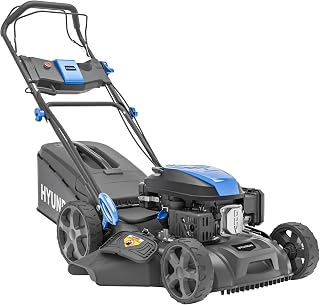


Choosing a Hyundai lawnmower is not simply a matter of selecting the widest cutting deck or the most powerful engine. The right model depends on the size and shape of your lawn, how frequently you mow, whether the ground is flat or sloping, how much grass you want to collect, and how comfortable you are with petrol-mower maintenance. Hyundai's UK lawnmower range includes petrol, cordless and electric models, with different combinations of cutting width, propulsion, starting method and grass-disposal options. For many UK gardens, the most important distinction is between a lightweight push mower for straightforward lawns and a self-propelled machine for larger, uneven or sloping areas. A wider cutting deck can reduce mowing time, but it also tends to make a mower bulkier. Likewise, a larger petrol engine can provide useful reserve power without automatically making a machine the better choice for a compact garden. This guide looks beyond headline specifications to explain what the numbers mean in practical terms. It covers cutting width, cutting-height adjustment, self-propulsion, electric starting, mulching, collection, storage, maintenance, fuel considerations and the differences between Hyundai models and alternatives from brands such as Honda, Bosch, Cobra, Mountfield, AL-KO, Flymo and STIHL. Hyundai's UK range is broader than a single petrol-mower design. The manufacturer's current range can be filtered by power source, starting method, propulsion, cutting options and whether a rear roller is fitted. That means two Hyundai machines that look similar on paper can behave quite differently in everyday use. Cutting width describes the approximate width of grass removed on each pass. A wider deck generally means fewer passes are needed across a lawn, making it particularly useful on larger open areas. However, bigger is not automatically better. A wide mower can be cumbersome between flower beds, around trees and through narrow gates. It can also require more storage space. For a small lawn with numerous obstacles, a narrower mower can actually be faster overall because manoeuvrability matters more than theoretical coverage. As an example, the Hyundai HYM430SP is listed with a cutting width in the 42–43cm class, whereas the HYM510SP is built around a 50cm cutting width. Independent specifications for the HYM430SP describe it as a medium-lawn mower, while the HYM510SP is categorised for larger lawns. Cutting height determines how much grass remains after mowing. A mower offering several height positions gives you more control over the lawn's appearance and lets you respond to seasonal growing conditions. For example, the HYM430SP and HYM510SPE specifications listed by Which? provide six cutting-height settings spanning 25mm to 75mm. Do not automatically select the lowest setting. Cutting very low can leave the lawn looking closely cropped, but it can also be inappropriate for stressed, dry or otherwise vulnerable grass. A higher setting can be more forgiving when conditions are less favourable. A central height-adjustment lever is particularly useful because it allows the deck to be changed without individually adjusting each wheel. When comparing models, look for the number of positions, the actual height range and how easy the adjustment mechanism is to operate. Self-propulsion is one of the most valuable features on a heavier petrol mower. Instead of relying entirely on the operator to push the machine, the drive system moves it forwards while the user controls its direction and pace. This can be especially useful on slopes, larger lawns and areas where repeated mowing would otherwise become tiring. It does not mean the mower becomes effortless: the operator still needs to steer, stop, turn and manage the machine safely. Self-propulsion can be unnecessary on a small, flat lawn. In a confined garden, a lighter push mower may be easier to turn and store. Engine capacity is normally expressed in cubic centimetres, or cc. A larger engine can provide more reserve power, but engine size should be considered alongside cutting width, mower weight and intended lawn size. The Hyundai HYM430SP uses a 139cc petrol engine, while the HYM510SP specification reviewed by Which? corresponds to a substantially larger machine designed around a 50cm cutting width. For ordinary domestic mowing, it is usually more useful to ask whether a mower has sufficient power for your grass and terrain than to chase the highest cc figure. A powerful machine can be overkill if it spends most of its life cutting a small, level lawn. Grass-box capacity influences how often you need to stop and empty the mower. A larger collector is generally convenient on a large lawn, but a full collector also adds weight and can become awkward to carry. When comparing grass collectors, consider more than the quoted litre capacity. Look at how the collector is removed, whether the handle is comfortable, how easily it empties and whether the mower gives a useful indication that the box is full. Mulching is different from conventional collection. Instead of placing clippings into the grass box, the mower cuts the grass into smaller pieces and returns them to the lawn when the appropriate mulching configuration is used. The advantage is that you avoid collecting and disposing of clippings and can return organic material to the turf. The technique works best when mowing regularly enough that the mower is not dealing with excessive quantities of long grass. The HYM430SP and HYM510SPE are listed as mulching-capable models in independent specifications. The Hyundai HYM430SP is one of the more relevant Hyundai models for buyers looking for a self-propelled petrol mower without moving into the physical scale of a large 50cm machine. Its published specification includes a 139cc petrol engine, approximately 42cm of cutting width, six height settings from 25mm to 75mm, self-propulsion and mulching capability. Which? categorises it as suitable for a medium lawn and lists its weight at approximately 27kg. The combination is important. A machine around this size can offer more coverage than a compact electric mower while remaining considerably more manageable than a large petrol mower. Independent testing and retailer specifications should be read alongside the manufacturer's specification because advertised features do not necessarily tell you how a mower behaves in difficult grass, around obstacles or on slopes. Which? specifically assesses cutting ability across standard, long, rough and wet grass, as well as handling, collection, mulching and ease of use. The Hyundai HYM510SP is aimed at a different type of user. Its 50cm cutting width and larger physical footprint make it more appropriate where coverage and propulsion are more important than compactness. Independent specifications list the HYM510SP family in the large-lawn category, with a 50cm cutting width, six cutting-height positions between 25mm and 75mm, self-propulsion and mulching. A large machine can be particularly useful when the lawn consists of a substantial open area. Every additional centimetre of cutting width can reduce the number of overlapping passes required. Over a whole mowing season, that difference can become more noticeable than it first appears. Independent testing of the HYM510SPE, an electric-start variant in the same broad model family, lists a weight of 48kg and describes it as a large-lawn mower. An independent practical review of the HYM510SP similarly found its substantial size and weight important considerations, particularly when moving it over steps or storing it in a restricted space. Electric starting is a convenience feature rather than a substitute for understanding petrol-mower maintenance. The HYM510SPE is described by Which? as having both an electric button start and a pull-cord starting method. That dual-start arrangement can be attractive to users who prefer push-button starting but still want a conventional petrol mower. It is particularly worth considering if starting convenience is one of your main reasons for upgrading. However, buyers should check exactly what is included with the particular model they are considering, including battery arrangements, charging requirements and the manufacturer's current specification. Product naming can change across model years, and retailer listings do not always present every technical detail in the same way. A rear roller changes the character of a lawnmower. Roller mowers can create the traditional striped appearance associated with formal UK lawns, while conventional four-wheel machines are generally more versatile across mixed terrain. The current Hyundai range includes both roller and non-roller configurations. The HYM430SP, for example, is listed without a rear roller, while the HYM430SPER specification includes a rear roller and is recommended by the manufacturer for small-to-medium lawns up to a stated lawn area. If the visual finish of the lawn is a priority, a roller deserves serious consideration. If manoeuvrability, uneven ground and general-purpose mowing matter more, a conventional wheeled mower may be the more practical choice. Before comparing individual Hyundai petrol models, decide whether petrol is actually the right power source. Hyundai's UK range includes petrol, cordless and electric lawnmowers, so the brand itself does not require buyers to choose petrol. Petrol mowers can be attractive for larger lawns because they are not constrained by a mains cable and do not require the battery charging routine associated with cordless equipment. Larger petrol models can also offer substantial cutting widths and self-propelled drive. The disadvantages are equally important: fuel handling, engine oil, servicing, noise, exhaust emissions and additional mechanical components all form part of ownership. Cordless mowers are attractive when low operating complexity and quieter operation matter. They are particularly convenient where carrying fuel is undesirable or where the lawn is relatively modest. The key buying questions are battery compatibility, runtime, charging time, whether the battery and charger are supplied, and the cost of additional batteries if you need longer mowing sessions. A corded electric mower can be an efficient option for a small lawn close to a suitable outdoor power supply. The motor is straightforward to operate and there is no petrol to store. The trade-off is the cable. It must be managed carefully around the lawn, garden furniture, trees and other obstacles, and the usable mowing area is influenced by the available power connection and cable arrangement. Brand comparisons are most useful when they are based on the characteristics of the specific mower rather than assumptions about the brand as a whole. Hyundai competes in a market containing established names such as Honda, Bosch, Cobra, Mountfield, AL-KO, Flymo and STIHL, but each manufacturer offers several different mower types. Honda has a strong presence in petrol garden machinery and is worth considering when engine refinement, dealer support and established mower platforms are priorities. Hyundai can be particularly interesting to shoppers seeking a broad selection of specifications and features at different points in the range. Compare the exact cutting width, propulsion system, deck material, collector, starting system, warranty terms and servicing arrangements rather than choosing solely by brand reputation. Bosch is particularly relevant when comparing cordless and electric lawnmowers. For smaller and medium-sized gardens, battery-powered equipment can eliminate petrol storage and engine maintenance. The most useful comparison is therefore often petrol Hyundai versus cordless Bosch rather than Hyundai versus Bosch as brands. Consider total mowing time, battery capacity, charging arrangements, cable-free convenience and the weight of the complete machine. Cobra offers a wide selection of domestic lawnmowers, including petrol, battery and electric configurations. When comparing a Hyundai and Cobra mower, examine cutting width, self-propulsion, collection capacity, cutting-height adjustment and deck construction. For a sloping lawn, self-propulsion may be more important than a small difference in advertised engine specification. For a compact garden, manoeuvrability and storage can matter more than engine capacity. Mountfield is another established name in the UK domestic lawnmower market. A Hyundai and Mountfield model can appear very similar on a specification sheet, which is why the details matter. Compare the mower's weight, cutting width, collection system, propulsion, starting system and manufacturer support for the exact models under consideration. AL-KO is particularly relevant for buyers interested in well-specified domestic garden machinery. When comparing larger petrol machines, look carefully at deck construction, cutting width, collector design, propulsion and handling rather than assuming the more expensive machine will automatically be the better choice. Flymo is especially associated with lightweight electric and hover-style mowing solutions. A Hyundai petrol mower and a Flymo can therefore represent fundamentally different approaches to lawn care. If your lawn is small and easy to access, lightweight simplicity may win. If you have a large lawn, steep sections or demanding grass, a self-propelled petrol machine may make more sense. STIHL offers extensive garden machinery coverage, including battery and petrol equipment. The brand can be particularly relevant to buyers who already own compatible battery-powered garden tools and want to build around an existing system. When comparing cordless equipment, battery-platform compatibility can be more significant than the mower's headline specifications because owning compatible batteries can affect the overall cost and convenience of expanding a tool collection. Small lawns generally reward compactness. A mower that is easy to turn, carry and store can be more useful than a powerful self-propelled machine. Measure access points as well as the grass itself. A mower may fit the lawn perfectly but be inconvenient if it cannot pass comfortably through a side gate or shed doorway. Medium lawns are where the choice becomes more balanced. A compact self-propelled petrol model such as the HYM430SP can be worth considering if you want the freedom of petrol power without moving to a large 50cm machine. At this size, cutting width, grass-box capacity and mower weight all deserve similar attention. On a large lawn, mowing efficiency becomes increasingly important. A wider cutting deck can reduce the number of passes, while self-propulsion can reduce the effort required to move a heavier mower. The HYM510SP family is designed around a 50cm cutting width and is categorised for large lawns by independent specification data. Slopes make self-propulsion substantially more valuable. The operator still needs to maintain control, but the mower's drive can reduce the effort needed to move the machine uphill. Never treat self-propulsion as permission to ignore safe mowing practice. Follow the specific manufacturer's operating instructions and avoid using a mower in conditions or on gradients beyond its stated capabilities. A large petrol mower may look impressive, but unnecessary size can make storage and manoeuvring harder. If most of your lawn is small and enclosed, a compact machine may provide a better ownership experience. The opposite mistake is equally common. A lightweight push mower can become frustrating when used on a large lawn or regular slopes. Weight is often overlooked because the mower moves on wheels. Yet you may still need to lift it into storage, move it across steps, manoeuvre it backwards or negotiate tight spaces. This is particularly important with large self-propelled petrol machines. The HYM510SPE, for example, is listed by Which? at 48kg, making its physical size a genuine buying consideration rather than a minor specification detail. Engine capacity is only one part of mower performance. Cutting width, blade design, deck condition, propulsion, grass condition and mowing frequency all influence real-world results. Measure the actual storage location before buying. Check doorway widths, shed height, turning room and whether the handle folds sufficiently for your available space. This is especially important for large petrol models. An independent practical review of the HYM510SP specifically highlighted its large footprint and the need to consider storage before purchase. Collection gives a tidy immediate finish, but emptying the collector repeatedly can be time-consuming. Mulching can reduce waste handling when the lawn is maintained frequently enough for it to work effectively. The ideal cutting height and disposal method depend partly on how frequently the lawn is maintained. A mower used regularly on moderate grass has a different workload from one brought out after several weeks of rapid growth. Not every premium feature deserves a premium price. Prioritise features that directly solve a problem in your garden. A common buying error is paying for features that do not match the garden. Petrol lawnmowers require more routine attention than basic electric machines. The exact maintenance schedule should always come from the manual for the specific model, but the main areas to monitor are consistent across petrol mower ownership. Check the correct oil specification and capacity in the mower's manual rather than assuming that every Hyundai petrol mower uses the same quantity or grade. Oil level should be checked according to the manufacturer's procedure, with the machine positioned as instructed. A dirty air filter can restrict airflow to the engine. Inspect and clean or replace it according to the manufacturer's maintenance schedule and the filter type used on your particular mower. Spark plugs are normal service components on petrol engines. If starting becomes difficult, do not immediately assume the plug is the cause; fuel condition, oil level, air filtration and other engine issues can also affect starting. A sharp, correctly fitted blade is important for clean cutting. Before any inspection or maintenance around the blade, follow the manufacturer's safety procedure and ensure the mower cannot start accidentally. Do not continue using a damaged or badly worn blade. If you are unsure how to inspect, remove, sharpen or replace it safely, use an appropriately qualified service professional. Grass clippings can accumulate beneath the cutting deck. Clean the mower using the procedure specified by the manufacturer and avoid introducing water into areas where it could damage the engine, electrical components or controls. Petrol should be stored safely and handled in accordance with applicable UK safety guidance and the manufacturer's instructions. Fuel left in a mower for extended periods can also contribute to starting and fuel-system problems, so follow the specific winter-storage procedure in the manual. When two models appear similar, create a specification checklist rather than comparing only headline horsepower. This method prevents a common problem with online mower shopping: selecting a product because one impressive specification looks better while overlooking several characteristics that matter more in your particular garden. Warranty terms should be checked for the exact model and purchase route because coverage can depend on registration, intended use, maintenance requirements and other conditions. Hyundai Power Products currently states that its UK lawnmower range is covered by a three-year platinum warranty. The manufacturer's current range page should be checked alongside the individual product information for the terms applicable to the model you are considering. Do not treat a long warranty as proof that a mower is maintenance-free. Wear items, consumables and damage caused by incorrect use can be treated differently from manufacturing faults, so reading the actual warranty conditions is worthwhile before purchase. For a petrol lawnmower, long-term value depends partly on whether routine service components remain obtainable. Check the availability of compatible blades, filters, spark plugs and other model-specific parts. Keep the exact model number and serial information with your purchase documentation. Hyundai's product pages can also identify compatible parts for individual models; for example, the HYM430SPER product information lists a compatible genuine replacement blade. This is one reason not to judge a mower purely on its initial purchase price. A machine that can be maintained properly and supported with appropriate parts may be more useful over a longer ownership period. Customer reviews are useful for identifying recurring themes, but they should not be treated as laboratory testing. Individual users operate their mowers on different lawn sizes, grass types and terrain. For example, retailer reviews of the HYM430SP include positive comments about manoeuvrability, starting and mulching, while another reviewer noted that the highest cutting setting may not provide enough clearance for grass that has become excessively long. Such comments are useful context, but they represent individual experiences rather than controlled tests. Independent testing provides another layer of information. Which? assesses lawnmowers across cutting ability, collection, handling, ease of use, mulching and other factors, which is more informative than relying on a single star rating or customer comment. When reading verified customer feedback, look for repeated observations rather than isolated praise or criticism. A comment saying that a mower is excellent on a small flat lawn tells you relatively little about its suitability for a large sloping garden. Always match review context to your intended use. A Hyundai petrol lawnmower can make sense when you want the freedom of petrol operation, need more capability than a compact electric mower provides, or want self-propulsion for a larger lawn. The strongest case for a Hyundai petrol mower is usually not simply that it has a powerful engine. It is the combination of features: cutting width, propulsion, cutting-height adjustment, collection and optional mulching can create a practical package for domestic lawn care. However, petrol is not automatically the best solution. For a small lawn near the house, a cordless or corded electric mower can be easier to live with. The correct purchase is the machine whose size, power source and features fit the actual workload. Estimate the total grassed area rather than the size of the entire garden. Exclude patios, borders, decking and permanent structures. Identify slopes, uneven areas, narrow passages and obstacles. Terrain can be more important than total lawn area when choosing between push and self-propelled models. If you want a tidy lawn immediately after mowing, collection may be preferable. If you mow frequently and want to return fine clippings to the turf, mulching can be attractive. Compare petrol with cordless and corded electric alternatives before committing to an engine-powered mower. Select a width that balances mowing speed with manoeuvrability. Bigger lawns generally benefit from wider decks, while complicated small gardens often benefit from compactness. Think about every time you will move the mower without its drive helping you. Storage, steps, transport and turning all matter. Measure the storage space and access route before purchasing. This is particularly important for large petrol mowers. Consider fuel, oil, routine maintenance, replacement blades, servicing and any additional battery or charging requirements rather than comparing purchase prices alone. There is no single best Hyundai lawnmower for every UK garden. A compact self-propelled model such as the HYM430SP can suit buyers looking for a relatively manageable petrol mower for a medium-sized lawn, while a larger model such as the HYM510SP is more appropriate when cutting width, power and self-propulsion are priorities on larger areas. It is positioned as a medium-lawn mower by independent specification data and combines a roughly 42cm cutting width with self-propulsion, six cutting heights and mulching capability. Suitability still depends on the shape, slope and condition of the individual lawn. Yes, its 50cm cutting width and self-propelled design make it much more relevant to large lawns than compact push mowers. Independent specifications categorise the model as suitable for large lawns. Self-propulsion is most valuable on larger lawns, slopes and with heavier machines. On a small flat lawn, the extra feature may not justify the additional complexity or weight. Hyundai's UK range includes petrol, cordless and electric lawnmowers, so buyers can choose between different power systems rather than being restricted to petrol. Some Hyundai models do. The HYM430SP and HYM510SPE are listed with mulching capability in independent specifications. Always check the exact model's current specification and supplied accessories before purchasing. Some petrol models do. The HYM510SPE is described as having both electric-button and pull-cord starting. Other Hyundai petrol models use recoil starting, so check the exact model number rather than assuming all Hyundai mowers start in the same way. Self-propelled models can be particularly useful on sloping lawns because the drive system assists forward movement. However, the mower must still be used within the manufacturer's operating instructions and safe terrain limits. The HYM430SP is listed with six cutting-height settings covering 25mm to 75mm. The HYM510SP has a 50cm cutting width according to independent specification information. Its overall physical width is greater than the cutting width, so storage and gate access should be checked separately. No. A wider deck can reduce mowing time on an open lawn, but it can also increase size and weight and make the mower harder to manoeuvre around obstacles. Choose the width according to the garden rather than treating the largest figure as automatically superior. Compare cutting width, cutting-height range, number of height settings, weight, propulsion, starting method, collector size, mulching capability, storage dimensions, replacement-part availability and warranty conditions. Choose according to the lawn and your preferred ownership experience. Petrol can suit larger or demanding lawns, while cordless can offer simpler operation without fuel and engine maintenance. Battery runtime, charging and replacement-battery costs should be considered before choosing cordless. The best Hyundai lawnmower is the one that matches the physical demands of your garden rather than the one with the longest specification sheet. Start with lawn size and terrain, then decide whether you need petrol power, self-propulsion, a wide deck, electric starting, mulching or a rear roller. The Hyundai HYM430SP is a sensible model to investigate when you want a comparatively compact self-propelled petrol mower, while the HYM510SP family becomes more relevant as lawn size increases and a wider cutting deck becomes advantageous. Electric-start variants such as the HYM510SPE add starting convenience but retain the substantial size and weight associated with larger petrol machines. Before making a final decision, compare the latest specifications for the exact model, read verified customer feedback, consider independent test results where available, check current retailer pricing and availability, and confirm the warranty and maintenance requirements. A mower that looks excellent on paper can still be the wrong choice if it is too large for your storage space, too heavy for your access route or unnecessarily powerful for your lawn. For UK buyers in 2026, the most useful comparison is therefore not simply “Which Hyundai lawnmower is the best?” but “Which Hyundai lawnmower gives me the right balance of cutting width, propulsion, weight, power, collection, maintenance and storage for my particular garden?” Answer that question first, and the shortlist becomes much easier to narrow down.Hyundai Lawnmower Buying Guide & Reviews: How to Choose the Right Model in the UK
Quick Answer: Which Hyundai Lawnmower Should You Consider?
Hyundai Lawnmower Range: What the Main Specifications Mean
Cutting Width
Cutting Height
Self-Propelled Drive
Petrol Engine Capacity
Grass Collection
Mulching
Hyundai HYM430SP: A Compact Self-Propelled Petrol Option
Who Should Consider the HYM430SP?
Where the HYM430SP May Not Be Ideal
Hyundai HYM510SP: When a Wider Deck Makes Sense
Why Choose a 50cm Mower?
Why a 50cm Mower May Be Too Much
Hyundai HYM510SPE: Electric Starting for a Large Petrol Mower
Rear Roller vs Wheel-Based Hyundai Lawnmowers
Choose a Rear Roller If:
Choose Conventional Wheels If:
Petrol vs Cordless vs Electric Hyundai Lawnmowers
Petrol
Cordless Battery
Corded Electric
Hyundai vs Other Major Lawnmower Brands
Hyundai vs Honda
Hyundai vs Bosch
Hyundai vs Cobra
Hyundai vs Mountfield
Hyundai vs AL-KO
Hyundai vs Flymo
Hyundai vs STIHL
How to Choose a Hyundai Lawnmower by Lawn Size
Small Lawns
Medium Lawns
Large Lawns
Sloping Lawns
Key Buying Mistakes to Avoid
Buying Too Much Mower
Buying Too Little Mower
Ignoring Weight
Choosing Solely on Engine Size
Forgetting Storage
Assuming a Grass Box Is Always Better
Ignoring Mowing Frequency
Features Worth Paying More For
Features You Should Not Overpay For
Hyundai Lawnmower Maintenance Guide
Engine Oil
Air Filter
Spark Plug
Blade Care
Cleaning the Deck
Fuel Storage
How to Compare Hyundai Lawnmower Specifications Properly
Warranty and After-Sales Considerations
Replacement Parts and Long-Term Ownership
What Independent Reviews Can and Cannot Tell You
How to Read Customer Reviews More Intelligently
Is a Hyundai Petrol Lawnmower Worth Buying?
Buying Guide: A Simple Decision Process
Step 1: Measure the Lawn
Step 2: Assess the Terrain
Step 3: Decide How You Want to Handle Clippings
Step 4: Decide Whether Petrol Is Necessary
Step 5: Choose the Cutting Width
Step 6: Consider Weight
Step 7: Check Storage
Step 8: Compare Total Ownership
Best Hyundai Lawnmower Features by Type of Buyer
Questions to Ask Before You Buy
Frequently Asked Questions
Which Hyundai lawnmower is best?
Is the Hyundai HYM430SP good for a medium lawn?
Is the Hyundai HYM510SP suitable for a large lawn?
Is a self-propelled Hyundai mower worth it?
Are Hyundai lawnmowers petrol or electric?
Do Hyundai lawnmowers have mulching functions?
Do Hyundai lawnmowers have electric start?
Are Hyundai lawnmowers suitable for hills?
How many cutting heights does the HYM430SP have?
How wide is the Hyundai HYM510SP?
Does a wider cutting width always mean a better lawnmower?
What should I compare besides price?
Should I choose petrol or cordless?
Final Hyundai Lawnmower Buying Advice