

Our experts reviewed the latest {category_name } to help you compare quality, performance, durability and overall value before making your purchase.


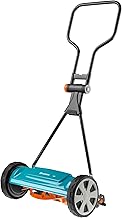


Choosing a GARDENA lawnmower is less about finding the model with the biggest motor or widest cutting deck and more about matching the machine to the size, shape and condition of your lawn. A compact mower can be easier to manoeuvre around beds and narrow passages, while a wider model can reduce the number of passes required on a more open lawn. Power source, grass collection, cutting-height adjustment, storage and battery compatibility can be just as important as headline performance. For UK buyers, the GARDENA range includes compact battery models, larger battery-powered PowerMax machines and mains-powered electric lawnmowers. Current specifications show a useful spread from the 22 cm HandyMower for lawns of up to 50 m² through 32 cm and 37 cm PowerMax models intended for larger areas. Before comparing individual models, decide which type of mower best fits the way you actually use your garden. Battery power removes the trailing cable, which can be particularly useful around trees, borders, play areas and garden furniture. The trade-off is that the mower's usable operating time depends on the battery system and mowing conditions. Buyers should therefore check whether a particular package includes a battery and charger or is supplied as a Solo version. The GARDENA HandyMower 22/18V P4A Solo, for example, requires an 18V POWER FOR ALL battery, while the PowerMax 32/18V P4A Solo is also sold without the battery. This distinction can materially affect the overall cost if you are not already invested in the compatible battery platform. A corded mower has a different advantage: once connected to the mains, there is no battery capacity to monitor. Current GARDENA electric PowerMax models include the 32/1200 G2 and 37/1800 G2, with published working-area capacities of up to 300 m² and 500 m² respectively. The HandyMower 22/18V P4A is designed around compactness rather than high-volume mowing. GARDENA specifies it for lawns of up to 50 m², with a 22 cm cutting width and a three-position cutting-height range from 30 to 50 mm. Its published weight without the battery is 4.2 kg. Its most distinctive feature is the mulching blade. Rather than collecting the cut grass in a conventional box, the 22 cm blade chops the clippings finely so that they remain on the lawn. That makes the model particularly relevant for buyers who prioritise quick mowing and minimal emptying. The compact format is also worth considering for gardens where access is awkward. A narrow lawn surrounded by paths, borders, shrubs or garden furniture can make manoeuvrability more important than outright cutting width. The PowerMax 32/18V P4A occupies a more conventional lawnmower format. GARDENA specifies a 32 cm cutting width, 30-litre collector, four cutting-height positions from 35 to 65 mm and a recommended lawn area of up to 300 m². It uses a brushless motor and offers a selectable Eco mode for lighter mowing conditions. This is the type of model to consider when a compact mower is too restrictive but a larger 37 cm machine would add unnecessary size. The 30-litre collector also gives it a clear advantage over a mulching-only compact mower if you routinely prefer to collect clippings. The grass combs are another practical consideration. GARDENA states that they extend beyond the wheels and help guide grass towards the blade near edges, walls and borders. That can reduce the amount of trimming needed after mowing, although the actual result will still depend on the shape of the lawn and how close its edges are to obstacles. The PowerMax 37/36V P4A moves to a 37 cm cutting width and a 45-litre collector. Its published cutting-height range is 35 to 65 mm across four positions, while GARDENA lists it for lawns of up to 500 m². The Solo version uses the 18V POWER FOR ALL battery platform and features a brushless motor, DuraEdge blade and ErgoTec Plus handle. A wider deck is particularly useful when the lawn is relatively open and rectangular. Each pass covers more ground, potentially making routine mowing less time-consuming than using a narrower mower. The disadvantage is that a larger mower may feel less nimble in confined areas. The telescopic handle is also relevant for buyers who place a high value on mowing posture. GARDENA describes the handle as adjustable to the user's preferred height, while the ErgoTec Plus design provides alternative hand positions. The PowerMax 32/1200 G2 is a corded electric alternative for smaller to medium-sized lawns. Its published specifications include a 1,200 W motor, 32 cm cutting width, 30-litre collector and four cutting-height settings from 35 to 65 mm. GARDENA gives it a working-area capacity of up to 300 m². The key buying question is not simply whether 1,200 W sounds sufficient. Consider whether you can comfortably manage the cable throughout the garden. A corded mower can be straightforward on an unobstructed lawn close to an outdoor socket but less convenient when the mowing route involves multiple obstacles. The PowerMax 37/1800 G2 increases the cutting width to 37 cm and collector capacity to 45 litres. GARDENA specifies an 1,800 W motor and a working-area capacity of up to 500 m², with four cutting-height settings between 35 and 65 mm. It is consequently a logical comparison with the PowerMax 37/36V P4A. Both use a 37 cm cutting width and 45-litre collection capacity, but the power source is fundamentally different. The electric version is mains powered, whereas the battery model is part of GARDENA's 18V POWER FOR ALL ecosystem. Cutting width is one of the most useful specifications when comparing lawnmowers, but it should never be considered in isolation. A 37 cm mower covers more grass in each pass than a 32 cm mower. Over a large, open lawn, that difference can be meaningful. On a small lawn with many corners, however, a wider deck may offer little practical advantage if it makes steering around obstacles more difficult. Do not assume that the widest mower is automatically the best choice. Lawn geometry, access and storage space can be just as influential as area. Cutting-height adjustment determines how much grass remains after mowing. It is therefore a specification worth checking before buying rather than treating it as a secondary feature. Several current GARDENA PowerMax models use a published range of 35 to 65 mm, with four height positions. The HandyMower has a lower range of 30 to 50 mm with three positions. A mower with a broader adjustment range gives you more flexibility for different mowing conditions. Rather than attempting to keep every lawn extremely short, a sensible cutting height should reflect the condition of the grass, seasonal growth and the desired appearance. Central height adjustment is another practical advantage. Instead of adjusting individual wheels separately, the mower can be configured using a central mechanism. Current PowerMax models such as the 32/18V P4A, 37/36V P4A and 37/1800 G2 use central cutting-height adjustment. Grass collection and mulching suit different mowing preferences. A collector is useful if you want the lawn surface left visually clear after mowing. It can also make the final appearance more predictable when the grass has grown enough to produce noticeable clippings. Mulching takes a different approach. The HandyMower's 22 cm mulching blade finely chops the cuttings and leaves them on the lawn. For buyers comparing these systems, the important question is how they want to manage grass after each mowing session. A collector introduces emptying as part of the job. Mulching removes that step but requires the lawn and mowing routine to be suitable for leaving finely cut clippings in place. Battery compatibility can have a substantial effect on the value of a cordless mower. The current 18V POWER FOR ALL models are designed around a shared battery platform, meaning a compatible battery can be used across supported garden tools and other products in the system. GARDENA states that the POWER FOR ALL battery can be used across more than 150 products from multiple brands. That makes the Solo version particularly interesting for existing users of the platform. If you already own compatible batteries and a charger, purchasing a Solo tool may avoid duplicating equipment. If you are new to the system, compare the complete battery-and-charger package rather than judging the mower from its tool-only price. Battery capacity should also be considered alongside lawn size. Amp-hour ratings indicate battery capacity, but they should not be interpreted as a guaranteed mowing time. Actual runtime varies with grass length, moisture, cutting height, mowing technique and other operating conditions. Brushless motors are used in current GARDENA battery PowerMax models such as the PowerMax 32/18V P4A and PowerMax 37/36V P4A. The significance for buyers is less about the label itself and more about the overall motor system. Brushless designs avoid the conventional motor brush arrangement and can offer an efficient, electronically controlled drive system. However, the presence of a brushless motor should not be treated as proof that one mower will always outperform every brushed alternative. Cutting width, blade design, battery system, lawn condition and machine weight all influence practical performance. The blade is the component directly responsible for cutting the grass, so blade construction deserves more attention than a simple marketing description. GARDENA specifies DuraEdge blades on several PowerMax models. The PowerMax 37/36V P4A uses a double-hardened steel DuraEdge blade, while the electric PowerMax 32/1200 G2 and 37/1800 G2 are also specified with DuraEdge blades and precision grinding. For long-term ownership, check replacement-blade availability and the correct blade reference for the exact mower model. A blade is not a universal component, and using the wrong replacement part can affect cutting performance and safe operation. A mower may look suitable on paper yet feel awkward if its handle height, controls and weight distribution do not suit the user. GARDENA's ErgoTec and ErgoTec Plus handle designs appear across its current mower range. The PowerMax 37/36V P4A, for example, has an ErgoTec Plus handle with horizontal and vertical grip options and a telescopic handle that can be adjusted to the user's height. For buyers, the practical questions are straightforward: Can you maintain a comfortable hand position? Is the handle height suitable? Does the mower remain controllable when turning? Can you lift it into storage without difficulty? These considerations become more important as lawn size increases because a larger mowing session means more time spent pushing and steering the machine. Weight should be considered in relation to the lawn rather than judged as a standalone number. A very lightweight mower can be easier to turn and carry, while a heavier machine may feel more substantial during use. The published figures illustrate the difference between GARDENA's formats. The HandyMower 22/18V P4A weighs 4.2 kg without its battery, while the electric PowerMax 32/1200 G2 is listed at 10.26 kg and the PowerMax 37/1800 G2 at 15.4 kg. For a compact garden with steps or limited storage, low weight can be especially valuable. For a broad lawn, the additional size of a larger mower may be justified by its wider cutting deck and greater collection capacity. Storage space is often overlooked during mower comparisons. Measure the available area before choosing a model, particularly if the mower needs to share a shed, garage or garden store with other equipment. Current GARDENA electric PowerMax models include folding-handle designs intended to make storage more compact. The PowerMax 32/1200 G2 and PowerMax 37/1800 G2 both describe folding handles as part of their storage-focused design. When comparing specifications, also consider whether the grass collector remains attached during storage, how easily the handle folds and whether the folded mower can be safely positioned without putting pressure on vulnerable components. Mower noise specifications can be confusing because manufacturers may publish both sound-power and sound-pressure figures. These numbers should not be treated as interchangeable. For example, GARDENA publishes guaranteed sound-power figures of 83 dB(A) for the HandyMower 22/18V P4A, 95 dB(A) for the PowerMax 32/1200 G2 and 96 dB(A) for the PowerMax 37/1800 G2. The corresponding operator-ear sound-pressure figures are lower. If noise is an important consideration, compare the same type of measurement across models rather than selecting a mower solely because one specification number appears lower. A useful specification comparison should go beyond motor power or battery voltage. Check the following information before making a buying decision: Lawn area is important, but it does not describe lawn shape. A 200 m² open rectangle can be easier to mow than a considerably smaller garden divided by narrow strips and obstacles. Voltage is only one part of the power system. Cutting width, motor design, battery capacity, blade geometry, weight and operating conditions all influence the finished result. A Solo mower and a ready-to-use kit are not equivalent purchases. Always check exactly what is included before comparing prices between retailers. A wider deck can be beneficial on an open lawn but unnecessary for a compact garden with narrow access. Bigger is not automatically better. The reverse mistake is also common. If you have a large open lawn, a very narrow cutting deck can mean substantially more passes. The convenience of a compact mower can disappear if mowing takes unnecessarily long. Motor specifications matter, but the best overall choice also depends on collection, cutting height, ergonomics, battery compatibility, storage and manoeuvrability. When two models appear similar, use a consistent comparison method rather than relying on whichever specification sounds most impressive. These two battery models are particularly useful to compare because both use the POWER FOR ALL battery ecosystem but target different levels of mowing capacity. The PowerMax 32/18V P4A has a 32 cm cutting width and 30-litre collector and is specified for lawns up to 300 m². The PowerMax 37/36V P4A increases this to a 37 cm cutting width and 45-litre collector and is specified for lawns up to 500 m². Both use brushless motors, offer four cutting-height positions from 35 to 65 mm and use central height adjustment. The 32 cm model therefore makes more sense where compactness and manoeuvrability are priorities. The 37 cm machine is more compelling when the lawn is larger and open enough to benefit from its wider cutting deck and larger collector. These models provide a useful battery-versus-corded comparison because both have a 37 cm cutting width and 45-litre collection capacity. The PowerMax 37/36V P4A is the cordless choice and forms part of the 18V POWER FOR ALL system. The PowerMax 37/1800 G2 is mains powered and uses an 1,800 W electric motor. Choose between them based primarily on your working environment. If freedom from a cable is valuable and you already use compatible batteries, the cordless platform has a strong practical argument. If you have convenient mains access and prefer not to manage battery charging, the corded model may be the more straightforward solution. These models occupy a similar 32 cm cutting-width category but use different power systems. The PowerMax 32/1200 G2 is a 1,200 W corded electric mower with a 30-litre collector and a published working-area capacity of up to 300 m². The PowerMax 32/18V P4A is a cordless model with the same 32 cm cutting width and 30-litre collector, also specified for lawns up to 300 m². This is therefore a particularly good comparison for buyers whose lawn size does not determine the choice. The deciding factors are instead cable convenience, battery ownership, charging requirements, handling preferences and the overall cost of the chosen configuration. Regular maintenance helps preserve cutting quality and makes faults easier to identify before they become significant problems. Always follow the exact safety and maintenance instructions supplied with the mower. There is no responsible one-size-fits-all replacement interval. Blade wear depends on mowing frequency, grass condition, contact with hard objects and general use. Instead of replacing a blade purely according to a calendar, inspect its condition and follow GARDENA's maintenance guidance for the exact model. A damaged or excessively worn blade can affect the quality of the cut and should not be treated as a cosmetic issue. Before purchasing a replacement, identify the mower's exact model and article number. GARDENA publishes model-specific spare parts for its products, making exact identification important when ordering components. The mower itself is only part of the equation. Mowing technique can significantly influence the finished appearance. A rotary lawnmower is not necessarily the right machine for every garden. Buyers should consider the lawn's structure before committing to a particular format. Manufacturer lawn-area recommendations are useful for narrowing down the range, but they should not be interpreted as a promise that every garden of that size will produce identical results. A simple rectangular lawn with regular maintenance is a different proposition from a 300 m² garden containing numerous borders, trees and narrow sections. Grass height, moisture, slope and mowing frequency can also influence how hard the mower has to work. Use the published area as a starting point, then consider the real layout of your garden. This approach is more useful than selecting a model solely because its headline area figure matches your lawn. Customer reviews can be useful, but they should be read in context. A complaint about battery life may come from a buyer with a lawn substantially larger or more demanding than the mower's intended application. Conversely, praise for an exceptionally lightweight machine may be most relevant to someone with a small lawn and limited storage. Look for recurring themes rather than relying on a single review. Pay particular attention to comments about handling, grass collection, battery usage, cable management, cutting performance, storage and long-term ownership. It is also sensible to distinguish verified product specifications from subjective opinions. Cutting width, collector capacity, weight and cutting-height range are measurable specifications; claims about comfort, convenience and perceived performance are inherently more dependent on the individual user and garden. For most buyers, the strongest shortlist can be created using five priorities: lawn size, lawn layout, power source, cutting width and ownership requirements. For a very small lawn, the HandyMower 22/18V P4A stands out as a compact option with a 22 cm cutting width and mulching blade. For a conventional small-to-medium lawn, the 32 cm PowerMax models provide a more traditional combination of cutting and collection. For larger lawns, the 37 cm PowerMax models provide greater coverage and larger collectors. The final decision between battery and mains power should then be based on how you actually use the garden. A technically capable mower is not necessarily the best mower if its power system, weight or dimensions make routine mowing inconvenient. For a very small lawn, the HandyMower 22/18V P4A is specifically designed for areas of up to 50 m². It has a 22 cm cutting width, a compact design and a mulching blade. For a larger small-to-medium lawn where grass collection is preferred, a 32 cm PowerMax model may be more appropriate. Current GARDENA specifications list both the PowerMax 32/18V P4A and PowerMax 32/1200 G2 for working areas of up to 300 m². The first is battery powered, while the second is a 1,200 W corded electric model. The PowerMax 37/36V P4A and PowerMax 37/1800 G2 are both specified for working areas of up to 500 m². They share a 37 cm cutting width and 45-litre collector, but use different power systems. No. The HandyMower 22/18V P4A uses a 22 cm mulching blade that finely cuts the grass and leaves the clippings on the lawn rather than collecting them in a conventional grass box. Yes, the current battery PowerMax models discussed here use rechargeable batteries from the 18V POWER FOR ALL system. Check the exact product package because Solo versions may be supplied without a battery and charger. Yes. Current UK-listed examples include the PowerMax 32/1200 G2 and PowerMax 37/1800 G2. Their published specifications show 1,200 W and 1,800 W motors respectively. The principal difference is cutting width, although the larger models can also have greater collector capacity and higher recommended working areas. For example, the PowerMax 32/18V P4A has a 32 cm deck and 30-litre collector, while the PowerMax 37/36V P4A has a 37 cm deck and 45-litre collector. Not necessarily. The Solo versions are tool-only configurations. For example, the PowerMax 32/18V P4A Solo specifies the 18V battery as the energy supply but does not include the battery, while the HandyMower 22/18V P4A Solo is likewise listed without its battery. Always check the exact package designation before buying. Check the exact model number, cutting width, cutting-height range, collector capacity, working-area recommendation, weight, power source and package contents. For battery models, verify whether the battery and charger are included. Specifications can differ between closely named configurations, so the exact article number is useful when comparing retailer listings. Start with the lawn's size and layout, then consider cutting width, collector capacity, battery compatibility and handling. Existing POWER FOR ALL users may place additional value on platform compatibility, whereas a new battery-tool buyer should compare the complete system cost including batteries and charging equipment. Choose a wider mower when the lawn is sufficiently open to benefit from greater coverage. If the garden contains many tight corners, narrow passages and obstacles, a smaller cutting width may actually make mowing easier. The best GARDENA lawnmower is the one that fits the lawn rather than simply the model with the longest specification list. A 22 cm HandyMower can be highly practical for a tiny lawn, while a 32 cm PowerMax can provide a more conventional collection-based solution for a small-to-medium garden. On larger open lawns, the 37 cm PowerMax models offer greater coverage and larger collectors. The most important comparison is therefore not simply “Which GARDENA mower is best?” but “Which GARDENA mower best matches my lawn, working habits and existing equipment?” Once lawn area, access, cutting width, power source, battery requirements, collection method, ergonomics and storage have been considered together, it becomes much easier to narrow the range to a sensible shortlist. Before purchasing, compare the latest specifications from the manufacturer and trusted retailers, confirm exactly what is included in the package, check current customer feedback and review today's pricing. That final verification is particularly important for battery products, where Solo and ready-to-use configurations can differ substantially.How to Choose the Right GARDENA Lawnmower for Your Garden
GARDENA Lawnmower Comparison: Which Type Makes Sense?
Battery vs Corded Electric
Best GARDENA Mower Options by Lawn Size
For Very Small Lawns: GARDENA HandyMower 22/18V P4A
For Small to Medium Lawns: GARDENA PowerMax 32/18V P4A
For Larger Lawns: GARDENA PowerMax 37/36V P4A
For Mains-Powered Mowing: GARDENA PowerMax 32/1200 G2
For Larger Mains-Powered Lawns: GARDENA PowerMax 37/1800 G2
Understanding Cutting Width
Cutting Height: What the Numbers Really Mean
Grass Collection vs Mulching
Battery Compatibility: An Important GARDENA Buying Consideration
Brushless Motors: Why They Matter
Blade Design and Cutting Quality
Ergonomics: The Feature That Is Easy to Underestimate
Weight and Manoeuvrability
Storage and Foldable Handles
Noise: Compare the Correct Measurement
What to Look for in a GARDENA Lawnmower Specification Sheet
Common Mistakes When Buying a GARDENA Lawnmower
Choosing by Lawn Size Alone
Assuming a Higher Battery Voltage Automatically Means a Better Mower
Ignoring the Battery and Charger Package
Buying Too Large a Mower
Buying Too Small a Mower
Focusing Only on the Motor
How to Compare Two GARDENA Mowers Properly
GARDENA PowerMax 32/18V P4A vs PowerMax 37/36V P4A
GARDENA PowerMax 37/36V P4A vs PowerMax 37/1800 G2
GARDENA PowerMax 32/1200 G2 vs PowerMax 32/18V P4A
Maintenance Advice for GARDENA Lawnmowers
How Often Should You Replace a GARDENA Mower Blade?
How to Get a Cleaner Lawn Cut
When a GARDENA Lawnmower May Not Be the Best Solution
What Does “Up to 300 m²” or “Up to 500 m²” Really Mean?
Questions to Ask Before Buying
How to Assess Reviews Without Being Misled
Independent Buying Advice: What Matters Most?
GARDENA Lawnmower Buying Checklist
Frequently Asked Questions About GARDENA Lawnmowers
Which GARDENA lawnmower is best for a small garden?
Which GARDENA mower is suitable for a 300 m² lawn?
Which GARDENA mower is suitable for a 500 m² lawn?
Is the GARDENA HandyMower a conventional grass-collecting mower?
Are GARDENA PowerMax battery mowers cordless?
Does GARDENA make corded electric lawnmowers?
What is the difference between a 32 cm and 37 cm GARDENA mower?
Are GARDENA Solo lawnmowers supplied with batteries?
What should I check before buying a GARDENA lawnmower online?
How should I choose between GARDENA battery models?
Should I choose a wider lawnmower?
Final GARDENA Lawnmower Buying Advice