

Our experts reviewed the latest {category_name } to help you compare quality, performance, durability and overall value before making your purchase.


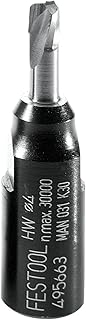


Festool's cordless routing range needs to be understood slightly differently from a conventional plunge-router comparison. The company's current battery-powered routing machines are primarily cordless edge routers, designed for trimming, rounding, chamfering, profiling and edge-banding work rather than replacing a full-size mains-powered plunge router for deep mortising, large-diameter profiling or heavy-duty template routing. That distinction matters when comparing products. A compact cordless edge router can be an excellent choice for mobile joinery, cabinetry, kitchen installation, furniture making and finishing work, but a professional who routinely needs substantial plunge depth or high-power material removal may still be better served by a mains-powered Festool router such as the OF 1010 R, OF 1400 or OF 2200. The right purchase therefore depends less on whether a machine is simply labelled "cordless" and more on the type of routing you actually perform. This makes the buying decision much clearer: if most of your work happens at the edge of a workpiece, cordless makes considerable sense. If your work is predominantly deep plunge routing, large rebates, substantial grooves, template work or heavy stock removal, compare the cordless models against Festool's mains-powered routers before deciding. The OFKC 500 R3 occupies the compact end of Festool's cordless edge-routing range. Its intended applications include rounding and chamfering square timber, door frames and boards, as well as flush trimming edge veneer and strip material. Its 18V battery drive and compact format make it particularly relevant where portability and easy handling are more important than maximum cutter capacity. The published technical specification includes a variable idle speed range of 10,000 to 25,000 revolutions per minute, a maximum cutter diameter of 27 mm, a 10 mm fine-adjustment stroke and a stated machine weight of 1.30 kg without accessories. The machine also uses a brushless EC-TEC motor, MMC electronics and a 27 mm dust-extraction connection. For a buyer, those specifications tell an important story. This is not intended to compete directly with a large plunge router. Instead, it is a lightweight edge-processing machine where controlling the cutter accurately and maintaining a stable relationship with the workpiece are the priorities. Do not choose the OFKC 500 simply because it is the smallest or most portable option. If you regularly need grooving, rebating, profiling with larger cutters or a broader selection of routing configurations, the MFKC 700 is likely to deserve closer consideration. If you need plunge routing, neither machine should automatically be treated as a substitute for a conventional plunge router. The MFKC 700 is the model to investigate when your routing work extends beyond straightforward edge rounding and chamfering. Festool positions it for routing solid wood, acrylic and PVC edge veneer, as well as chamfering, rounding and profiling. With suitable accessories, it can also be used for grooving and rebating. The published specification gives it an 18V battery system, an idle speed range of 10,000 to 25,000 revolutions per minute, a 6–8 mm clamping range, 14 mm of fine cutter adjustment and a maximum cutter diameter of 32 mm. Its stated machine weight without accessories is 1.70 kg. That additional flexibility is important because the MFKC 700 is built around a modular approach. Different router tables and guiding arrangements can be used for different edge-processing tasks, allowing the same drive unit to be configured around the job rather than forcing the user to buy a separate specialist machine for every operation. The MFKC 700 KA is aimed at a more specific category of edge work. It is designed for flush trimming and rounding protruding edges, including applications involving inclined edges depending on the cutter used. The published specification lists an 18V battery drive, a 10,000–25,000 revolutions-per-minute idle speed range, 6–8 mm clamping capacity, 14 mm fine adjustment and a maximum cutter diameter of 32 mm. The machine is therefore closely related to the MFKC 700 but should not be selected purely on headline specifications. The configuration and accessory compatibility are what determine whether it is the better tool for a particular workflow. For a general-purpose workshop, the standard MFKC 700 may provide the broader platform. For a professional whose daily work centres on edge finishing, the KA configuration can be the more relevant comparison. This is one of the most important points in any Festool cordless router buying guide. A compact edge router and a plunge router solve different problems. A plunge router is designed to enter the workpiece from above and can be used for operations such as internal recesses, mortises, deep grooves, template routing and substantial material removal. An edge router is optimised for working from an existing edge or surface boundary. Consequently, a buyer searching for the "best cordless Festool router" should first ask what type of routing is required. If the answer is predominantly edge trimming, rounding, chamfering and profiling, the cordless range is highly relevant. If the answer involves deep plunge cuts or heavy stock removal, compare the cordless edge machines with a mains-powered router before purchasing. Maximum cutter diameter is not simply a bigger-is-better specification. The cutter you use should match the machine, material, speed setting and intended operation. A compact router with a smaller permitted cutter diameter can be easier to control and may be exactly what an edge-trimming application requires. Always check the current machine documentation and the specific cutter manufacturer's requirements rather than assuming that every cutter in a given diameter range is appropriate for every application. Check the available shank sizes before buying cutters. The MFKC 700 family is specified for 6–8 mm clamping, while individual accessories can have specific compatibility requirements. Cutter shank diameter, cutter geometry and maximum permitted speed all need to be considered together. Variable speed is valuable because different materials and cutter sizes do not necessarily require the same operating speed. Larger cutters generally require more care with rotational speed, while material characteristics can also influence the appropriate setting. Do not treat maximum RPM as a performance score. A router that offers an intelligently controlled speed range can be more useful than one that simply advertises a higher top speed. For edge work, small height changes can make the difference between a clean flush finish and an edge that remains visibly proud or becomes overcut. Festool's cordless edge routers place considerable emphasis on fine adjustment, with the OFKC 500 R3 offering 10 mm of fine adjustment and the MFKC 700 family offering 14 mm. Fine adjustment is particularly valuable when trimming expensive veneer, laminate or finished components because the objective is controlled material removal rather than simply removing material as quickly as possible. Machine weight should be considered alongside balance. A technically light router can still become tiring if the operator has to fight its centre of gravity or maintain pressure against an awkward workpiece. For repetitive edge work, ergonomics can matter as much as raw power. A compact cordless router can be attractive precisely because it allows the user to maintain a stable, controlled movement along an edge without managing a trailing cable. Routing generates chips and fine dust, particularly when working with MDF, engineered boards and other composite materials. A suitable dust-extraction arrangement is therefore an important part of the purchase rather than an optional afterthought. Check the router's extraction connection, the hose arrangement, the extractor's capacity and the compatibility of any remote-start or Bluetooth functions you intend to use. A clean extraction setup can also improve visibility around the cutter and reduce the amount of debris that has to be cleared afterwards. A cordless router should be assessed as a complete battery-powered system rather than as a bare machine. If you already own compatible Festool 18V battery packs and chargers, the cordless route can be considerably more convenient because the same battery platform can support multiple tools. If you are entering the battery system for the first time, however, remember to account for the cost and practicality of batteries and charging equipment when comparing the total ownership proposition with a mains-powered alternative. A larger-capacity battery may provide greater working autonomy, but it can also add weight. For a router used predominantly around edges, where manoeuvrability is important, the balance between runtime and handling deserves attention. Also consider how the machine will be used. A tradesperson completing short finishing tasks at multiple locations may value portability more highly than someone spending several continuous hours routing in a workshop. Solid timber can be routed successfully with the appropriate cutter, speed and feed rate, but the species, grain direction and profile all influence the result. Harder timber can demand more from the cutter and machine than softwood, while end grain can behave differently from long grain. For visible furniture components, make shallow controlled passes where appropriate rather than trying to remove excessive material in one operation. The aim is to keep the cutter working predictably and minimise breakout. Edge trimming is one of the strongest use cases for a compact cordless router. The objective is usually a controlled flush cut rather than aggressive material removal. A stable base, sharp cutter and suitable extraction arrangement become especially important because damage to a thin decorative surface can be difficult to repair invisibly. Laminate can produce sharp chips and can be unforgiving of poor technique. Use the correct cutter and follow its operating instructions. Avoid assuming that a setting suitable for solid timber is automatically suitable for a laminate panel. Engineered boards can generate substantial fine dust. Extraction should therefore be treated as a central part of the workflow. Cutter sharpness also matters because a blunt tool can increase heat, friction and the likelihood of a poor edge. Plastic materials require particular attention to cutter selection, speed and feed rate. Excessive heat can affect the cut quality, so follow the recommendations for the specific material and cutter rather than relying on a generic woodworking setting. One of the easiest mistakes when comparing routers is to compare only the bare machine. A modular edge router's usefulness can depend heavily on the accessories that make particular operations possible. For the MFKC 700 family, different router tables and guide arrangements can extend the machine into applications including profiling, grooving, rebating and edge-band processing. This means the correct question is not simply "Which router has the best specification?" but "Which complete setup gives me the operations I actually need?" The router is only one part of the cutting system. Cutter geometry, sharpness, material and bearing arrangement can have a major effect on the finish. Festool offers cutters for operations including rounding, chamfering, flush trimming, grooving, profiling and specialised applications. Other established cutter manufacturers can also be considered where compatibility and technical specifications are appropriate. When comparing cutters, look beyond price. Check the shank size, overall diameter, cutting length, bearing arrangement, intended material, maximum permitted speed and compatibility with the router. Carbide-tipped cutters are commonly favoured for demanding woodworking applications because the cutting edges can retain their performance over extended use. High-speed steel can also be appropriate for particular materials and applications. The correct choice depends on the cutter design and material rather than the label alone. A blunt cutter can make a good router appear underpowered. As the cutting edge deteriorates, friction and heat can increase while the quality of the routed surface declines. The operator may also be tempted to slow the feed excessively, which can make the cutter spend longer in contact with the material. Inspect cutters regularly and replace or professionally sharpen them when appropriate. Do not continue using a damaged cutter simply because the router itself is functioning normally. Dust extraction is especially important when routing MDF and other dusty sheet materials. A suitable Festool CLEANTEC extractor can be considered as part of a wider workshop system, although the appropriate extractor depends on the material, work environment and applicable dust-control requirements. For mobile work, the value of cordless routing can be reduced if the rest of the setup remains awkward to move. Consider the complete workflow: battery, router, extraction hose, extractor, cutters, accessories, workpiece support and storage. Festool's router system includes guide-rail accessories for compatible routers. The purpose is to provide controlled straight guidance for operations such as grooves, recesses and other accurately positioned cuts. This is particularly useful when repeatability matters. Rather than relying entirely on freehand positioning, a suitable guide arrangement can provide a physical reference that reduces lateral movement. Always confirm compatibility between the specific router, adapter, guide system and required rods or accessories before purchasing. Compatibility should be checked against the current manufacturer's specification rather than assumed from a similar-looking model. For buyers considering more than one professional power-tool ecosystem, brand comparison should begin with the job rather than brand loyalty. Festool is particularly compelling for users who value an integrated system of routers, cutters, guide accessories, dust extraction, Systainer storage and connected cordless equipment. The cordless edge-router range is focused on specialised edge-processing applications rather than attempting to turn one compact machine into a universal plunge router. Makita is worth comparing for buyers already invested in its cordless platform. The key questions are battery compatibility, available router types, ergonomics, cutter capacity, accessory ecosystem and the specific applications supported by the model under consideration. DeWalt is another established professional power-tool brand with a broad cordless ecosystem. Buyers should compare the exact machine configuration rather than assuming that two routers with similar headline specifications will behave identically in edge-trimming or plunge applications. Bosch Professional offers a broad range of professional cordless tools, making it relevant for users who already own compatible batteries. Compare the router's intended application, depth adjustment, cutter compatibility, handling and accessory availability against the Festool alternatives. Milwaukee is another important comparison point for tradespeople building around an existing cordless platform. The strongest reason to choose one system over another may be the tools, batteries, chargers and accessories already present in the workshop rather than a small difference in one router's specification. Use a consistent comparison framework rather than relying on star ratings or isolated specifications. This is perhaps the biggest mistake. A compact edge router is not automatically a substitute for a plunge router simply because both machines use routing cutters. Low weight is attractive, but versatility may matter more. If you regularly need larger cutters, grooving or rebating accessories, the additional capability of the MFKC 700 may justify its larger format. Compare the router, batteries, charger, cutters, bases, fences, tables, guide accessories and extraction requirements. The bare-tool price rarely describes the complete cost of a professional routing setup. Battery compatibility should always be checked against the manufacturer's current specifications. Features such as Bluetooth connectivity and extractor integration may depend on using particular compatible battery packs. Think about the profiles you actually use. A router that cannot accommodate the cutter sizes or shank formats required for your normal work can become a frustrating purchase even if its motor and battery system are excellent. Routing close to an edge can reduce the router's supporting surface. A suitable base or support accessory can therefore be just as important as the router itself. Stable support helps reduce tipping and makes consistent feed control easier. Routing direction deserves particular attention because a rotating cutter can pull the machine in an unexpected direction if the cut is approached incorrectly. For conventional routing, the operator generally controls the router against the cutter's tendency to pull into the material. Climb-cutting can be useful in specialised circumstances but requires significantly greater control and is not a technique to adopt casually. Always follow the router and cutter manufacturer's operating instructions. The correct direction can also depend on whether the work is being performed on an internal or external edge and on the particular cutter geometry. Cordless does not mean maintenance-free. Keeping the router and accessories clean can help preserve reliable operation and makes it easier to identify problems before they become serious. For professionals moving between workshops and installation sites, storage can influence the practicality of a cordless router almost as much as its technical specification. Festool's Systainer approach is designed around modular tool and accessory storage, which can be useful where cutters and router accessories need to travel together. Before buying, consider how much equipment the complete setup requires. A compact router can lose some of its portability advantage if it needs numerous loose accessories that are difficult to organise. A bare machine can make sense when you already own compatible batteries, chargers and some accessories. A set may be more appropriate when you are starting from scratch or when the included accessories correspond closely to your regular work. Compare the actual contents of each package carefully. Product names can be similar while the supplied accessories differ significantly. Check the exact model number, included batteries, charger, base components, cutter accessories, storage case and voltage specification before committing to a purchase. There is no universally correct budget for a professional cordless router. The appropriate spend depends on workload, existing battery ownership and the accessories needed for the intended applications. Rather than choosing solely by the lowest purchase price, consider the cost per useful application. A slightly more expensive machine that replaces several specialist setups may provide better value for a professional. Conversely, paying for modular features that will never be used does not necessarily represent good value. When checking today's prices, compare like-for-like packages from trusted UK retailers and confirm whether batteries, chargers and accessories are included. Prices and availability can change, so they should be verified at the time of purchase rather than treated as permanent specifications. A cordless edge router may not be the best purchase if most of your work involves substantial plunge routing, large cutter profiles, deep grooves, heavy material removal or long uninterrupted workshop sessions. In those circumstances, compare the Festool OF 1010 R, OF 1400 and OF 2200 with the cordless edge routers. The OF 1010 R, for example, is built around a conventional router architecture with a double-sided column clamp, fine depth adjustment and a dedicated guide system, making it a fundamentally different proposition from the compact cordless edge machines. For professional use, prioritise ergonomics, reliability, accessory availability, service arrangements, battery compatibility and the frequency with which the machine will be used. A tool used every working day deserves to be assessed differently from one used for occasional home projects. For DIY users, the calculation is often more straightforward. If edge routing is occasional, a simpler configuration may be sufficient. If the router will be used for furniture making, cabinetry and repeated finishing work, investing in a better-supported system can become more attractive. The best Festool cordless router is not necessarily the most powerful, lightest or most expensive model. It is the machine whose configuration matches the work you actually perform. For straightforward rounding, chamfering and flush trimming, the OFKC 500 R3 is the compact option to investigate. For a wider range of edge-routing applications, the MFKC 700 offers a more versatile platform. For specialist flush-trimming and edge-band work, the MFKC 700 KA deserves consideration. If your definition of a router includes deep plunge cuts, substantial internal routing and heavy material removal, broaden the comparison to Festool's mains-powered routers rather than assuming that a cordless edge router can perform the same role. The OF 1010 R, OF 1400 and OF 2200 belong to a different class of routing work. Finally, compare the complete system rather than the tool alone. Battery ownership, cutter compatibility, extraction, guide accessories, bases, router tables and storage can materially affect the practical value of a professional routing setup. Check the latest specifications, package contents, retailer information and verified customer feedback before making the final purchase decision. Yes. Festool offers cordless edge routers in its 18V range, including the OFKC 500 R3, MFKC 700 and MFKC 700 KA configurations. These machines are intended primarily for edge-processing applications rather than serving as universal replacements for conventional plunge routers. It depends on the application. The OFKC 500 R3 is focused on compact edge work, while the MFKC 700 offers a broader range of edge-routing possibilities. The MFKC 700 KA is aimed at specialist flush-trimming and edge-processing work. Not in every application. A cordless edge router is designed for work around existing edges and surfaces. A conventional plunge router is better suited to operations that require the cutter to enter the workpiece from above, including many deep grooves, recesses and template-routing applications. The current cordless edge-router models discussed in this guide use Festool's 18V battery platform. Always check the exact model specification and battery compatibility before buying. Depending on the model and cutter, applications include solid wood, veneer, laminate, acrylic, PVC edge materials and engineered boards. The correct cutter, speed and feed rate depend on the specific material and operation. Yes. The published specification gives the MFKC 700 a 10,000–25,000 revolutions-per-minute idle speed range, with Festool's MMC electronics designed to manage speed according to the working material and maintain speed under load. The published specification lists a maximum cutter diameter of 27 mm. Cutter compatibility should always be checked against the exact machine and cutter documentation. The published specification lists a maximum cutter diameter of 32 mm. The permitted diameter for a particular operation can also depend on the cutter design and manufacturer's instructions. Yes. The cordless edge-router models include dust-extraction connections, and compatible Festool extraction equipment can form part of the wider system. Check the exact connection size and accessory requirements for the model you are considering. They are designed as professional power tools, but suitability depends on the particular trade and operation. They are especially relevant to professional edge processing, furniture, cabinetry, installation and finishing work where cordless mobility provides a practical advantage. There is no universal winner. Compare the exact router, existing battery platform, cutter compatibility, accessory ecosystem, extraction setup, ergonomics and intended application. If you already own a substantial cordless system, battery compatibility can be an important part of the decision. It can be, particularly if you frequently perform edge-finishing work away from a convenient power source. A cordless edge router can complement rather than replace a conventional router, giving you a smaller and more mobile tool for trimming, rounding and chamfering. Check the exact model number, current specification, battery requirements, cutter compatibility, included accessories, optional accessories, extraction connection, package contents, current retailer pricing and availability. If buying from an independent retailer, compare like-for-like packages because apparently similar product names can represent different configurations. There is no universal replacement interval. Cutter life depends on the material, frequency of use, cutter quality, operating conditions and whether the cutter is sharpened. Replace or service cutters when their condition no longer permits safe, controlled and acceptable-quality work. For most buyers, application suitability is more important than any single specification. Cutter compatibility, stable guidance, precise adjustment, ergonomics, battery convenience and dust extraction all contribute to the quality of the finished result.Festool Cordless Routers: What to Know Before You Buy
Best Festool Cordless Router Options by Type of Work
Festool OFKC 500 R3: Who Is It For?
Where the OFKC 500 R3 Makes Most Sense
When to Look Beyond the OFKC 500 R3
Festool MFKC 700: The More Versatile Cordless Choice
Why the MFKC 700 Deserves a Close Look
Festool MFKC 700 KA: When the Specialist Configuration Makes Sense
Consider the MFKC 700 KA If You Frequently Work With
Why Festool Cordless Routers Are Not Direct Replacements for Plunge Routers
Festool Cordless vs Mains-Powered Routers
What to Compare When Choosing a Festool Cordless Router
1. Maximum Cutter Diameter
2. Collet or Clamping Capacity
3. Speed Range
4. Fine Depth Adjustment
5. Weight and Balance
6. Dust Extraction
Battery Considerations for Festool Cordless Routers
Battery Capacity Is Not the Only Consideration
Material Choice: Which Router Setup Suits Which Work?
Solid Wood
Veneer and Edge Banding
Laminate and HPL
MDF and Engineered Boards
Acrylic and Plastics
Accessories Can Change the Buying Decision
Useful Accessory Categories to Compare
Festool Router Bits: Do Not Overlook Cutter Quality
Carbide vs High-Speed Steel Cutters
Why Cutter Sharpness Matters More Than Many Buyers Expect
Dust Extraction and a Cleaner Routing Workflow
Using a Guide Rail With a Festool Router
Festool Cordless Router vs Makita, DeWalt, Bosch Professional and Milwaukee
Festool
Makita
DeWalt
Bosch Professional
Milwaukee
How to Compare Festool Cordless Routers Properly
Common Buying Mistakes
Buying a Cordless Edge Router for Heavy Plunge Work
Choosing the Smallest Model Solely Because It Is Lighter
Ignoring the Cost of the Complete Setup
Assuming Every 18V Battery Is Identical
Choosing a Router Before Choosing the Cutters
Ignoring Workpiece Support
How to Get Better Results From a Cordless Router
Routing Direction and Workpiece Safety
Maintenance and Care
Storage and Transport
Should You Buy a Bare Tool or a Set?
How Much Should You Spend?
Who Should Buy a Festool Cordless Router?
Who May Be Better Off With a Mains-Powered Router?
Professional vs DIY Use
Questions to Ask Before Buying
Festool Cordless Router Buying Checklist
Final Buying Advice
Frequently Asked Questions
Is there a cordless Festool router?
What is the best Festool cordless router?
Can a Festool cordless edge router replace a plunge router?
Are Festool cordless routers 18V?
What materials can a Festool cordless edge router handle?
Does the MFKC 700 have variable speed?
What is the maximum cutter diameter of the OFKC 500 R3?
What is the maximum cutter diameter of the MFKC 700?
Can Festool cordless routers be used with dust extraction?
Are Festool cordless routers suitable for professional work?
Should I choose Festool over Makita, DeWalt, Bosch Professional or Milwaukee?
Is a cordless router worth buying if I already have a mains router?
What should I check before buying a Festool cordless router in the UK?
How often should router cutters be replaced?
What is the most important feature in a cordless router?
Quick Decision Guide