

Our experts reviewed the latest {category_name } to help you compare quality, performance, durability and overall value before making your purchase.


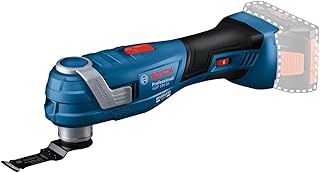


Choosing a Bosch cordless multi-tool is less about finding one universally “best” machine and more about matching the tool to the type of work you actually carry out. Bosch offers cordless oscillating multi-tools across both its DIY and Professional ranges, with meaningful differences in battery platform, accessory interface, speed control, ergonomics, vibration behaviour, intended workload and kit contents. For occasional household repairs, a Bosch DIY model such as the UniversalMulti 18V-32 can make sense because it is compact and designed around general-purpose work. The AdvancedMulti 18 sits further towards demanding DIY applications, while Professional models such as the Bosch GOP 18V-28 and GOP 18V-34 are aimed at users who need a more work-focused machine and access to the Bosch Professional 18V system and AMPShare battery ecosystem. These descriptions should be treated as buying categories rather than absolute rankings. The right choice depends on whether you prioritise portability, cutting performance, comfort, battery compatibility, accessory flexibility or professional-duty features. A cordless oscillating multi-tool uses a small, rapid side-to-side movement to drive interchangeable accessories. Unlike a conventional circular saw, reciprocating saw or sander, the tool is designed to perform several different operations from one compact body. Depending on the blade or attachment fitted, an oscillating multi-tool can be used for tasks such as plunge cutting, flush cutting, sanding, scraping and removing grout. Suitable Bosch accessories can extend the range of applications across materials including wood, metal, plastic, plasterboard, grout and mortar, although the appropriate accessory and operating speed must always be selected for the material and job. The greatest advantage is access. A multi-tool can often work in corners, beside skirting boards, around door frames, underneath cabinets and in other restricted areas where a larger saw would be awkward. One of the most important decisions is choosing between Bosch’s DIY-oriented range and Bosch Professional equipment. The colour scheme alone should not determine the choice. The battery system, intended workload, accessory compatibility, ergonomics and specification are more important. Bosch DIY cordless multi-tools are designed for household projects, maintenance and general DIY. The current 18V range includes models such as the UniversalMulti 18V-32 and AdvancedMulti 18. The UniversalMulti 18V-32 is specified with a 10,000 to 19,000 oscillations-per-minute no-load speed range, a 2.8-degree oscillating angle and a stated tool weight of 0.75kg excluding the battery. Bosch also highlights electronic speed preselection, MagnetHold and a four-stage depth stop on this model. The AdvancedMulti 18 is positioned higher within the Bosch DIY range. Bosch specifies a 10,000 to 20,000 oscillations-per-minute no-load speed range and a 2.8-degree oscillating angle. Its features include electronic speed preselection, a 180-degree light band and the AutoClic system for rapid accessory changes. Bosch Professional cordless multi-tools are intended for users who place greater emphasis on sustained work, professional ergonomics, accessory performance and integration with the Professional 18V battery system. The Bosch Professional GOP 18V-28 uses the Starlock interface and is compatible with Starlock and StarlockPlus accessories. Bosch also specifies Constant Speed, soft grip, speed selection and an LED work light. The machine is compatible with Bosch Professional 18V batteries and the AMPShare multi-brand battery alliance. The GOP 18V-34 takes a different approach, with Bosch highlighting enhanced low-vibration design, a slim ergonomic grip, Snap-in SDS accessory changes and a 3.4-degree oscillating angle. That larger oscillating angle can be relevant when comparing cutting behaviour and efficiency in confined working areas. The UniversalMulti 18V-32 is particularly interesting for buyers who want a lightweight Bosch 18V multi-tool without stepping into the Professional range. A compact multi-tool is easier to position when working inside cupboards, around pipework or close to finished surfaces. The UniversalMulti 18V-32 has a stated weight of 0.75kg excluding its battery, which helps explain why it sits firmly in the compact DIY category. Electronic speed preselection is useful because the ideal operating speed is not necessarily the maximum available speed. A slower setting may be preferable when working with a delicate material or controlling an accessory, while higher settings can be useful for suitable cutting and sanding applications. Bosch's MagnetHold feature is designed to help keep accessories in position during changes. This is a small convenience feature, but accessory handling becomes increasingly important if the multi-tool is used frequently. The four-stage depth stop is particularly relevant for repeatable segment-cutting work. If you frequently need to make controlled cuts rather than simply cutting through material, depth management can be more valuable than headline motor performance. The AdvancedMulti 18 is worth considering when a basic household multi-tool does not provide enough flexibility for the work planned. Bosch describes it as a versatile cordless all-rounder and specifies applications including cutting, sawing, sanding, scraping, routing and polishing. The manufacturer lists compatible materials including wood, metal, plastic, plasterboard, grout and mortar, subject to using the appropriate accessory. Frequent accessory changes can interrupt a project. Bosch's AutoClic system is designed to allow keyless accessory changes, with Bosch stating a three-second change time. This is particularly useful when a job involves alternating between cutting, scraping and sanding. The 180-degree light band is more than a cosmetic feature. Multi-tools are often used against walls, floors, furniture and other surfaces where the operator's hand or the surrounding structure can obstruct conventional lighting. Better illumination can make the cutting line and accessory position easier to see. The AdvancedMulti 18 belongs to Bosch's 18V POWER FOR ALL ALLIANCE. This means buyers already invested in compatible products from that battery ecosystem may be able to use the same battery across supported equipment. Always check the exact compatibility of the battery and charger rather than assuming every Bosch 18V product uses the same battery platform. The GOP 18V-28 is a more professional-oriented proposition and should be considered separately from Bosch's green DIY machines. Accessory compatibility is one of the most important reasons to compare Bosch multi-tools carefully. The GOP 18V-28 supports Starlock and StarlockPlus systems, giving users access to a broad range of compatible accessories. Bosch states that the Starlock interface uses a tight three-dimensional connection intended to provide high direct power transfer. This matters because the blade is the part that actually contacts the workpiece. A powerful multi-tool fitted with an unsuitable or poor-quality accessory can still produce disappointing results. The Snap-in system is intended to simplify accessory replacement. If a multi-tool is being used throughout a renovation project, faster blade changes can have a greater practical benefit than a specification that looks impressive but is rarely relevant to the user's work. Constant Speed is another feature worth considering for users who carry out repetitive cutting or sanding. Maintaining controlled operation under load can contribute to a more predictable working experience, although actual results will still depend on the accessory, material, pressure and battery condition. The GOP 18V-28 is compatible with Bosch Professional 18V batteries and AMPShare. This is a fundamentally different battery ecosystem from Bosch's 18V POWER FOR ALL DIY platform, so buyers should identify which Bosch 18V system they already own before purchasing a bare tool. The GOP 18V-34 deserves particular attention when comparing professional Bosch multi-tools because Bosch lists a 3.4-degree oscillating angle rather than the 2.8 degrees specified for several Bosch DIY models and the GOP 18V-28. A larger oscillating angle can influence how aggressively the accessory moves through its working path. However, it should never be treated as a standalone measure of cutting performance. Motor design, electronics, blade geometry, material, pressure, battery state and vibration control all contribute to the result. For users who spend extended periods using an oscillating multi-tool, vibration control becomes a significant buying consideration. Bosch highlights the GOP 18V-34's enhanced low-vibration design and slim ergonomic grip. This is particularly relevant to tradespeople carrying out repeated cuts or removal work. A specification that improves comfort may be more valuable over a full working day than a small difference in theoretical cutting speed. Bosch specifically positions the 3.4-degree oscillating angle as helping cutting efficiency in small areas. This makes the GOP 18V-34 worth comparing for renovation, installation and repair work where access is restricted. The oscillation rate describes how rapidly the accessory moves through its oscillating cycle. A higher maximum figure is not automatically better. Different materials and accessories call for different settings, which is why variable speed or electronic speed selection can be more useful than maximum speed alone. The oscillating angle describes the movement of the accessory. Bosch models in this comparison use different angles, including 2.8 degrees and 3.4 degrees. This can affect cutting characteristics and the amount of movement available at the accessory. Weight should be considered together with battery weight. A bare-tool specification does not tell the whole story because the battery adds mass and can alter the balance of the machine. For overhead work, detailed trimming and long sanding sessions, lower overall weight can be particularly valuable. For heavy cutting, some users may prefer a larger professional machine if the additional size is accompanied by improved control and durability. Battery capacity is normally expressed in ampere-hours. A higher-capacity battery can provide greater energy storage, but it also adds weight. There is therefore a trade-off between runtime and portability. For occasional short cuts, a smaller battery may be perfectly adequate. For extended cutting, sanding or renovation work, a larger battery or multiple batteries can be more practical. This is one of the easiest buying mistakes to avoid. Bosch 18V does not mean that every Bosch 18V battery is interchangeable across every Bosch product family. The POWER FOR ALL ALLIANCE and Bosch Professional 18V/AMPShare ecosystems serve different product groups. If you already own Bosch cordless tools, identify the exact battery platform before choosing the multi-tool. A bare tool can be attractive value only when the existing battery and charger are genuinely compatible. Accessory compatibility deserves as much attention as the multi-tool itself. Bosch's oscillating accessories are available in different interface classes and cutting designs, and not every accessory is suitable for every tool. Starlock is important because it provides a defined mechanical interface between the tool and accessory. StarlockPlus provides compatibility with the corresponding accessory class used by suitable Bosch Professional equipment. Before purchasing replacement blades, check: The blade can have a greater effect on performance than many first-time buyers expect. Oscillating multi-tools are only as effective as the accessory being used for the job. Wood-cutting blades are useful for timber, trim, flooring and similar applications. Teeth configuration and blade width affect how easily the tool can be positioned and how quickly a cut can be made. Bi-metal accessories are designed for applications involving materials such as wood with embedded metal or suitable metal-cutting work. They can be useful where ordinary wood blades would be inappropriate. Carbide accessories can be appropriate for demanding materials and specialist applications. They should be selected according to the manufacturer's stated application rather than simply because carbide sounds more durable. Delta sanding plates transform the multi-tool into a compact detail sander. They are useful for corners and small surfaces where a conventional random orbital sander is difficult to position. Scraper blades can be used for removing suitable adhesives, sealants, coatings and other materials. The correct blade and speed setting are important because aggressive pressure can damage the substrate. The exact application depends on the model, accessory and material. Always follow the manufacturer's instructions and use the accessory specified for the task. A multi-tool is versatile, but versatility should not be confused with being the fastest tool for every job. If you need to make long straight cuts through sheet material, a circular saw may be more appropriate. For large numbers of timber cuts, a dedicated saw can be considerably more efficient. For extensive sanding, a random orbital or dedicated detail sander may be more comfortable and productive. For heavy demolition, a reciprocating saw or dedicated demolition equipment may be better suited. The multi-tool is at its strongest when the job involves awkward access, precision trimming, short cuts, detail work or switching between several operations. If you already own compatible Bosch batteries, cordless is often much easier to justify because the same battery platform can support multiple tools. Many cordless multi-tools are sold in several configurations. A bare tool normally makes the most sense when the buyer already owns compatible batteries and a charger. A full kit can be more convenient for someone entering the battery platform for the first time, but kit contents must be checked carefully. Two apparently similar packages can differ substantially in battery capacity, charger, carrying case and included accessories. Do not compare kit prices without comparing what is actually included. A cheaper package can become more expensive if it requires the later purchase of batteries, charger and essential blades. A sensible comparison should use the same criteria for every model. Maximum oscillations per minute are easy to compare but do not tell the complete story. A useful multi-tool needs controllable speed, an appropriate accessory and good handling. This is perhaps the most expensive mistake. Check the precise battery family before buying a bare tool. Accessory compatibility and application suitability are separate issues. An accessory may physically fit while still being inappropriate for a particular material or cutting task. A large battery can increase runtime but also adds weight. If most jobs last only a few minutes, a lighter battery can make the tool more comfortable. A multi-tool without the correct blades quickly becomes a frustrating purchase. Budget for the accessories genuinely required for your work rather than concentrating entirely on the machine itself. Professional features can be valuable, but they may not provide proportional benefits for someone who only occasionally trims a door, removes grout or sands a small area. The opposite mistake can also occur. If the tool will be used frequently throughout working days, professional ergonomics, vibration control, accessory performance and battery ecosystem may justify moving up the Bosch range. Prioritise compactness, ease of use, sensible speed control and a battery platform that fits your existing tools. A model such as the UniversalMulti 18V-32 can be particularly relevant to this category. Look for stronger all-round versatility, convenient accessory changes, good illumination and a battery with sufficient capacity. The AdvancedMulti 18 is worth considering when the work extends beyond occasional small repairs. Prioritise professional battery compatibility, ergonomics, vibration control, accessory performance and the ability to obtain the blades required for your regular work. The GOP 18V-28 and GOP 18V-34 are the more relevant Bosch Professional models in this comparison. Look closely at grip shape, head profile, oscillating angle, blade selection and visibility. A compact machine that is easy to control can outperform a theoretically more powerful tool when the working position is awkward. Weight, grip comfort and vibration control should be given greater importance. The lightest tool is not automatically the most comfortable, because balance and vibration characteristics also affect fatigue. Proper maintenance helps preserve the tool and accessories. Remove dust and debris after use, particularly around ventilation openings and the accessory mounting area. Keep the machine dry and store it in accordance with the manufacturer's instructions. Inspect blades and attachments before use. A damaged, excessively worn or inappropriate accessory should not be used. Dull accessories can encourage excessive pressure, which can reduce control and increase heat and vibration. Battery contacts should be kept clean and protected from contamination. Batteries should be stored and charged according to the manufacturer's instructions rather than exposed to unsuitable temperatures or conditions. If the tool develops unusual vibration, noise, overheating or inconsistent operation, stop using it and consult the appropriate Bosch documentation or authorised service route rather than attempting an improvised repair. Oscillating multi-tools can look relatively harmless because the blade movement is small, but the accessories operate at high speed and can cause serious injury. There is no single best Bosch cordless multi-tool for every buyer. The UniversalMulti 18V-32 is suited to compact general DIY, the AdvancedMulti 18 is a more capable Bosch DIY option, while the GOP 18V-28 and GOP 18V-34 are aimed at professional-oriented users. The best choice depends primarily on workload, battery platform, ergonomics and required accessories. They are designed for different user groups, so a simple better-or-worse ranking can be misleading. The GOP 18V-28 belongs to the Bosch Professional ecosystem and supports Starlock and StarlockPlus accessories, while the AdvancedMulti 18 belongs to the Bosch DIY POWER FOR ALL ALLIANCE. The Professional model is more relevant where professional battery compatibility and trade-focused features matter; the AdvancedMulti 18 can be more appropriate for demanding household DIY. Yes, particularly if low vibration, ergonomic handling and cutting performance in confined areas are important. Bosch highlights its low-vibration design, slim grip and 3.4-degree oscillating angle, making it a meaningful alternative to the GOP 18V-28 rather than simply a cosmetic model update. It depends on the model. Bosch DIY 18V machines such as the UniversalMulti 18V-32 and AdvancedMulti 18 use the 18V POWER FOR ALL ALLIANCE, while Bosch Professional models such as the GOP 18V-28 and GOP 18V-34 are associated with the Bosch Professional 18V system and AMPShare. Always verify the exact model before purchasing a battery or charger. Suitable Bosch multi-tools can cut certain metals when fitted with the correct blade and operated according to the manufacturer's instructions. The accessory must be selected for the specific metal and application. Never assume that a blade designed primarily for wood is suitable for metal simply because it physically fits the tool. Yes, suitable oscillating accessories can be used for grout-removal applications. The correct accessory, operating speed and technique are important because excessive pressure can damage adjacent tiles or the substrate. Compatibility depends on the interface supported by the particular tool. Check whether the tool accepts Starlock, StarlockPlus or another specified accessory system before purchasing blades. The GOP 18V-28, for example, is specified for Starlock and StarlockPlus compatibility. Not necessarily. Cordless models provide mobility and avoid mains cables, while corded models can be convenient for prolonged stationary work. If you already own compatible Bosch batteries, a cordless model can offer greater practical value because the battery platform can be shared with other tools. Choose based on the balance between runtime and weight. Smaller batteries are useful when low weight and manoeuvrability matter. Larger batteries can be advantageous for extended work but add weight. There is no universally ideal battery capacity for every application. Kit contents vary. Some configurations include one or more accessories, while other variants may contain additional blades, sanding attachments, batteries, chargers or carrying cases. Always check the exact part number and package contents rather than assuming two versions of the same tool contain identical equipment. The strongest way to compare Bosch cordless multi-tools is to start with the job rather than the model number. Decide what you will cut, how often you will use the tool, whether you already own compatible batteries and how important weight, vibration, accessory changes and professional features are to you. For straightforward DIY, the Bosch UniversalMulti 18V-32 offers a compact approach with a useful combination of speed control, depth control and 18V battery compatibility. For more ambitious household projects, the AdvancedMulti 18 provides a broader set of features and applications. For professional users, the Bosch Professional GOP 18V-28 and GOP 18V-34 deserve closer examination. The GOP 18V-28 combines the Professional 18V platform with Starlock and StarlockPlus compatibility, while the GOP 18V-34 places greater emphasis on low vibration, ergonomic control and its 3.4-degree oscillating angle. Before making a purchase, compare the exact model number, battery configuration, accessory interface, included equipment and manufacturer's current specification. Then compare equivalent kits from trusted retailers and check current customer feedback for the particular variant you are considering. This approach is more reliable than choosing solely from headline power figures or a generic “best multi-tool” ranking. Product specifications, compatibility information and included equipment can change between model variants and over time. For the most accurate purchasing decision, verify the exact Bosch product number, current specification and kit contents against the manufacturer's documentation before ordering.Bosch Cordless Multi-Tools: Buying Guide, Comparison and Reviews for 2026
Quick Comparison: Which Bosch Cordless Multi-Tool Should You Consider?
What Is a Cordless Oscillating Multi-Tool?
Bosch DIY Versus Bosch Professional
Bosch DIY
Bosch Professional
Bosch UniversalMulti 18V-32: What Makes It Different?
Compact design
Speed control
MagnetHold
Depth control
Bosch AdvancedMulti 18: A More Capable DIY Choice
AutoClic accessory changes
180-degree illumination
Battery ecosystem
Bosch Professional GOP 18V-28: A Trade-Focused Option
Starlock and StarlockPlus compatibility
Snap-in accessory changes
Constant Speed
Professional battery compatibility
Bosch Professional GOP 18V-34: Why the Oscillating Angle Matters
Low-vibration design
Confined-space cutting
Technical Specifications That Actually Matter
Oscillations per minute
Oscillating angle
Tool weight
Battery capacity
Battery platform
Starlock, StarlockPlus and Accessory Compatibility Explained
Choosing the Right Blade
Wood blades
Bi-metal blades
Carbide accessories
Sanding attachments
Scrapers
What Can You Use a Bosch Cordless Multi-Tool For?
When a Cordless Multi-Tool Is Not the Best Tool
Cordless Versus Corded Multi-Tools
Advantages of cordless
Advantages of corded
Battery-Only Tool or Full Kit?
How to Compare Bosch Multi-Tools Properly
Common Bosch Cordless Multi-Tool Buying Mistakes
Choosing solely on maximum speed
Ignoring the battery platform
Assuming every Starlock accessory is identical
Buying the largest battery for every job
Underestimating accessories
Buying professional equipment for occasional light DIY
Buying a DIY model for intensive trade work
How to Choose the Best Bosch Multi-Tool for Your Work
For occasional household repairs
For regular DIY and renovation
For tradespeople
For detailed cutting in restricted areas
For long sanding sessions
Maintenance and Care
Safety Considerations
Bosch Cordless Multi-Tool Buying Checklist
Frequently Asked Questions
Which Bosch cordless multi-tool is best?
Is the Bosch Professional GOP 18V-28 better than the AdvancedMulti 18?
Is the Bosch GOP 18V-34 worth considering?
What battery does a Bosch cordless multi-tool use?
Can Bosch cordless multi-tools cut metal?
Can a Bosch multi-tool remove grout?
Are Bosch Starlock accessories interchangeable between models?
Is a cordless multi-tool better than a corded one?
What size Bosch battery should I buy?
Do Bosch cordless multi-tools come with blades?
Final Buying Advice
Sources of Product Information and Verification