

Our experts reviewed the latest {category_name } to help you compare quality, performance, durability and overall value before making your purchase.


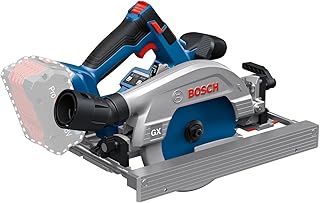

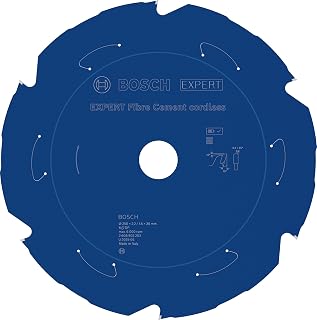


Bosch cordless mitre saws are aimed at buyers who want the accuracy and repeatability of a mitre saw without depending on a mains socket. The current Bosch Professional cordless range in the UK includes the GCM 18V-216 D, GCM 18V-254 D and the larger GCM 18V-305 GDC, giving buyers a meaningful choice between portability, cutting capacity and high-output performance. The right model depends less on the headline battery voltage and more on the type and dimensions of material you routinely cut. A 216 mm machine can be a sensible choice for trim, flooring and general carpentry, while a 254 mm model provides a useful step up in capacity without approaching the size and weight of a 305 mm professional saw. The GCM 18V-305 GDC is the specialist option for demanding work where maximum cross-cutting capacity and cordless power matter more than portability. These descriptions are buying-guide categories rather than claims that one machine is universally superior. A smaller saw can be the better purchase for a mobile carpenter who values lower carrying weight, whereas the larger 305 mm machine can make much more sense for repeated cutting of substantial timber. Specifications can vary by exact market configuration and product variant, so the specification plate, supplied manual and current manufacturer listing should be checked before purchase. The figures above are based on Bosch Professional's current UK product information. The GCM 18V-216 D occupies the more portable end of Bosch Professional's current cordless mitre-saw range. It uses a 216 mm blade, weighs 16.2 kg and has a stated 0° cutting capacity of 70 x 305 mm. Bosch lists a 5,000 rpm no-load speed, 48° mitre adjustment to both the left and right, and 47° bevel adjustment in both directions. For buyers who frequently move a saw between workshops, sites, garages and installation jobs, those dimensions are important. A mitre saw is not genuinely portable merely because it is battery powered; the saw itself, battery, stand and accessories all contribute to the equipment that has to be transported. Do not assume that a smaller blade automatically means insufficient performance. The more useful question is whether its published cutting capacity covers the largest material you regularly encounter. Conversely, buying a larger saw simply because it has a larger blade can add unnecessary weight, bench space and cost if most of your work involves relatively modest sections. The GCM 18V-254 D is particularly interesting for buyers who want more cutting height than the 216 mm model without moving all the way to the considerably heavier 305 mm machine. Bosch lists a 254 mm blade, 17.7 kg weight, 90 x 305 mm cutting capacity at 0°, 90 x 215 mm at a 45° mitre and 55 x 305 mm at a 45° bevel. Its stated no-load speed is 4,500 rpm. The 1.5 kg difference between the GCM 18V-216 D and GCM 18V-254 D may appear small on paper, but the more important distinction is the additional cutting capacity. For someone regularly cutting thicker timber, the 254 mm model can therefore be more useful than simply choosing the lightest saw available. The GCM 18V-254 D is therefore worth considering when your decision sits between “easy to transport” and “large enough for substantial timber”. The best choice is determined by the material dimensions you actually cut rather than by blade diameter alone. The GCM 18V-305 GDC is the largest of the current Bosch Professional cordless mitre saws considered in this guide. It has a 305 mm blade and a published 0° cutting capacity of 104 x 341 mm. Bosch also lists 104 x 240 mm at a 45° mitre and 40 x 341 mm at a 45° bevel. The saw weighs 26.6 kg and has a variable no-load speed range of 2,550 to 4,000 rpm. That specification makes its role very different from a compact cordless mitre saw. The 305 GDC is designed for users who need substantial cutting capacity while retaining the flexibility of an 18V battery system. Bosch states that its brushless motor and ProCORE18V technology are designed to provide cordless power equivalent to a 2,000 W corded mitre saw. Bosch also states that the GCM 18V-305 GDC is compatible with the AMPShare multi-brand battery alliance and can be mounted on multiple Bosch GTA stands. Blade diameter is one of the easiest specifications to compare, but it should not be treated as a simple performance ranking. A 216 mm blade is well suited to buyers who want a relatively manageable professional mitre saw. It can provide substantial cross-cutting capacity while keeping the machine more portable than larger models. The Bosch GCM 18V-216 D demonstrates this approach with a 70 x 305 mm published capacity at 0°. A 254 mm blade sits between the compact and high-capacity categories. The Bosch GCM 18V-254 D increases the stated 0° cutting height to 90 mm while retaining a 305 mm maximum horizontal dimension. A 305 mm blade is intended for much larger workpieces. The GCM 18V-305 GDC reaches a published 104 x 341 mm capacity at 0°, making it substantially more suitable when larger timber sections are part of the normal workload. The trade-off is physical size and weight. The GCM 18V-305 GDC weighs 26.6 kg compared with 16.2 kg for the GCM 18V-216 D and 17.7 kg for the GCM 18V-254 D. For many buyers, cutting capacity is more useful than motor speed when comparing mitre saws. It tells you whether the machine can physically accommodate the material you intend to cut. Pay attention to several separate measurements rather than looking for one maximum figure: A saw that can cut a large board squarely may have a significantly different capacity when the table and blade are both angled. Buyers should therefore examine the complete specification rather than relying on the largest number displayed in a retailer's product title. Mitre and bevel adjustment are related but perform different functions. The mitre setting rotates the workpiece relative to the blade, while the bevel setting tilts the blade assembly. For ordinary picture frames, skirting, architrave and similar work, mitre adjustment is usually the first specification to consider. Compound carpentry applications require attention to both axes because the blade and table may need to be positioned simultaneously. The GCM 18V-216 D and GCM 18V-254 D both provide 48° left and right mitre adjustment and 47° left and right bevel adjustment according to Bosch's UK specifications. The larger GCM 18V-305 GDC provides 52° left and 60° right mitre adjustment with 47° bevel adjustment in both directions. Brushless motor technology is now common in professional cordless power tools, but the presence of a brushless motor should not be treated as a guarantee that one saw will outperform every other model. The complete system matters: motor design, battery capability, electronics, blade, material, cutting technique and thermal management all affect practical performance. Bosch's BITURBO concept is particularly relevant to its higher-performance Professional cordless machines. On the GCM 18V-305 GDC, Bosch states that the brushless motor is optimised for ProCORE18V technology and delivers cordless power equivalent to a 2,000 W corded mitre saw. For buyers, the practical lesson is simple: compare the manufacturer's power claims alongside cutting capacity and battery requirements. Do not judge a cordless mitre saw solely by its nominal 18V rating. Battery compatibility can be one of the strongest reasons to choose a Bosch Professional cordless mitre saw. If you already own compatible Bosch Professional 18V tools, adding a mitre saw can allow batteries and chargers to serve multiple machines rather than creating an entirely separate battery ecosystem. Bosch states that the GCM 18V-305 GDC is compatible with all Bosch Professional 18V batteries and chargers, while recommending ProCORE18V batteries of at least 5.5 Ah when maximum power is required. Bosch also identifies compatibility with AMPShare. Always check the exact battery recommendation for the particular saw and application. Battery capacity is expressed in ampere-hours, but a larger Ah figure does not by itself describe every aspect of battery performance. High-demand cutting applications can make battery technology, current delivery, temperature and workload just as relevant as nominal capacity. Runtime is difficult to express as a universal number because a mitre saw can perform very different amounts of work between charges depending on the timber, blade condition, cut frequency, material thickness and operating technique. For occasional cuts, a smaller battery may be convenient because it reduces overall equipment weight. For sustained cutting, a higher-capacity battery can reduce interruptions, although it also adds weight and cost. When comparing battery kits, look beyond the advertised tool price. A bare-tool saw can appear significantly cheaper than a complete kit, but the real cost of entering a battery platform includes the appropriate battery and charger if you do not already own them. A cordless mitre saw is not automatically better than a corded machine. The major advantage is flexibility: there is no power lead running across the work area and no requirement to position the saw close to a mains outlet. A corded machine can remain attractive for fixed workshop use, particularly when the saw is operated for long periods and continuous mains power is more convenient than managing batteries. For site carpentry, renovation work, outdoor installation and mobile workshops, cordless operation can be much more compelling. For a permanently installed workshop where portability has little value, the calculation is different. A mitre saw is fundamentally a precision tool. Large cutting capacity is of limited value if the machine is difficult to set accurately or repeatedly. When assessing a Bosch cordless mitre saw, consider: Precision is also affected by setup. A high-quality saw cannot compensate for a poorly supported workpiece, an incorrectly adjusted fence, a damaged blade or an unstable stand. Dust management should be part of the buying decision rather than an afterthought. Mitre saws can generate considerable airborne and deposited dust, particularly when cutting wood-based materials. Check the manufacturer's extraction provisions and consider how the saw will connect to your existing dust extractor. A dust bag can be useful for mobile work, but workshop users may prefer a compatible extraction system for more sustained cutting. Bosch highlights integrated dust-management features on its professional mitre-saw range, while the GCM 18V-305 GDC is supplied with a dust bag in the UK configuration listed by Bosch. The blade is effectively the cutting interface between the saw and the material. Tooth count, tooth geometry, blade thickness and intended material all influence the result. A blade designed for rapid rough cross-cutting is not necessarily the best choice for fine finish work. Similarly, a blade intended for a particular material should not automatically be used for another material without checking its suitability. When comparing replacement blades, check: The Bosch GCM 18V-216 D and GCM 18V-254 D use 30 mm blade bores, as does the GCM 18V-305 GDC. The supplied blade specifications differ by model, so replacement blades should always be checked against the exact saw's manual and manufacturer requirements. Long timber should not be allowed to hang unsupported from a mitre saw table. Poor support can affect accuracy and can also make the workpiece harder to control. A suitable stand or correctly arranged side supports can make repetitive cutting considerably easier. Bosch offers GTA stands designed for its mitre saw ecosystem, and the GCM 18V-305 GDC is listed as compatible with multiple Bosch GTA stands. Before purchasing a stand, check its supported load, working dimensions, portability and compatibility with the exact saw. The stand should be treated as part of the cutting system rather than an optional cosmetic accessory. The published weights demonstrate a clear progression across the three Bosch models. The GCM 18V-216 D is 16.2 kg, the GCM 18V-254 D is 17.7 kg and the GCM 18V-305 GDC is 26.6 kg. Remember that the complete carrying weight may include a battery, blade, dust bag, clamps and other accessories. A stand can add considerably more. If your work involves frequent movement between floors or vehicles, the difference between a compact and large mitre saw becomes much more significant than it may appear in an online comparison table. Mitre saws require more clearance than their published width and length might suggest. The sliding mechanism, workpiece supports and material itself all require usable space. Bosch lists dimensions of 464 x 770 x 594 mm for the GCM 18V-216 D, 500 x 787 x 632 mm for the GCM 18V-254 D and 565 x 630 x 790 mm for the GCM 18V-305 GDC. Before buying, measure not only the bench or stand but also the available clearance around the saw. Sliding saws require additional room for their operating movement, while long workpieces need side clearance even when the saw itself fits comfortably on the bench. A 305 mm saw can be unnecessarily cumbersome for someone whose normal work involves trim and relatively small timber sections. Extra capacity is valuable only when you use it. The opposite mistake is equally common. If your normal workpieces approach the published capacity of a 216 mm saw, moving to the 254 mm class may provide a useful margin and reduce the need to rethink the tool later. A cordless tool is part of an ecosystem. If you already own compatible Bosch Professional batteries, that can materially change the value proposition. If you are starting from scratch, calculate the cost of the batteries and charger as part of the complete purchase. Blade size does not tell the whole story. Compare cutting capacity, mitre range, bevel range, weight, dimensions, speed, battery requirements, extraction provisions and included accessories. A large mitre saw can be awkward to use safely and accurately on an improvised surface. If you regularly cut long stock, include suitable workpiece support in your budget. Battery power removes the mains cable but does not remove normal tool maintenance. Blades still become dull, extraction paths collect dust, moving components need inspection and batteries need appropriate storage and charging. The GCM 18V-216 D is a logical choice when portability and professional cutting capability are both important. Its 16.2 kg weight is considerably below that of the 305 mm model, while the 70 x 305 mm published 0° capacity is substantial for many carpentry and installation applications. It is especially worth considering if you already have Bosch Professional 18V batteries and rarely need the larger cutting envelope of a 254 mm or 305 mm machine. The GCM 18V-254 D is the model to examine when the 216 mm saw is beginning to look restrictive but a 26.6 kg professional machine would be excessive. Its 90 x 305 mm 0° capacity gives it more vertical cutting capability than the GCM 18V-216 D, while its 17.7 kg weight remains relatively manageable for a professional mitre saw. The GCM 18V-305 GDC is aimed at buyers who genuinely need high cutting capacity and cordless performance. Its 104 x 341 mm published capacity at 0° is substantially larger than the corresponding figures of the 216 mm and 254 mm models. It makes most sense for professional users who can justify the 26.6 kg machine weight and who will benefit from its large blade, wider mitre range, variable speed and BITURBO performance. For buyers comparing Bosch with brands such as DeWalt, Makita and Milwaukee, the most useful comparison is the complete battery ecosystem rather than the mitre saw in isolation. Do not select a cordless mitre saw solely because another brand advertises a higher headline specification. Battery ownership, charger availability, existing tools, replacement battery cost, blade availability, accessories, service arrangements and the exact cutting capacity may matter more over the life of the tool. Bosch operates distinct Professional and DIY-oriented power-tool ranges. Bosch DIY's UK mitre-saw range includes mains-powered models such as the PCM 8, while Bosch Professional provides the current cordless GCM 18V models discussed here. This distinction matters because the appropriate product depends on workload. A homeowner completing occasional projects does not necessarily need the same combination of capacity, battery ecosystem and professional-duty features as a full-time tradesperson. Buy according to actual workload rather than assuming the professional label automatically represents better value for every user. Mitre saws combine a high-speed rotating blade with substantial cutting force, so safe setup and operation are fundamental considerations. Safety guidance in the instruction manual takes precedence over generic buying-guide advice, particularly for blade installation, maintenance and operating procedures. A dull or inappropriate blade can increase cutting effort, worsen finish quality and place greater demands on the machine. Inspect the blade regularly and replace or service it when appropriate according to the manufacturer's guidance. Fine dust can accumulate around mechanisms, fences and adjustment areas. Follow Bosch's cleaning and maintenance instructions rather than applying lubricants or cleaning products indiscriminately. Repeated use can expose components to impacts and accumulated debris. Check that the workpiece-supporting surfaces and fences remain secure and correctly aligned. Use compatible batteries and chargers and follow Bosch's storage, charging and temperature guidance. Avoid treating cordless batteries as generic interchangeable power sources simply because they share the same nominal voltage. A blocked dust path can reduce extraction effectiveness. Empty dust bags and maintain the connected extraction equipment as required. A useful comparison process is to create a short specification checklist before looking at retailer offers. Retailer listings can combine several configurations of the same model. A listing may describe a bare tool, a battery kit or a package containing additional accessories. Check the exact product code and included items before comparing prices. This is particularly important with cordless tools because a low headline price may refer to a bare-tool configuration, whereas a higher price may include batteries and a charger. Also check whether the stated specification belongs to the exact model number rather than a visually similar Bosch mitre saw. A bare-tool cordless mitre saw is normally supplied without the battery and charger needed to operate it. This can be the most economical route for someone who already owns compatible batteries. For a first-time buyer entering a new battery platform, a kit containing the required battery and charger may be more convenient. Always compare the complete system cost rather than the saw-only price. A Bosch cordless mitre saw can be a strong choice when portability, battery compatibility and professional cutting capability are important. The current Bosch Professional range provides three distinct capacity classes rather than forcing every buyer into one large machine. The key is choosing the right size. The GCM 18V-216 D prioritises manageable weight, the GCM 18V-254 D occupies a useful middle position, and the GCM 18V-305 GDC targets high-capacity work where a substantially heavier saw is justified. For a purchase in 2026, start with your existing tools and actual cutting requirements rather than starting with a price or a model name. Bosch's current UK Professional listings show the GCM 18V-216 D, GCM 18V-254 D and GCM 18V-305 GDC as cordless mitre-saw options, so buyers have a clear progression in blade size and capacity. Before placing an order, compare the current specification, exact package contents, battery requirements and retailer price. Product availability and promotional pricing can change, so today's retailer listing should always be treated as the final reference for a purchase decision. There is no single best model for every buyer. The GCM 18V-216 D is the most portable of the three current Bosch Professional cordless models considered here, the GCM 18V-254 D offers a middle ground between capacity and weight, and the GCM 18V-305 GDC provides the largest cutting capacity. It is part of Bosch Professional's cordless mitre-saw range and is specified with a 216 mm blade, 5,000 rpm no-load speed and 70 x 305 mm cutting capacity at 0°. Whether it is suitable for a particular professional workload depends on the dimensions and materials being cut. It has greater published cutting capacity, but it is also heavier. The GCM 18V-254 D weighs 17.7 kg compared with 16.2 kg for the GCM 18V-216 D. The better choice depends on whether you value additional capacity or lower carrying weight. It can be worthwhile for users who genuinely need its larger cutting envelope. Bosch lists a 104 x 341 mm capacity at 0°, but the machine weighs 26.6 kg, so buyers who rarely cut large sections may prefer one of the lighter models. Bosch specifies the GCM 18V-305 GDC as an 18V cordless mitre saw and states that it delivers its full power with one battery, with ProCORE18V batteries of at least 5.5 Ah recommended for maximum power use. Bosch states that its Professional 18V System is designed around battery compatibility across its Professional 18V tools. Exact compatibility should still be checked for the particular product and battery configuration. The GCM 18V-216 D uses a 216 mm saw blade with a 30 mm bore according to Bosch's UK specification. The GCM 18V-254 D uses a 254 mm blade with a 30 mm bore. The GCM 18V-305 GDC uses a 305 mm blade with a 30 mm bore. A suitable Bosch cordless mitre saw can be used for applications such as trim and skirting provided the dimensions and material fall within the machine's stated capacity and the correct blade is selected. The 216 mm model is already specified with a 305 mm horizontal capacity at 0°, which is relevant to many trim-cutting applications. Not necessarily, but suitable support can make a substantial difference when handling long workpieces. If you regularly process long lengths of timber, compare the saw's compatibility with an appropriate stand and side-support system before buying. Modern professional cordless mitre saws can provide substantial cutting performance. Bosch specifically states that the GCM 18V-305 GDC's BITURBO brushless motor can deliver cordless power equivalent to a 2,000 W corded mitre saw when paired with its recommended ProCORE18V technology. Actual cutting performance still depends on the blade, material, battery condition and application. Check the exact model number, cutting capacity, blade diameter and bore, mitre and bevel ranges, machine weight, physical dimensions, battery compatibility, battery requirements, included accessories, dust-extraction provisions, stand compatibility and the exact contents of the retailer's package. Bosch's current Professional cordless mitre-saw range gives UK buyers three distinct approaches. The GCM 18V-216 D is the compact option for users who prioritise mobility, the GCM 18V-254 D is the capacity-focused middle ground, and the GCM 18V-305 GDC is the high-capacity choice for demanding professional applications. The smartest purchase is therefore not necessarily the largest or most powerful saw. Match the cutting capacity to your real workload, account for battery and stand requirements, consider how often the machine will be transported, and compare the complete specification rather than a single headline feature. That approach makes it much easier to identify the Bosch cordless mitre saw that offers the right combination of capacity, portability and long-term usefulness for your particular work.Best Bosch Cordless Mitre Saws in the UK: Detailed Buying Guide and Comparison
Which Bosch Cordless Mitre Saw Should You Choose?
Bosch Cordless Mitre Saw Comparison
Model Blade diameter Maximum cutting capacity at 0° 45° mitre capacity 45° bevel capacity No-load speed Weight Bosch Professional GCM 18V-216 D 216 mm 70 x 305 mm 70 x 215 mm 42 x 305 mm 5,000 rpm 16.2 kg Bosch Professional GCM 18V-254 D 254 mm 90 x 305 mm 90 x 215 mm 55 x 305 mm 4,500 rpm 17.7 kg Bosch Professional GCM 18V-305 GDC 305 mm 104 x 341 mm 104 x 240 mm 40 x 341 mm 2,550–4,000 rpm 26.6 kg Bosch GCM 18V-216 D: Compact Professional Cordless Option
Where the GCM 18V-216 D Makes Sense
What to Check Before Choosing the 216 mm Model
Bosch GCM 18V-254 D: The Middle Ground
Why Consider a 254 mm Blade?
Bosch GCM 18V-305 GDC: High-Capacity Cordless Mitre Saw
Key Features of the GCM 18V-305 GDC
Blade Size: 216 mm vs 254 mm vs 305 mm
216 mm Blades
254 mm Blades
305 mm Blades
Cutting Capacity: The Specification That Matters Most
Mitre and Bevel Range Explained
Brushless Motors and Cordless Power
Battery Compatibility and the Bosch Professional 18V System
How Battery Capacity Affects Real-World Use
Battery Tool or Corded Mitre Saw?
Precision: What to Look For Beyond Cutting Capacity
Dust Extraction and Workshop Cleanliness
Blade Selection: Do Not Judge a Saw by the Supplied Blade Alone
Workpiece Support Is More Important Than Many Buyers Expect
Portability: Weight Is Only Part of the Equation
Size and Workshop Space
Common Buying Mistakes
Choosing the Largest Saw Just Because It Is More Powerful
Choosing the Smallest Saw Without Checking Material Dimensions
Ignoring the Battery System
Comparing Only Blade Diameter
Forgetting the Stand
Assuming Cordless Means Maintenance-Free
Who Should Buy the Bosch GCM 18V-216 D?
Who Should Buy the Bosch GCM 18V-254 D?
Who Should Buy the Bosch GCM 18V-305 GDC?
Bosch Professional 18V vs Other Cordless Tool Ecosystems
Professional vs DIY Bosch Mitre Saws
Safety Considerations When Buying a Cordless Mitre Saw
Maintenance Guide for Bosch Cordless Mitre Saws
Keep the Blade Clean and Sharp
Keep Moving Components Free From Excessive Dust
Inspect the Fence and Work Supports
Look After Batteries Properly
Check Extraction Equipment
How to Compare Bosch Cordless Mitre Saws Before Buying
How to Read Retailer Listings Carefully
What Does “Bare Tool” Mean?
Is a Bosch Cordless Mitre Saw Worth Buying?
Best Buying Strategy for 2026
Quick Decision Guide
Frequently Asked Questions
Which Bosch cordless mitre saw is best?
Is the Bosch GCM 18V-216 D suitable for professional use?
Is the Bosch GCM 18V-254 D better than the GCM 18V-216 D?
Is the Bosch GCM 18V-305 GDC worth the extra size?
Does the Bosch GCM 18V-305 GDC use one battery?
Can Bosch Professional 18V batteries be used across Bosch tools?
What blade size does the GCM 18V-216 D use?
What blade size does the GCM 18V-254 D use?
What blade size does the GCM 18V-305 GDC use?
Are Bosch cordless mitre saws suitable for skirting boards?
Do I need a Bosch mitre saw stand?
Are cordless mitre saws powerful enough for timber?
What should I check before buying a Bosch cordless mitre saw?
Final Buying Checklist
Bottom Line