
Our experts reviewed the latest {category_name } to help you compare quality, performance, durability and overall value before making your purchase.






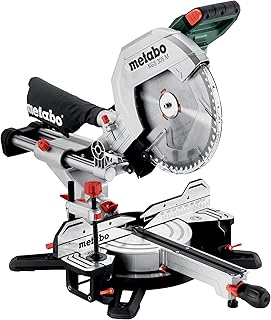


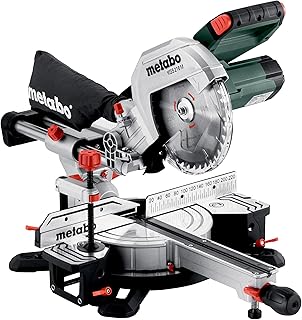
Choosing a Metabo cordless mitre saw is less about finding the biggest blade or the highest specification and more about matching the saw's cutting capacity, portability, battery requirements and working environment to the jobs you actually carry out. Metabo's current 18 V cordless mitre saw range includes the KGS 18 LTX BL 216, KGS 18 LTX BL 254 and KGS 18 LTX BL 305, giving buyers three distinctly different capacity classes rather than three interchangeable versions of the same machine. That distinction matters when comparing cordless mitre saws in the UK. A compact 216 mm machine can be the more sensible choice for flooring, trim, framing and general carpentry where transport and bench space matter. A 254 mm saw provides a useful middle ground for buyers who regularly cut wider or deeper timber. The 305 mm model is aimed at substantially larger workpieces and offers the greatest cutting capacity of the three, but its larger blade, table and overall mass make it a very different proposition for mobile work. The following sections expand the buying considerations behind a Metabo cordless mitre saw comparison, including cutting capacity, blade size, battery selection, brushless motors, angle adjustment, portability, dust management, material compatibility, maintenance and the common mistakes that can lead to choosing the wrong model. These figures should not be treated as a simple ranking of good, better and best. Cutting capacity is only one part of the buying decision. The correct model depends on the dimensions of the stock, the frequency of transport, the available battery capacity and whether the saw will mainly be used for repetitive production work or occasional site cutting. The KGS 18 LTX BL 216 is the logical starting point for buyers who want cordless operation without moving into the size and weight of a larger 254 mm or 305 mm machine. Its 216 mm blade gives it a useful combination of portability and cutting capacity, while the sliding design allows a maximum cutting width of 305 mm under the stated 90° configuration. Metabo specifies a 70 mm maximum cutting height at 90° and 40 mm at 45°. The standard blade is 216 x 30 mm, and the no-load speed is listed at 5,000 rpm. The body-only weight is 12.8 kg, which is an important consideration for anyone who expects to carry the saw between a workshop, garage, job site or different floors of a building. A 216 mm blade is a common practical size for general-purpose mitre saw work. It does not automatically mean the saw is limited to narrow boards: the sliding mechanism allows the KGS 18 LTX BL 216 to achieve a stated 305 mm maximum cutting width at 90°. However, buyers should distinguish width from thickness. The maximum stated capacity is 305 x 70 mm at 90°, so a wide, relatively thin board is a different proposition from a thick structural timber of the same width. This is one of the most important specifications to check before buying. Looking only at the headline cutting width can create unrealistic expectations about the size of material the saw can cut in a single pass. The KGS 18 LTX BL 254 occupies the space between the compact 216 mm model and the larger 305 mm machine. Its 254 mm blade provides a deeper cutting envelope, with Metabo's documentation listing a maximum 305 x 92 mm capacity at 90° and 215 x 48 mm at 45°. For buyers who routinely encounter timber that pushes beyond the practical depth of a 216 mm saw but who do not need the full capacity of a 305 mm machine, this middle category deserves particular attention. The principal reason is cutting depth. The documented 90° cutting height increases from 70 mm on the KGS 18 LTX BL 216 to 92 mm on the KGS 18 LTX BL 254. That additional capacity can make a meaningful difference when working with thicker timber, larger sections or material where repositioning for a second cut would be inconvenient. It is nevertheless worth considering whether you will actually use that extra capacity. A larger saw is not inherently more suitable for small work. If most of your jobs involve skirting, architrave, flooring trims, smaller framing components or ordinary lengths of timber, the compact machine may remain the more convenient choice. The KGS 18 LTX BL 305 is the high-capacity option in this cordless comparison. It uses a 305 mm blade and is specified for cuts up to 305 x 110 mm at 90°. At 45°, the documented capacity is 215 x 67 mm. Metabo lists a 3,700 rpm no-load speed and a maximum cutting speed of 59 m/s for the model. Its body-only weight is 17.4 kg, so portability remains possible but should be assessed differently from the 216 mm machine. The important trade-off is physical size. A 305 mm machine offers greater capacity, but that capacity comes with a larger blade, larger working area and higher machine weight. The KGS 18 LTX BL 305 is therefore not simply a bigger version of the KGS 18 LTX BL 216; it is better viewed as a different class of cordless mitre saw. Brushless motors are particularly relevant in cordless power tools because the motor design can contribute to efficient power use and reduced wear associated with conventional motor brushes. In a mitre saw, however, it is a mistake to treat the presence of a brushless motor as a guarantee of unlimited cutting performance. Actual cordless performance is affected by the battery, material, blade condition, feed rate, cut dimensions and working pattern. A large battery can provide more energy than a smaller pack, but it also adds weight. Conversely, a compact battery can make a portable saw easier to handle while reducing the amount of stored energy available for sustained work. For this reason, battery selection should be considered part of the saw specification rather than an afterthought. The cordless advantage is most compelling when the user already owns compatible batteries and chargers. Metabo's 18 V LTX system is designed around a shared battery platform, which can reduce the need to maintain separate battery ecosystems when several compatible tools are already in use. For mitre saws, capacity is particularly important because cutting can demand sustained electrical power. Metabo's UK cordless catalogue gives an example of the KGS 18 LTX BL 216 producing up to 400 cuts in softwood measuring 60 x 60 mm per charge when paired with a 10 Ah LiHD battery. This is a manufacturer-stated example under a defined material and battery condition, not a universal number of cuts that should be expected in every application. Do not compare battery capacity solely by the Ah figure. The energy available depends on voltage and capacity, while real-world runtime also depends heavily on the load placed on the saw. Two users can achieve very different results from the same battery because their timber dimensions, blade condition and cutting patterns differ. A mitre saw is only as effective as the blade being used for the particular material and finish required. The standard blade supplied with a saw should therefore be viewed as a starting point rather than a universal answer for every job. In general terms, blades with fewer teeth tend to prioritise rapid material removal, while higher tooth counts can favour a cleaner finish in suitable materials. The ideal choice depends on the material, thickness, grain direction and desired finish. Always check the blade diameter, bore size, maximum permitted speed and material compatibility before fitting a replacement blade. The fact that a blade physically fits the spindle does not mean it is appropriate or safe for the saw. Cutting capacity should be assessed in more than one dimension. A specification such as 305 x 70 mm describes a particular cutting configuration, not a blanket statement that every object measuring less than 305 mm in one dimension can be cut. Capacity can change when the mitre angle or bevel angle changes. Metabo's technical documentation illustrates this clearly for the KGS 18 LTX BL 254 and KGS 18 LTX BL 305, with different cutting dimensions listed at different angles. Write down the largest three or four workpiece sizes you routinely encounter and compare those measurements against the manufacturer's capacity tables. This is more reliable than choosing a model based purely on blade diameter. A mitre cut changes the angle of the blade across the width of the workpiece, while a bevel cut tilts the blade relative to the table. A compound cut combines both adjustments. Metabo's technical documentation shows that the KGS 18 LTX BL 216 has a turntable range of up to 50° left and 60° right and a bevel range of 47° left and 47° right, while the KGS 18 LTX BL 305 is documented with the same broad turntable and bevel adjustment ranges. These ranges can be useful for complex joinery, framing and trim work, but maximum adjustment range is not the only factor that matters. Buyers should also consider how clearly the angle scale is marked, how securely the table locks into position and whether commonly used angles can be set quickly and repeatably. Metabo's Precision Cut Line, or PCL, uses an LED arrangement to project a shadow indicating the blade position. The KGS 18 LTX BL 216 is specifically described as using this system to provide a precise shadow cutting line without readjustment. A shadow line has a practical advantage over a conventional laser-style indicator because it represents the physical position of the blade rather than relying on a separately aligned beam. It can make positioning the workpiece more intuitive, particularly when making repeated cuts. Nevertheless, no visual cutting guide removes the need to secure the workpiece correctly and verify the cut before committing valuable material. The sliding mechanism allows the blade assembly to travel through the workpiece, increasing available cutting width compared with a basic non-sliding mitre saw. This is particularly useful when cutting wider boards. However, sliding action also means the saw requires sufficient clearance behind or around the machine, depending on the rail arrangement and the manufacturer's recommended setup. A saw that fits comfortably on a bench when the head is parked may require considerably more working space once the slide is fully extended. Before choosing a cordless mitre saw for a small workshop, measure the entire operating area rather than only the footprint of the machine. Allow space for material supports, the operator, the sliding mechanism and safe movement around the saw. One of the strongest arguments for cordless equipment is freedom from a mains cable. That is particularly useful when cutting outside, working in partially completed buildings or moving between work areas. But a cordless mitre saw can still be heavy. The KGS 18 LTX BL 216 is listed at 12.8 kg without the battery, whereas the KGS 18 LTX BL 305 is listed at 17.4 kg without the battery. The battery adds further weight, so the carrying weight in actual use will exceed the body-only specification. This is an important consideration for tradespeople who repeatedly load tools into vehicles, carry them across sites or move them between floors. A 17 kg machine can still be portable in the sense that it can be transported from one work area to another. That does not mean it will feel lightweight when carried repeatedly. If portability is one of the main reasons for choosing cordless equipment, compare the complete working setup rather than looking only at the absence of a power cable. Mitre saws generate substantial quantities of chips and fine dust, particularly when cutting wood-based materials. Effective dust management can improve visibility around the cutting area and reduce the amount of airborne debris, although extraction performance varies according to material, blade, extraction equipment and the geometry of the saw's dust collection system. The KGS 18 LTX BL 216 is supplied with a chip collection bag according to Metabo's UK cordless catalogue. The KGS 18 LTX BL 254 documentation also identifies dust-extraction components within the machine's service parts structure, while the broader KGS range uses dedicated collection and extraction arrangements. For workshop use, buyers should consider whether a suitable extraction system can be connected and whether the intended hose, adapter and dust collector are compatible. A collection bag can be convenient for mobile work, while a dedicated extractor may be preferable for longer indoor cutting sessions. The size of the saw table is only part of the support system. Long timber can become difficult to control if it extends well beyond the machine's built-in surface. Metabo's KGS 18 LTX BL 216 documentation specifies a support surface of 345 x 730 mm and lists two table length extensions among the supplied equipment for the body-only version described in the UK catalogue. For longer boards, additional material support can be just as important as the saw itself. A stable support at the correct height helps keep the workpiece level and reduces unwanted movement as the cut is completed. A clamp helps prevent the material from moving during cutting. It is particularly valuable for short sections, awkward profiles and repeatable production work. Even when the material appears stable by hand, clamping provides a more controlled setup and keeps hands away from the blade path. Never assume that a heavy workpiece is automatically secure. The correct clamping and support arrangement depends on the material shape, cut direction and machine configuration. Mitre saw safety should be treated as a selection criterion rather than something considered only after purchase. Look for a properly guarded blade, positive controls, secure workpiece clamping, stable support and clear operating instructions. The KGS 18 LTX BL 305 is documented with features including soft start and overload protection, while Metabo's product information also identifies a quick-release clamp, depth stop and fast brake among the design features associated with this model. Soft start is particularly useful on a large cordless mitre saw because a controlled start can make the machine easier to manage when the motor begins rotating. Metabo lists soft start and overload protection among the features of the KGS 18 LTX BL 305. Overload protection should not be interpreted as permission to force the saw through material. If the machine is repeatedly overloaded, the underlying cause should be investigated. A dull blade, inappropriate blade, excessive feed pressure, unsuitable material or an incorrectly supported workpiece can all contribute to unnecessary load. The 216 mm model is the most logical choice when general-purpose cutting capacity is sufficient and the machine will be moved frequently. Its 12.8 kg body-only weight is significantly lower than the 17.4 kg listed for the 305 mm model, and its 305 mm maximum 90° cutting width is already substantial for a compact machine. The 254 mm model is worth considering where the 70 mm 90° cutting height of the 216 mm saw is restrictive but a 305 mm machine would be unnecessarily large. Its documented 92 mm maximum 90° cutting height provides a useful intermediate step. The 305 mm model is the strongest candidate when large and thick workpieces are routine. Its 305 x 110 mm 90° cutting capacity is considerably greater than the 216 mm model's 305 x 70 mm specification. The trade-off is the larger machine and higher body-only weight. More cutting capacity is useful only when you need it. A large saw can take up more room, weigh more and be less convenient to move. If your work rarely exceeds the capacity of a 216 mm machine, the larger model may provide little practical benefit. Blade diameter is an important specification, but it does not tell the whole story. Sliding travel, maximum cutting width, maximum cutting depth, angle settings and the actual dimensions of the workpiece all matter. A body-only weight is useful for comparing machines, but it is not the weight you will carry when the saw is ready for work. Include the battery when assessing transport requirements. Voltage alone does not tell you the battery's capacity or physical weight. Consider Ah capacity, battery technology, charging arrangements and compatibility with the rest of your tool collection. A replacement blade is a consumable component. Before buying, check the required diameter and bore, the available tooth configurations and whether suitable blades are readily obtainable for the materials you expect to cut. Long workpieces require proper support. A saw can have an impressive cutting capacity yet still be awkward to use if the surrounding support arrangement is inadequate. Carpenters should prioritise a combination of cutting capacity, repeatability, transportability and battery compatibility. For general carpentry, the 216 mm class can be particularly attractive where most material remains within its documented capacity. Where thicker stock is common, the 254 mm or 305 mm models may reduce the need for repositioning or multiple cuts. Think about the actual workflow rather than isolated specifications. A carpenter carrying a saw from room to room may value the lower mass of the KGS 18 LTX BL 216 more than the additional depth of a larger machine. A carpenter working predominantly at a fixed site may place greater emphasis on capacity. For visible joinery, blade choice and repeatability deserve particular attention. A large cutting capacity does not automatically produce a better finish. The quality of the blade, accuracy of setup, stability of the material and consistency of the operator all contribute to the final result. For smaller mouldings and trim, a compact saw can also be easier to position. Consider whether the saw can be set accurately to the angles required for the work and whether the cutting guide is easy to see in the lighting conditions where you normally work. Site users should place greater emphasis on mobility, battery availability, robustness, workpiece support and ease of setup. Cordless operation removes the need to position the saw near a mains socket and avoids managing a trailing power cable, which can be particularly useful on unfinished sites. However, cordless operation does not eliminate the need for good site planning. Bring enough compatible battery capacity for the planned workload, keep blades sharp and provide a stable support arrangement for longer material. DIY buyers often make the mistake of buying for hypothetical future projects. A 305 mm saw may appear attractive because it can handle larger stock, but it may be unnecessary for occasional skirting, architrave, shelving, flooring and general home improvement work. For a home workshop, measure your storage area and workbench before buying. Also consider how often the machine will actually be moved. The difference between a 12.8 kg body-only machine and a 17.4 kg body-only machine becomes much more noticeable when the tool is repeatedly carried, particularly after adding a battery. Regular maintenance helps preserve cutting accuracy and safe operation. The precise maintenance schedule and procedures should always follow the operating instructions supplied for the specific model. A blade should not be judged solely by how long it has been used. Cutting performance can deteriorate because of resin build-up, damaged teeth, inappropriate material, overheating or general wear. Warning signs can include noticeably slower cutting, increased effort, rougher finishes, burning or unusual vibration. A blade showing damaged or missing teeth should be treated as a safety concern rather than simply a performance issue. Replacing or cleaning the blade can sometimes restore performance without any change to the saw itself. This is why a disappointing cutting result should not automatically be blamed on the cordless motor or battery. When comparing Metabo with brands such as Bosch, Makita, DeWalt, Milwaukee and Festool, avoid relying on brand reputation alone. The most useful comparison is model against model. The last point is particularly important with cordless tools. A bare machine can appear attractive until the cost of batteries, charger, suitable blades and additional support equipment is included. Brand-level comparisons are useful for identifying ecosystems, but they should not be used as a substitute for technical comparison. Bosch, Makita, DeWalt and Milwaukee all have extensive cordless tool ranges, but battery compatibility, machine weight, blade sizes and cutting capacities differ between individual models. If you already own several cordless tools from one manufacturer, remaining within that battery ecosystem can be more economical and convenient than starting a second system solely for a mitre saw. On the other hand, if the mitre saw is your only cordless tool, choosing based on the saw's own specifications may be more important than ecosystem loyalty. The purchase decision should include more than the initial machine cost. A realistic ownership assessment can include: Compare like-for-like packages when assessing prices. A bare tool and a kit containing batteries and a charger are not directly comparable, even when the model name is identical. Specification sheets can look complicated because they combine dimensions, angles, speeds, weights and electrical information. Focus first on the specifications that determine whether the machine can physically perform your intended work. An 18 V rating identifies the nominal voltage of the battery system. It does not mean that every 18 V cordless mitre saw delivers the same power or runtime. Motor design, electronics, battery technology, blade characteristics and mechanical design all influence performance. This is why comparing cordless saws by voltage alone can be misleading. The more meaningful comparison is the complete system: motor, battery, blade, cutting capacity and intended workload. The number refers to the nominal blade diameter. In Metabo's cordless range, the progression from 216 mm to 254 mm to 305 mm corresponds with progressively greater cutting depth. The documented 90° cutting heights are 70 mm, 92 mm and 110 mm respectively. It is useful to think of blade diameter as an indication of the saw's capacity class rather than a direct measurement of every possible cut. The sliding mechanism and cutting geometry also influence the final cutting dimensions. For many applications, a modern cordless mitre saw can provide a practical alternative to a mains-powered machine, particularly where mobility and rapid setup are important. Metabo specifically describes the brushless KGS 18 LTX BL 216 as providing powerful sawing comparable with a mains-powered tool. That does not mean cordless and mains-powered machines are identical in every respect. Battery runtime, battery charging, complete machine weight and the availability of continuous mains power can all affect which format is preferable for a particular workshop or job. There is no single best model for every user. The KGS 18 LTX BL 216 is the most compact option of the three, the KGS 18 LTX BL 254 provides greater cutting depth, and the KGS 18 LTX BL 305 offers the largest documented cutting capacity. The right choice depends primarily on the dimensions of the material, portability requirements and battery setup. Its specification and design make it a capable option for professional users whose normal work falls within its cutting capacity. Metabo classifies it within its professional-oriented 18 V LTX cordless range. Suitability ultimately depends on the specific trade, material sizes and frequency of use. It can be if you regularly need the additional cutting depth. The KGS 18 LTX BL 305 is documented at 305 x 110 mm at 90°, compared with 305 x 70 mm for the KGS 18 LTX BL 216. If your material rarely approaches 70 mm in thickness, the additional capacity may not justify the larger and heavier machine. Yes. Metabo documentation specifies a 305 x 30 mm blade for the KGS 18 LTX BL 305. The KGS 18 LTX BL 216 uses a 216 x 30 mm saw blade according to Metabo's UK cordless range documentation. Metabo lists a maximum cutting width of 305 mm at 90° and 215 mm at 45° for the KGS 18 LTX BL 216. The documented maximum cutting depth is 110 mm at 90° and 67 mm at 45°. Cutting dimensions vary with the selected angle and configuration. The KGS 18 LTX BL models are part of Metabo's 18 V cordless platform. Buyers should still verify the exact battery and charger compatibility for the specific machine and kit being purchased rather than relying solely on a general 18 V label. Yes. Metabo describes the KGS 18 LTX BL 216 as having a powerful brushless motor. Yes. Metabo identifies its Precision Cut Line system, which uses an LED-generated shadow to show the cutting line. Check whether the package includes batteries, a charger, the intended saw blade, clamps, extensions and other accessories. Metabo's UK documentation for the KGS 18 LTX BL 216, for example, identifies a body-only version supplied without battery and charger. A higher-capacity battery can be useful for longer cutting sessions, but it is also heavier. Metabo's published KGS 18 LTX BL 216 example uses a 10 Ah LiHD battery when stating its maximum example of up to 400 cuts in 60 x 60 mm softwood. That figure should be regarded as a manufacturer example under specified conditions rather than a guarantee of runtime for every user. The best Metabo cordless mitre saw is determined by the work rather than by the largest number in the specification sheet. The KGS 18 LTX BL 216 is the compact, general-purpose choice; the KGS 18 LTX BL 254 provides a useful increase in cutting depth; and the KGS 18 LTX BL 305 is the high-capacity option for users who regularly work with substantially thicker material. For buyers comparing models in the UK, the most useful approach is to start with the dimensions of the material, then consider blade size, cutting angles, battery requirements, portability, workpiece support and extraction. Once those requirements are established, the choice between the three Metabo cordless models becomes considerably clearer. Technical specifications should always be checked against the latest manufacturer documentation and the exact product variant before purchase, particularly where a listing is offered as a bare tool or as a battery-and-charger kit. This is also the best way to distinguish genuinely useful differences between models from specifications that may have little practical relevance to your work.Metabo Cordless Mitre Saws: Which Model Is Right for Your Work?
Metabo Cordless Mitre Saw Range at a Glance
KGS 18 LTX BL 216: The Compact Choice
Who should consider the KGS 18 LTX BL 216?
What the 216 mm blade means in practice
KGS 18 LTX BL 254: The Middle-Ground Option
Why choose 254 mm rather than 216 mm?
KGS 18 LTX BL 305: Maximum Cordless Cutting Capacity
When does a 305 mm cordless mitre saw make sense?
Metabo Cordless Mitre Saw Comparison: 216 mm vs 254 mm vs 305 mm
Why Brushless Motor Technology Matters
Understanding Metabo's 18 V Battery System
Battery size: what should buyers prioritise?
Blade Choice Is as Important as Saw Choice
Tooth count and cut quality
Cutting Capacity: The Specification Most Buyers Misread
Questions to ask before buying
Mitre and Bevel Adjustment: What the Numbers Mean
Precision Cut Line: Why a Shadow Line Can Be Useful
Sliding Action and Why It Matters
Portability: Cordless Does Not Automatically Mean Lightweight
Workshop portability versus site portability
Dust Extraction and Workshop Cleanliness
Material Support and Workpiece Control
Why a workpiece clamp matters
Safety Features Buyers Should Look For
Soft Start and Overload Protection
How to Choose the Right Metabo Cordless Mitre Saw
Choose the KGS 18 LTX BL 216 if portability is the priority
Choose the KGS 18 LTX BL 254 if you need additional depth
Choose the KGS 18 LTX BL 305 if cutting capacity comes first
Common Buying Mistakes
Buying the largest saw simply because it has the highest specification
Choosing based only on blade diameter
Ignoring battery weight
Assuming all 18 V batteries are equivalent
Forgetting blade availability
Underestimating table and support requirements
Buying a Cordless Mitre Saw for Carpentry
Buying for Joinery and Fine Woodworking
Buying for Construction and Site Work
Buying for DIY and Home Workshop Use
Maintenance Guide for a Metabo Cordless Mitre Saw
When Should You Replace the Blade?
How to Compare Metabo with Other Mitre Saw Brands
Metabo vs Bosch, Makita, DeWalt and Milwaukee: What to Compare
Total Cost of Ownership
How to Read a Metabo Mitre Saw Specification Sheet
What Does 18 V Mean on a Cordless Mitre Saw?
What Does 216 mm, 254 mm or 305 mm Mean?
Can a Cordless Metabo Mitre Saw Replace a Mains-Powered Saw?
Questions to Ask Before Buying
Frequently Asked Questions
Which Metabo cordless mitre saw is best?
Is the KGS 18 LTX BL 216 suitable for professional work?
Is the KGS 18 LTX BL 305 worth choosing over the 216 mm model?
Does the KGS 18 LTX BL 305 use a 305 mm blade?
What blade size does the KGS 18 LTX BL 216 use?
What is the maximum cutting width of the KGS 18 LTX BL 216?
What is the maximum cutting depth of the KGS 18 LTX BL 305?
Are Metabo cordless mitre saws compatible with Metabo 18 V batteries?
Does the KGS 18 LTX BL 216 have a brushless motor?
Does the KGS 18 LTX BL 216 have a cutting-line guide?
What should I check when comparing bare-tool and kit versions?
Should I buy a 10 Ah battery for a cordless mitre saw?
Final Buying Checklist
Bottom Line