

♥ Wishlist






A toaster is one of the most useful small appliances for a UK kitchen. From a quick slice of toast before work to a relaxed weekend breakfast, a reliable toaster can make preparing bread simple and convenient. When comparing toasters, it is worth looking beyond appearance and considering how the appliance will fit into your daily routine. The right model should offer useful controls, suitable capacity and consistent results while fitting comfortably on your kitchen worktop.
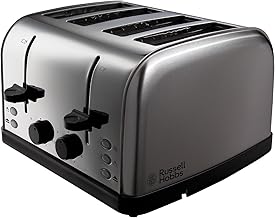
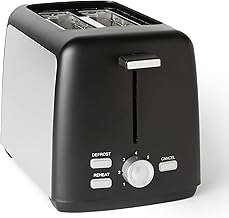
For many households, a 2-slice toaster is a practical choice. It takes up relatively little worktop space and can be suitable for individuals, couples or kitchens where counter space is limited. If several people regularly eat toast at the same time, a 4-slice toaster can be more convenient because multiple slices can be prepared together. The best capacity depends on how many people you are serving and how frequently you use the appliance.
Slot design is an important consideration when choosing a toaster. Standard bread slices are suitable for many models, but wider or deeper slots can provide greater flexibility for different types of bread. If you enjoy thicker bakery-style bread, crumpets or other breakfast items, checking the slot dimensions can help you avoid choosing a model that is too restrictive. Even browning across the bread can also be important if you prefer consistent results from one use to the next.
Adjustable browning controls allow you to select a preferred level of toast. This can be particularly useful in households where different people prefer different levels of crispness. A toaster with straightforward controls can also make everyday use easier. Look for clearly marked settings and controls that are simple to adjust without unnecessary complexity.
Modern toasters often include several functions designed to make breakfast more convenient. A defrost function can be useful for bread taken directly from the freezer, while a reheat function allows toast to be warmed without continuing the full browning cycle. A cancel button is another useful feature because it allows the cycle to be stopped quickly when required.
A removable crumb tray can make cleaning easier by collecting crumbs that fall during normal use. Regularly emptying the tray can help keep the appliance cleaner and reduce crumbs around the worktop. Some models also include high-lift mechanisms, which can make it easier to remove smaller slices without reaching into the toaster slots.
Compact toasters can work well in smaller flats, apartments, student accommodation and kitchens where worktop space is limited. Larger models may be more suitable for families or households that prepare several slices at once. If the toaster will remain on display, its size, shape and finish may also matter because it becomes part of the kitchen's everyday appearance.
For frequent use, convenience and ease of cleaning can be just as important as the number of slots. Consider how often you prepare toast, what types of bread you normally use and whether different household members require different browning settings. These practical details can help narrow the choice more effectively than selecting a toaster based on appearance alone.
Start by deciding whether you need two or four slots. Next, consider the types of bread you normally eat and whether wider slots would be useful. Compare browning controls, defrost, reheat and cancel functions, then look at cleaning features such as crumb trays. If kitchen space is limited, check the appliance dimensions before making a decision.
Price is another consideration for UK shoppers, but the cheapest toaster is not always the most suitable option. A model with useful features, convenient controls and an appropriate capacity may provide better everyday value. Likewise, paying for features that you are unlikely to use may not be necessary. Think about your actual breakfast habits and prioritise the specifications that will make the biggest difference to regular use.
The ideal toaster depends on the way you use your kitchen. A simple 2-slice toaster can be an efficient choice for everyday individual use, while a 4-slice model can help speed up breakfast for a family. Wider slots may provide additional flexibility, while adjustable browning, defrost and reheat settings can make daily operation more convenient.
Before choosing a toaster, compare capacity, slot design, controls, functions, cleaning features and available worktop space. By focusing on practical requirements rather than choosing purely on appearance, UK shoppers can find a toaster that complements their kitchen and makes everyday breakfasts easier.
Find a toaster to suit your kitchen, breakfast routine and household needs. Whether you are looking for a compact toaster for a smaller kitchen, a practical 2-slice model for everyday breakfasts or a larger 4-slice toaster for busy family mornings, this category brings together useful information to help you compare your options. UK shoppers can consider important features such as slot size, browning control, defrost and reheat settings, removable crumb trays, power, cleaning convenience and overall design before choosing a toaster.
| Toaster type | Best suited to | Key consideration |
|---|---|---|
| 2-slice toaster | Individuals and couples | Compact size and everyday convenience |
| 4-slice toaster | Families and busy households | Higher capacity for simultaneous preparation |
| Wide-slot toaster | Different bread types | Greater flexibility for thicker slices |
| Toaster with defrost | Frozen bread users | Convenient preparation from frozen |
| Toaster with reheat | Users who occasionally need to warm toast | Reheating without extended browning |