

♥ Wishlist


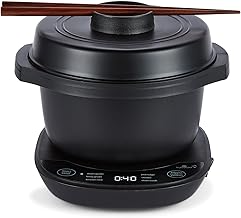


A rice cooker is designed to simplify one of the most frequently prepared staples in many homes. Instead of monitoring a saucepan throughout the cooking process, a rice cooker can manage the cooking cycle and help produce consistently cooked rice with less attention required. For busy households, students, couples and families, this can make everyday meal preparation more convenient.
When choosing a rice cooker in the UK, it is worth considering how much rice you normally prepare, how much worktop space you have available and which cooking functions you are likely to use. Compact models can be useful for smaller kitchens or one- and two-person households, while larger-capacity rice cookers can be more suitable for families or people who prepare several portions at once.
Capacity is one of the most important factors to consider. A smaller rice cooker can be practical when you usually prepare individual portions or smaller meals. A medium-capacity model may provide a useful balance for couples and small families, while larger cookers can be convenient when preparing rice for several people or batch cooking for later meals.
Remember that manufacturers may describe capacity using cups, litres or cooked and uncooked measurements. Check the product specifications carefully rather than comparing capacity figures without considering how they are measured. Choosing a suitable size can help prevent wasted space and make the cooker more convenient for regular use.
Different rice cookers offer different levels of functionality. Basic models may focus on straightforward rice cooking with simple controls, making them appealing if you want an uncomplicated appliance. More advanced models can include multiple cooking programmes, automatic keep-warm functions, timers or settings designed for different types of food.
A keep-warm function can be particularly useful when meals are not served immediately. Automatic cooking controls can also make the appliance easier to use because you can start the cooking process and concentrate on preparing other parts of a meal. If you want an appliance that can do more than cook rice, look for multifunction models with programmes for foods such as porridge, steamed dishes or other grains where supported by the manufacturer.
UK households often prepare rice as an accompaniment to curries, stir-fries, grilled foods, stews and many other meals. A rice cooker can be useful for cooking everyday varieties such as basmati, long-grain and jasmine rice. However, cooking results can vary depending on the rice variety, water ratio, quantity and appliance design.
Always follow the manufacturer's instructions for water measurements and cooking programmes. Some models include measuring cups and rice paddles, which can make preparation easier. Using the recommended ratios can help you achieve the texture you prefer while reducing the need for repeated experimentation.
Kitchen space is an important consideration, particularly in flats, apartments and smaller UK homes. A compact rice cooker can provide the convenience of dedicated rice preparation without taking up as much worktop or cupboard space as a larger appliance. Before buying, check the external dimensions as well as the cooking capacity.
If you plan to store the cooker between uses, consider its shape, lid design, cable arrangement and overall weight. A practical appliance should fit comfortably into your available storage area while remaining easy to take out whenever you need it.
A multifunction rice cooker can be worth considering if you want greater flexibility from one kitchen appliance. Depending on the model, additional programmes may allow you to prepare grains, porridge, steamed foods or other dishes. This can make a multifunction cooker useful when you want to reduce the number of appliances on your worktop.
However, extra programmes are not necessarily essential. If your main priority is consistently cooking rice, a straightforward model may be easier to operate and better suited to your needs. Consider the functions you will actually use rather than paying more for features that may remain unused.
Cleaning should be part of your buying decision. Look for features such as a removable cooking pot, non-stick cooking surface or removable components where specified by the manufacturer. Always check the care instructions because not every component of every rice cooker is suitable for dishwasher cleaning.
A well-designed control panel, clear markings and an easy-to-handle lid can also make everyday use more convenient. For frequent cooking, small practical details can have a significant impact on how enjoyable the appliance is to use.
The best rice cooker for one household may not be the best choice for another. Compare capacity, dimensions, cooking programmes, controls, included accessories, cleaning requirements and manufacturer specifications before making a decision. Think about the meals you regularly prepare and choose features that support your normal cooking routine.
For UK shoppers, it is also sensible to check the supplied plug, power requirements, warranty information and product documentation before purchase. Comparing these details alongside price can help you make a more informed choice rather than selecting an appliance based on cost alone.
Whether you need a compact rice cooker for a small household, a larger model for family meals or a multifunction appliance for broader cooking tasks, comparing the available options can help you find a practical match for your kitchen. Explore the rice cooker category to compare suitable options and select a model that fits your capacity, functionality and everyday cooking requirements.
A rice cooker can make preparing rice simpler, more consistent and less time-consuming. Whether you regularly cook basmati rice, long-grain rice, jasmine rice or other varieties, the right appliance can help take the guesswork out of everyday cooking. This category brings together rice cookers suitable for different household sizes, cooking routines and kitchen spaces, helping UK shoppers compare useful features before choosing a model.
Primary: Commercial investigation and transactional
Secondary: Category comparison, product discovery and buying research